All Alone on an Alien Planet, Perseverance Rover is Photographed as a Tiny Green Speck in a Sea of Red
Humans on Earth may have just run a marathon in under two hours for the first time, but it has taken the Mars Perseverance Rover 1,890 Martian sols — or five years and four months in Earth time — to travel 26.2 miles on the Red Planet.
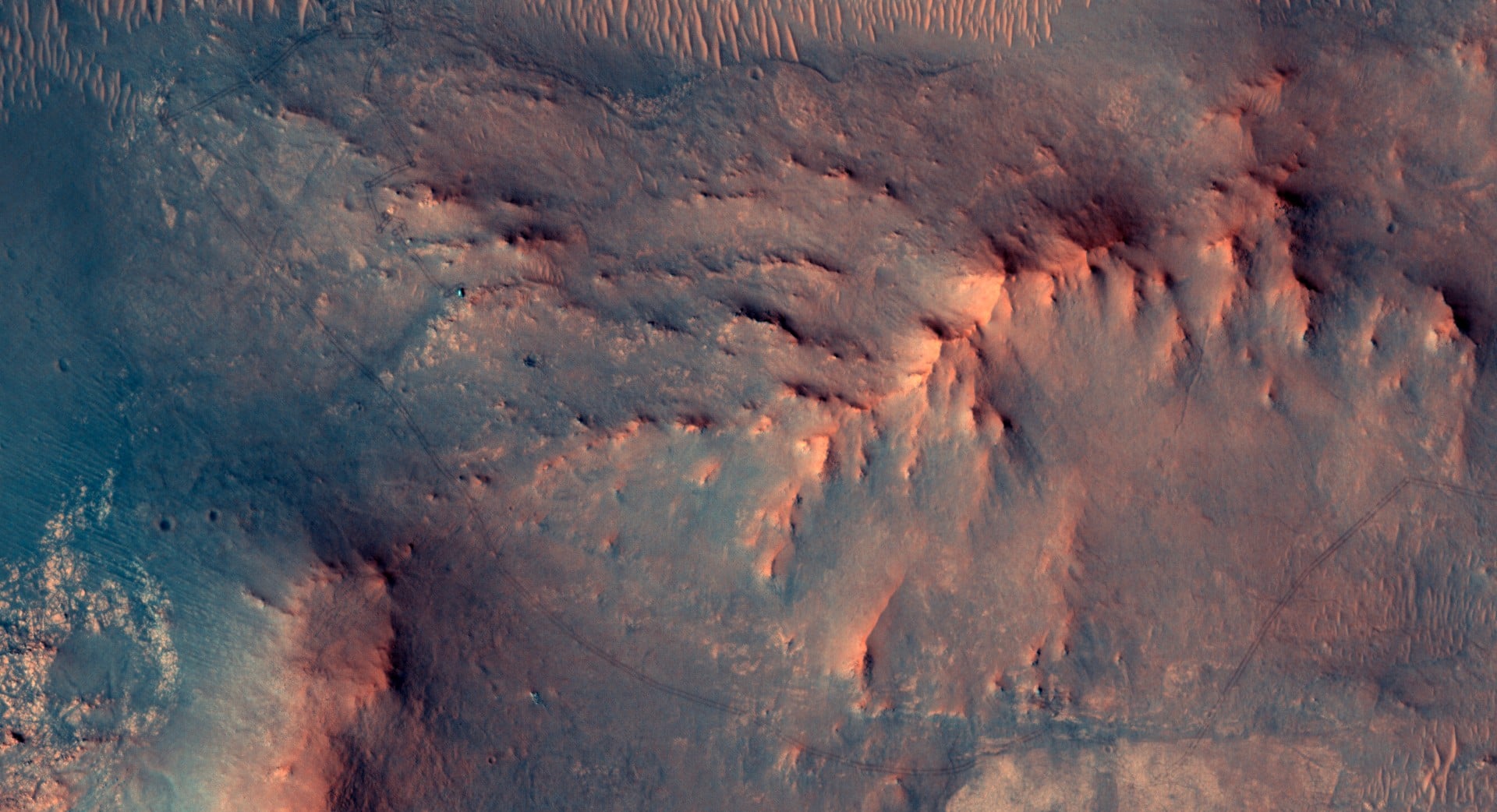
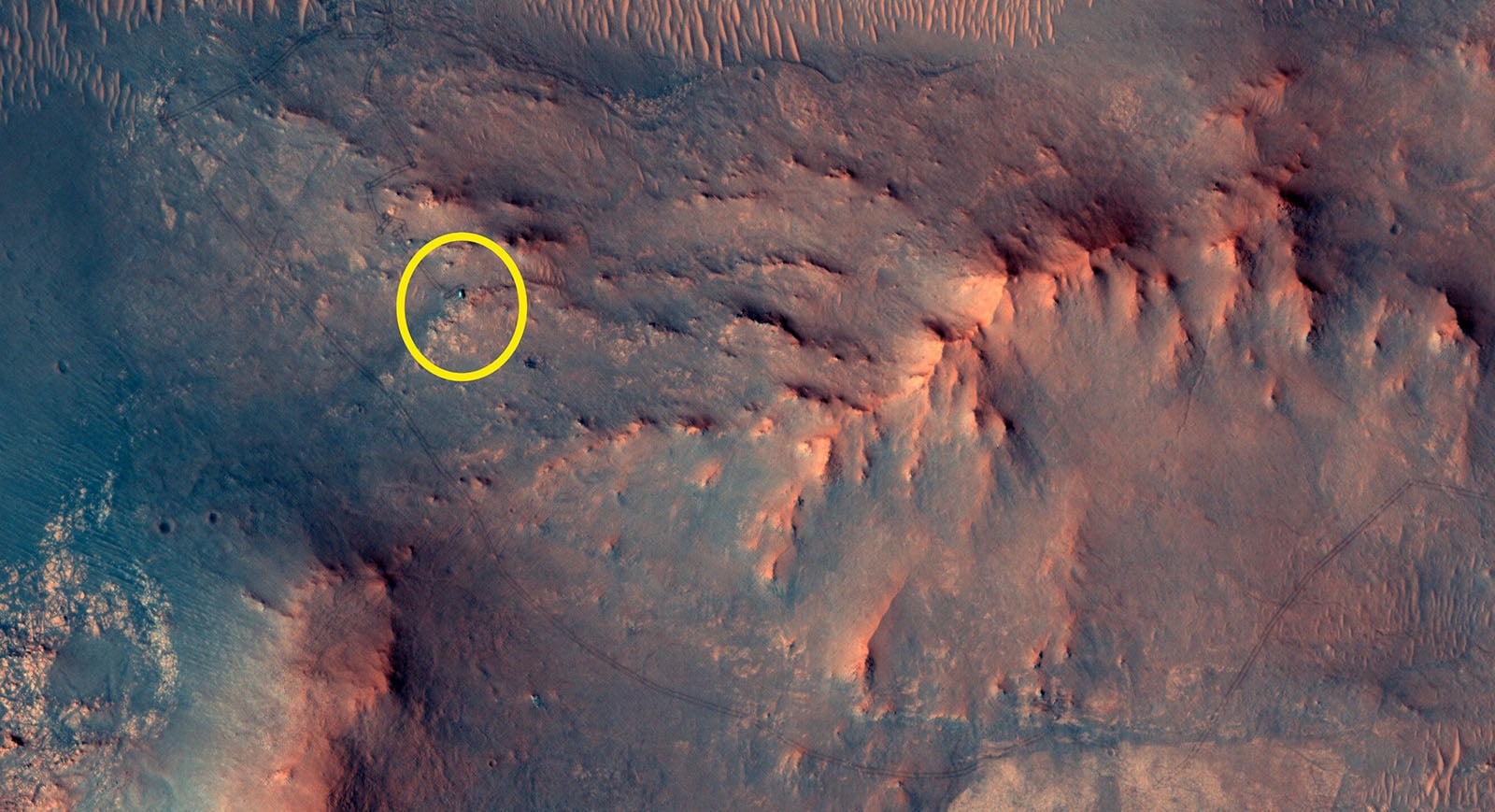
On June 13, the intrepid rover was photographed as a green speck by NASA’s Mars Reconnaissance Orbiter (MRO) using its High-Resolution Imaging Science Experiment (HiRISE) camera. The rover’s tracks can be seen tracing the surface. The rover is in an area west of Jezero Crater that the science team is calling “Arbot.”
Life on Mars?
Yesterday, it was reported that the Perseverance rover has detected complex carbon molecules in rocks on Mars that could prove to be a sign of ancient microbial life.
Organic carbon was discovered in mudstones as the robot explored a dried-up river known as Neretva Vallis. The carbon detected is known as macromolecular carbon or MMC, which is known to originate from living organisms.
“It may originate from biological sources such as fossilized organic matter found in microbial mats and coal,” Dr Ashley Murphy, a scientist at the Planetary Science Institute in Arizona tells The Guardian.
However, Dr Murphy adds that it could also be from reactions between rocks and water or arrived on meteorites.
The Neretva Vallis is inside the Jezero Crater, a 28-mile-wide impact crater on Mars. Perseverance has been exploring it since it landed there on February 18, 2021.
“Jezero crater was once fed water and sediment from rivers, and, billions of years ago, it hosted a lake,” Dr Murphy tells Live Science.
Scientists will need to get their hands on the sample found by Perseverance to find out once and for all whether this complex carbon really does contain a biosignature.
In September last year, Perseverance sent back high-resolution images of “leopard” rocks that are believed to have gotten their spots from chemical reactions involving organic matter.
Affiliate Disclosure PetaPixel articles may include affiliate links; we may earn a commission if you buy through one.