The Best Wireless Microphones in 2026
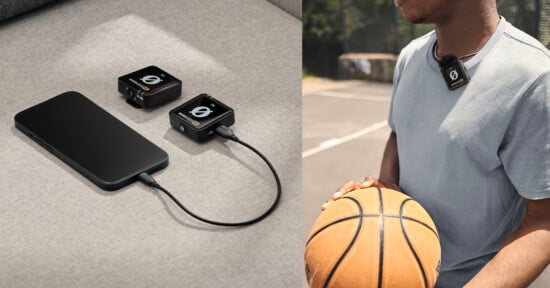
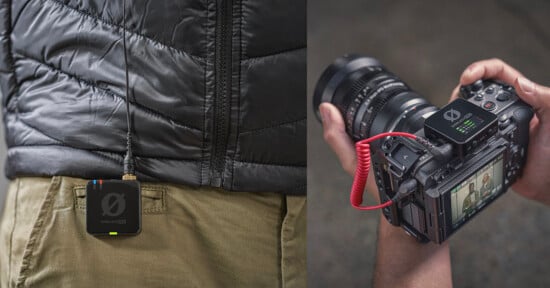
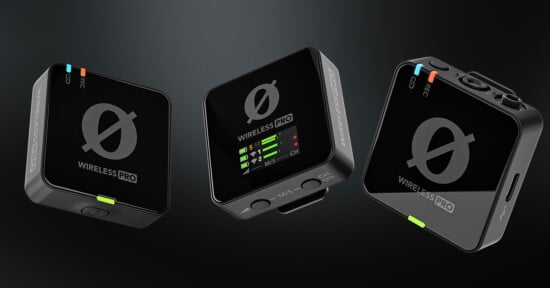
I have been using the Rode Wireless Pro for a few years now, because it was the first of its kind to offer 32-bit internal recording back in 2023. But now, we have a bunch of new contenders entering the market, and it’s starting to feel like an arms race of who can create the most compact, long-lasting, internal-recording, noise-cancelling, all-in-one wireless kit.
I do still love using the Rode, but I am curious to see what else is out there, so I decided to pull together as many of these wireless mic systems as possible and pit them against each other in a friendly (and controlled) competition.
Testing Conditions
Internal recording and noise cancellation are the two features driving this category right now, so those were my primary focus. Coincidentally, the Price and Internal Recording categories line up pretty well: everything here that records internally sits around $300, and everything that doesn’t lands in the $100–150 range.
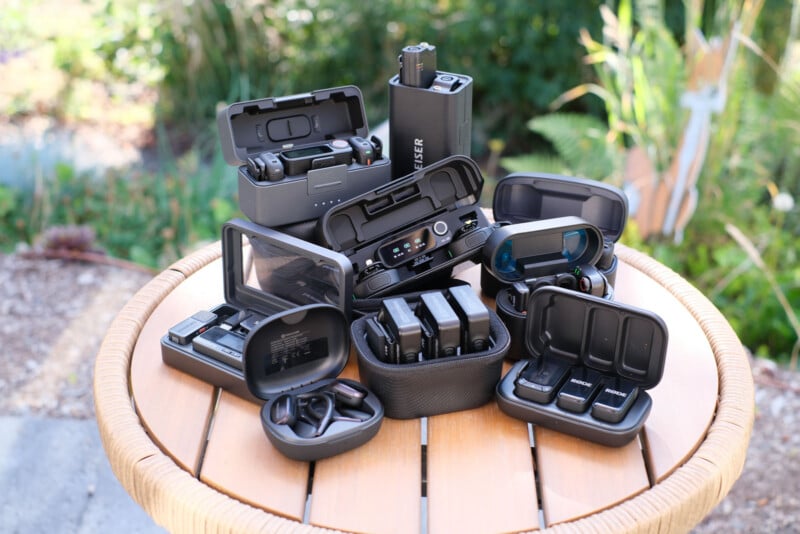
The internal recording category will feature the Rode Wireless Pro, Sennheiser Profile, Hollyland Lark Max 2, DJI Mic 3, Insta360 Mic Pro, and Saramonic Ultra. The more entry-level and non-recording category will feature the Rode Wireless Micro, Saramonic Air, and Hollyland Lark M2S.

We picked a (relatively) quiet spot in New York, McCarren Park, and a noisy intersection nearby in Brooklyn. Although the park was still full of crying babies, wailing sirens, loud arguments, and nasty wind, it presented a perfect real-world opportunity to test out all the features, including noise cancellation and windscreens. Meanwhile, the street corner provided a great stream of constant background noise.

We tested and recorded every unit with and without windscreens, and made sure to test all levels of noise cancellation that each unit offered, if any. We also performed a comprehensive range test on each unit, both facing away and towards the receiver and camera.
Battery, Storage, and Interface
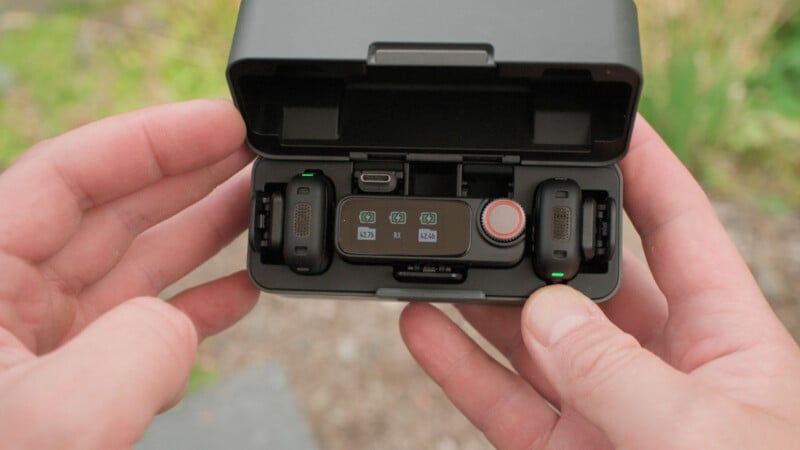
Before we get into the results, let’s chat about the other features that we didn’t directly test. Since it would be time-consuming to try and run the mic batteries (and their cases) to empty and our experience shows company estimations are largely quite accurate, we’ll go off of those specs: across the board, battery life hovers around seven to 10 hours. That sounds like plenty until you run a full production day in the field at maximum settings with noise cancellation, at which point you’ll be forced to pause production for 15 to 30 minutes, and toss these back into their case to recharge. Make sure to carry spares, and don’t forget to charge during any breaks.
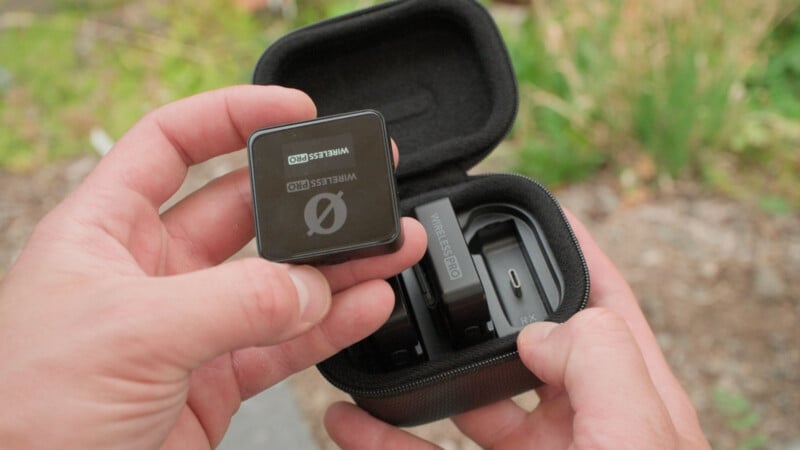
For the internal-recording models, several offer 32GB of storage, good for 30 to 40 hours. The exceptions are the Hollyland Lark Max 2 and Saramonic Ultra at 8GB, or roughly 14 hours. That’s still longer than a battery will last, but it means offloading and formatting at the end of every shoot day rather than rolling into the next one.
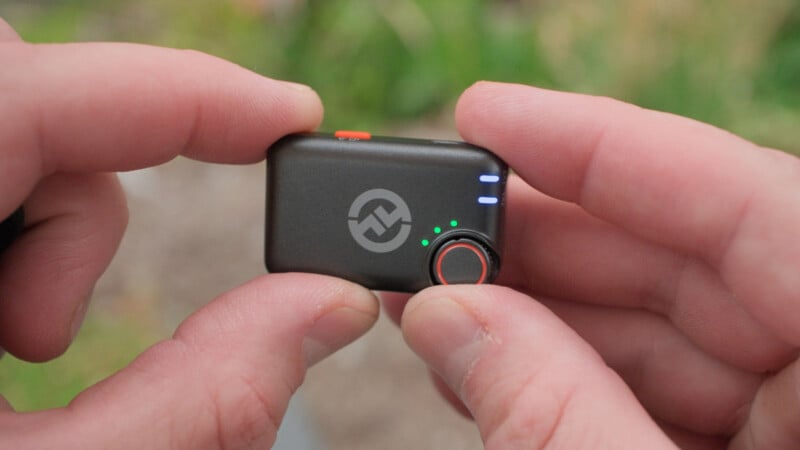
One practical hurdle: some cheaper units skip the transmitter screen, which means certain settings are only accessible through the phone app. After a full day of plugging my phone in and out of these things to check settings via their respective apps, my phone battery ran down fairly quickly.
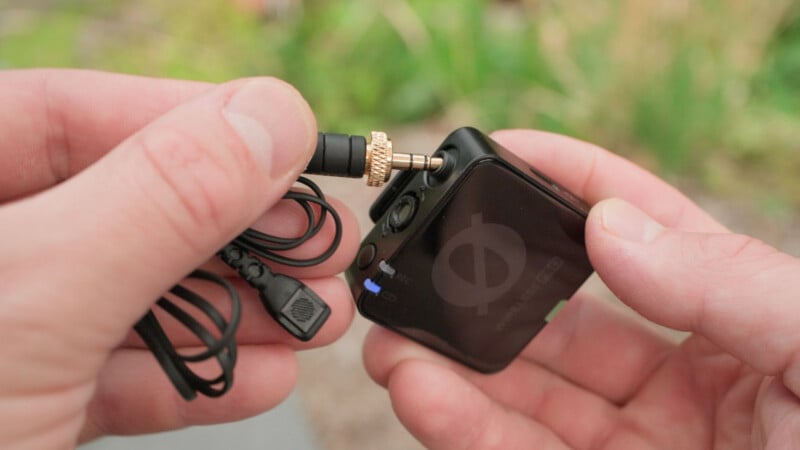
Another note on accessories: I personally love having an external lavalier option which lets me hide the larger capsule body, or gain reach where I need it. RODE, Saramonic Ultra, and Lark Max 2 include them in their kit; Sennheiser offers a 3.5mm connection for them, the DJI Mic 3 doesn’t offer one at all, and the Insta360 model supports one via USB but doesn’t include it in the standard kit.
Range Test
On the range test, plenty of these reached 350 to 400 feet, which is more than I expected. What was surprising was how quickly many of them dropped out when I turned away from the receiver, which is understandable, given the transmitter sits on the front of your body and most of these lack the external antennas you’d find on professional systems. The budget units generally fell off early, with one exception: the Hollyland Lark M2S held on all the way to 400 feet alongside the best of them.

Audio Quality
Rode Wireless Pro — Still near the top for me, especially when hearing it compared to the rest. Clean, well-rounded audio: highs present and not too piercing, mids that don’t go boxy, lows that hold up. No onboard noise reduction, so that’s a post-production job, but it includes the lavalier attachment.
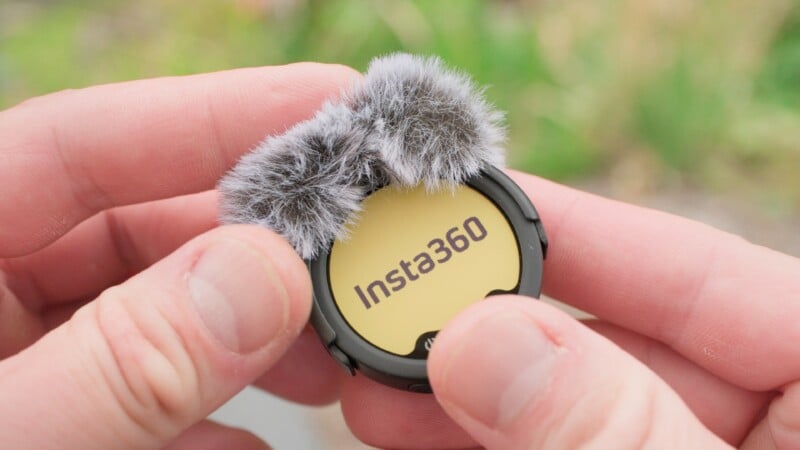
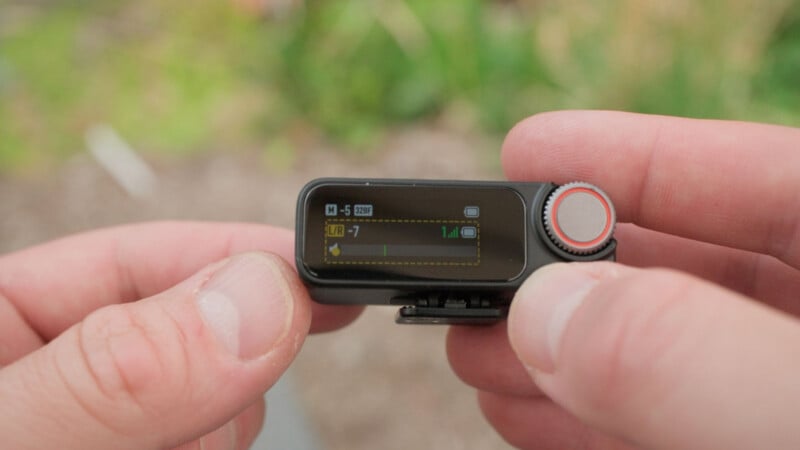
Insta360 Mic Pro — The biggest surprise of the test. Insta360 isn’t known for audio, but the highs are great, the mids stay open, the lows are there, and it includes noise reduction. The noise processing isn’t aggressive; you’ll still hear some wind bleed through, but I’ll take that compromise over a hit to overall quality. Sounds good in both modes, plus some extra features such as a customizable faceplate and key accessories.
Hollyland Lark Max 2 — The most accessories out of any of these: two transmitters, receiver, iPhone attachments, lavaliers, wireless monitoring earbuds. Audio is decent, but the highs roll off, which makes it sound a bit boxy, and switching on noise reduction is quite noticeable – you can hear it pumping in and out. One unique feature is that the noise reduction is adjustable by decibel amount. I only had time to test the standard 20dB setting, and I suspect dialing it back to 10dB would make it sound a bit more pleasant.
DJI Mic 3 — Good overall, with a similar slight dip in the highs, but the noise reduction is not too aggressive and still feels natural. It also runs dual band at 2.4 and 5GHz, which lets you scale to four transmitters and eight receivers at once. I haven’t found a practical scenario to test that in, but just know it’s there.
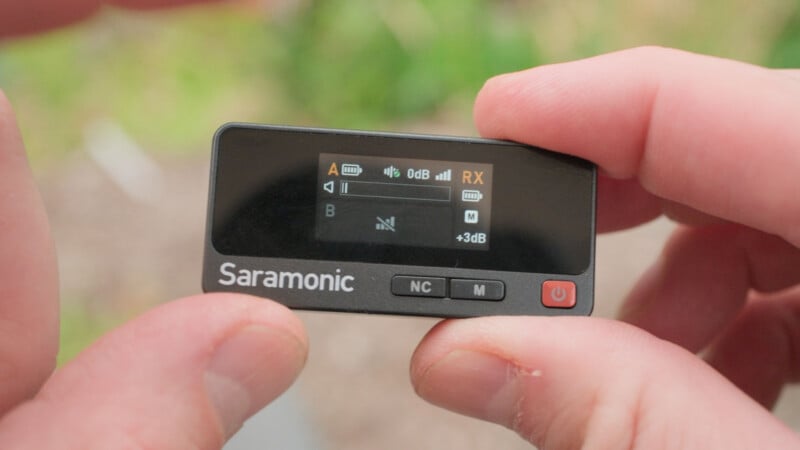
Saramonic Ultra – Good range, battery life, and decent sound profile. Saramonic excels with its optional lavalier capsules (not the transmitter unit), so it didn’t get to strut its stuff in this particular test. The Ultras are reliable, but the controls are somewhat finicky. A solid option, although the internal storage is on the low side.
Sennheiser Profile — Decent quality, but noticeably thin through the lows and mids. It reads crispy, and you’d want to rebuild some of that body in post. The charging body/case is the bulkiest out of any of them, but it doubles as a handheld mic when fully assembled, though the trend now is holding the small packs themselves, so I’m not sure if this feature is all that practical.
Budget Picks:
Saramonic Air — Impressive for how small it is. Solid, well-rounded quality and decent noise reduction from a tiny package. My (unexpected) top pick for the budget category.
Hollyland Lark M2S — Well-rounded audio, maybe slightly compressed sounding, and the noise reduction is noticeable when it kicks in. The range performance is right up there with the big players.
Rode Wireless Micro — The one surprise that wasn’t pleasant – very different from its bigger brother. Minimal features, and the audio sounds compressed both in frequency and in volume. In the video, you can hear it clamping down on louder moments, and there seems to be no way to disable that on the mic itself.
The Bottom Line
That’s a lot of units and a lot of specs, and no single one wins outright. Personally, I’m choosing audio quality over anything else – still love my RODE Wireless Pro, but the Insta360 Mic Pro genuinely impressed me on both features and sound quality. For budget-conscious, Saramonic Air felt like it had the best quality out of the three. Everything here is capable – the question is which set of tradeoffs fits your work and your budget.
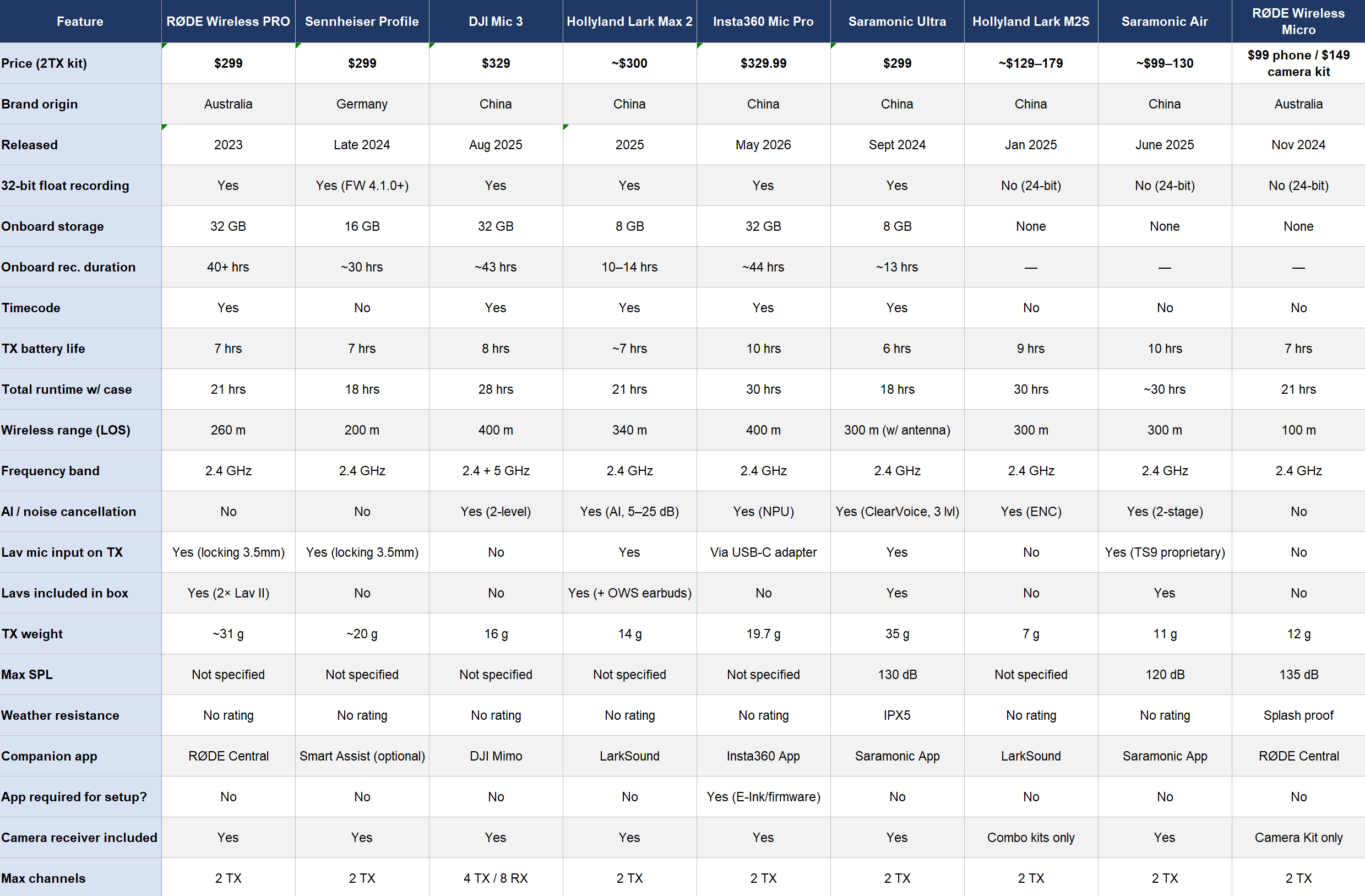
Here is a useful chart comparing all the specs of mics tested in this side-by-side:
Check out the video for the full recorded audio. Keep in mind, I normalized levels across the board but applied minimal compression or limiting, so what you hear is as close to the original as I could keep it. Headphones are strongly recommended.
Affiliate Disclosure PetaPixel articles may include affiliate links; we may earn a commission if you buy through one.