
Four Decades of Photography That Defined Iconic Fashion Brand Yves Saint Laurent
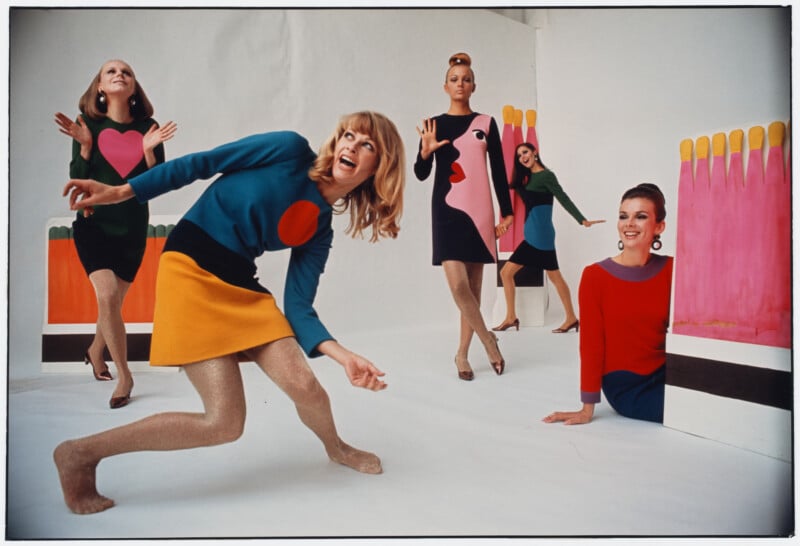
Four women in colorful, graphic mod dresses pose playfully in a white room with large, bright matchstick props in the background. Their poses and expressions are energetic and dynamic, evoking a 1960s fashion vibe.
Jean-Claude Sauer, Cocktail dresses known as “Homage to Pop Art,” Fall/Winter 1966 haute couture collection. Published in LIFE magazine, September 1966 © All rights reserved © Jean-Claude Sauer

A new exhibition explores how photography became central to the making of the famed fashion house Yves Saint Laurent over four decades.

The International Center of Photography’s (ICP) exhibition Yves Saint Laurent and Photography runs through September 28. The New York institution’s exhibition examines the close relationship Yves Saint Laurent forged between fashion and photography over forty years, showing how the medium served not only as a promotional tool but also as a creative influence that helped shape his legacy.
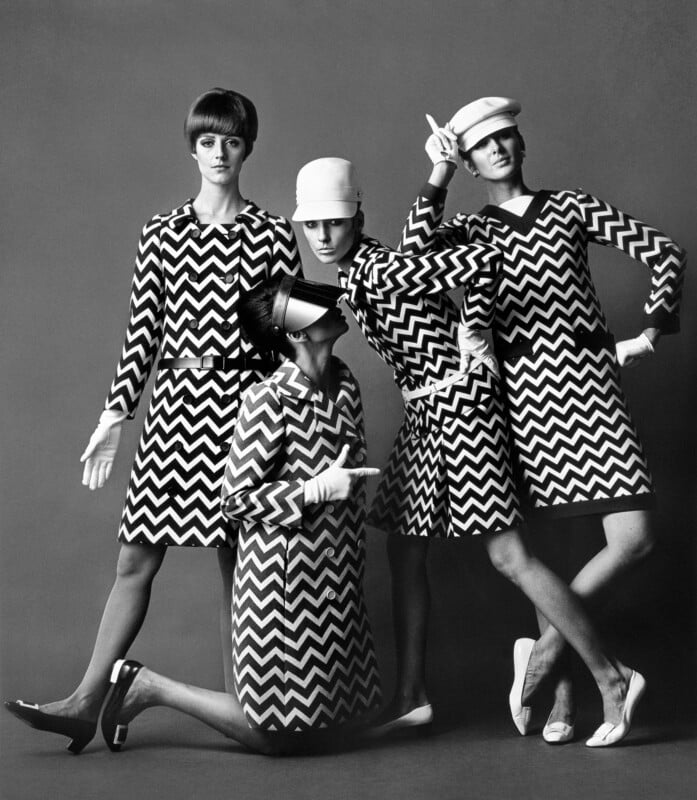
Four women pose in matching zigzag-patterned dresses and hats, striking playful, dramatic poses against a plain background in a black and white fashion photo.
James Moore, Models from the Spring/Summer 1966 haute couture collection. Published in Harper’s Bazaar, March 1966 © James Moore © Yves Saint Laurent
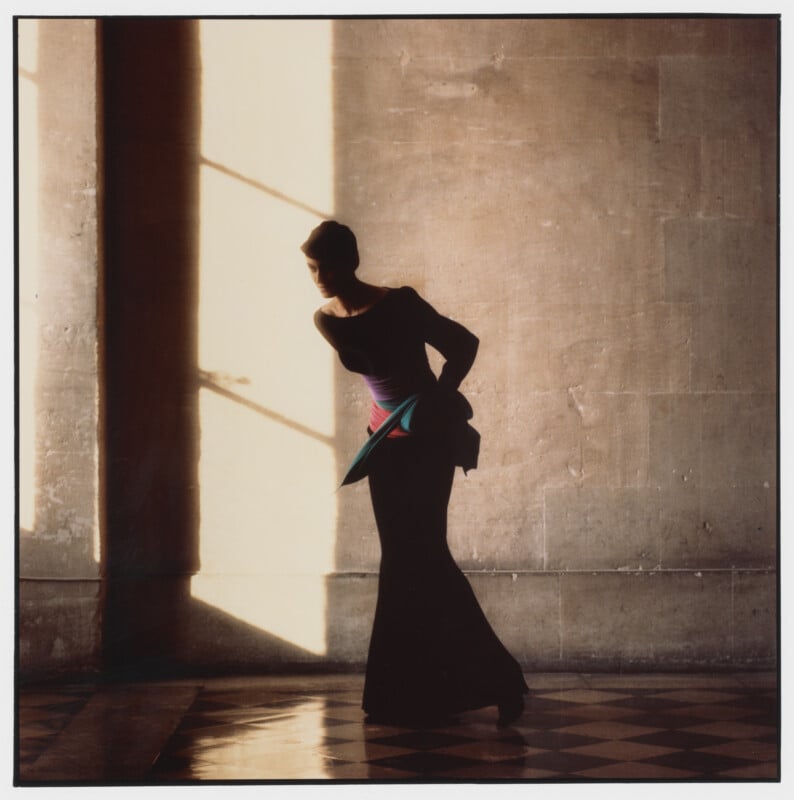
A fashionably dressed woman stands in profile against a sunlit wall, casting a shadow. She wears a long, dark gown with colorful accents and poses gracefully on a checkered floor.
Dominique Issermann, Evening dress from the Fall/Winter 1984 haute couture collection. Published in Vogue, November 1984 © Dominique Issermann © Yves Saint Laurent
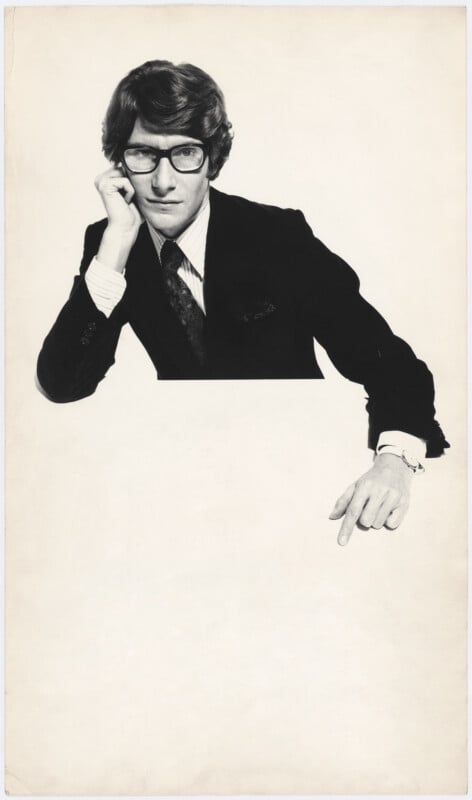
A man in a suit and glasses rests his head on one hand and points downward with the other, against a plain white background.
Harry Meerson, Yves Saint Laurent, 1966 © Harry Meerson

Organized in collaboration with the Musée Yves Saint Laurent Paris and the Fondation Pierre Bergé–Yves Saint Laurent, the exhibition brings together nearly 300 photographs and archival objects. It features work by photographers including Richard Avedon, Cecil Beaton, Annie Leibovitz, Helmut Newton, Gian Paolo Barbieri, and Irving Penn, alongside contact sheets, campaign materials, magazines, and personal images. Together, these materials highlight how Yves Saint Laurent helped establish a visual language that continues to shape how fashion is seen and understood today.
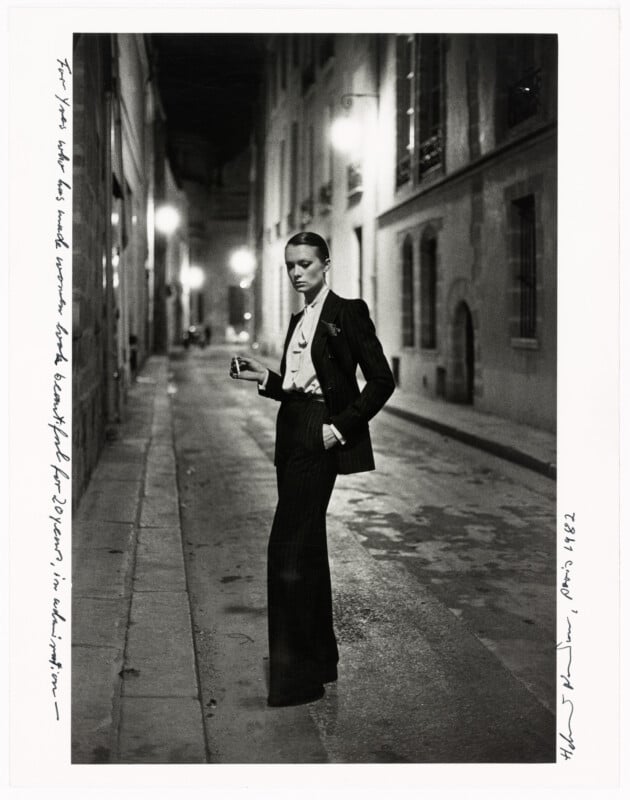
A person in a pinstripe suit and bow tie stands confidently in the middle of a dimly lit, empty city street at night, holding a cigarette. Handwritten notes frame the image on two edges.
Helmut Newton, Rue Aubriot, Pantsuit worn by Vibeke Knudsen, Fall/Winter 1975 haute couture collection. Published in Vogue Paris, September 1975 © Helmut Newton Foundation, courtesy Helmut Newton Foundation and Fondation Pierre Bergé – Yves Saint Laurent
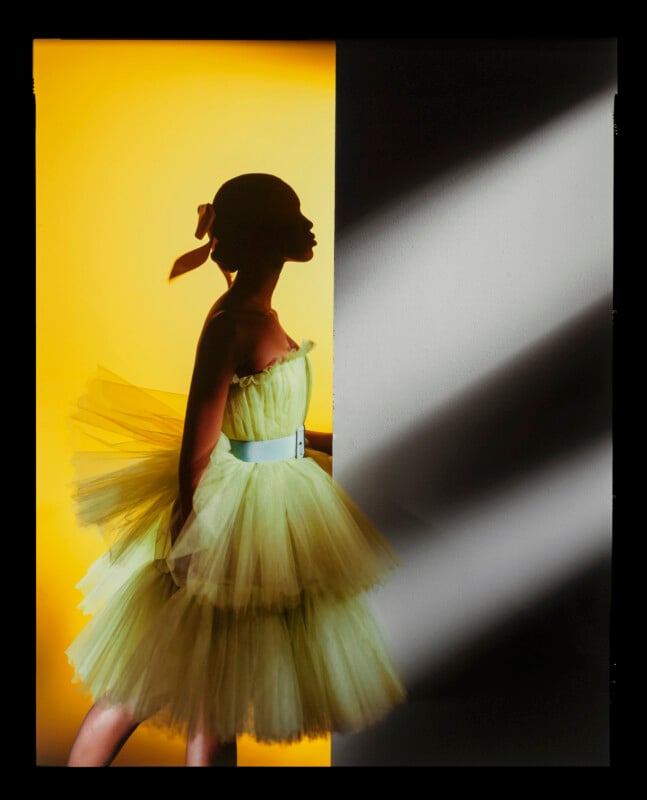
A person in a light green tulle dress and hair ribbon stands profile to a wall, illuminated by yellow light on one side and dramatic shadows on the other.
Gian Paolo Barbieri, Creations from the Spring/Summer 1988 SAINT LAURENT rive gauche collection worn by Christy Turlington and Naomi Campbell. Images used for the catalog of the collection © Gian Paolo Barbieri, Courtesy Fondazione Gian Paolo Barbieri © Yves Saint Laurent
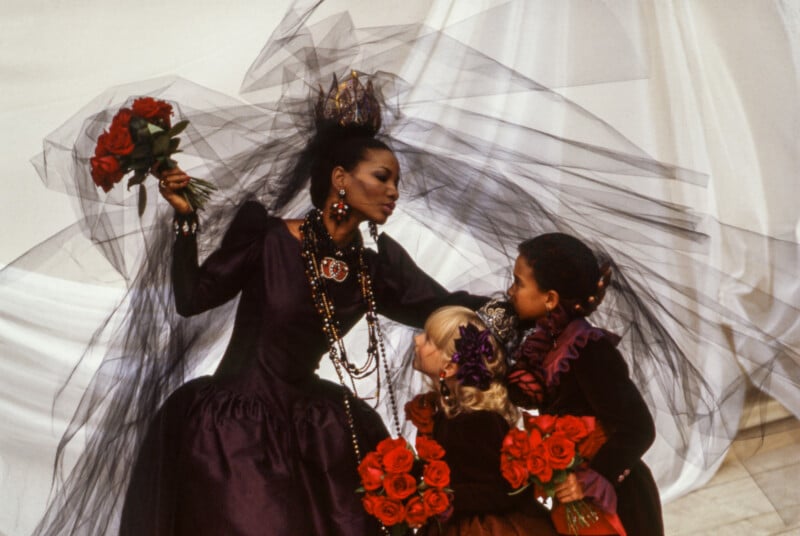
A woman in an elaborate dark gown and black veil holds roses while bending toward two children dressed in matching dark outfits, each holding bouquets of red roses, against a draped white background.
Arthur Elgort, Wedding dress worn by Mounia Orosemane, accompanied by a page girl and page boy, Fall/Winter 1981 haute couture collection. Published in Vogue Paris, September 1981 © Arthur Elgort © Yves Saint Laurent

Yves Saint Laurent himself maintained an active relationship with countless photographers, viewing the medium as a way to take risks in fashioning his identity and pushing the boundaries of what was deemed acceptable or relevant, particularly regarding gender roles and expectations.
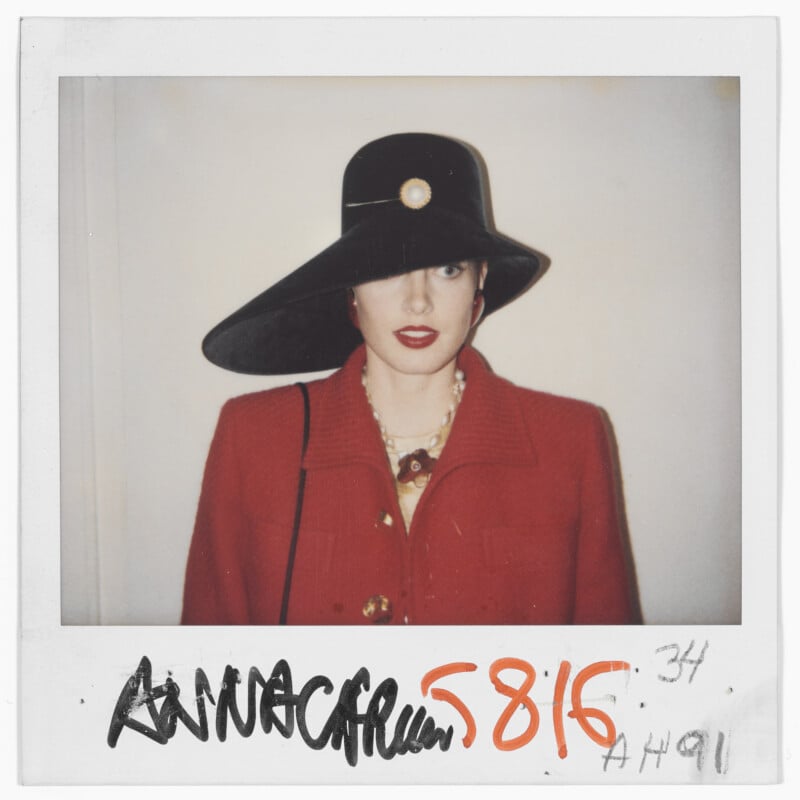
A woman in a red jacket and large black hat with a wide brim and pearl pin stands against a plain background, wearing bold red lipstick and a beaded necklace. Handwritten notes are on the photo border.
Tailored suit worn by Anna Karin, Haute Couture Autumn/Winter 1991 collection, 5 Avenue Marceau, Paris, July 1991. Polaroid by fashion house staff © All rights reserved © Yves Saint Laurent
A person wearing a vibrant, multicolored patterned top and a bright orange turban stands against a plain background, adjusting the turban. The photo has handwritten numbers and notes at the bottom.
Ensemble worn by Edia Vairelli, Haute Couture Spring/Summer 1982 collection, 5 Avenue Marceau, Paris, January 1982. Polaroid by fashion house staff © All rights reserved © Yves Saint Laurent

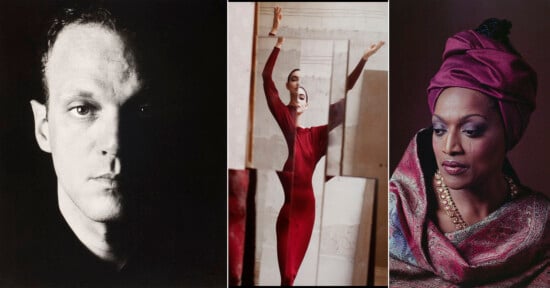
The ICPs exhibition is divided into two sections. The first brings together portraits, fashion images, and related works by photographers working in different styles, tracing the evolution of Yves Saint Laurent’s designs and his public image over time. It includes Irving Penn’s 1957 portrait of Yves Saint Laurent, Patrick Demarchelier’s 2004 portrait, William Klein’s experimental images from 1962, and Bettina Rheims’ backstage photographs from runway shows in the 1980s. Each image reflects a distinct moment in the designer’s career and the broader cultural context of the time.

The second section of the exhibit revisits the same period through more than 200 archival items from the Musée Yves Saint Laurent Paris, including contact sheets, advertising notebooks, campaign catalogs, press clippings, magazines, and personal photographs. From widely recognized images to lesser-known works, these materials document how photography contributed to Yves Saint Laurent’s international reputation and left a lasting mark on visual culture.


Image credits: All photos courtesy of the International Center of Photography.

Discussion