Thypoch Enters Its Autofocus Era with the Voyager 24–50mm f/2.8
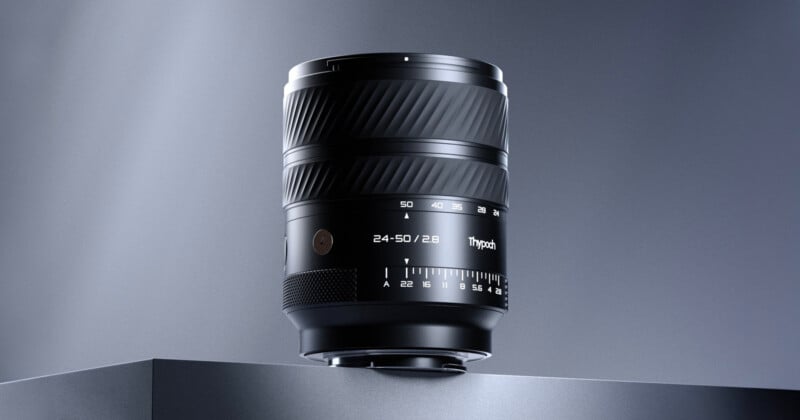
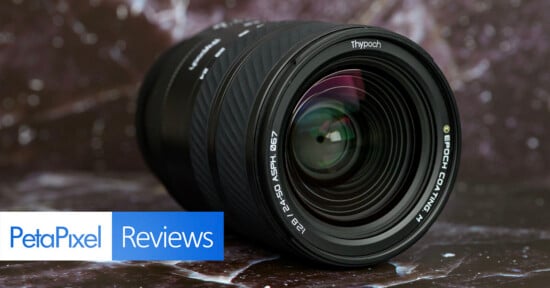
Shenzhen-based optics maker Thypoch has officially entered the autofocus mirrorless market with the launch of the Voyager 24–50mm f/2.8, a full-frame constant aperture zoom designed for Sony E-mount systems.
Positioned as both a technical milestone and a design statement, Thypoch describes the Voyager as its first autofocus lens and the first full-frame AF zoom developed by a Chinese optical brand. The lens is built around a simple idea: replace a traditional mid-range zoom with a single internal zoom optic that behaves more like a set of primes.
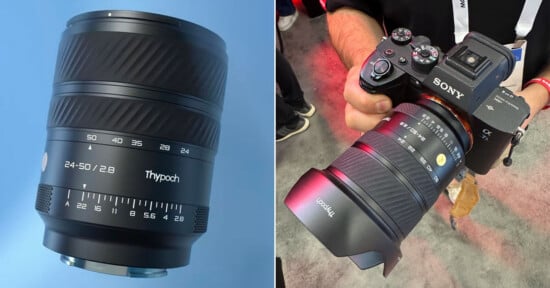
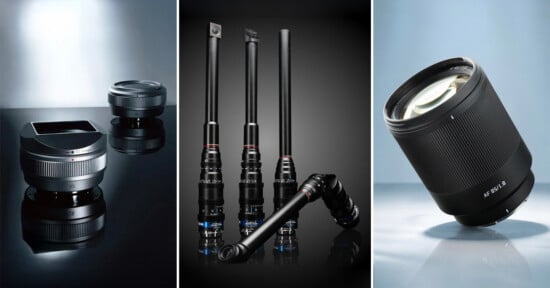
PetaPixel had a first look at the Voyager 24–50mm f/2.8 at NAB 2026, noting fast autofocus response and a solid, compact build. Thypoch has also indicated that this launch marks the beginning of a broader autofocus lineup of six lenses. Still, the company didn’t fully lift the curtain on the lens at the time, but that changes today.
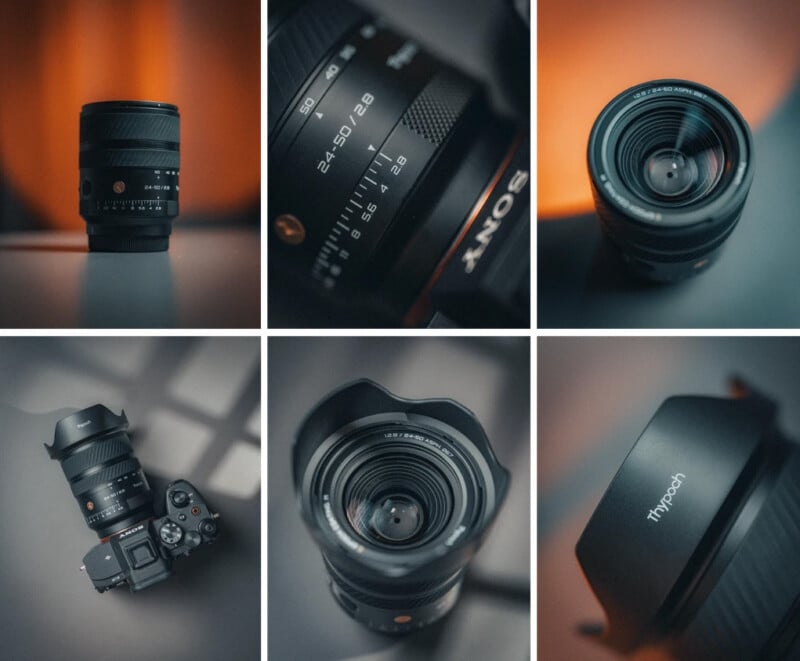
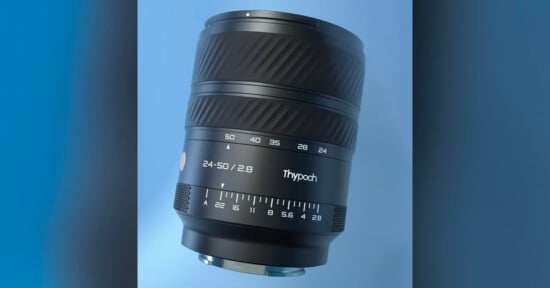
The Voyager centers itself on the most frequently used working focal lengths in everyday photography: 24mm, 35mm, and 50mm. Rather than chasing reach, Thypoch’s focus is continuity. The intent is a lens that can stay on the camera throughout an entire shoot, shifting perspectives without interrupting workflow or requiring lens changes.
That idea of “three primes in one” defines the Voyager’s design language, prioritizing flexibility without sacrificing portability.
Internal Zoom Design and Constant Exposure Control
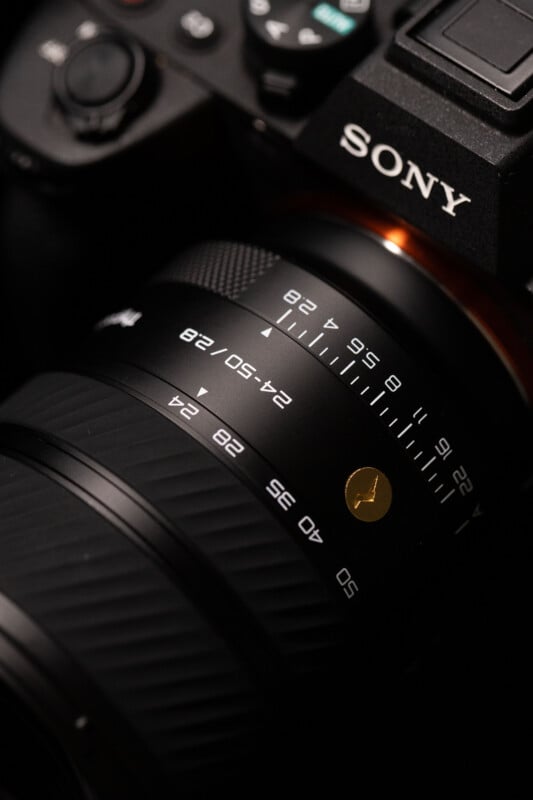
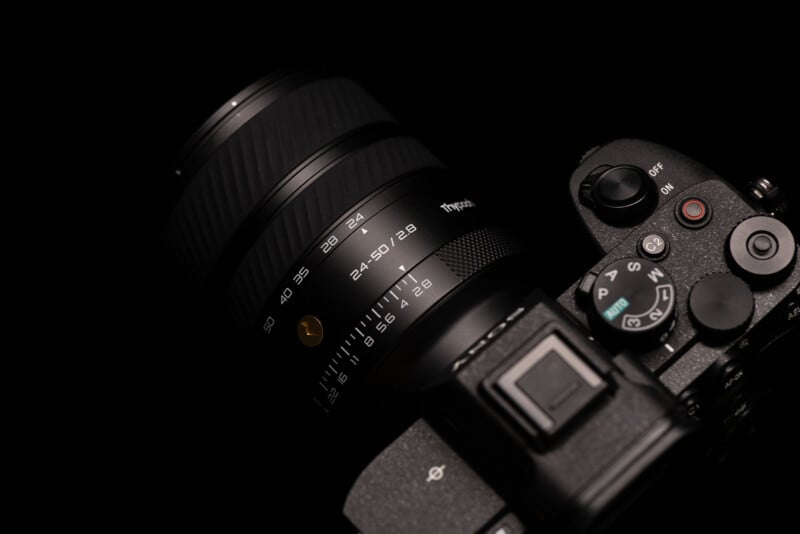
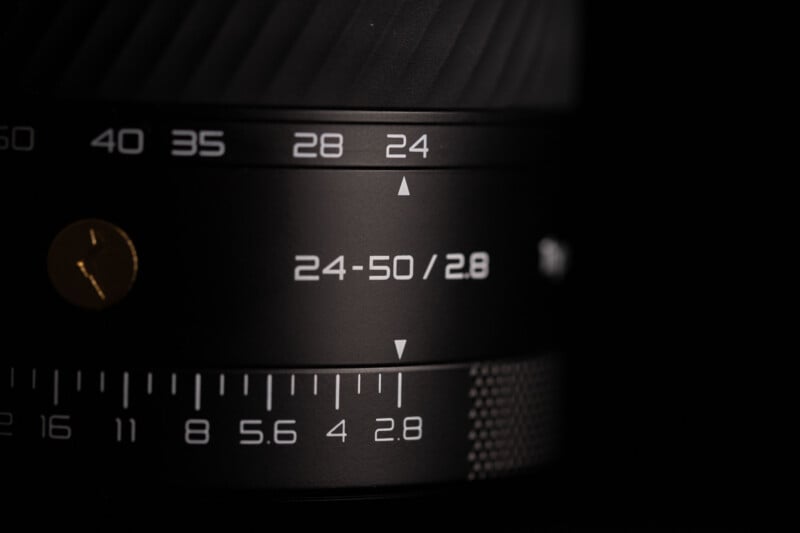
A defining mechanical choice is the internal zoom system. The barrel remains physically fixed through the entire focal range, with no extension or retraction during operation.
That stability improves balance on handheld rigs and stabilizers, where even small shifts in lens length can affect framing. It also removes the external movement points that typically introduce dust ingress and long-term wear in conventional zoom designs.
Paired with this is a constant f/2.8 aperture, which remains available across the full zoom range. Exposure stays consistent while zooming, making transitions between focal lengths seamless in both stills and video workflows.
Optical Construction Focused on Controlled Character
Inside the Voyager is a 16-element, 13-group optical design that blends aspherical, extra-low dispersion, and high refractive index elements.
The goal is consistent correction across the zoom range without stripping away character. Sharpness is maintained across the frame, while out-of-focus rendering is shaped by a 10-blade diaphragm that preserves smooth transitions and rounded highlights.
Rather than aiming for clinical rendering, Thypoch appears to be targeting controlled character, an image style that balances clarity with depth and dimension.


Autofocus Built for Hybrid Workflows
As Thypoch’s first autofocus lens, the Voyager introduces a system designed for modern hybrid stills and video work.
The autofocus motor is tuned for quiet operation and responsive subject tracking, with support for eye autofocus and continuous AF on Sony Alpha bodies. Native E-mount integration ensures full compatibility with in-camera systems, including AF-C tracking and fast switching between autofocus and manual control.
Rather than treating autofocus as a feature layer, Thypoch integrates it into the lens’s core design philosophy: speed, discretion, and reliability in unpredictable shooting environments.


Built for Field Conditions
Weather sealing is integrated throughout the lens, including the mount, control rings, and front element. Combined with the internal zoom design, this reduces potential points of ingress and supports consistent use in unpredictable environments.
The Voyager is designed for field work rather than cautious handling, whether in humidity, rain, or dusty conditions, especially when paired with sealed Sony Alpha bodies.
Cinema-Inspired Design Principles
Although designed for stills and hybrid shooting, the Voyager clearly borrows from cinema zoom design principles.
Constant aperture behavior and internal zoom construction are long-established standards in cine optics, where maintaining balance and exposure consistency is essential during focal transitions. Thypoch adapts these principles for autofocus mirrorless use, merging mechanical stability with electronic focusing performance.
The result is a hybrid tool that aims to bring cine-like consistency into a stills-first workflow.

Key Specifications
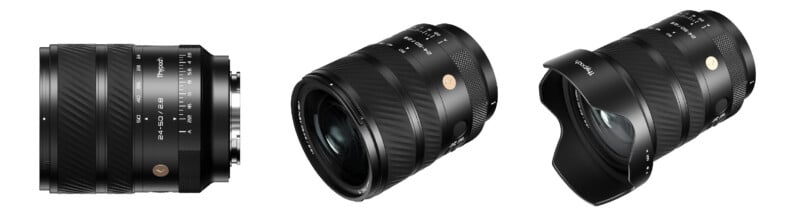
The Voyager 24–50mm f/2.8 is a full-frame Sony E-mount zoom with a constant f/2.8 aperture across its entire range. It uses a 16-element, 13-group optical design that includes aspherical, extra-low dispersion, and high refractive index elements, supported by a 10-blade diaphragm for smoother out-of-focus rendering.
It focuses down to 0.3 meters (0.98 feet) throughout the zoom range, with a maximum magnification of 0.216x. The lens accepts 67mm filters and weighs 432 grams (0.95 pounds).
Physically, it measures 92.88 millimeters (3.66 inches) in length and 73.6 millimeters (2.90 inches) in diameter, with an internal zoom mechanism that keeps the barrel fixed during operation. It includes dust and moisture resistance for field use.
Pricing and Availability
The Thypoch Voyager 24–50mm f/2.8 launches at $619 for an introductory period from May 14 to May 31, 2026, before moving to $649 as its standard pricing.
Image creditsThypoch
Affiliate Disclosure PetaPixel articles may include affiliate links; we may earn a commission if you buy through one.