How to Discover Photography With Limited or No Budget
Photography can be an expensive pastime. However, you can launch yourself into photography without breaking the bank.
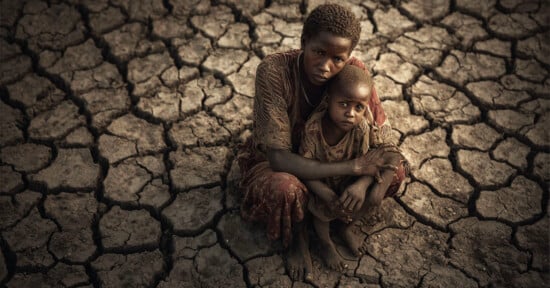
Imagine having your burning desire to take photos, but not having access to a camera. That is reality for many potentially great photographers. According to various data sources, including the Legal Services Corporation and the Census Bureau (census.gov), between 10.6% and 11.4% of the US population lives below the federal poverty line, which is about 35–37 million Americans. Using the broader 125% federal poverty level threshold, about 50 million Americans live in low-income households.
Coupled with that is the ongoing cost-of-living crisis, where 70% of Americans find living unaffordable, and non-essentials suffer.
Photography is, of course, a non-essential. So, how can any of the one in five children growing up in a low-income household become enthused by something unessential and unaffordable, grow to become the next photographic great? Is photography becoming elitist as a result? Fortunately, it can be accessible to those on a restricted budget.
Finding Free Interchangeable Lens Cameras (ILCs)

If you just want to solely point and shoot and don’t need control or image quality, there’s no reason you cannot use a smartphone. Even budget phones take reasonable photos these days, and lots of people have old but usable phones sitting in drawers. Nevertheless, most people who want to pursue photography require the versatility of an interchangeable lens camera. However, they can seem prohibitively expensive.
Therefore, the obvious starting point is finding used cameras. A host of second-hand sellers sell used cameras at significantly reduced prices. There are many good retailers, such as B&H and KEH to name a couple, that will sell you used gear with a warranty. But that’s not the only route.
There are also private sellers. However, these come with much greater risks. Online marketplaces are plagued with stolen goods. As soon as you post a photo online, the camera and lens’s serial numbers may also be shared, and stolen gear is recovered this way. Online databases like Stolen Camera Finder and Lens Tag help law enforcement agencies and insurance companies track stolen gear.
A Lesson From History
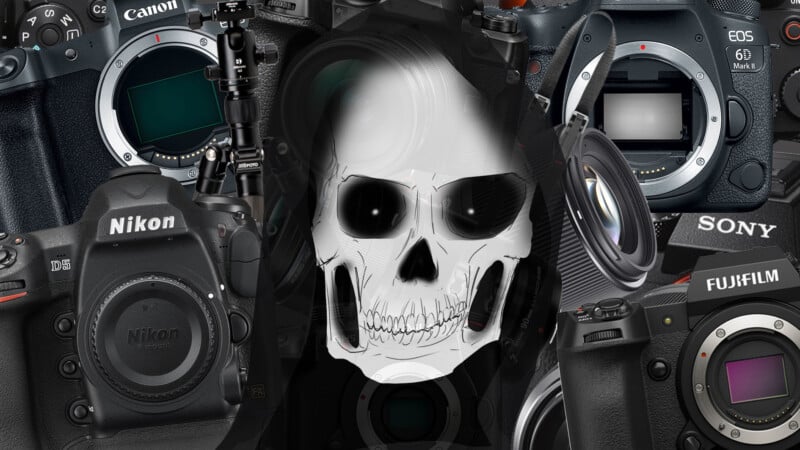
There is another way to get a camera, for free. To understand how that might be possible, take a look at the history of digital photography.
From 2006 through 2012, DSLR cameras sales continually increased. In 2012, per CIPA, there were over 20 million interchangeable lens digital cameras shipped by Japanese manufacturers, 16.2 million of which were DSLRs. There were nearly 100 million total digital cameras shipped that year, the vast majority of which were compact cameras with built-in lenses.
In the next few years, smartphones essentially decimated the compact camera market, but interchangeable lens camera sales remained quite high. The DSLR was on decline, though. By 2018, when Canon and Nikon finally joined Sony in the full-frame mirrorless camera space, DSLR shipments had dipped to 6.6 million units, while mirrorless camera shipments had increased to 4.1 million. By 2020, mirrorless cameras had finally overtaken DSLR in terms of total shipments, and the mirrorless lead has only grown each year since.
Even with the general downturn in the photo industry over the past decade-plus, there have still been hundreds of millions digital interchangeable lens cameras sold in the 21st century. Many of these are still operational, perhaps sitting on a shelf somewhere. There is a good chance someone in your family or a friend has an unused camera they can pass on to you. Ask them. You may be surprised to find that someone in your life has a camera they will happily pass forward.
Old Cameras are Still Good Cameras
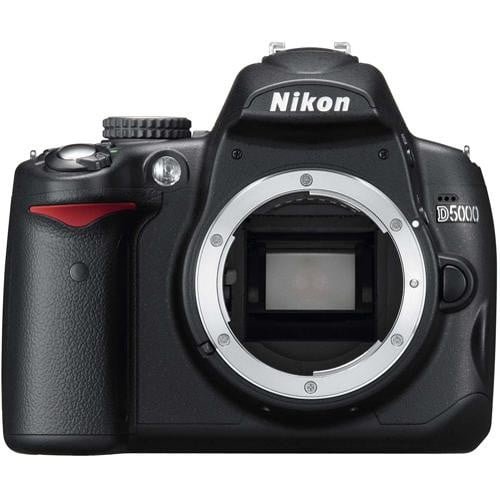
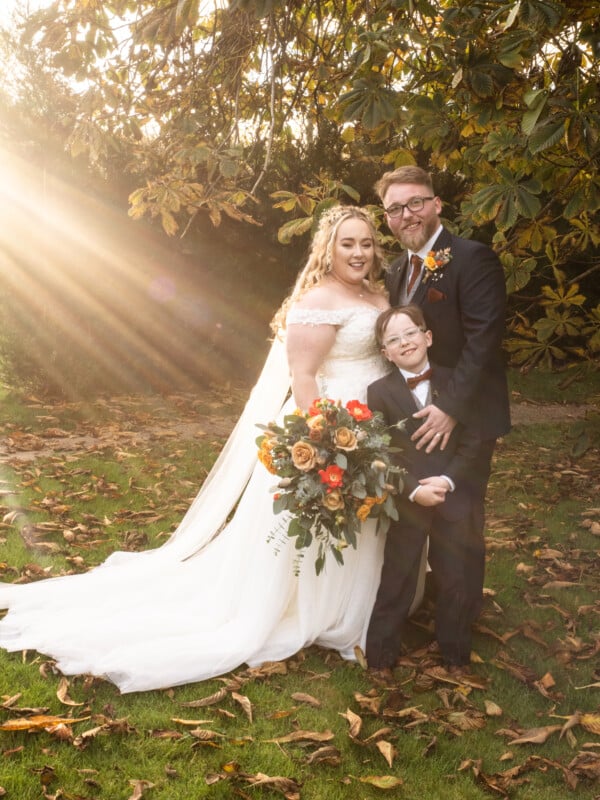
If you look at Flickr.com at photos taken 20 years ago, there are outstanding images that stand up to today’s standards. You don’t have the very latest gear to take photographs.
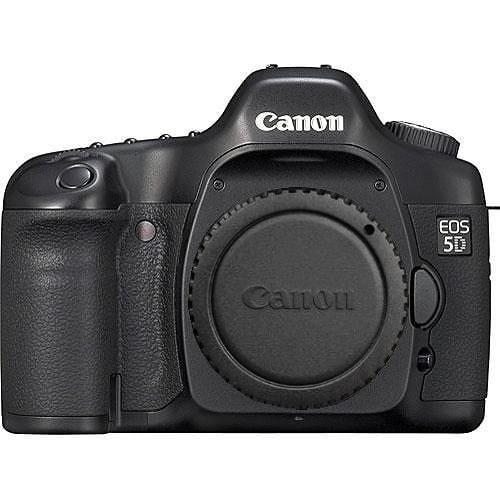
Furthermore, although DSLR sales have crashed and are on the verge of obsolescence, plenty of people still use them to take great pictures. You are more likely to find a disused DSLR stored away than a mirrorless camera, but single-lens reflex cameras have been around since 1884, and have produced many of the finest photos history has seen. There is no reason why they cannot continue to do so.
Do You Own an Old Camera You Don’t Use?
Perhaps you are reading this and have an old, unused camera sitting in a closet and slowly deteriorating.
If, like me, you read biographies of famous photographers or listen to them being interviewed, you will often hear them say they became fascinated by photography when they were given an old camera. Ansel Adams was given a Kodak Brownie by his father, just as Annie Leibovitz and Margaret Bourke-White were given theirs by their fathers. Ansel Adam’s uncle gifted him his first camera. It was a friend who lent Robert Capa a Leica. Meanwhile, Julia Margaret-Cameron was given her camera by her daughter, Sebastião Salgado by his wife, and Diane Arbus by her husband.
So, if you have an old camera kicking about that you don’t use, consider passing it on to someone. You might be inspiring and empowering the next photographic great.
Pre-Digital Lenses
If you have a fixed budget for a camera and lens, then it is worth spending more on the lens than the camera body. Good-quality lenses make a far greater difference to image quality than cameras.
Lens technology has changed over the years, and modern glass is sharper than early digital lenses. That doesn’t mean all older lenses were bad, but many consumer-end models don’t meet today’s standards. Nevertheless, you can pick up some fabulous older professional lenses for a song.
Digital lenses must be sharper than the glass made for film cameras. But those old lenses can have a magical feel. Both film cameras and lenses can often be found in junk shops, yard sales, and online auctions; I picked up a fabulous old camera and lens for about $20. Adaptors to add film lenses to digital cameras are cheap to come by.
If you intend to use film lenses for artistic reasons, consider a digital camera with a larger viewfinder. Although most modern mirrorless cameras are better now, many, but not all, older DSLRs and small viewfinders made manual focusing difficult.
Memory Cards
For what they are made from, memory cards are expensive. Nevertheless, there are cheap SD cards on online marketplaces. Their read and write speeds might not be that quick, but as long as you are not intending to fire off continuous shots at 120 frames per second, they are adequate.
Software
There are plenty of free photo-processing programs. Darktable has been around for many years and is excellent for sorting your photos and developing raw images. Similarly, although the main website has closed, Lightzone is also available as a free open-source raw developer. It continues to focus on non-destructive editing and RAW file processing. It includes ZoneMapper, designed for precise control, as the zone system developed by Ansel Adams and Fred Archer.
Gimp is a free photo editor that many photography students cut their editing teeth on. All those are available on GitHub and for Windows, macOS, and Linux.
Affinity is also free and is available for macOS using Apple Silicon (M Series) or Intel processors. Supported versions include macOS Catalina (10.15) and later. It also works on iPadOS, plus Windows 10 (May 2020 Update, build 19041 or later) and Windows 11. It supports Intel, AMD, and ARM64 processors.
ON1 also provides its Editor for free. It works with Windows 11 and macOS.
Another great free editor is from getpaint.net, which looks and feels like Adobe Photoshop Elements but costs nothing.

Computers
For those who use old computers that are either slowing down or, in theory, incompatible with Windows 11, there are options available to give them new life.
You can install Windows 11 on a computer even if the Windows Updater says it is not possible. There is a program called Flyby 11 that I used to update an old laptop. Rufus and Ventoy are alternatives. However, Windows 11 seems to use more resources than Windows 10, and if your machine was slow before, it’s not going to get faster after the update.
There is a way of making an old, slow machine faster. Installing a Linux operating system, such as Ubuntu, can breathe new life into it. However, not all apps will work on that operating system, unless you use a clunky emulator. But for someone on a limited budget who plans to use the Linux-compatible software, it is a good option.
Just like those old cameras, there will be a lot of redundant laptops kicking around. I’ve loaded Ubuntu onto old machines and given them to young people who haven’t got access to a computer.
If you have an old computer kicking around, please wipe the hard drive, install Ubuntu, and pass it on.
Lighting
Flashes are expensive. Also, you don’t want to put an old film camera flash on a digital camera because it will burn out the electronics. However, you can mount an old flash on the cheap, wireless receivers, as they withstand higher voltages.
You can buy a set of three receivers and one trigger for around $40, and you will find old camera flashes for $5-10 each at yard sales and junk shops.
Domestic LED lights with variable colours are also available very cheaply online, and so are powerful torches. These offer huge creative options.

Shooting during the blue hour, I used a cheap but powerful LED torch to bring out the details in the foreground rocks.
Studio Alternatives
Photographers like either bright and shiny new things or old, grungy stuff.
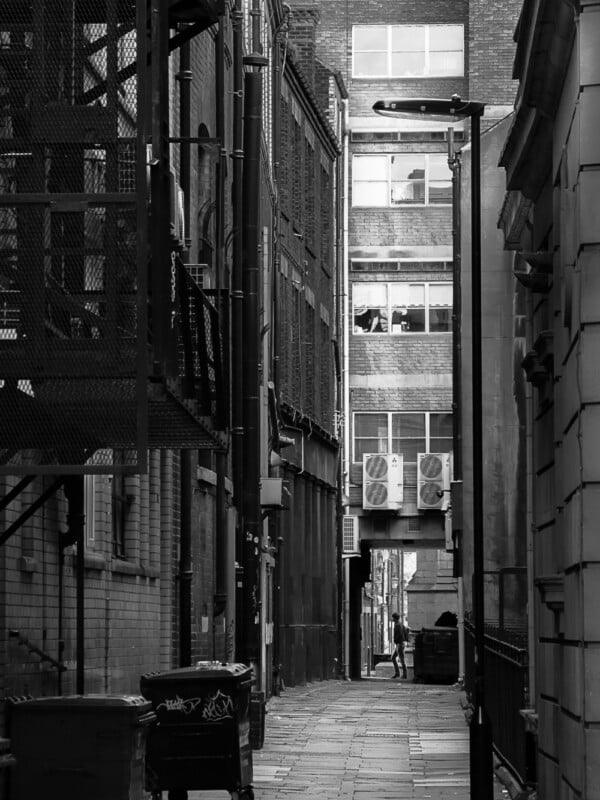
Unless you have free access to a studio or a newly built environment, go for the latter. Backstreets, derelict buildings, unused industrial sites, forest, and ghost towns all make excellent backdrops; there are around 4,500 documented ghost towns in the USA, with historians reckoning that the real number is nearer 20,000.
Moreover, the best street photography often occurs in settings that are not pristine. Also, what may seem commonplace and easily accessible for you will be extraordinary and unusual for someone else.
Training
Although it is not the way everyone can learn, the internet offers a wealth of information on photography. Enthusiastic photographers give up their time with little or no reward to provide you with amazing insights in videos, blog posts, and podcasts. PetaPixel itself has a wealth of knowledge to share, too, of course.
But the best way to learn is to go out with a camera and take pictures. Once you have the gear, pressing the shutter button costs little.
In Conclusion
Great photography doesn’t come from having expensive equipment. It comes from the photographer’s creative eye, and anyone can learn it.
Moreover, having older equipment with limitations can teach you far better camera skills than having an endless budget and the best equipment. For example, photographing a bird in flight requires much more skill with a manual-focus lens than with a camera with AI subject detection.
Did someone inspire you by giving you a camera? Have you given a camera to someone who has gone on to become a successful photographer? Do you work with older equipment and still get great shots? Do you have other ways that people coming into photography with a small budget will find useful? Please share your thoughts and words of encouragement to new photographers in the comments.
Affiliate Disclosure PetaPixel articles may include affiliate links; we may earn a commission if you buy through one.