
GoPro Mission 1 Pro: 8Kp60 Video, 50MP Photos, 10-Bit Log, 5+ Hour Battery
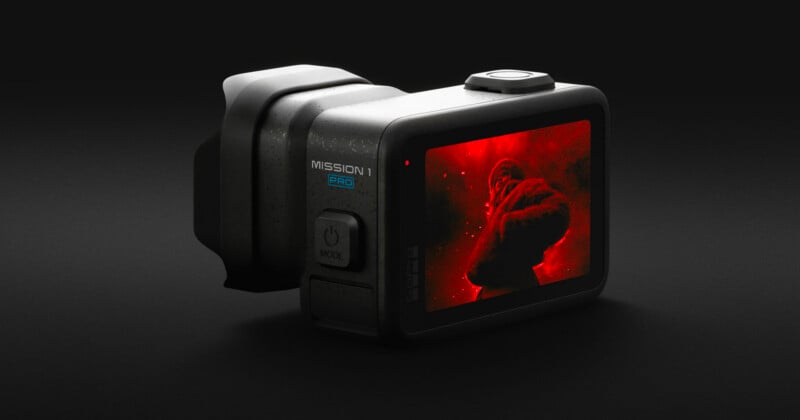
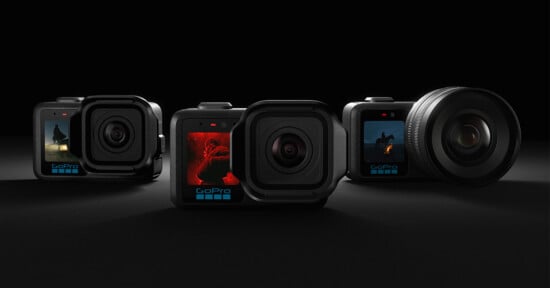
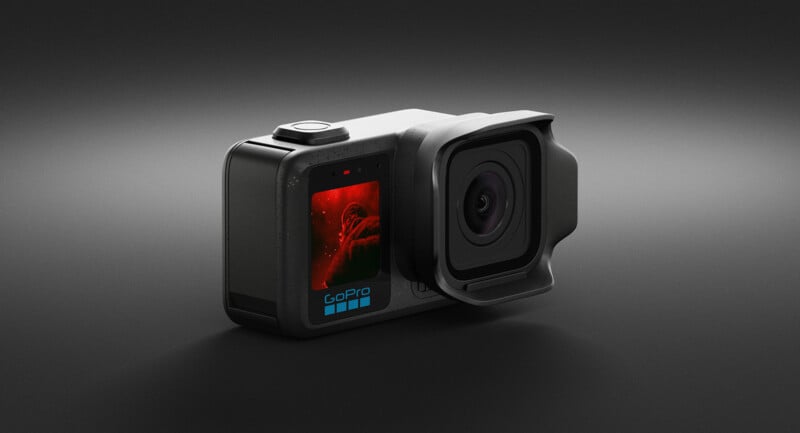
GoPro has announced the Mission 1 series of cameras. Fully announced today is the Mission 1 Pro, a high-end compact camera with a Type 1 sensor, up to 8Kp60 video capture (along with 8K Open Gate), and 50 megapixel photo capability.
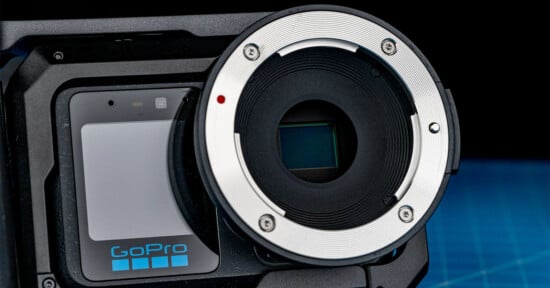
Coming later this year is the Mission 1 ILS, which replaces the fixed lens with a Micro Four Thirds mount. More details on that camera are expected closer to its announcement date, which is scheduled for sometime in Q3 2026.
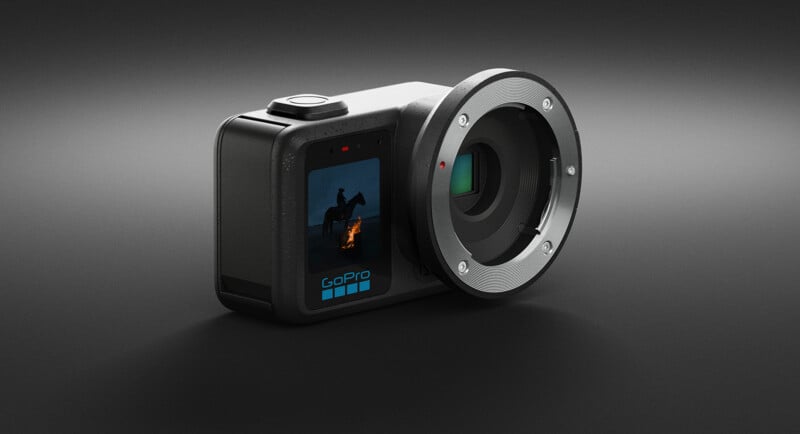
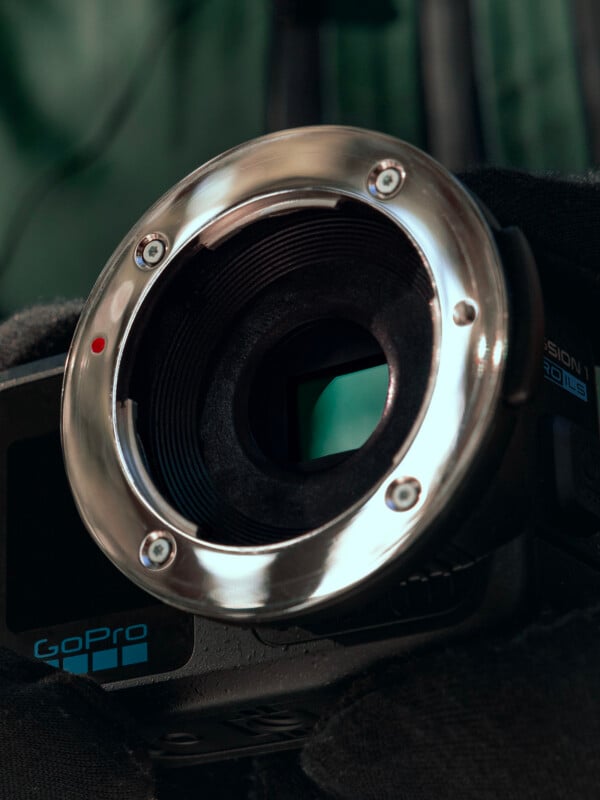
Both cameras promise high-end capabilities and very likely aim to push the GoPro up-market and away from the DJI Osmo and Insta360 end of the market, where competing has become more difficult.
The Mission 1 Pro
GoPro’s highly-touted GP3 processor is at the heart of the Mission 1 series. The company says that thanks to its capabilities and combined with a new 4:3 Type 1 sensor, the GoPro Mission 1 offers 8K open gate capture, better thermal management, superior low-light capability, and up to 960 frames per second slow motion.
Starting with the sensor, GoPro says the Mission 1 series features a sensor that is 25.4% larger than the sensor in the DJI Osmo Action 6 and 43.8% larger than the one found in the Insta360 Ace Pro 2. GoPro also says that at 8K resolution, the competition hovers around 1.2 μm while its sensor delivers a size of 1.6 μm, which the company claims results in 77% more light gathered per pixel. At 4K resolution, GoPro says the competition sits at around 2.4 μm while the Mission 1 series is at 3.2 μm.
GoPro’s 8K Open Gate capture is in a 4:3 aspect ratio (7,680 x 5760 pixels) at up to 30 frames per second and a 16:9 aspect ratio at up to 60 frames per second. The Mission 1 also features a new high bit rate mode for the best image quality possible at up to 240 Mbps. The Mission 1 can also shoot in GP-Log2, which is a 10-bit log profile.
The company says that the GoPro Mission 1 Pro features professional-level image-tuning controls, including real-time readouts of white balance, EV, ISO, and shutter values. It also offers HLG HDR capture capability, the aforementioned Log capture (with included LUTs), and support for timecode sync.
The Mission 1 Pro is equipped with four microphones but also supports Bluetooth 5.3 connectivity as well as the ability to connect a microphone physically via USB-C.
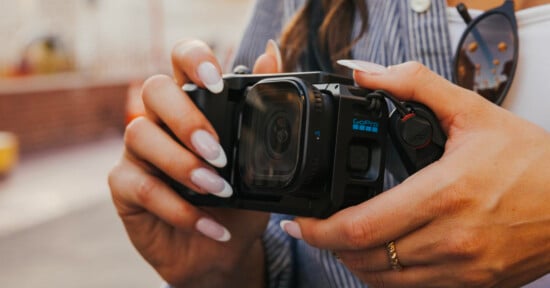
Physically, GoPro designed the Mission 1 Pro to have native waterproofing up to 66 feet (and up to 196 feet deep with the dive case), a removable lens hood, and a hydrophobic front element coating, raised buttons to be easier to press even when wearing gloves, and a larger 2.59-inch OLED rear screen paired with the 1.4-inch front screen.
The Mission 1 Pro continues to use a microSD card.
Battery Life
Battery life varies depending on resolution and frame rate, with the highest five-hour life coming when recording in 16:9 1080p Full HD in 24, 25, or 30p. GoPro internal testing shows that this maximum record time can be reached regardless of air flow. But overall, GoPro says that the new Enduro 2 battery (which has 13% higher capacity than the Enduro 2 battery) in the Mission 1 Pro, combined with the GP3 processor, has resulted in overall longer-lasting record times across the board.
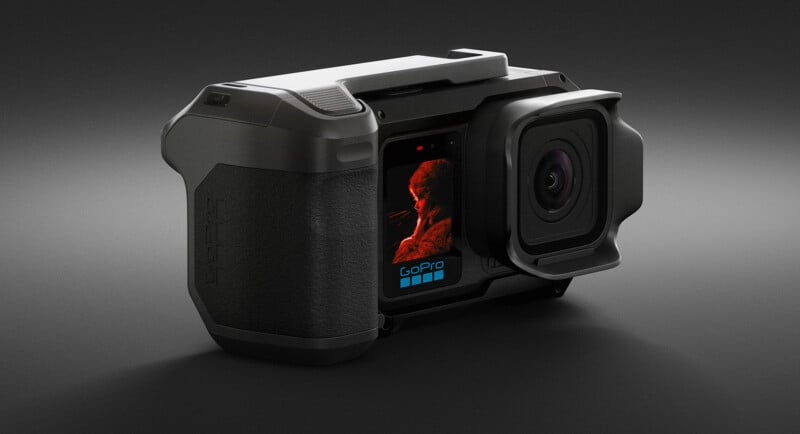
Shooting in 4:3 aspect ratio in 4K, that dips a bit to 188 minutes in those standard frame rates, but it is again unaffected by airflow. GoPro rates the 120 frames per second 4K capture mode at 101 minutes. 4K at 240 frames per second will see a difference depending on air flow: with proper air flow, GoPro rates the Mission 1 Pro to last 74 minutes, while a position with no air flow will result in just 35 minutes of capture before the camera overheats.
In 8K 4:3 open gate, GoPro rates the Mission 1 Pro for 96 minutes of continuous recording in standard frame rates, regardless of the camera’s position. At 8Kp60 (which is a 16:9 aspect ratio), the camera will shoot for 74 minutes with proper air flow and 37 minutes without.
The Mission 1 Pro features several intelligent capture modes, including subject tracking (which keeps a subject centered), Dive (which tunes video stabilization and settings to best capture underwater footage), and Low Light (which enhances brightness while reducing noise). The camera also has video, slow motion, photo, timelapse, sport POV, Vlog, Open Gate, Endurance, and Looping modes available.
Photography
On the photo side, the GP3 processor powers the Mission 1 Pro’s 50-megapixel photo capability, and photographers can also get full manual control over ISO, shutter speed, exposure compensation, and white balance. GoPro also offers 10-bit color HLG HDR capture.
Below are a few sample photos — many of which have been featured in marketing lead-up to this announcement — captured with the Mission 1 Pro, provided by GoPro. Please click on the photos to view them at their full resolution.








Pricing and Availability
The Mission 1 Pro is scheduled to be available to pre-order starting May 21, and it will be widely available on May 28. Pricing, however, was not revealed at the time of publication due to the ongoing issues with flash memory production. The GoPro Mission 1 doesn’t have built-in storage, but it does require RAM. Expect final pricing to be announced closer to the pre-order date.
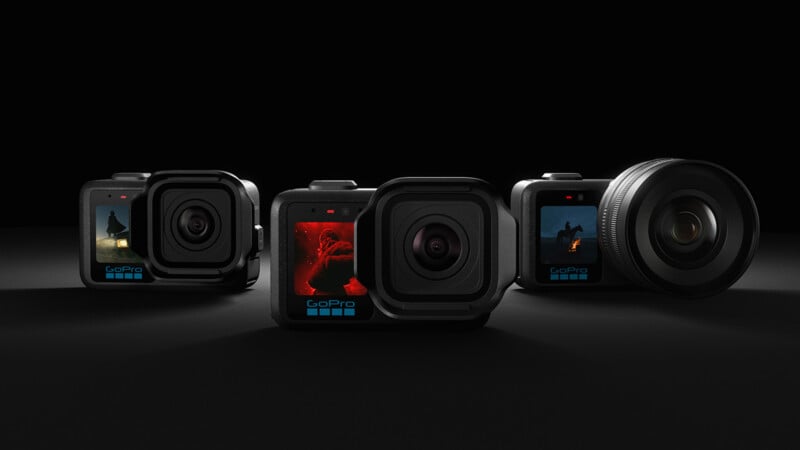
In addition to the Mission 1 Pro and the Mission 1 Pro ILS, GoPro also announced a basic Mission 1 model, which shares many of the same features as the Mission 1 Pro, but with 8Kp30 Video Capture, 4Kp120 Open Gate, and a maximum 4Kp120 and 1080p240 slow motion frame rates.
Image creditsGoPro
Affiliate Disclosure PetaPixel articles may include affiliate links; we may earn a commission if you buy through one.