Nikon Explains How It Makes Lenses Smaller While Somehow Making Them Better
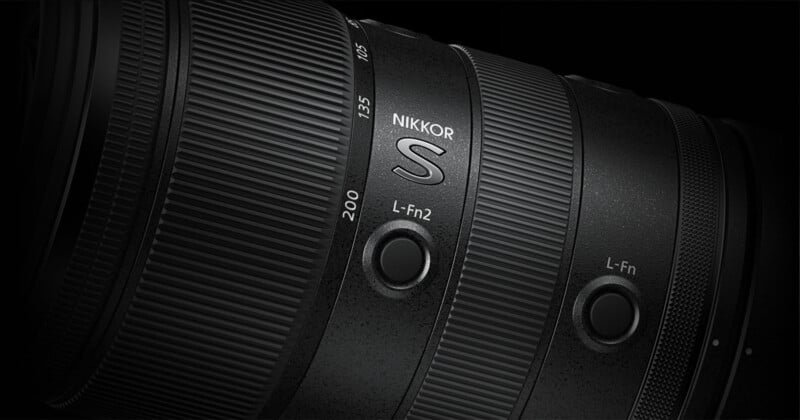
Nikon’s original Nikkor Z 24-70mm f/2.8 S and Nikkor Z 70-200mm f/2.8 VR S lenses were already superb when they were released in 2019 and 2020, delivering great optical performance and dependable autofocus inside a well-designed chassis. However, much has changed in lens design in the years since, and Nikon’s even better, significantly lighter 24-70mm f/2.8 S II and 70-200mm f/2.8 VR S II zooms reflect multifaceted technological advancements.
Speaking to PetaPixel at CP+ 2026 in Japan, Nikon’s optical engineers Takahiro Sakai, the 2nd Development Department, Optical Engineering Division, explained how the company implemented improved technology to simultaneously make its new professional zoom lenses, particularly the brand-new Nikkor Z 70-200mm f/2.8 VR S II, smaller, lighter, and sharper, while also improving autofocus performance. It turns out that improving one aspect of a lens’s design can have cascading effects on other performance metrics, as nearly everything about a lens affects everything else.
How Nikon Made the New Nikkor Z 70-200mm f/2.8 VR S II Lighter Than the Original
For example, by implementing more specialized optical elements in lens designs, as with the Nikkor Z 24-70mm f/2.8 S II and Nikkor Z 70-200mm f/2.8 S VR II lenses, both of which feature fewer overall elements than their predecessors, Nikon improved image quality. Typically, more lenses improve image quality because they work together to correct various issues, such as aberrations, and ensure that different wavelengths of light focus precisely on the image sensor, resulting in sharper, cleaner images.
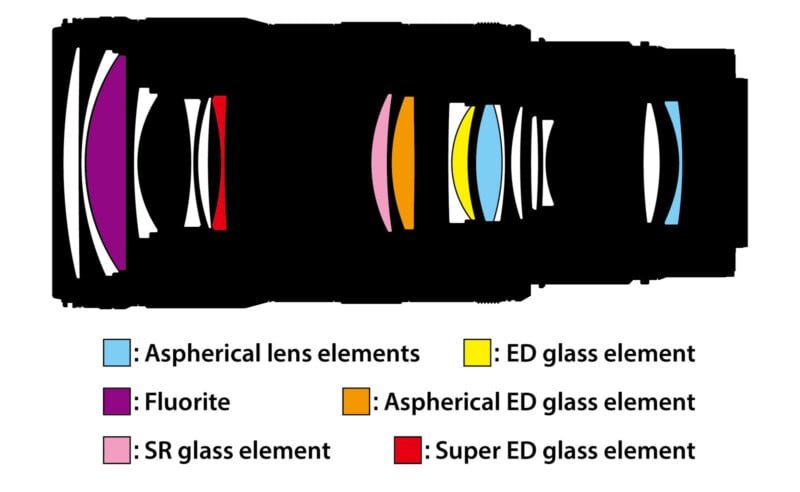
However, by precisely positioning sophisticated glass types, such as fluorite, SR, Super ED, ED, and aspherical, in its new professional lenses, Nikon was able to “both achieve a reduction in the number of elements and superior image quality” compared to the original lenses.
Another important evolution in Nikon’s glass design is the development of thinner elements since the original Nikkor Z 24-70mm and 70-200mm f/2.8 zooms arrived.
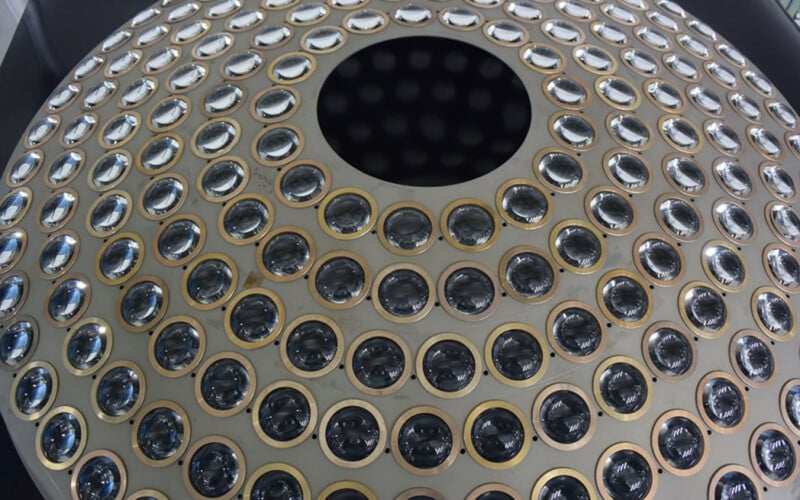
Nikon cannot share specifics about its proprietary manufacturing processes, but the company tells PetaPixel that its lens designers worked very closely with the manufacturing teams to utilize thinner glass elements on medium- and long-term timelines, ensuring that the company’s cutting-edge glass processing techniques were incorporated in early-stage lens designs.
Then there is the convex front element design in the new Nikkor Z 70-200mm f/2.8 VR S II. This replaces a more typical concave-convex-convex arrangement for the frontmost elements. In other cases, this different design would result in residual aberrations. However, that’s where the SR and Super ED elements come in, enabling Nikon’s optical engineers to swap in a different optical structure that would otherwise yield worse image quality.

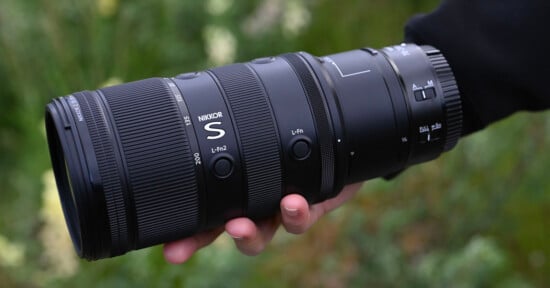
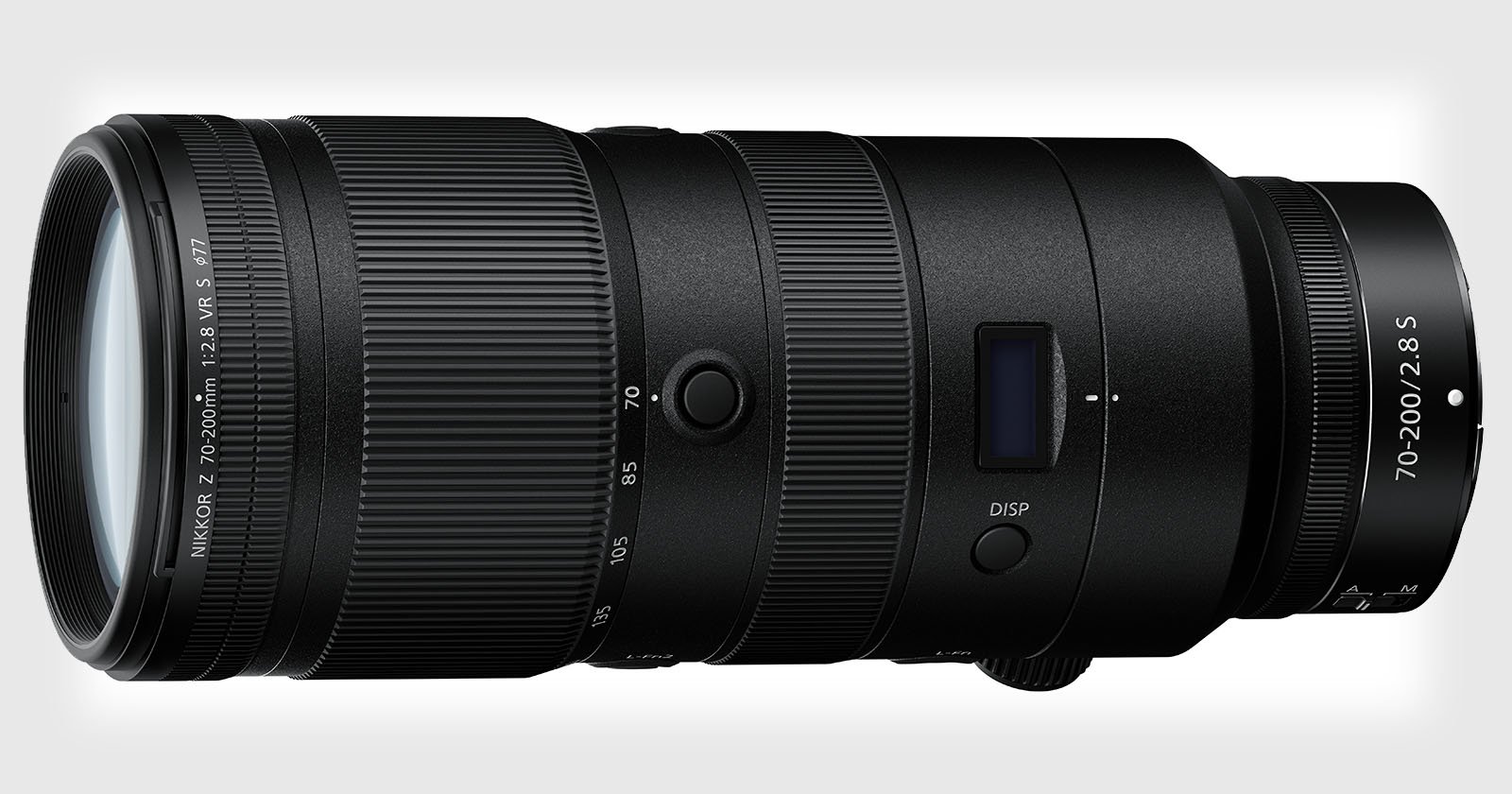
Taken together — fewer elements, thinner glass, and an atypical element structure — the Nikkor Z 70-200mm f/2.8 VR S II is lighter than its predecessor. Much lighter, in fact. The new Nikon Z 70-200mm f/2.8 VR S II is 26 percent lighter than its predecessor while offering better image quality. The Nikkor Z 24-70mm f/2.8 S II, for what it’s worth, is just under 20 percent lighter than its predecessor.
The weight reduction efforts don’t stop there, however. As Nikon tells PetaPixel, the reduction in total element count and element size is only part of why the new telephoto zoom weighs much less than its predecessor.
“The biggest contributor to weight reduction in this optical design is how the lenses move during zooming,” Takeru Uehara, the 3rd Designing Department, Optical Engineering Division, explains. “By reducing the number of moving elements and simplifying the mechanical structure, we achieved lighter weight.”
Essentially, the Nikkor Z 70-200mm f/2.8 VR S II’s weight savings come from fewer elements, thinner elements, and fewer moving elements. Fewer moving elements require less additional hardware, which means less weight, all else equal.
Making Autofocus Faster and Improving Usability for Pros
While the original Nikkor Z 70-200mm f/2.8 VR S offers great image quality and overall performance, Nikon determined it could improve autofocus speed and precision.
Picking the right autofocus technology for each lens is tricky, and like all aspects of an optical design, it requires careful balancing of often competing priorities. A Voice Coil Motor (VCM) autofocus system, for example, delivers very strong torque at high speeds, driving fast, accurate, and quiet autofocus. However, a VCM is generally larger and heavier.
Stepping motors (STMs) are slower but compact and lightweight, making them a great choice for many lenses.
In the case of the new Nikkor Z 70-200mm f/2.8 VR S II, Nikon wanted to achieve the best possible autofocus, which meant employing its most advanced autofocus system, the Silky Swift VCM (SSVCM). Initially developed for the Nikon Nikkor Z 400mm f/2.8 TC VR S released in 2022, this drive motor, which wasn’t available for the original Nikkor Z 70-200mm f/2.8 VR S, combines a voice coil motor with a new guide mechanism.
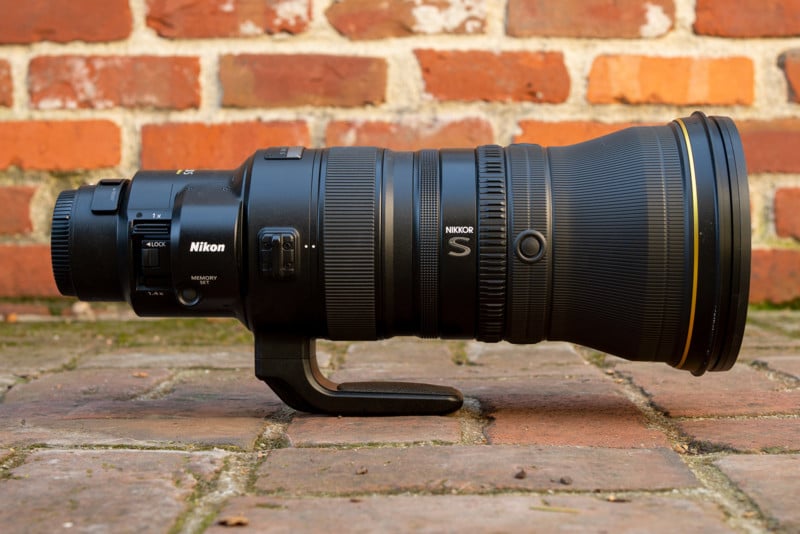
“By adopting a Silky Swift VCM (SSVCM), which combines a VCM (voice coil motor) with a new guide mechanism developed by Nikon, we achieved both strong torque and smooth movement,” Sakai says.
“In addition, advances in control algorithms and the newly adopted optical ABS encoder as a position-detection sensor allow highly precise positioning. This has enabled accurate control of fast-moving focus lenses and precise stopping at the intended point. The mechanical structure was also optimized for these new controls, resulting in faster AF and significantly shorter scan times.”
The autofocus improvements in the new Nikkor Z 70-200mm f/2.8 VR S II result from better hardware and software, and the advancements are significant. The lens focuses 3.5 times faster than its predecessor while delivering 40% faster tracking while zooming and much greater precision.

A 70-200mm f/2.8 zoom is a workhorse lens for many professionals across a diverse range of genres, including sports, photojournalism, weddings, events, and portraiture. All of these photographers care about autofocus speed and performance, but they also care about image quality and professional durability.
As for image quality, the new 11-bladed aperture diaphragm — up from a nine-bladed design in the original lens — promises highly circular bokeh and smoother, more natural bokeh. But bokeh goes beyond the aperture itself; it also relies on the optics.
“Special elements also help,” explains Uehara. “A major factor is also advanced in simulation technology that allows us to predict bokeh accurately at the design stage. We tested many aberration-balanced patterns during design to achieve the optimal result.”
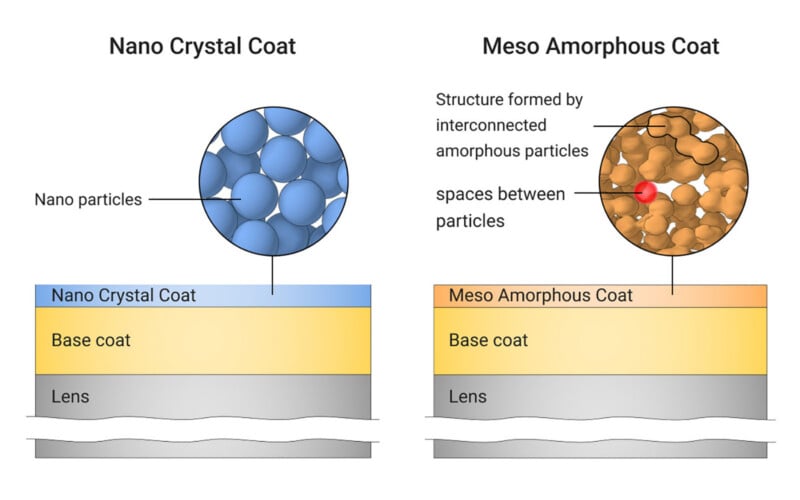
Nikon’s Iterative Lens Design Process
“Balance” is a crucial word here because the concept is prevalent throughout the entire lens design process.
As Nikon tells PetaPixel, things like ghosting, reflections, and flare all change as the optical design changes. Fewer elements reduce reflections, which can help with ghosting, but they make it more difficult for engineers to correct for aberrations. More elements help with aberrations, but increase ghosting. Further, prioritizing aberration corrections may require certain lens shapes, some of which “may introduce unavoidable ghosting.” Designing lenses is “an iterative balancing process.”
That is the key takeaway. While the new optical design technology unique to the Nikkor Z 70-200mm f/2.8 VR S II is fascinating and helps make the lens even better than its already-great predecessor, the iterative balancing process is universal across all of Nikon’s Nikkor Z lenses. In every single case, the company must grapple with the same challenges, whether it’s a budget-friendly entry-level lens or a flagship professional one.
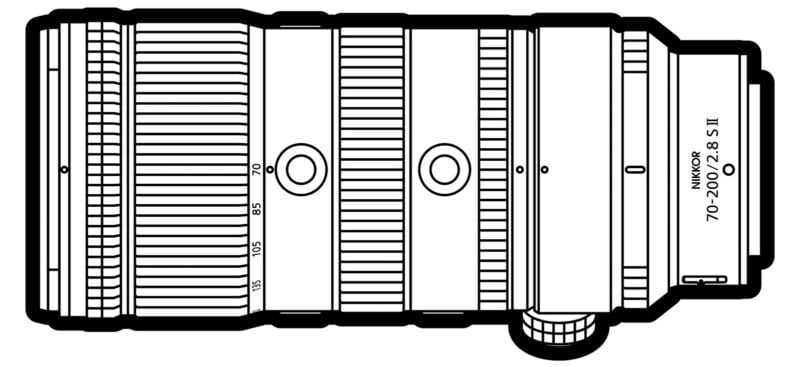
Nikon must clearly define its product concept and goals from the jump, including determining who a lens is for, what these users require, what Nikon wants to prioritize, and which features are essential.
In the case of the Nikkor Z 70-200mm f/2.8 VR S II, the lens is for professional photographers with diverse requirements, so the lens had to be robust, lighter, and better to use. It had to have fast, accurate autofocus that works across any photographic genre. And it had to do all of that while remaining optically equal to, or better than, its predecessor.
With a “Mark II” version, Nikon also incorporates extensive user feedback as part of its design process. For the new telephoto zoom, the company knew that photographers wanted a de-clickable control ring, a shorter minimum focusing distance, a filter adjustment window in the lens hood, additional Fn buttons, and an Arca Swiss-compatible tripod foot.
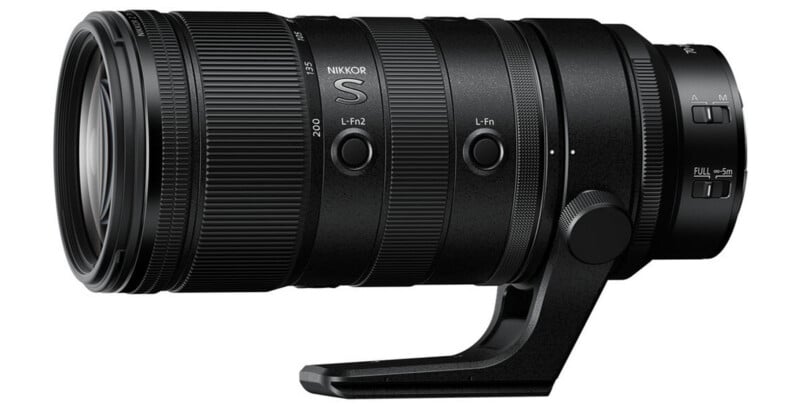
“We built each function around the concept of high practicality for diverse professional use, resulting in a product we believe is extremely easy to use for both professionals and advanced amateurs,” Akiyuki Usui, the UX Planning Department, Imaging Business Unit,
says.
It is easy for photographers to take the extensive design process of new lenses for granted. We almost exclusively see just the results, the final lens that promises better this and faster that. But these improvements, even relatively minor ones, are the result of years of work and engineering, often tied to technological advances Nikon has made for other lenses.
The Nikkor Z 70-200mm f/2.8 VR S II, for example, benefits from the Silky Swift VCM developed for the Nikkor Z 400mm f/2.8 TC VR S, but it also incorporates improvements in glass element processing and manufacturing, software algorithms, and, perhaps most importantly of all, real-world feedback that photographers offered about the original 70-200mm f/2.8.
Image credits: Nikon