How Canon’s RF Mount Design Enables Innovative New Lens Designs

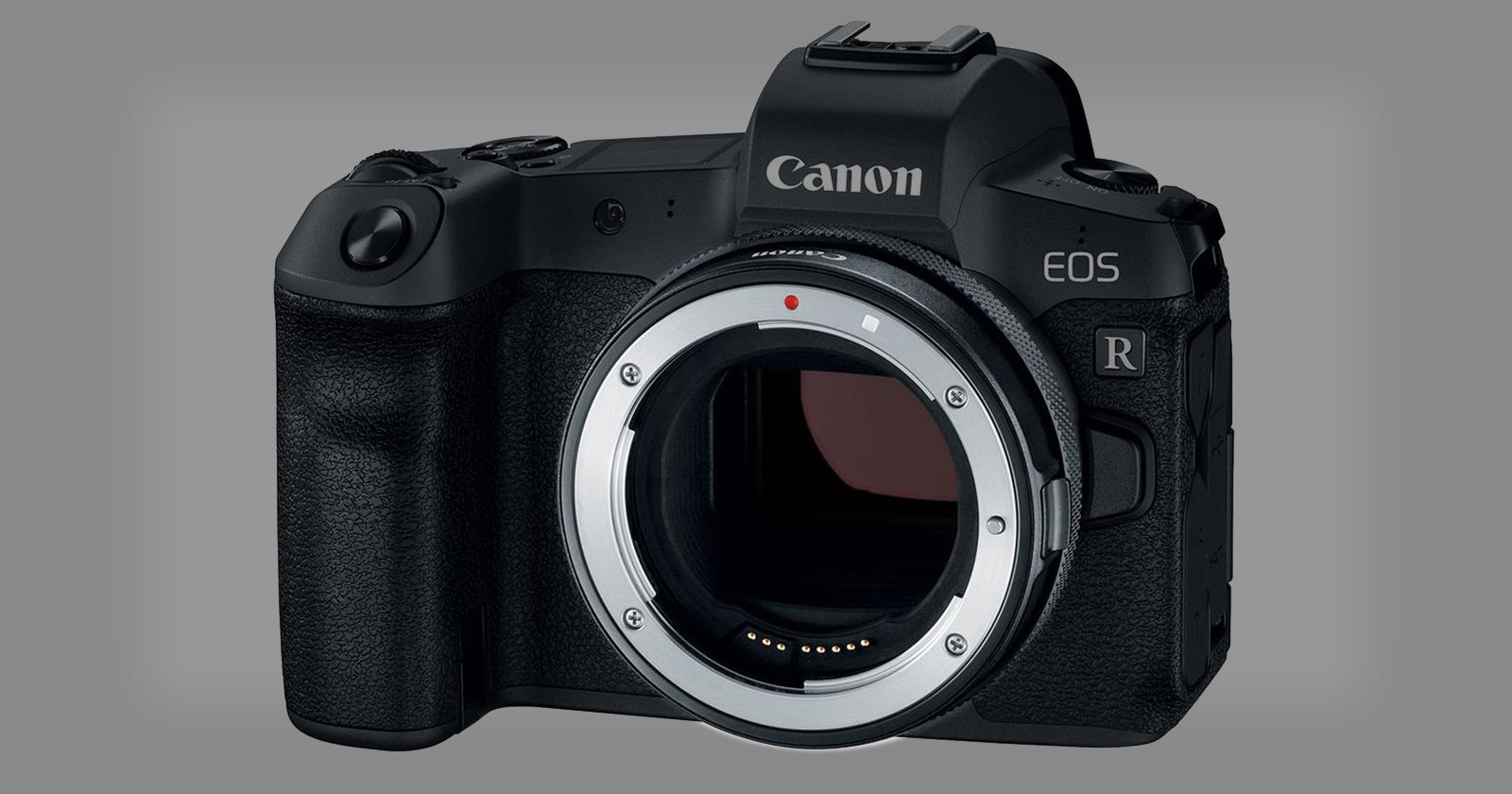
When Canon unveiled its first mirrorless full-frame camera, the EOS R, in 2018, the company touted its new EOS RF lens mount. While it has the same 54-millimeter diameter as the DSLR EF mount, the RF mount’s flange distance is significantly shorter, shrinking from 44 millimeters to just 20. Canon promised that this would enable bold new lens designs, and the company’s latest lenses show that as well as any of Canon’s 60-plus RF lenses.
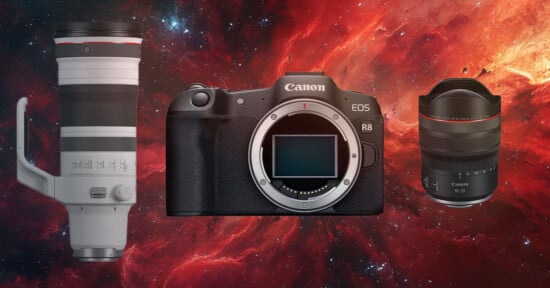
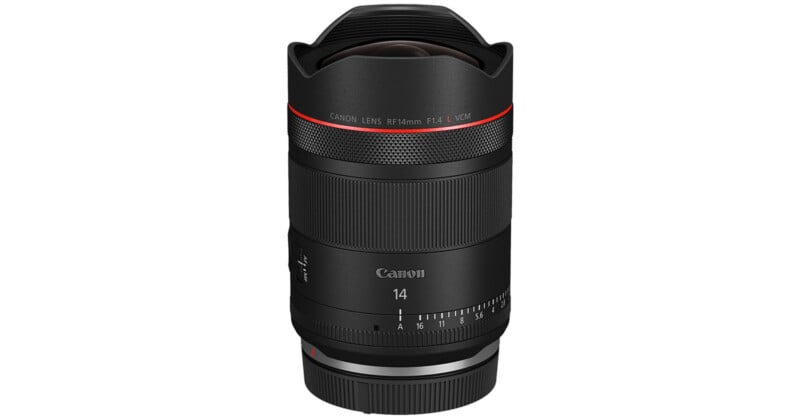
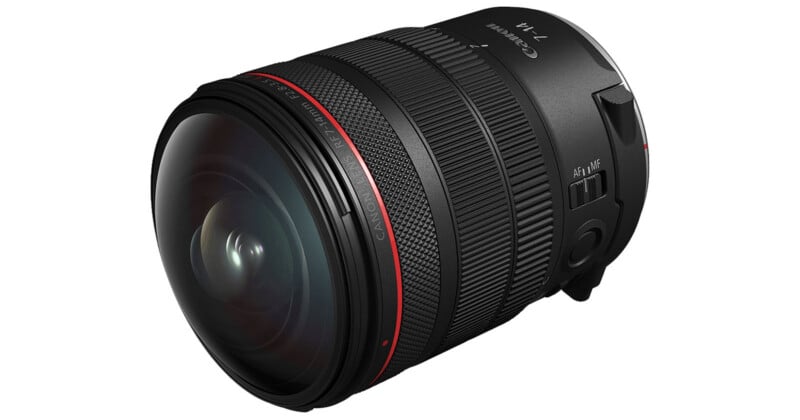
The Canon RF 14mm f/1.4L VCM and RF 7-14mm f/2.8-3.5L Fisheye STM are cutting-edge ultra-wide lenses. The RF 14mm f/1.4L VCM is Canon’s fastest ultra-wide lens ever made, while the RF 7-14mm f/2.8-3.5L Fisheye STM breaks new ground with its 190-degree field of view and relatively fast aperture. As Canon told PetaPixel at CP+, these lenses are possible in large part because of the RF mount design.
How the RF Mount Design Enables Better, Faster Lenses
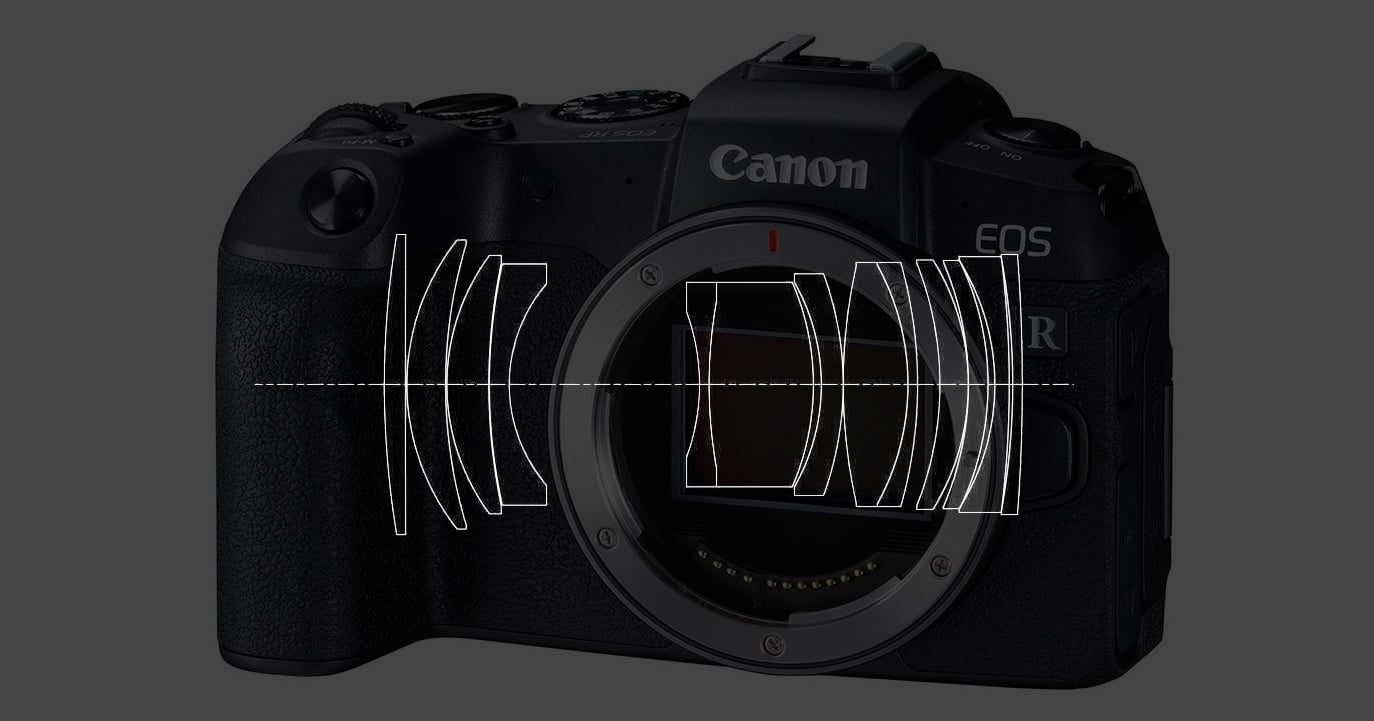
“Because of the [RF mount’s] large diameter, we can put rear elements near the sensor. This gives us greater flexibility in optical design, allowing us to achieve both higher image quality and a more compact, lightweight form,” said Satoshi Maetaki, General Manager, Optics Technology R&D Center, Imaging Business Operations.
Being able to position lens elements closer to the image sensor is important no matter which lens Canon is making, but it is especially beneficial when designing ultra-wide lenses. The closer Canon’s engineers can position the glass near the sensor, the better. This means faster apertures, wider focal lengths, superior image quality, and more user-friendly lens designs.
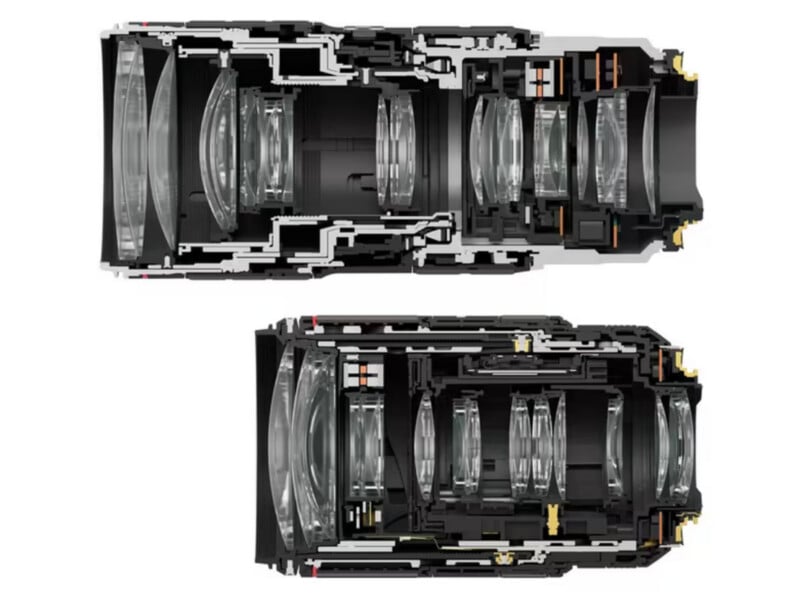
Although the diameter and flange distance of Canon’s RF mount is not unique among all full-frame mirrorless camera systems — there are mounts with larger diameters and shorter flange distances, for example — the advantage compared to the EF mount is massive.
There are ultimately three big reasons why Canon has been able to break new optical ground with its RF lens designs, both delivering all-new focal length and aperture combinations and expanding previous concepts. For example, the RF 14mm f/1.4L VCM is much faster than the older EF 14mm f/2.8, and the RF 7-14mm f/2.8-3.5L Fisheye STM is faster and wider than the EF 8-15mm f/4L Fisheye USM.
“One [reason] is that the lens mount has a large diameter, which I previously mentioned. Secondly, we applied a VCM actuator, so therefore we were able to make it smaller. And third, this is more important: we developed many new optical technologies,” explained Maetaki.
The optical technology in question includes improved lens elements and optics that deliver the same or better optical performance in smaller, lighter elements. This goes far beyond just making smaller glass elements, as photographers still expect ever-improving optical quality and faster apertures, which historically requires more glass, not less.
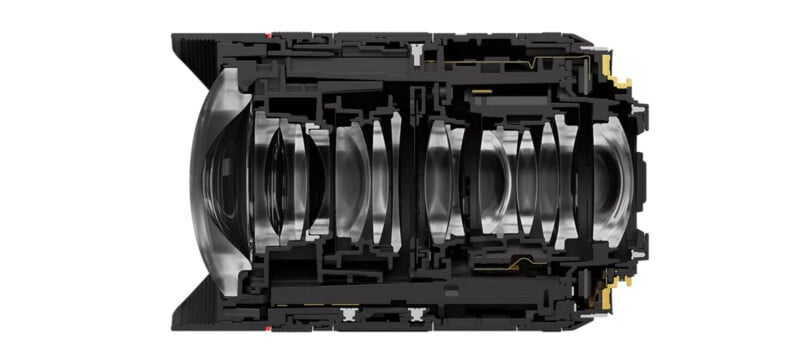
Making a lens better is easy if engineers don’t care about its size and weight. However, Canon and photographers do care about a lens’s size, weight, and, of course, cost. So making a lens sharper, better corrected, and faster, while also making it more compact, requires extremely complex, precisely-machined glass elements, and this is an area where Canon focuses significant resources.
BR optics, for example, took many years of consistent, daily research and development. That is very expensive, and the resulting elements aren’t cheap to make, either. But these BR optics significantly reduce longitudinal chromatic aberrations (LoCA), a bugbear of fast lenses, especially wide-angle ones.
New-and-Improved Lenses Go Beyond Just Glass
But improved lens designs go beyond just sophisticated, complex glass elements. Autofocus mechanisms matter a lot, too.
“During the EF lens era, we used ring type USM [autofocus]. But it’s not very suitable for video shooting and because the ring has a fixed diameter, it means the lens size is also fixed. Then this time we adapted VCM. That is a very high-quality tool. It means we can move the very heavy, large elements. That’s [part of] why we could develop very fast, very wide-angle lenses,” said Yutaka Nakamura, Assistant Manager, IMG-1 Products Planning Center, Imaging Business Operations.
Dedicated Efforts
When it comes to Canon’s two new ultra-wide, fast L-series lenses, each of which is unlike anything the company has made before, the company is very proud of its development efforts.
“For example, this RF 14mm f/1.4L VCM it has very, very high image quality with a very compact size. We have not made any compromises in image quality,” Nakamura explained.
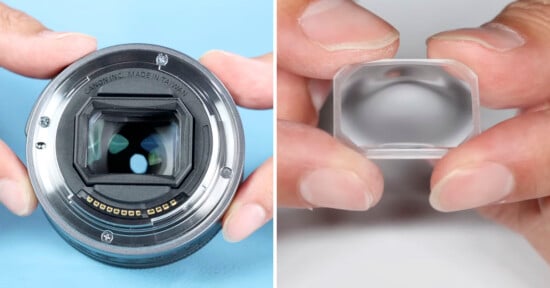
As for the RF 7-14mm f/2.8-3.5L Fisheye STM, Canon is especially proud of making this lens wider and faster than its EF-mount predecessor. It also features drop-in filter support, which utilizes the drop-in filters Canon developed for its Mount Adapter EF-EOS-R back in 2018.
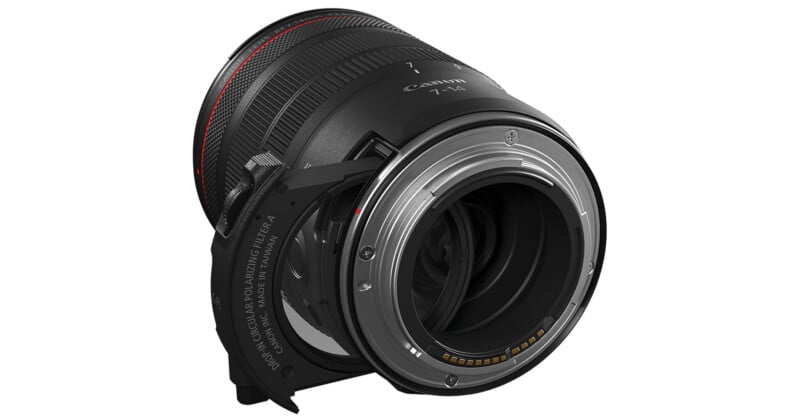
The lens is very good for photo and video, Nakamura added. “That’s what we are most proud of.”
When Canon announced the RF 14mm f/1.4L VCM and RF 7-14mm f/2.8-3.5L Fisheye STM together last month, the company went from having one of the weakest wide-angle lens lineups in the full-frame mirrorless space to arguably the strongest and most versatile in just one day.
As of February 2024, the widest L-series prime lens in Canon’s lineup was the RF 50mm f/1.2L USM. After that, Canon expanded the range by rolling out the RF 35mm, RF 24mm, and RF 20mm f/1.4L VCM lenses as wide-angle and ultra-wide-angle prime options.
“We expanded the lens wide because it is very important. A lot of users, especially those who take astrophotography seriously, [wanted fast, wide lenses.]”
“Then we developed this to fulfill their demands,” Nakamura said. “As mentioned, the RF mount is advantageous for developing fast, wide lenses because of its short back focus and large diameter.”
“We aim to make our strengths clearly visible to users. ”
What’s Next for Canon RF Lenses?
Next up on the docket, Canon says it wants to continue exploring the concept of affordable, fast, and lightweight lenses with good image quality, akin to the RF 45mm f/1.2 STM the company launched last year for just $459.
“We need to provide such concept lenses,” said Nakamura. “That is very important.”
On the extreme other end of the spectrum, Canon is eyeing the 2028 Summer Olympics in Los Angeles, where thousands of photographers will descend on California, armed with flagship cameras and super-telephoto lenses.
“Lenses for professionals should be prepared,” Nakamura concluded.
“We also need to expand the lineup for hybrid shooting. We have launched a lot of primes [for hybrid users], and we also need to expand zoom lenses.”
Image credits: Canon