Mike Disfarmer’s Relatives Reach Settlement in Copyright Case Over Photographer’s Work
Relatives of the eccentric photographer Mike Disfarmer have reached a settlement in a copyright dispute involving thousands of his photographs and glass-plate negatives.
According to a report by the Arkansas Democrat-Gazette, the details of the agreement between Disfarmer’s great-great nephew Fred Stewart and the Arkansas Museum of Fine Arts are confidential. The museum holds many of the photographer’s surviving negatives.
“The Arkansas Museum of Fine Arts and the Disfarmer family have reached a mutual agreement,” Stewart says in a statement. “I have met several representatives of the AMOFA and found them very pleasant and professional.”
The New York Times reported last week that while the specific terms are private, the agreement appears to leave the heirs in possession of the copyright and about 3,000 of Disfarmer’s glass-plate negatives, along with hundreds of posthumous prints made from them.
According to the news outlet, the first family-authorized exhibition of the photographer’s work opened on February 25. Titled “Disfarmer: The Homecoming,” the display features nine prints and is on view in the rotunda of the Arkansas State Capitol through late May.
Stewart filed a lawsuit against the museum’s foundation in 2024, alleging it had been profiting illegally from thousands of Disfarmer photographs and glass-plate negatives that were donated to the institution in the mid-1970s.
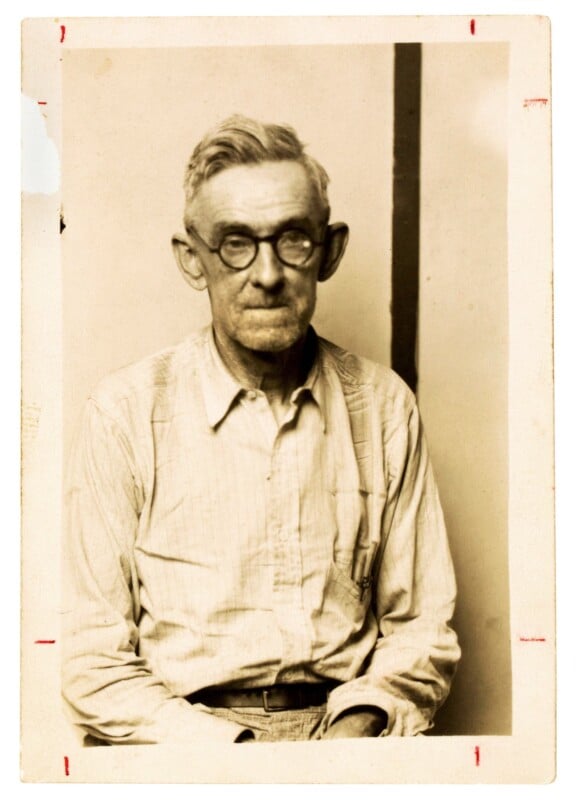
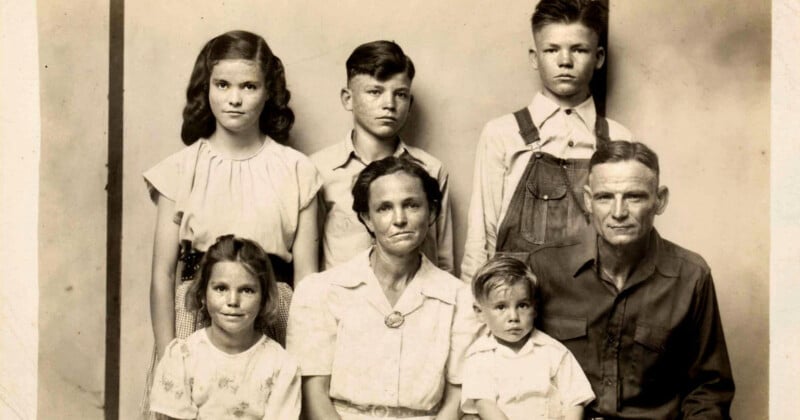
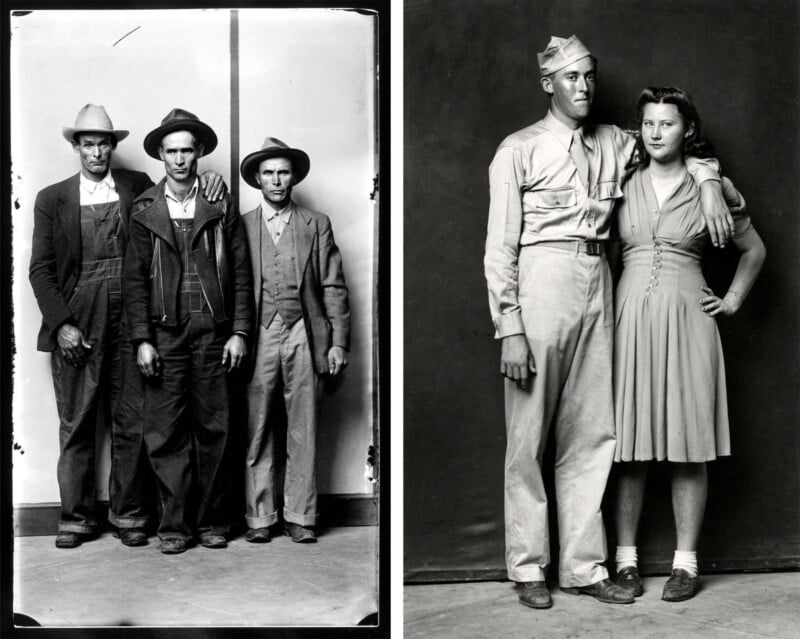
Disfarmer died in 1959, but his portraits of residents of rural Arkansas were rediscovered by the art photography world in the 1970s. Since then, his images of ordinary people have come to symbolize small-town America during the Great Depression and World War II.
Working primarily in black and white, Disfarmer photographed members of his community in the town of Heber Springs. Beginning around 1914, Disfarmer photographed local residents who purchased portraits for as little as 25 cents. His subjects typically stood stiffly in a bare studio setting, often facing the camera with little expression. The stark simplicity of these portraits has often been compared to the mood of American Gothic by Grant Wood.
Disfarmer himself remains a somewhat mysterious figure. Born Mike Meyer in Indiana, he legally changed his name in 1939 to Mike Disfarmer. According to a filing from foundation attorneys, he believed that “Meyer” meant farmer in German and adopted the name “Disfarmer,” which he interpreted to mean “not a farmer.” He also reportedly claimed that when he was three years old he had been blown by a tornado into the home of a couple named Meyer. Disfarmer moved to Heber Springs, never married, and lived alone in his photography studio. He was often described as eccentric.
When he died at 75, Disfarmer left behind thousands of glass-plate negatives and a bank account containing $18,148.80, which was divided among his siblings or their heirs. According to court filings from the museum foundation’s attorneys, family members showed little interest in the negatives at the time. They were sold at an estate sale for $5 to former Heber Springs mayor Joe Allbright.
Allbright later sold the collection in 1973 to Peter Miller, editor of the Arkansas Sun. Miller said in a 2021 interview that he acquired about 6,000 glass-plate negatives. Many of the plates had been stored in Allbright’s garage for more than a decade, where bacteria had begun to destroy the animal-gelatin emulsion used in the negatives.
Miller traveled to the headquarters of Kodak in Rochester, New York, to learn how to salvage the remaining plates. Restoring them was a arduous years-long process. In 1976, Miller transferred the negatives to an entity known as The Group Inc., which later gave them to the Arkansas Arts Center, now known as the Arkansas Museum of Fine Arts.
Image credits: Photographs by Mike Disfarmer