
The Fight Over Eccentric Arkansas Photographer Mike Disfarmer Continues

A federal judge has dismissed two claims made by a relative of photographer Mike Disfarmer against the Arkansas Museum of Fine Arts, which holds Disfarmer’s negatives.
U.S. District Judge James M. Moody Jr. dismissed Fred Stewart’s allegations of “conversion and unjust enrichment,” both of which relate to the rights of Disfarmer’s photos. Stewart is Disfarmer’s great-great-nephew.
The Arkansas Democrat-Gazette reports that Disfarmer’s photos were donated to the Museum of Fine Arts in the mid-1970s. Disfarmer died in 1959, but his portraits of regular people in rural Arkansas have since been discovered by fine art institutions and have come to symbolize small-town America during the Great Depression and World War II.
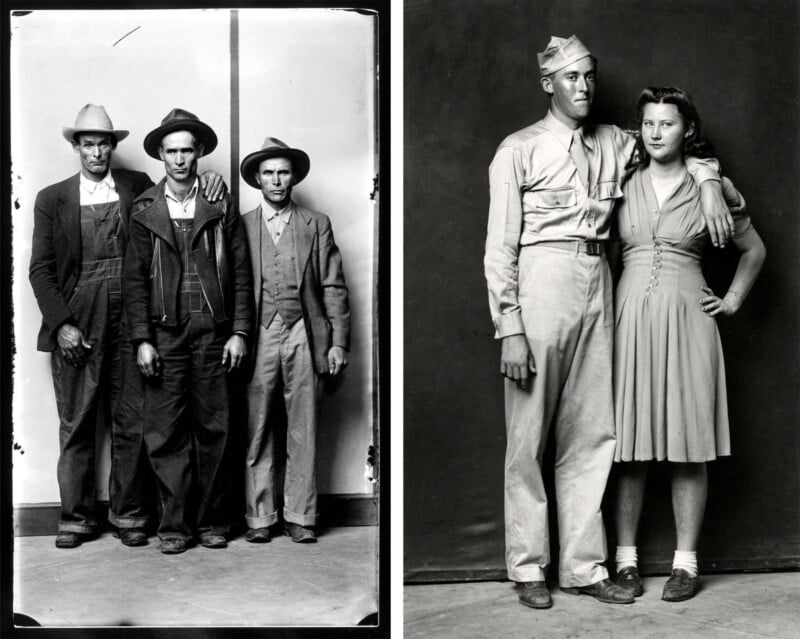
Disfarmer’s black and white photos are reminiscent of American Gothic by Grant Wood; his photos show subjects standing stiffly, in a bare studio, often devoid of emotion. This plainness has come to be viewed as profoundly artistic.
Disfarmer himself is a mystery. Born Mike Meyer in Indiana, he moved to the town of Heber Springs, never married, and lived alone in his photography studio. He has been described as eccentric and even potentially insane. The name “Disfarmer” is a direct reference to his birth name, Meyer, which is farmer in German. He literally called himself “not a farmer.”
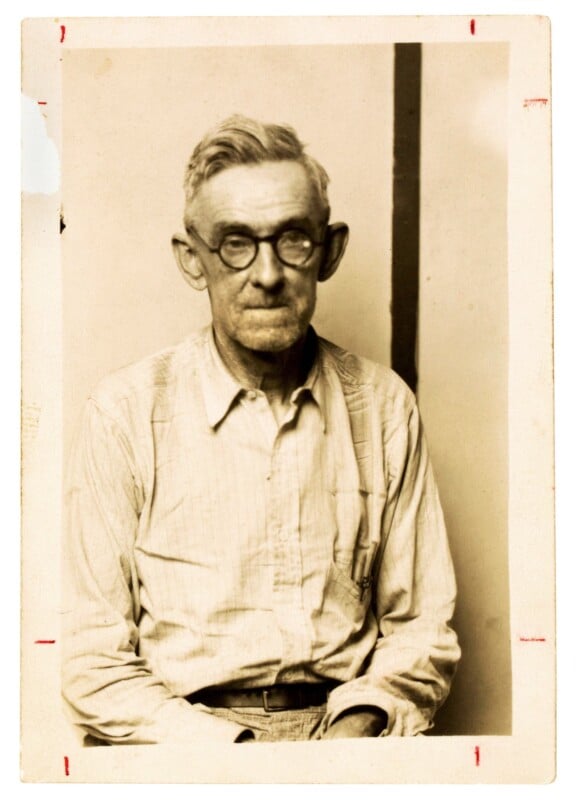
The story of his glass-plate negatives is complicated. The Arkansas Democrat-Gazette’s article reveals that the dispute goes all the way back to 1959, the year Disfarmer died, when the administrators of Disfarmer’s estate sold the photos to then mayor of Heber Springs, Joe Allbright, for $5. The Museum has court filings that show that at the time of the photographer’s death, his family had no interest in his photos.
Mayor Allbright sold the negatives in 1973 to the editor of the Arkansas Sun, Peter Miller, who painstakingly restored the by-then moldy glass-plates, even traveling to Rochester, New York, to learn from Kodak the best way to save them.
After the restoration process, the negatives were given to the organization now known as the Arkansas Museum of Fine Arts.
Judge Moody dismissed allegations of “conversion and unjust enrichment,” stating that Stewart’s complaint was filed “well after the statute of limitations for conversion had run,” per the Arkansas Democrat-Gazette’s piece.
But the judge did not dismiss the entire complaint, and there are eight counts in total brought by Stewart.
Image creditsPhotographs by Mike Disfarmer
Affiliate Disclosure PetaPixel articles may include affiliate links; we may earn a commission if you buy through one.