L-Mount Desperately Needs a Great, Everyday, Photo Camera
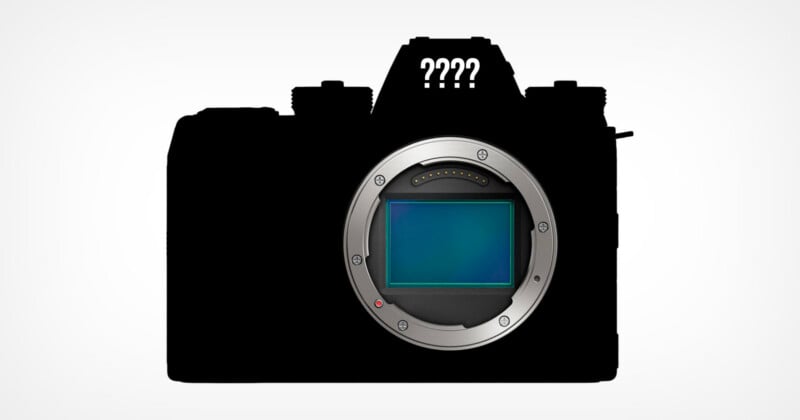
Earlier this week on The PetaPixel Podcast, we discussed Nikon’s lawsuit against Viltrox and both the best and worst-case scenarios for that outcome. As part of it, we found ourselves talking about L-mount and how it was the only option outside of Sony E-mount that has shown itself willing to be “open.” Unfortunately, it doesn’t offer a compelling solution for the average photographer.
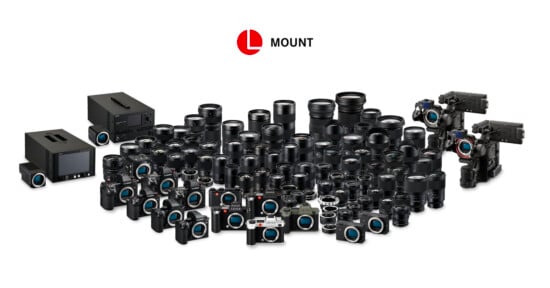
It’s great that the L-Mount Alliance has so many companies in it that are ready to support it, but it’s heavily weighted in the optics direction. That leaves L-mount with a weird, unique problem: it’s got more truly fantastic lenses to use than any other system, but no camera to use them on.
There isn’t a single camera on the market that can take full advantage of Sigma’s best lenses. That is insanity.
As my co-host Jordan Drake said in that podcast discussion, our friend Gordon Laing has been saying that L-mount is a really great value if you’re looking at the lower-end of the photo and hybrid space, but there is very little to get excited about at the mid- or high-end when it comes to pure photo capability. I agree. I argue that while the S1R II does exist, it’s not a system mover. It’s not getting people excited about L-mount enough to invest in the system.
And that’s because cameras like the Lumix S1R II or the Sony a7R V or the Canon R5 II are not system movers. Those are the Canon R6 III or the Sony a7 V type cameras. The mid-range camera is what gets people into a system and keeps them there. Due to its aggressive pricing, you could argue the Nikon Z8 stretches beyond its initial target user and is therefore a system mover, too.
But there is nothing like any of those cameras on L-mount. You either have to go with an S5 II or an S9 and in addition to being a lower-end system, neither of those are, frankly, particularly good photography cameras. Panasonic Lumix is doing all of the camera work when it comes to L-mount and given its focus on video features, it just isn’t cut out to drive the whole mount by itself.
Someone, anyone, needs to make a “normal” camera that is a solid performer at both photo and video to drive people to L-mount. Just offering great lenses on the system is not enough. Sigma’s CEO Kazuto Yamaki has told us that he does want to someday make a camera worthy of the 300-600mm f/4 DG OS Sports lens, but that doesn’t feel like an endeavor that’s particularly close to becoming reality.
To get L-mount to where it needs to be, therefore, might require a more concerted cooperation. I think it’s time the L-mount Alliance members really truly consider this. If, say, Panasonic and Sigma actually worked together to make a mid-range camera, I think the two companies have the ability to combine their strengths and succeed.
Panasonic has the manufacturing capability in place to build the body of the camera — screens, plastics, metal frames, silicone and silicon, it’s all there. Sigma has the autofocus technology (we were blown away how good the performance is in the BF) and photo-focused acumen to guide development in a direction that doesn’t create a camera that’s too video-centric as to drive the price up and scare away potential buyers. Panasonic can guide Sigma away from creating a camera that is too weird in shape that it becomes uncomfortable to hold, but Sigma can also push back and help Panasonic make a camera that doesn’t feel like taking photos with a laptop.
The two can be each other’s middle ground.
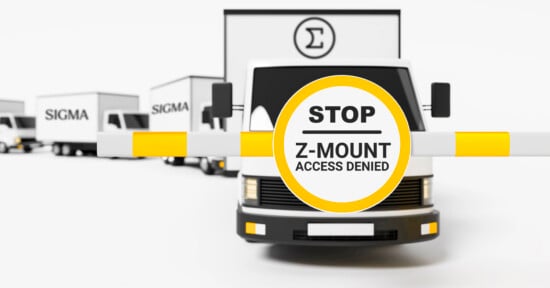
This is unlikely to happen, of course, but I’m just spitballing now in a desperate plea for L-mount to just do something — anything — for the average camera enthusiast. With Nikon appearing to clamp down on Z-mount (and its unwillingness to let Sigma on it at all) and Canon stubbornly refusing to open its mount, photographers who value choice deserve an option — a real option — that’s not just Sony.
Because as good as Sony cameras are, the company is in a position where it benefit from some better competition, too.