The Instax Mini Evo Cinema Combines Retro-Inspired Video with Instant Film

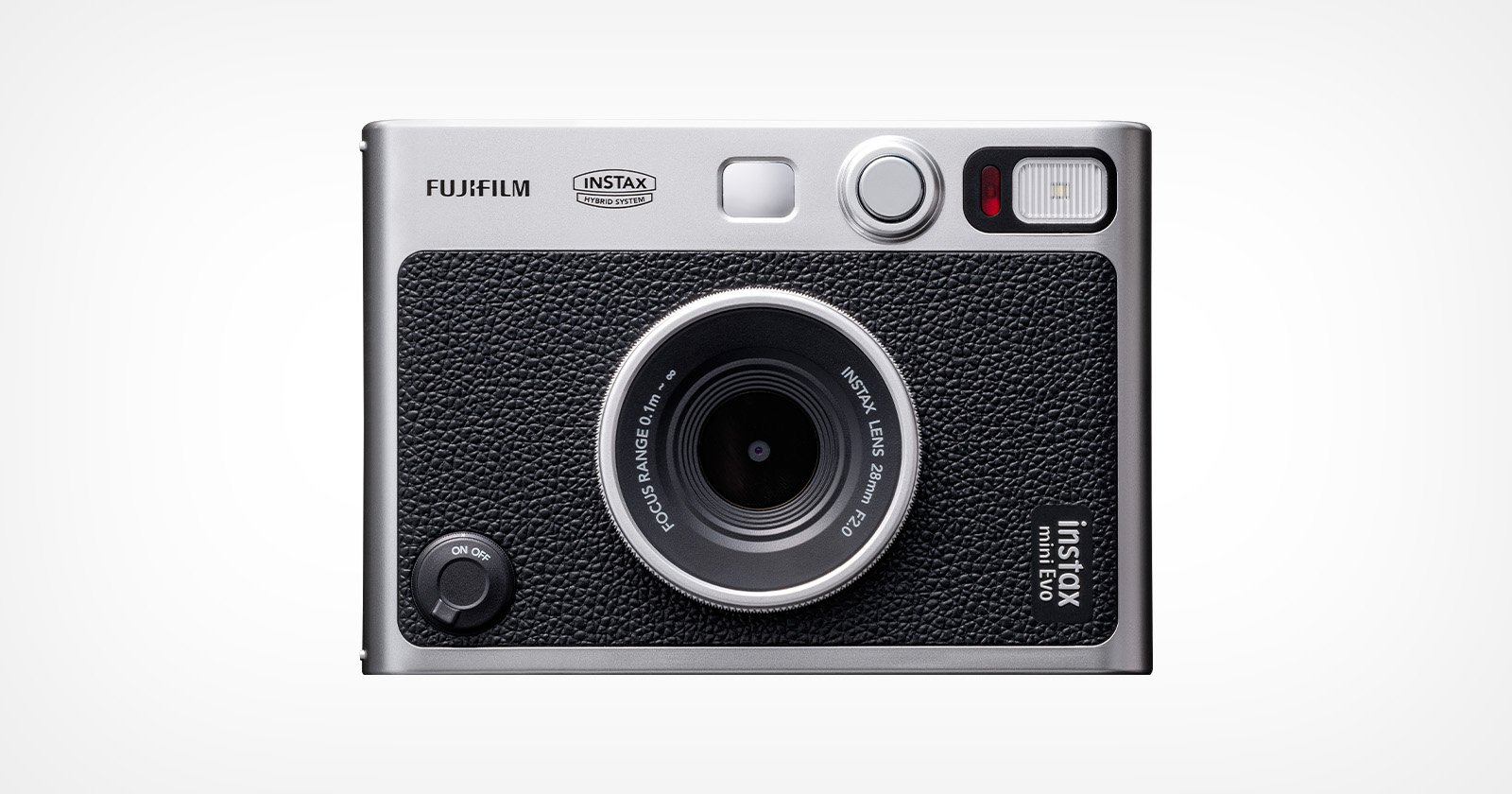
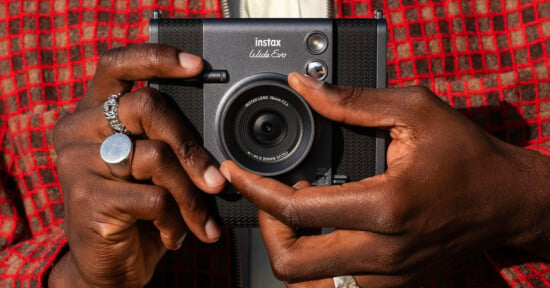
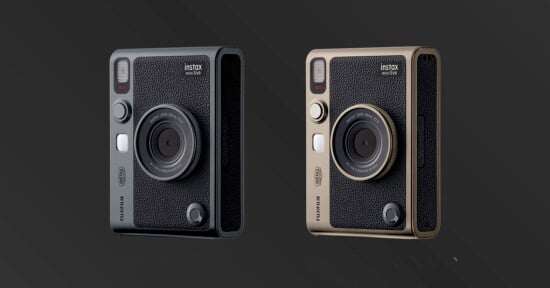
Fujifilm Japan has announced the Instax Mini Evo Cinema camera, a unique take on the Evo series that focuses on capturing short videos but also combines that with the ability to shoot photos and make prints.
The Evo series is Fujifilm’s combination of digital and instant print cameras. Previous iterations allowed photographers to take digital photos and print them out of the camera, which is basically the same experience as a standard instant camera. The difference is that because it’s a digital sensor, the photos it produces are more akin to a digital photo printer than, say, a Polaroid and therefore generally allow it to connect to a smartphone and print photos from a user’s camera roll, too.
The Evo Cinema camera takes the next logical step in leveraging that digital sensor by making video an option.
“The mini Evo Cinema can capture both still images and videos. It converts captured video data into a QR code and creates an Instax print together with a still image cut out from the video, allowing users to ‘hand over a video,'” Fujifilm Japan explains. “By turning videos into Instax prints, users can not only preserve memorable moments spent with loved ones in tangible form, but also easily revisit the video anytime via the QR code.”

By holding down a trigger located on the camera handle, users can record video clips separately until a full 15-second clip is created. The camera can then print a photo with a QR code on it, which, when scanned, takes the viewer to a webpage to view the whole clip. An example of one of those clips can be seen here.
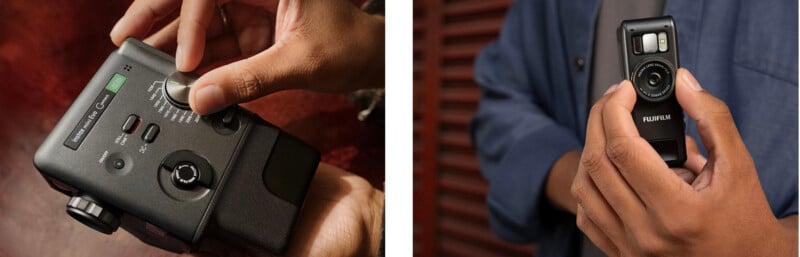
Because video is a major feature of this camera, the body features a vertical grip design that the company says is inspired by the Fujica Single-8 camera that was originally introduced in 1965.
On the side of the camera is a dial that Fujifilm calls the “Eras Dial,” which the company says changes the effect of the video captured to one that is inspired by those particular periods of time. Each effect has 10 adjustable levels, offering a total of 100 possible expressions, the company says.
“These effects capture the unique flavor of each era, letting users shoot extraordinary, special videos and still images with a sense of time travel,” Fujifilm adds.
And, as with other Evo cameras, the mini Evo Cinema also functions as a smartphone printer. Fujifilm is also releasing a dedicated app for the new camera that allows clips to be combined into a maximum 30-second clip, as well as add other effects (such as text) to prints.

The Mini Evo Cinema camera includes the main camera body, a viewfinder attachment, a grip attachment (to make it easier for those with larger hands to hold), and a camera case. The camera will be available in Japan starting January 30, 2026. Pricing and international release windows were not revealed.
Image credits: Fujifilm Japan