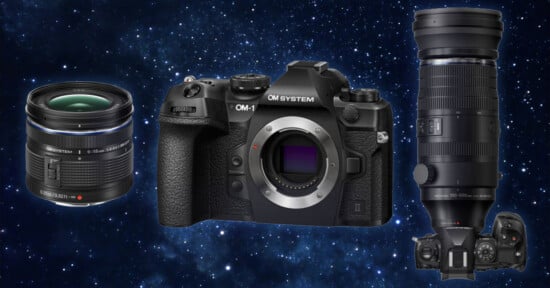
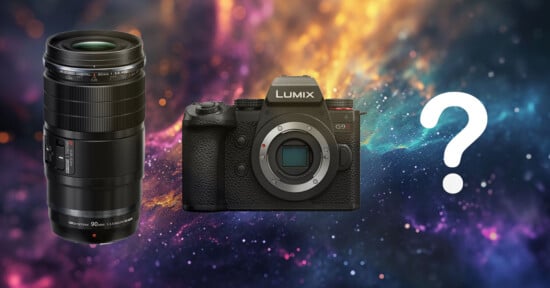
OM System in 2025: A Great Camera, an Awesome Lens, and Little Else
While Panasonic ignored Micro Four Thirds in 2025, OM System thankfully didn’t. And that’s a good thing, too, because it’s OM’s entire business. OM System didn’t entirely allay my fears about Micro Four Thirds’s ultimate fate, but at least the company did release some nice products this year.
Two Cameras, But Arguably Just One New One
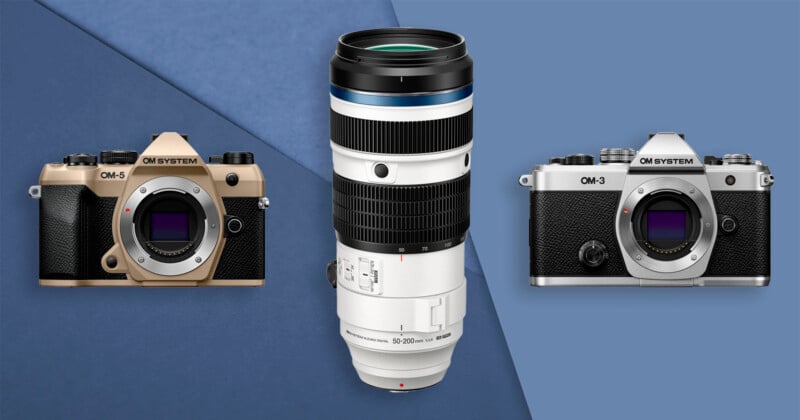
OM System’s first camera of the year, the OM-3, is pretty darn good. Its stylish vintage-inspired design and 20-megapixel sensor, borrowed from the OM-1 II, combine to deliver a really solid photographic experience.
“The OM System OM-3 is a beautiful camera that packs a ton of high-end features. It does have some concessions compared to the OM-1 Mark II, but they’re fairly minor and aren’t areas where those interested in this vintage-styled camera will likely be particularly bothered,” Chris Niccolls concluded.

Even with OM’s holiday savings in effect, the OM-3’s $1,799 price tag is still fairly steep. That is perhaps the biggest downside of the OM-3, because its style and performance are both very good. It is a sleek camera ideal for travel and, like all OM System cameras, outdoor adventures.
OM System’s second camera of 2025 was the OM-5 II, which OM System describes as a “refined” compact travel camera. The camera is very similar to the OM-5 that came before it in late 2022, but is that necessarily a bad thing?
Ultimately, the OM-5 II is a good camera for the price, but it is very familiar and has not made significant strides forward. It’s difficult not to be disappointed by the lack of progression on offer here.
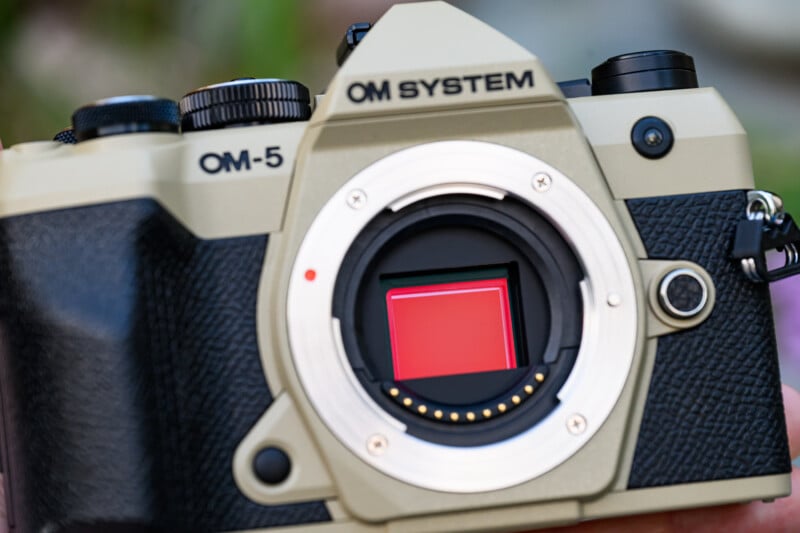
“We need to see some real innovation in the entire product line as a whole, and we need to see some of the higher-end features that do exist trickle down to the more affordable products,” wrote Chris Niccolls of the OM-5 II’s lack of standout improvements.
“I love the OM-5 Mark II for all its strengths, but these are effectively the same strengths that I loved almost four years and two cameras ago.”
Three Upgrades and One All-New Lens
Alongside the OM-3, OM System refreshed three of its more popular lenses: the OM System M.Zuiko Digital ED 100-400mm f/5-6.3 IS II, M.Zuiko Digital ED 25mm f/1.8 II, and the M.Zuiko Digital 17mm f/1.8 II.
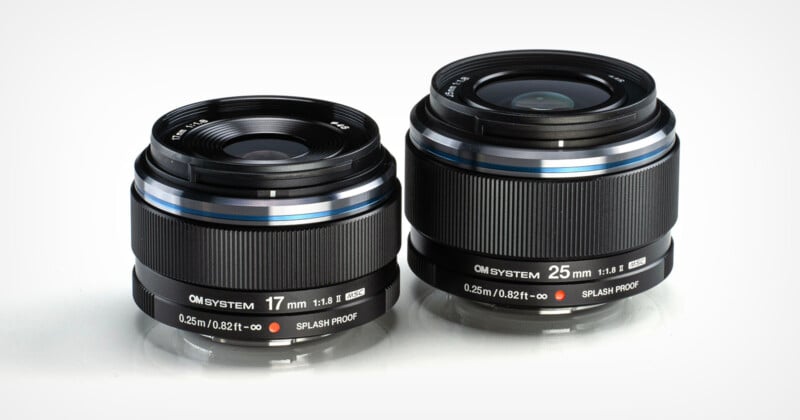
These beefed-up lenses received an upgrade to an improved design with better build quality and enhanced weather resistance, including additional seals. The lenses are all IPX1-rated, matching OM System’s ruggedest Micro Four Thirds camera bodies. The improved 100-400mm telephoto zoom also features better image stabilization, for what it’s worth.

These changes are nice, but they hardly move the needle much.
OM System’s fourth new lens of the year, which is actually truly new, is the real star of OM System’s 2025. The long-awaited OM System M.Zuiko Digital ED 50-200mm f/2.8 IS Pro arrived in September and is excellent. It is a perfect example of what great engineers can do with the Micro Four Thirds platform, delivering a 100-400mm equivalent lens (35mm terms) with a constant f/2.8 aperture.
While the OM System 50-200mm f/2.8 IS Pro didn’t win anything in this year’s PetaPixel Awards, it is still a stellar lens and among the best Micro Four Thirds zooms to date. And it couldn’t have come at a better time, as OM System hasn’t released much for photographers to get excited about in recent years. A lens like this genuinely delivers hope and optimism that Micro Four Thirds can continue to thrive.

“OM System absolutely needed a lens like this to provide users with a professional option that features a bright aperture. This is a very professional lens with the versatility to shoot everything from portraits to sports to wildlife. Optically, there is very little to complain about, and a lot to compliment, but all of this quality comes at a price,” Niccolls wrote. “The $3,699 price is certainly a big ask, but not out of the range of most full-frame telephoto lens options that do a similar thing. If you are serious about shooting professional photography with an OM System body, this lens makes a ton of sense, without having to jump to the very expensive 150-400mm f/4.5 lens.”
Grading OM System in 2025
There is no question that the OM-3 is a good camera and the 50-200mm f/2.8 IS Pro a great lens, but that is about the extent of the excitement in 2025 for OM System. A slightly refreshed OM-5 II and three marginally updated lenses are just fine, at best.
Whether it’s fair or not, I think Micro Four Thirds is in a position where it really needs to justify its existence to the broader photography market. The format still has a lot to offer, and I know plenty of photographers who use and love Micro Four Thirds cameras and lenses. However, given the quality of APS-C and full-frame cameras on the market at prices similar to or even lower than those OM System offers, I think OM System really needs to do better. I believe Micro Four Thirds can be great, so I’d really like to see OM System prove it to me, and more importantly, to everyone else. The company just didn’t do that this year.
Grade: C+
Image credits: Header photo created using an asset licensed via Depositphotos.