The Canon EOS R Was Such a Weird Camera
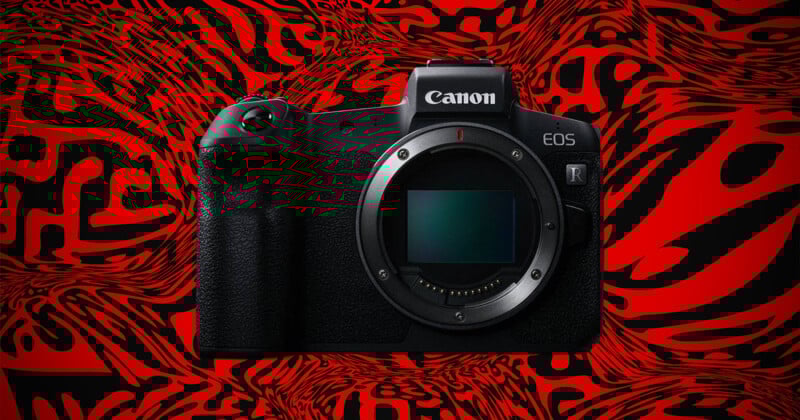
Between writing the polarizing opinion that Canon should revisit the EOS R’s much-maligned Touch Bar and reviewing the excellent Canon EOS R6 III in recent weeks, it has become even clearer just how bizarre the original Canon EOS R actually was when it arrived in 2018.
I was at Canon’s North American EOS R launch event in Maui, Hawaii, and looking back on it, the whole thing was pretty strange.
Admittedly, part of its oddness was that the big reveal happened late at night in Hawaii, which was six hours behind the eastern time zone from which I had just arrived. My brain was in middle-of-the-night mode when Canon started blasting music and bringing executives onstage to reveal an entirely new camera system, lens mount, and quartet of RF lenses. And who can forget the trio of EF-to-RF lens adapters, including the strange one with a drop-in filter mount? It was all just way too much, and I felt like I was in the Twilight Zone.
It wasn’t until the following day that I really got to take a breath and dissect Canon’s barrage of announcements. However, looking back on the nearly week-long trip to Maui to see and test the Canon EOS R system, the eponymous full-frame mirrorless camera, and four Canon RF lenses, what I remember most is essentially everything but the EOS R camera itself. The RF 28-70mm f/2L lens made a strong impression, and its influence is acutely felt to this day. The RF 50mm f/1.2L was also a standout. The EOS R camera, though, is little more than a footnote. It’s the camera that happened to be first, but it’s not a thread Canon has seemed very interested in pulling on again.
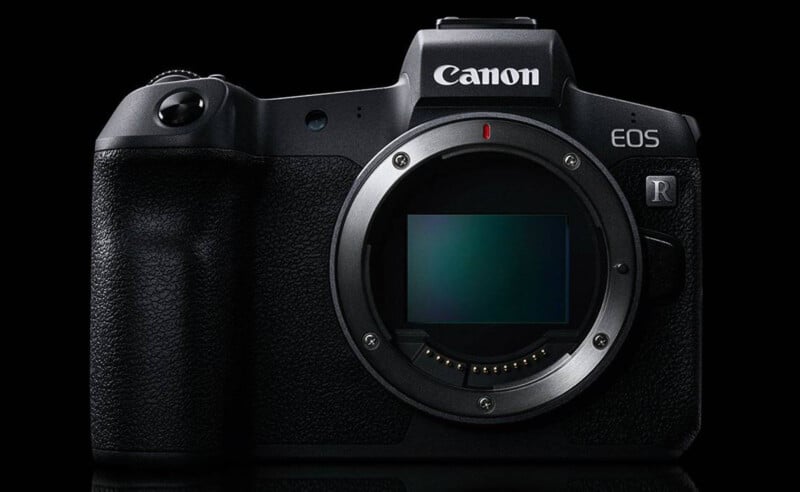
I don’t think the EOS R was an awful camera. There were downsides, of course, like the mode button (yes, button), slow continuous shooting speeds, a single card slot, and the lack of IBIS, to name a few of the most glaring shortcomings. But the camera still had some neat features and did most things pretty well.
But everything about its launch, its technology, and how Canon went on to treat it was weird.
Let’s contrast it with something like the Nikon Z6 and Nikon Z7, Nikon’s first full-frame mirrorless cameras that were unveiled less than a month before the Canon EOS R. While the Z6 and Z7 were smaller than Nikon’s DSLR cameras, they were fundamentally similar in their overall design and user experience. Still, they felt like the continuation of something.
The Canon EOS R didn’t. That in and of itself is not a bad thing, however, the EOS R wasn’t just an unusual departure from a tried-and-true type of camera and photographic experience, it was mostly a worse one.
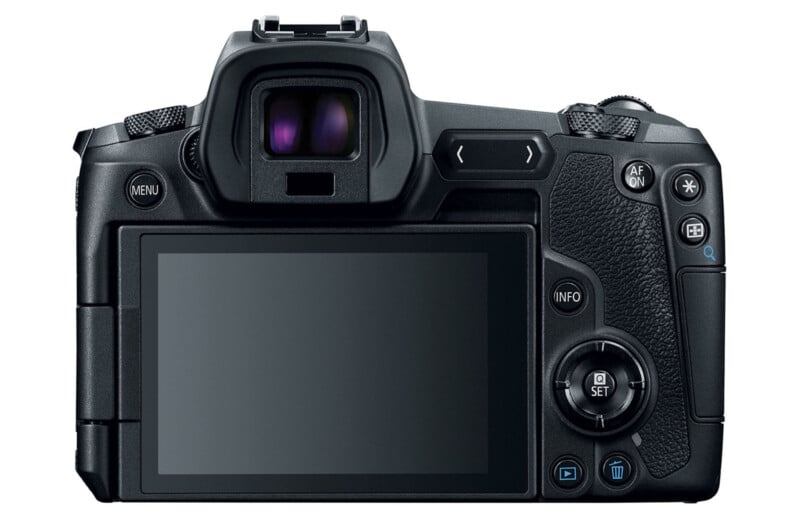
The fact that the EOS R didn’t follow typical Canon camera naming conventions was a good indicator that Canon was up to something unusual with its debut full-frame mirrorless camera. There was never to be a Canon EOS R Mark II, and the original EOS R was very clearly not an EOS R1. Canon was exceptionally adamant about that back in 2018.
The EOS R also didn’t really introduce much new in terms of its features or performance. It had essentially the same image sensor as the Canon 5D Mark IV DSLR, lagged far behind its primary full-frame mirrorless competition, the Sony a7 III and brand-new Nikon Z6, and had a lot of puzzling design choices that Canon almost immediately walked back with subsequent Canon EOS R-series cameras, like that Touch Bar.
It’s as if Canon knew the 5D Mark IV wasn’t popular, so it repackaged the camera into the EOS R and asked, “How about now?”
New lenses always last longer than new cameras, of course, but it is challenging with the benefit of hindsight to think that the Canon EOS R was anything more than a way for Canon to hurriedly launch a new camera system and the RF lens mount. The EOS R, for all its achievements and faults, was most notable for being a way to use Canon’s impressive new RF lenses, rather than a camera that lived up to the optical engineering on offer. Canon launched a brand-new system that happened to, by necessity, include a camera.
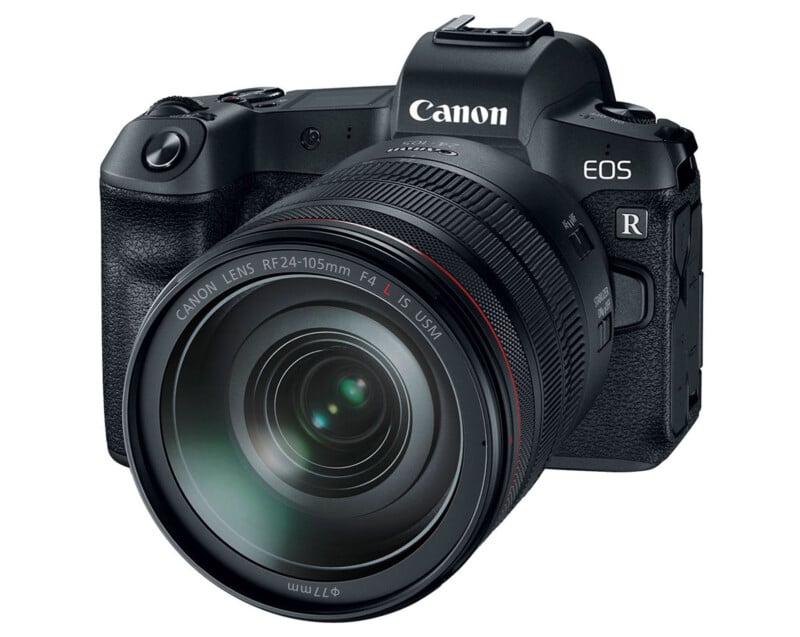
When have we ever seen anything like that from a camera maker before or since?
I know Canon worked hard on the EOS R camera and many people spent considerable time and energy to make it as good as possible. It was the best Canon had to offer at the time that the company wanted to enter the full-frame mirrorless camera space. But frankly, it set a weird tone that it would take Canon years to fully move beyond.
If the Canon EOS R felt like a fairly limited photo and video tool as soon as it landed in 2018, 2019’s EOS RP only magnified these shortcomings. And then, Canon’s next major release in January 2020 was the Canon EOS-1D X Mark III, a flagship DSLR. A great DSLR, no doubt, but an old-school camera nonetheless.
Canon’s messaging around the EOS R and mirrorless in general was still all over the place.
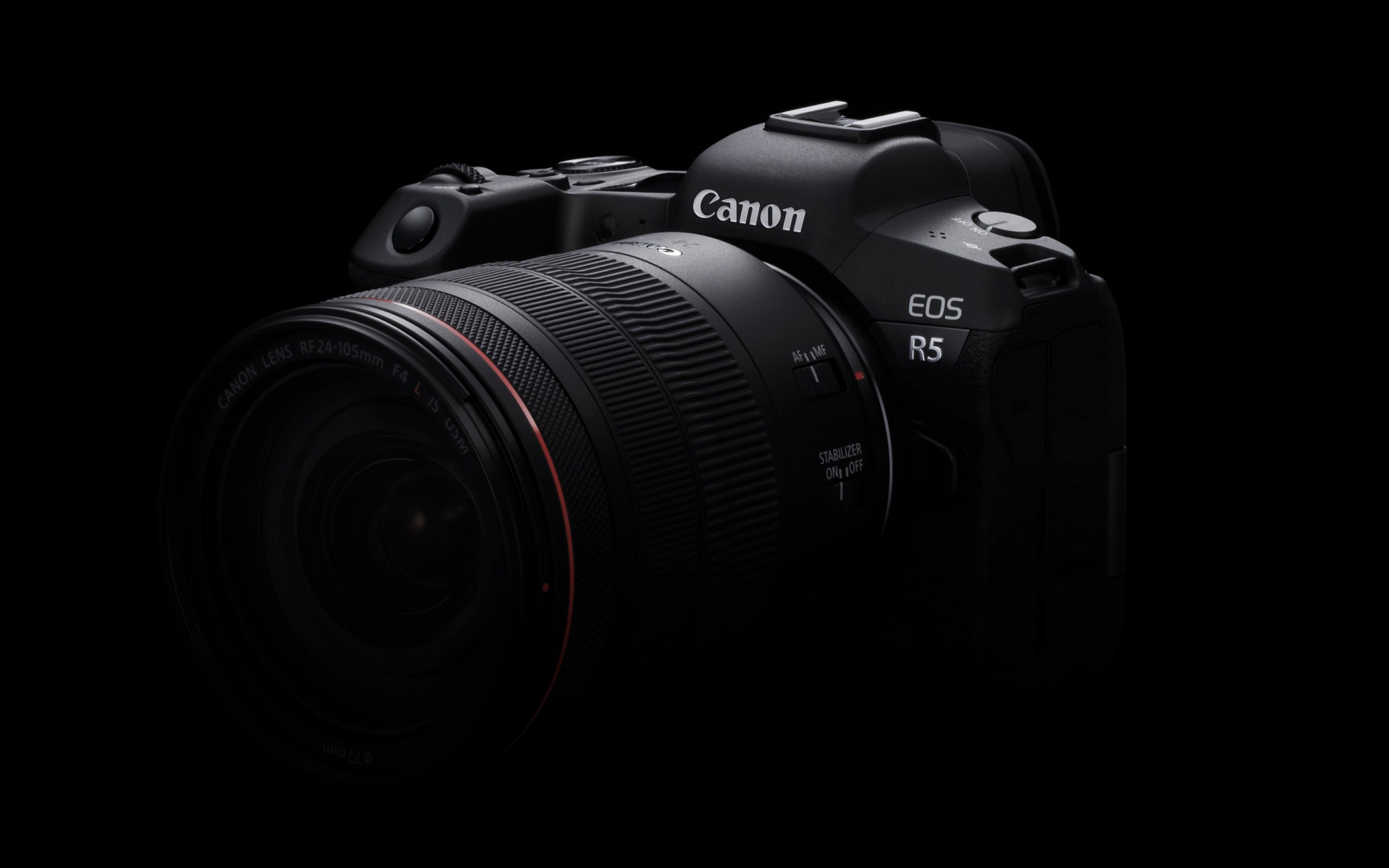
Finally, nearly two years after the EOS R was unveiled in a fast-paced, bombastic late-night event in Hawaii I barely remember, Canon’s EOS R mirrorless camera system got its first genuinely great cameras: the EOS R5 and R6. As soon as these cameras were announced, it was, “Canon EOS R who?”
The RF mount may have started with Canon’s very first RF lenses in 2018, but it feels like the EOS R camera system didn’t truly begin until the R5 and R6. And boy, what fantastic, normal cameras they are.
Nearly all of the unfulfilled promises of the Canon EOS R were quickly answered in the form of two excellent cameras that set the foundation for even better cameras to come, like the R5 II, one of my favorite cameras ever, and the R6 II and R6 III, the former of which is Canon’s best-selling full-frame mirrorless camera and the latter, Canon’s best overall mirrorless camera for most photographers right now.
However, many of the new and interesting features that the Canon EOS R introduced, albeit somewhat unsuccessfully in most cases, were left by the wayside when Canon launched the EOS R5 and R6 cameras. There was a massive shift back to the “norm,” which only makes the EOS R all the more forgettable.
It was an anomaly in ways I didn’t fully appreciate in 2018. At the time, I expected all future Canon mirrorless cameras could easily trace their lineage back to the very first camera. But that didn’t happen either.
The Canon EOS R and its bizarre astrophotography-oriented sibling, the EOS Ra, were discontinued in short order — much faster than Canon typically discontinues any of its cameras. I’d say gone but not forgotten, but I don’t think that’s really true. If I ask someone today, “Hey, what do you think of the EOS R?” I think more times than not, the response will be, “Which one?”
Image credits: Canon. Header photo created using an asset licensed via Depositphotos.