Man Can See His Family Again Thanks to Insta360 Camera Controlled Via Neuralink Brain Chip

An Insta360 webcam is helping a man with ALS, a fatal degenerative condition that causes a person’s muscles to atrophy, to live a better life and see his children.
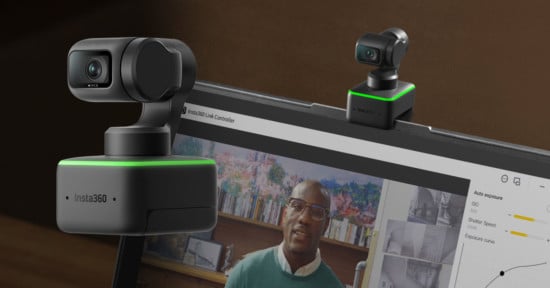
Coupled with a Neuralink chip implanted in his brain, which can essentially translate thoughts, Brad Smith from Gilbert, Arizona, is now able to use an Insta360 Link 2 to look around, take photos, and engage with his family in ways he couldn’t before.
“It restores a sense of mobility in my gaze,” says Smith in a newly-released documentary titled A Second Pair of Eyes. “I can now pan to see their laughter, gains, and growth in real time. It bridges the isolation ALS imposes, and restores meaningful connection.”
Smith says the camera has “dramatically changed how I interact with my child and wife,” enabling him to see moments that have been denied to him for years. He likens it to “reclaiming a piece of freedom after a long time being locked in place.”
Previously, Smith could only communicate with an infrared camera system called Eyegaze, which tracks a person’s eyeline, a bit like a computer mouse. But with that setup, he wasn’t able to go outside or even be around bright light. With the Link 2 and Neuralink chip, Smith can go into the sunlight and watch his kid’s soccer games, experiencing things he had been missing.
“Life no longer feels static, it’s dynamic and engaging once more,” Smith says in a voice that has been AI-generated based on recordings of his voice before his debilitation.
Smith became the first person with ALS to receive a Neuralink brain-computer interface (BCI) in November 2024. The Link 2, with its 1/2″ sensor, can capture lifelike 4K, and the pan-tilt-zoom movements of the 2-axis gimbals allow him to smoothly change the angle, opening up his field of view.


Insta360 says it reached out to Smith after it noticed he was using a Link 2 camera with Neuralink — a company co-founded by Elon Musk. Insta360 customized the webcam to be “faster and more sensitive” in regard to the gimbal.
“The standard Link 2 model rotates at a speed of 5° per second—which is fine for everyday scenarios, but puts a hard limit on his reaction time—and lacks the finesse necessary to truly match the human eye, even when controlled by Neuralink,” Insta360 says in a press release.
“Our engineers worked flat out to modify Link 2 and found that it wasn’t possible to make the gimbal move fast enough without making the camera drastically larger and heavier, thus making it too cumbersome for Brad to use. Instead, they tweaked the logic being used by the Neuralink system to make every signal more efficient, essentially letting him move the camera further with the same amount of commands. This may sound like a relatively small change, but it made a big difference to Brad. It makes Link 2 easier and more natural for him to use, and he’s very happy with the results.”
Image credits: Courtesy of Insta360