Sony Talks Mid-Range Success and When it Launches New Camera Models
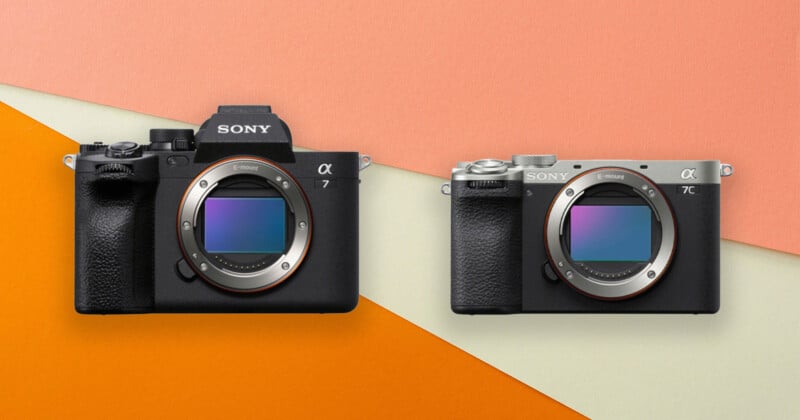
French photography publication Phototrend interviewed a senior product manager from Sony France, discussing a wide range of topics, including APS-C, full-frame, and hybrid cameras. The official even discussed the widely expected future Sony a7V camera.
Phototrend‘s interview, spotted by Sony Alpha Rumors, was with Fabrice Abuaf, Senior IP&S Product Manager for Sony France.
Right off the bat, Abuaf dished on the success of the Sony a7 III and a7 IV cameras.

“These are the most balanced [cameras] in our range, offering a good compromise between photo, video, and budget,” Abuaf said in French, edited for clarity. “Even though these models are not the most recent, they continue to sell extremely well.”
At least, that’s the case in France. Abuaf tells Phototrend that in other regions, including Asia, different cameras are more popular. In Asia specifically, Abuaf claims that the a7C II is the most popular, “probably for cultural reasons.” He cites the left-justified EVF as one reason why the a7C II may sell better in Asia.
However, overall, that class of full-frame mirrorless camera — a7 IV and a7C II — sells extremely well globally.
Although full-frame cameras are popular in France (Abuaf says Sony has 35 to 36% market share in the full-frame segment there), Sony’s APS-C cameras remain a good choice for many consumers. Abuaf acknowledges that Sony’s APS-C cameras, which do not feature a central EVF, are less popular in Europe, though. It would be interesting if Sony built an enthusiast-oriented APS-C camera with an a7 IV-style body, but it would mark a significant departure for the company.
Phototrend, noting that it “expects a lot from the Sony a7 V,” asked Abuaf about this expected camera. The senior manager reiterated that Sony cameras are “designed to last” a long time and that, despite its “relative age,” the a7 IV remains a best-selling camera for Sony.
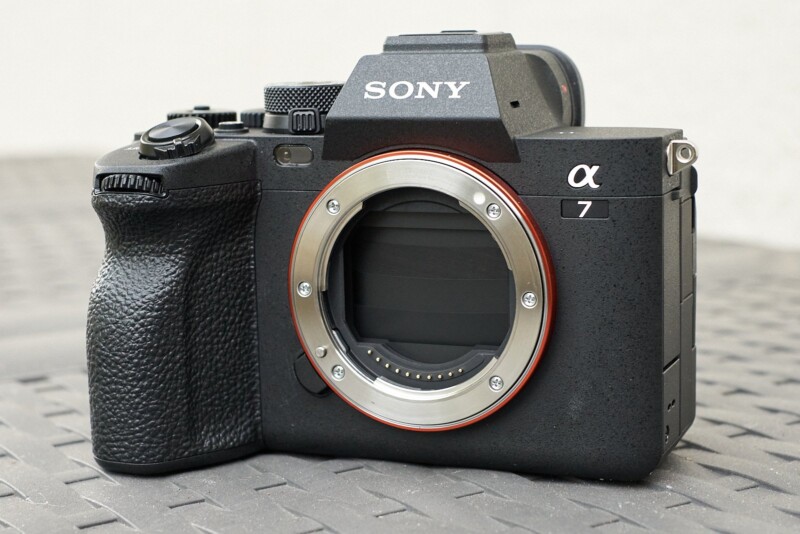
“There is obviously a waiting effect, a ‘buzz’ around the [a7 V], as [there was] for the a7S III in its it time,” Abuaf says. “But our philosophy is not to renew at all costs every year. We build sustainable ranges, with major innovations for every generation. The a9 III, for example, marked a real technological [breakthrough] with its global shutter sensor.”
While there is no telling when an a7 V might arrive, many photographers are expecting it, given that the a7 IV turns four years old this month. That’s quite long in the tooth for a Sony Alpha camera, especially a mid-range model. Abuaf doesn’t give much away here, but his insistence that Sony only releases new models when there are “major innovations” on offer at least offers photographers hope that when the a7 V arrives, it will be a marked step-up from the a7 IV.
Abuaf also touched on the Sony a1 II’s popularity. Although the new flagship camera didn’t necessarily seem that exciting at launch or offer many breakthroughs, it has proven a smash hit among professionals.
“Yes, [the a1 II] is a real success,” Abuaf says. “From the moment we started, we have experienced a strong demand and we were immediately in short supply. Many professionals who already used the Alpha 1 have [upgraded to] the a1 II, seduced by its level of maturity.”
Sony, like everyone else, has noticed the two newest video-first hybrid cameras to hit the market: the Canon EOS C50 and the Nikon ZR.
“We are watching the competition carefully, of course,” Abuaf says. “But we are especially proud of our FX range, which has largely inspired other brands.”
The senior product manager touts the FX2’s workflow features, in particular, and is adamant that video users understand what Sony FX-series cameras can offer them in professional environments. Sony won’t chase “specifications” with its cameras, per Abuaf.
Among the many other topics discussed in the full interview, it is worth considering what Abuaf has to say about the Sony RX1R III premium compact camera. This camera has been nearly a decade in the making, and its $5,100 price tag has left some photographers feeling a bit jaded.
However, as sales charts have shown and Abuaf confirms, photographers are buying the RX1R III. Abuaf suggests that the RX1R III’s success so far indicates that there remains a strong market for the product, despite it being a niche luxury camera. Hopefully, this means that photographers won’t need to wait another 10 years or so for the next version.
The full Phototrend interview includes discussions on tariffs, third-party lenses, adapters, the RX100 series, Sony’s new 100mm f/2.8 Macro G Master lens, and more. It is a fairly candid interview and sheds light on Sony’s Alpha business and philosophies.
Image creditsSony. Header photo created using assets licensed via Depositphotos.
Affiliate Disclosure PetaPixel articles may include affiliate links; we may earn a commission if you buy through one.