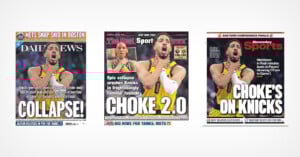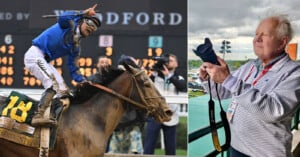

The idea of being a sports photographer to many enthusiasts seems glamorous and exciting. Free and seemingly unfettered access to major league games with a view just meters away from live action. Akin to a soldier on a battleground armed with the latest gear, carefully and methodically (yet rapidly) shooting his subjects with the aim to make a publish-worthy photograph in the midst of chaos.
But what is it really like out there in the trenches? Is it all it’s cracked up to be? More importantly: in a society where the almighty dollar is king, is it a viable source of income for a professional photographer? Read more…
Seven other photographers were also presented with awards, and prior to each one receiving their prize, a short video feature was played to introduce people to the photographers and their work. We’ve collected the videos here for your enjoyment. Read more…
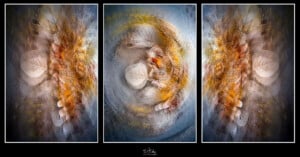
Craig Royal is an award-winning fine art photographer based in Tampa, Florida. Visit his website here.
PetaPixel: Can you tell us a little about yourself and your background?
Craig Royal: I’m a visually impaired fine art photographer. I’m legally blind due to a congenital form of optic nerve atrophy. I have been legally blind since birth. My vision had been 20/200 corrected up until 1992, when a white blind spot began to develop in the center of my visual field in both eyes. Read more…
Clark Little is a photographer based in North Shore, Hawai’i who specializes in shorebreak wave photography, or photographing waves as they crash onto shore. Visit his website here.
PetaPixel: Can you tell us about yourself and how you got started in photography?
Clark Little: In the late 80′s and early 90′s I was known in the surfing world for catching big hopeless shorebreak waves on my surfboard at a famous surf spot called Waimea Bay. Back in those days, Waimea Bay was the epicenter of the big wave surfing world. The surfing magazines published these shots since many were of wipeouts and situations where people would think that person got seriously injured. Read more…
Joey Lawrence, better known by his professional name, “Joey L.,” is a Canadian commercial photographer, director and published author based in Brooklyn, New York. Visit his website here.
PetaPixel: Can you tell us about yourself and how you got started in photography?
Joey L: When I was 16 years old and in high school, all my friends were in bands. I could never sing (I’m beyond horrible) or play any instruments, so instead I became the photographer. I would help them build press kits and band profiles for their websites, experimenting along the way and learning everything I could about the technical side of photography. Read more…
The New York Times has published a recently-discovered interview photographer W. Eugene Smith gave the American Society of Media Photographers back in 1956. Here’s Smith’s response to the question, “When do you feel that the photographer is justified in risking his life to take a picture?”:
I can’t answer that. It depends on the purpose. Reason, belief and purpose are the only determining factors. The subject is not a fair measure.
I think the photographer should have some reason or purpose. I would hate to risk my life to take another bloody picture for the Daily News, but if it might change man’s mind against war, then I feel that it would be worth my life. But I would never advise anybody else to make this decision. It would have to be their own decision. For example, when I was on the carrier, I didn’t want to fly on Christmas Day because I didn’t want to color all the other Chistmases for my children.
He also shares thoughts on the issues of staging and retouching. It’s a fascinating read. Check out the full interview through the link below.
Perth-based photographer James Fabri sees things a little differently when he looks through the viewfinder of a DSLR. While most photographers can only use half of their regular vision to frame shots, Fabri has the advantage of seeing things the way he normally experiences the world. You see, he only has one eye. Read more…
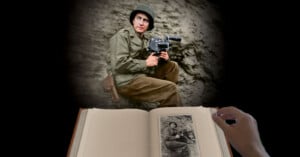
What’s it like to shoot on the front lines of battle as a military photojournalist? This 15-minute documentary by filmmaker Hannah Hill will tell you. Here’s the video’s description:
This is a documentary about Staff Sgt. Ryan Crane, a United States Air Force photojournalist, who has deployed to Afghanistan twice. He shares his experiences as a photojournalist in a combat environment as well as the mental and physical toll it takes on him.
Crane is based out of O’Fallon, Illinois, and has served as a combat cameraman for a Special Forces, photographing the war with a DSLR and an M4. Read more…