Posts Tagged ‘commercial’

One Photoshop Fan’s Quest for CS5

It’s nice to see that Adobe’s corporate culture allows for some “self-deprecating fun“. Yesterday Photoshop product manager John Nack posted the above video, in which a “Photoshop fan” starts an Apple-esque waiting line outside what appears to be a Best Buy.

Guess who makes an appearance in the video? None other than Bryan O’Neil Hughes, the product manager whose voice narrates the now famous Content Aware Fill demo video.

“Unicorn into a meteor sho-weer!”

Taylor Swift Markets New Sony Cyber-shot

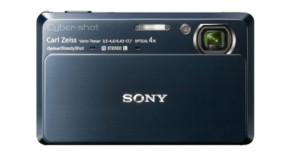
Taylor Swift Markets New Sony Cyber shot DSCTX7L 1 copyCountry-pop darling Taylor Swift has joined the growing list of camera-toting celebrity spokespersons. Swift’s partnership with Sony hit the limelight in January during CES2010, when Swift joined in the Sony press event to announce her use of Sony 3D technology during her current tour.

In a commercial released today, Swift demos the iSweep Panorama feature on the new Sony TX7 Cyber-shot. According to a Sony press release, the ads will air tonight on NBC, FOX and CW, likely targeting  a younger, primarily female demographic — though as the commercial suggests, she’s got a pretty broad fan base.

The camera boasts a number of other noteworthy features including a Carl Zeiss lens, “Exmor R” CMOS censor, HD video, and a touch screen, but Sony says Taylor Swift fans can get extra excited over the limited edition version with the singer’s signature engraved onto the camera.

However, the camera comes at a steep price of $400, which is considerably pricey for point-and-shoots. That’s nearly the cost of six tickets to see Taylor Swift in concert.

Driving Wooden Chairs in Stop-Motion

Here’s an amazing stop-motion video created for Nissan, and promoting zero emissions mobility. It’s amazing that a sense of speed and danger can be created from photographs of people sitting still in wooden chairs.

You can do this same idea with an “invisible” bike or car as well. Just take photographs of a person jumping into the air and posing as if they’re riding a bike or driving a car.

Nissan Shoots RC Cars with RC Cameras

Here’s a nifty behind-the-scenes video by Nissan Canada for a car commercial shot using a 1/10 scale remote controlled car.  In addition to using cranes and camera dollies, they mixed in a few Canon 5D Mark II DSLRs mounted on separate RC cars and a helicam.

Here’s the final product:

(via Chase Jarvis)

Stop Motion Animation with Knitting

Knitting is getting quite a bit of coverage on PetaPixel this week. Just a couple days ago we featured the surreal knitting photographs of Daniela Edburg. The above is an creative commercial for natural gas by TBWA Brussels and directed by Olivier Babinet. What’s amazing is that all the stop-motion animation you see is done using wool and a team of super dedicated knitters. They’ve also released a behind the scenes video showing how the commercial was made.

I love this kind of effort because it shows you how much you can do with good ol’ fashioned hard work and perseverance.


Update: Rather than “knitting”, the process is probably better described as “un-knitting”.

Samsung Shipping Container Camera

Samsung Shipping Container Camera samsunggiant

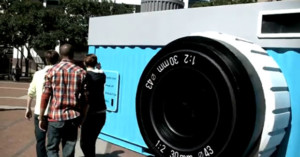
There’s a new video on YouTube showing a gigantic shipping container camera promoting a Samsung camera. In the video, bystanders can actually use the “camera” by inserting some money into a coin slot, and then having someone jump onto the massive shutter button on top of the shipping container. The resulting photograph is then displayed on a gigantic screen atop a nearby building.

It looks like this whole thing is simply a viral video created by Samsung. Here are some indicators:

  • The video was posted by cr8yourworld, which looks like an account created specifically for this campaign by Samsung.
  • Can you imagine the lawsuits Samsung would face if this thing were actually real, and people started falling off the container while pressing the “shutter”?
  • There’s a square helicopter at the end

Anyhow, fake or not, it’s a pretty fun idea. If only they actually created something like this (albeit safer) in some big city.

(via Trend Hunter)

Interview with Roger Hagadone

Even if you haven’t heard of Roger Hagadone, chances are you’ve seen his work before.

Hagadone is a talented commercial photographer whose impressive portfolio includes advertisements for the Blue Man Group and the cover of the popular young adult novel series, Twilight by Stephanie Meyer.


Interview with Roger Hagadone 11

PetaPixel: Can you tell us a little about your background, what you do, and where you’re based?

Roger Hagadone: I’m an advertising photographer, and I shoot editorial book covers and dabble in fine art. I’m based in New York City. I live here and have an office in LA where I work quite a bit as well. I moved to the City after college, and met several top photographers here, one including Annie Leibovitz, who became a big influence on how I shoot people.

PP: Where did you go to college at?

RH: Purchase college, just outside of New York City.Interview with Roger Hagadone hagadone portportrait

PP: When did you get started with photography?

RH: Professional commercial photography — probably 10 years ago now. I started with magazine editorial and eventually that turned into advertising.

PP: We notice from your portfolio that you’ve worked with a number of really interesting subjects. Do you have one particular portrait shoot that you find especially memorable?

RH: That would definitely have to be the shoot with Mike Rowe from Dirty Jobs. It was a lot of fun to work with Mike. He’s a really awesome guy. For that shoot especially, he was really a trooper. It was about eight hours of photography.

We covered him with special ‘dirty’ effects. We layered the dirt, starting out very light and added more as the day went on. At the end, he was completely covered.  A lot of people would be very cranky after that, but he was cool. He was having a laugh.

Interview with Roger Hagadone mike rowe hagadone

PP: How many people worked at the shoot?

RH: Around a dozen people including crew and client. There were three people just covering him with these different substances but in the end most of the crew pitched in. We covered him with grease and eggs, bubble gum, feathers, and all kinds of stuff.

PP: That alone sounds like a pretty dirty job.

RH: Yeah, actually he said that this may have been his dirtiest job ever. His only regret was that he didn’t have his crew there to film it.

Interview with Roger Hagadone mike rowe hagadone 21

PP: How would you describe your photography and style to someone who has never seen it?

RH: I would say it’s cheerful and sometimes surprising. Never boring — that’s the main thing, I can’t stand boring photography. I like to keep it positive and fun. There’s usually a narrative to the images, something of a story, or maybe a comment or a joke.

Interview with Roger Hagadone hagadone stereo

PP: Is there an example of an image that represents the general body of your work?

RH: That’s tough. One image that I like that comes to mind is the time bomb image. There’s a bomb squad guy defusing the bomb, and there’s his pal behind him, about to pop a bag to scare him. I just like that anticipation of the joke.

The visual effect in my images, the retouching and the lighting, are kind of two halves of the images that are both equally important to me. It’s not just the photograph and the concept, but it’s also the retouching aspect of it as well.

Interview with Roger Hagadone timebomb

PP: What’s the single item in your metaphorical camera bag, aside from your actual camera, that you can’t go without?

RH: It’s Photoshop, well Photoshop and a dozen strobes! I prefer to get as close to the final image in-camera as possible but it’s in post processing where my images come alive. I have several techniques that I use and they are constantly evolving.

PP: What do you shoot with, currently?

RH: I have different cameras. I shoot with a Hasselblad with a Phase One back, mostly for advertising shoots. Other than that, I use a 1Ds Mark III.

PP: What was your first camera that you ever got?

RH: I think that I was seven (years old) and I had a Kodak 35mm camera, which I still have.

PP: Is that when you started getting in photography?

RH: Yeah, I still have images from that, too.

The actual camera is in one of my photographs in my Bigfoot story. In one of the images, Bigfoot has a camera, and he’s taking a picture from behind bushes. That’s my first camera.

Interview with Roger Hagadone bigfoot hagadone

PP: So we discovered your work because you did the covers for Twilight, and that imagery is evoked in a lot of fashion, a lot of types of advertising nowadays, that uses a very similar color scheme: black, white, red. How did you conceptualize and visualize this?

RH: It’s really a collaborative process. It begins with the publisher and they have some concepts in mind. And then I interpret these concepts into photographs. Sometimes, they have a pretty good idea of what they’d like to see in the image. It could be a background, an object, and then it’s just the interpretation of that into a final image. When I shoot a cover for a book, I usually take the basic idea and shoot several different variations of that one concept.

Things change very quickly in the publishing world. Once I receive the assignment to photograph a cover, by the time it’s complete, things may have changed, and the images that I shot might end up on the cutting floor.

Or, I may be asked to re-shoot it with a slightly different idea. It’s a collaboration, and it’s important to be flexible.

When it came to the Twilight series, the first image of Twilight, the hand with the apple, set the tone for the rest of the images in the series: simple graphic composition. The use of red, white, and a warm black background. That pretty much set everything else.

Interview with Roger Hagadone twilight hagadone

PP: When you see this style used in other images, it’s as if it’s become a part of cultural memory and become almost iconic. How do you feel about that?

RH: It’s kind of huge that it’s crossed over into what I guess you would call pop-culture.

The first time I saw an advertisement similar to the look, I was taken back, but I wasn’t really sure if I was seeing it correctly, if they were really using inspiration from the cover in their advertisement.

But now, as you say it, I do see it quite often and it’s fun to see. Artists borrow from each other all the time, and I’ve been on both sides.

Other images that I’ve shot I’ve seen similar advertisements pop up six months later, but it’s give and take.

PP: Do you enjoy the attention you’ve received from your work on Twilight, or would you rather be known for your other work?

RH: I get a lot of inquiries about Twilight.

I don’t mind it at all, really. It’s kind of nice. The Twilight fans are really great. I get a lot of emails from them.

The weirdest thing that I’ve seen is the original Twilight cover — the hands and the apple — I saw someone with a tattoo of it. That was really bizarre, to see the photograph I shot tattooed on somebody’s arm.

That was shocking. It’s too bad I didn’t get a picture of that.

Interview with Roger Hagadone salvationmountain hagadone

PP: Let’s go back to you. What advice would you shoot to fellow photographers about interacting with their portrait subjects. From what your portfolio looks like, it seems like you’ve got a really good relationship with the people you shoot, or at least you know how to bring out their personality and emotion.

RH: The main thing is trust. They have to trust you. What I usually do is talk to the model before the shoot, before we start shooting to get that rapport going.

During the shoot, I keep it fun and fast-paced. Things are always moving, and I give them a lot of direction, so the model never gets bored or too distracted.

Also, I’m pretty silly when I photograph, so I think that element of fun brings out what I’d like. I also ask that from my crew, just to keep a really fun atmosphere.

Interview with Roger Hagadone hagadone bigfootjogging

PP: How long does it take you on average to do a photo shoot, for instance, the Bigfoot project?

RH: That one I shot in two days, and did all the post work within three days. So probably about a full week. They’re all different, though, depending on what’s involved.

A book cover may take one day to shoot and depending on retouching, it could take several days to finish up with revisions.

PP: And it gets bounced back and forth from you to the publishers too, right?

RH: Exactly. Like with the Twilight image, we got to the point where it was pretty much finished. And then there was a comment that the apple needed to be a little larger. So it was back to the drawing board, and we had tweak the apple just slightly.

Interview with Roger Hagadone hagadone cell

PP: How did you think of these image concepts for a lot of your personal work?

RH: Well, I’m an avid note taker. I just take tons and tons of notes.

The cliché is the pad by the bed, but I use an iPhone by the bed.

I use essentially a digital notebook and I just write all of my ideas in there. Sometimes it’s a full, complete idea that’s ready to go and I can shoot it; sometimes it’s just a little piece.

I’ll add little things to that piece later, but as soon as it’s ripe I can shoot it.


Image Credits: all images by Roger Hagadone

Communicating a Love for Photography

German film director and photographer Wim Wenders created this short film for Leica that captures his passion for photography in a beautiful and powerful way. It’s sure to inspire you, and may rekindle your love for the art if it’s grown cold.

(via Time2shoot)

Interview with Gary Salter

Gary Salter is a professional photographer based in London UK. You can visit his website at Gary Salter Photography. His clients include Mercedes Benz, Nissan, Ford, Vodafone, Citibank, LG, Jaguar, Nike, McDonalds, and Playstation.


PetaPixel: Could you tell me a little about yourself and what you do?

Gary Salter: I’m a Photographer based in London, I’ve been shooting for 17 years. I grew up in the north of England, I Studied graphics and photography at Liverpool, worked for a short time in the design world before making the break into photography. My interest in photography developed when I was about 8, It seemed natural that I would end up in a visual field when I was older. I also had an ability to draw, this eventually pushed me into studying graphics , the liverpool course had a strong photographic department, which was perfect for me. After college I ended up in the design world, working alongside some of londons top photographers, this was inspiring,

It was only time before I had to make the break.

PP: What kind of photography do you do?

GS: My commissioned work is 90% advertising based. It’s mainly people on location, quirky people. Some of the images are quite ironic, and we try to have as much fun as possible with them.

The commissioned work originally stem from my early street photography which contain a lot of observational humour. I still continue my ‘hobby’ street photography and tend to use it as a ‘sketch pad’ for ideas. Ideas that I can make into something bigger.

Interview with Gary Salter gs1

PP: How did you first get into photography? What was your first camera?

GS: I was 8 years old and I loved it, I think it was a Kodak Instamatic. My first serious camera at 18 was a Canon AE1. It was a gift when I started at college.

PP: What equipment do you use for your work now?

GS: I use whatever it takes for the job. It’s not really about the camera, it’s about the picture. I work out the requirements then use the best camera to solve the problem, I have a lot of cameras in the collection.

Interview with Gary Salter gs9

PP: Which would you say are your favorite cameras and lenses?

GS: My favourite camera is the one that will solve the problem the best, I can list a few. The Canon 1Ds MK3 is amazing, It’s a work horse, Is great in more stressed conditions where there’s less control. The hassleblad H3 D2, fantastic for the larger setup multiple people sets and huge productions. The leica M8 is fantastic as the street camera, it looks old fashioned its not in your face and it’s quiet.

PP: You’ve work with some pretty notable clients. Were there any that stick out as being especially fun to shoot for?

GS: I’m very fortunate in having a fantastic crew, all jobs are fun, there are many a story from many productions and some do stand out, but it would not be fair to name them.

Interview with Gary Salter gs2

PP: Can you tell me about your workflow? What’s the process like for a photo to go from your camera to the final image?

GS: Varies again on requirement, we shoot into Macs, makes life much easier, files are regularly backed up onto external raids.

We then build presentation websites for the clients to make selections. I have already made my selections and they are on the site too as preferenced shots. These tend to be the ones we work with at the end. Post production is split between myself and a company called loupe. They know how I want the images to look, and we work well together.

The client is kept up to date with the progress of the post production by a website where we launch the latest ‘critical’ changes to the image, they see a string of images next to each other from start to finish. Then it’s supplied to the client.

Interview with Gary Salter gs8

PP: Many of your photographs seem to be very elaborately staged. How many people are involved in each shoot, and how long do the shoots generally take?

GS: The idea stages take the time. Once we have a plan then anything can be achieved. There are many people. Vinita Dave does the production alongside myself. There will be hair make up and assistant, stylist and assistant, location finders. I like to build my own sets, (e.g. the sauna shots we built in my studio in shoreditch, and so was the changing room for the old footballers), I build these with one of my long term assistants Jose, amongst others. We will have 3 assistants on a shootday and a digital operator, then anyone else the project requires, eg stylists, hairmakeup etc etc.

PP: Who are the people that appear in your staged photos? How do you find the people you want?

GS: We use a mixture of model agencies and actors agents. It’s organised via a casting agent. If we can’t find them there, then we’ll street cast. I have a lot of respect for my casting agent, she really knows the business.

Interview with Gary Salter gs4

PP: Is there anything you wish you had known when you first started out in commercial photography?

GS: Yes, you don’t get much time off. You have to be completely committed, and have a love for images.

Money too. Very difficult… This means all the money goes back into the business, banks don’t understand what we do. We don’t make widgets, so they don’t get it. It’s hard work to get to a level where you don’t have to talk to them.

If you believe in pictures, you can do it.

PP: What advice would you have for an aspiring photographer who dreams of getting to where you are now?

GS: Carry a camera at all times and use it all the time. Observe and enjoy.

Test, test, test, set yourself projects, and see them through. Pictures get old quicker these days, you always need something new to show people.

Interview with Gary Salter gs3

PP: How important would you say a formal education in photography is?

GS: Good question. My best assistants over the years have all done degree courses, they know their stuff. They have then assisted for 4 years before moving on to their own stuff.

I have met allot of assistants that think its easier than it is, They break out too soon because they see the money. They tend to struggle and end up shooting things they don’t want to, things that aren’t right for them. The guys who really do well are the ones that do the time.

It’s not essential these days, but it’s a massive advantage.

Interview with Gary Salter gs7

PP: What does a formal education provide you with that is difficult to obtain otherwise?

GS: A chance to find your own direction, find what you would like to create in a competitive market, then give you the opportunity to go and get work with someone in that area who’s work you respect.

PP: Are there any photographers whom you keep up keep up with online?

GS: It seems strange to say I try to avoid that as much as possible, I like to do my own thing which has taken a very natural progression, watching what others are doing isn’t that healthy. I have had experiences when I have known people to become a little over influenced.

I do go to exhibitions, I keep up with the industry press, I love photo books, I just don’t like the online thing.

Interview with Gary Salter gs5

PP: Could you name some other photographers you respect?

GS: I’d have to go to the old school guys, likes of Elliott Erwitt, and Bresson.

Quite like more recent people like Martin Parr and David LaChapelle.

PP: If you could choose one person to be interviewed on PetaPixel, who would it be?

GS: Elliott Erwitt. Love to know what he was thinking when he took some funnier images.

Interview with Gary Salter gs6

PP: Any final thoughts you’d like to leave PetaPixel readers with?

GS: Final thoughts, many, but most importantly, Always carry a camera, use it as a sketch pad for your ideas, enjoy using it, ignore the rules and have fun.