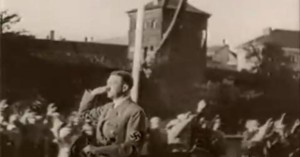
The Story of How Jews Were Saved by the ‘Leica Freedom Train’
Last week we briefly wrote on how Leica played a role in saving Jews by helping them …
Last week we briefly wrote on how Leica played a role in saving Jews by helping them …
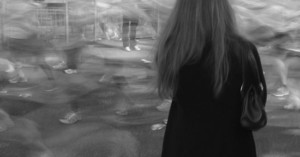
Runners in broad daylight aren't often captured as motion blurs, but that's exactly how Flickr user Justin (just big feet) shot the London Marathon. Just stick a neutral density filter or two onto your lens to restrict the amount of light entering your camera, allowing you to shoot at slower shutter speeds.
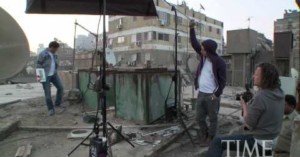
Here’s an interesting behind-the-scenes video showing photographer Martin Schoeller shooting portraits for …
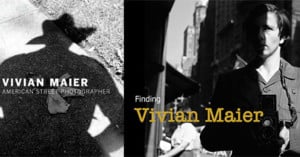
One of the big stories in the photo world last year was when a set of glass negatives purchased for $45 at a garage sale were found to potentially be Ansel Adams photos worth an estimated $200 million. Unfortunately for the finder, the photos were most likely not Ansel's, and ensuing lawsuits prevented him from making a huge profit from the find. Real estate agent John Maloof, on the other hand, could end up making a fortune from his discovery of previously-unknown nanny and street photographer Vivian Maier.
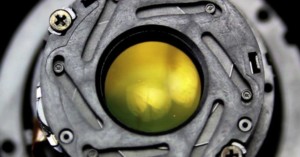
Here's an interesting look at what the aperture blades on a Canon 18-55mm (the kit lens for many DSLRs) look like. The video above shows the blades moving into position at 120fps. This happens every time you shoot a photograph and in the blink of an eye.
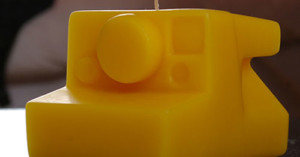
twine, the same store that sells the ceramic cameras we featured …
How much does a camera vibrate due to your finger pressing the shutter or the mirror flipping? …
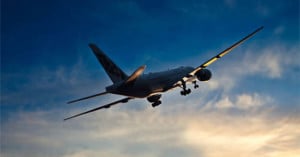
There's a lot of paranoia when it comes to doing photography in and around airports these days -- much to the dismay of plane spotters -- but wedding photographer and airplane enthusiast Lynn-Kai Chao came up with a neat way to do airplane photography without worrying the TSA: by using airplane models. Believe it or not, the above photograph is actually a Photoshopped photograph of Chao holding a model airplane.
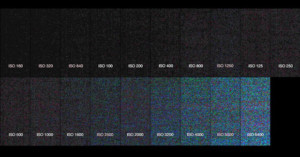
Technicolor just released a new Picture Profile for Canon DSLRs, and recommended that ISO be used in multiples of 160. Andrew Schär decided to test this using his Canon 60D, and found that in terms of the amount of noise present in the footage, ISO numbers that are multiples of 160 are best (i.e. least noise), followed by multiples of 100, and finally multiples of 125 being worst.
National Geographic created this nifty little video teaching how to turn any room with a view into a giant …

Rather than using traditional instant film that develops on the spot, newer instant cameras are using a special …