Everything You Wanted to Know About Noise but Were too Afraid to Ask
As technology has advanced, so too has noise control. Here's the basic information about why noise appears in your photos and how to deal with it.
As technology has advanced, so too has noise control. Here's the basic information about why noise appears in your photos and how to deal with it.
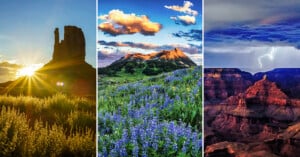
What if creating a truly unique landscape photograph isn’t about finding somewhere no one has ever stood, nor simply revisiting the places everyone knows, but about noticing the extraordinary in both?

Abstract photography is one of those things that you either love or hate. Either way, it’s a genre worth dabbling in, as you can learn a lot about your camera from it.

There’s more to photographing the sea than many people realize. Here are some handy techniques for safely photographing one of the most exciting and evocative subjects on our planet.

Photography has never been more accessible, yet truly distinctive images feel harder to come by than ever. With social media reinforcing familiar compositions and popular locations, many photographers find themselves asking how to create work that feels original and fulfilling. This three-part series is designed to explore that question across three genres: wildlife, landscape, and night sky photography. In this first article, the focus is on wildlife and how slowing down, understanding animals on their own terms, and committing to personal projects can help photographers create images that rise above the expected.

Social media was once the backbone of marketing for photography businesses. However, we now have strong reasons to leave it behind and adopt a different approach to photography. Why did my recent behavior change prove this to be true?

When we print, we usually want colors and tones to be as accurate as possible. What appears on the paper should match what is on our screens. There are important steps to achieving that.

Printing is the ultimate step in the photographer’s workflow. Getting to grips with the basics is essential, and there is more to it than meets the eye. In my first article, we discussed the printers and inks. In this second one, we examine the paper.

Photographers often embrace beauty and the sublime, unlike the current trends in other arts that downgrade their importance. There are good arguments for both rejecting and embracing aesthetics in our images.
Do you print your photos? If not, it’s something you should consider because it is much more rewarding than just posting pictures online.
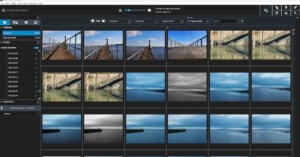
We can quickly acquire tens of thousands of photos. Therefore, managing them effectively is essential. Equally, we are becoming more demanding of our development and editing software. Recently, the most effective way of managing our workflow has changed dramatically, making our lives easier.

For professional photographers, there’s more to it than just composing a photo and exposing it correctly. It's great fun, but any photographer can set up a business and benefit from it.
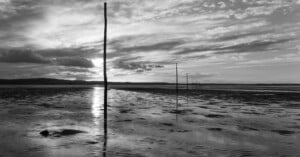
I often refer to photography as a blend of art and science. However, our cameras' lack of adherence to scientific principles can lead to confusion. Both our photographer ancestors and the camera manufacturers are to blame.

We all want to become more successful at photography, don’t we? Of course, success is a personal thing and can be defined in many ways. If you want that as your New Year’s resolution, there are ways to go about it.
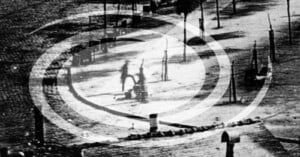
The concept of a time machine was first described by H.G. Wells in his book The Time Machine in the year 1895. That was 57 years after Louis Daguerre invented his photographic technique, the daguerreotype.
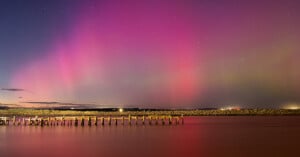
An understanding of colors and how they can transform our photography is a skill we photographers must master. Therefore, getting to grips with the strangeness of color is essential for understanding how to take better photos.

Claims made about the golden ratio in nature are often overstated or romanticized. In fact, it is more often a useful model than it is a universal law,

It may be commonplace to you, but your audience members may be unfamiliar with the things in your life. Consequently, to them, your ordinary subjects may seem exotic and unusual. However, there are other good reasons to photograph the commonplace repeatedly.

Originating in the early part of the last century, Gestalt Theory revolutionized the understanding of perception. It emphasizes how humans perceive what they see. So, how can we use it to improve our photography?
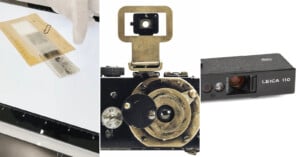
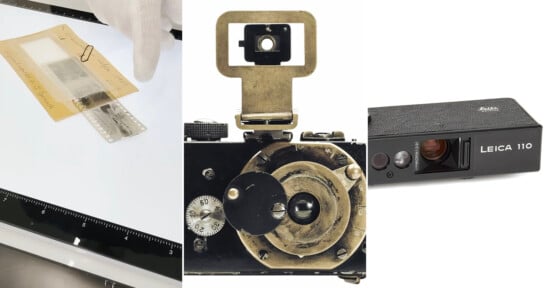
Leica counted down the days to Christmas in style, delivering daily videos that showcase "the most special things" in the company's archives. As is tradition, the photographic advent calendar of sorts concluded yesterday, Christmas Eve, and we thought a nice little Christmas present to our passionate readers was a recap of Leica's Christmas countdown.

Learning photography is a never-ending quest. Most of us are hoping to make our photos appealing to our audience. So what follows are five approaches we can employ to help achieve that.
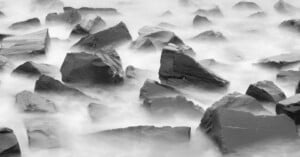
As photographers, we often concentrate on technical perfection and the compositional layout. However, arguably more important than either of those is adding meaning to your photos. It can be challenging, but adding meaning can genuinely elevate your photos to the next tier.

Master winter wildlife photography with expert tips on camera settings, gear, composition, and field strategies to capture stunning images of animals in snowy landscapes.

There have been significant improvements in photographic technology over the last 50 years. Although it helps us get ever-better photographs, there is an essential reason for going back to basics.

The most compelling photos are those that break away from the mundane. Therefore, you can achieve better results by photographing at atypical times of day and weather conditions. Here are some hints for doing that and avoiding some risks.

Depth of field refers to how much of the picture is sharply in focus. A skill you should hone is precision, because it can make an enormous difference to the success of your photos.

Digital photography is at a disadvantage when it comes to creativity, I argue; at least when compared to painting, drawing, sculpture, or music. However, there are lessons from history you can apply to overcome the hindrances we face and learn ways to help us grow creatively.

There are different types of color contrast, and how we use them radically changes the look and feel of our photographs. An often-overlooked aspect of photography, the various types of contrast play an essential role in creating our images. What are the different types, and how can we use them to improve our pictures?

Animal photographer Tim Flach has taken hundreds of photos of cats and, through his time with them, finds himself asking questions about why they are so important to humans. He has partnered with scientists to find out exactly why they elicit the emotions they do, and how he, as a photographer, can better highlight those aspects of their form.

Previously, I wrote about five elements of art and how they can impact our photographs. However, there are three more elements that work in conjunction with points, lines, shape, and form that can elevate your photography further.
The Professional Photographers of America (PPA), the world’s largest nonprofit photography association, has launched PhotoVision. This new streaming platform brings together more than 2,500 videos and 1,700 articles focused on the art, business, and inspiration of photography.

Photographer Chris McGinnis has never taken a macro photograph in the field with a tripod in his entire career as an OM SYSTEM ambassador. The reason is simple: mobility trumps stability when you understand the workarounds.

Merging multiple images into panoramas is a feature available in many editing programs and it is surprisingly easy to accomplish.
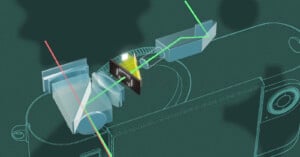
Photographer and technology expert David Imel recently published a video discussing why Leica got rid of the most iconic part of its M series cameras in the new M EV1: the rangefinder. But to do that, he first had to explain what a rangefinder is and how it works, and in doing so created the best modern breakdown of the technology that is very easy to understand.

Understanding the roles of the fundamental elements of art allows photographers to create compelling compositions. These elements are not merely aesthetic choices but tools for creating structure in your photography.

Travel photography is one of the most rewarding genres, as it allows you to use your image skills in new and exciting environments. But there is more to it than just creating vacation snaps. Here are some of my approaches to better travel photography during a recent visit to beautiful Albania.
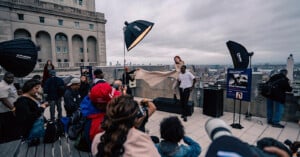
Sony and Adorama are inviting photographers to their highly anticipated Rooftop Photography Events at Sixth Floor Loft in New York City. Over two consecutive days, October 26 and 27, attendees will experience hands-on sessions with Sony cameras, expert guidance from industry professionals, and the chance to capture striking rooftop imagery.

The design of an image is one of the most important aspects of photography, but composition is a vast and complex subject on which much ink has been spilled. It is well worth coming to grips with composition fundamentals, as they will transform your photography.

While smartphone cameras and standalone cameras (which are sometimes referred to as "real" cameras) are often marketed using the same terms, the way they each function is very different. In a video published to TED-Ed, electrical engineer Rachel Yang simplifies and explains why smartphones don't operate by the same rules that standalone cameras do.

There’s much more to exposure than just correcting for light. It’s one of the most powerful tools you can use creatively.

In this, the second in a series of articles about autofocus, we will look at different focusing modes and their practical applications.

Every few years, I write an updated version of the Film Grain Emulation guide. I do this because my passion drives me to learn more, and my understanding of film grain changes significantly.

There’s a lot more to focusing than many novice photographers realize. When they delve into it, it can seem complex. However, it is easy to master once you have found your way around your camera.

There are small pieces of information that can make a big difference to your enjoyment of photography and your success at taking better pictures.
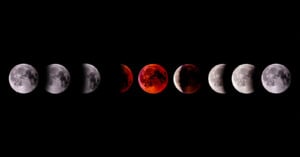
A "blood moon" lunar eclipse will dazzle viewers this weekend, September 7-8, and provide photographers their second chance of 2025 to capture incredible total lunar eclipse images.
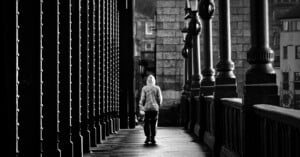
All great photographers in the past and present have had creativity at their core. There are proven links between personality traits and creativity. Therefore, modifying your actions can improve your photography.

Choosing the correct shutter speed is imperative. Here’s how it works and why you should take it into consideration when shooting any photograph.

Swiss manufacturing and craftsmanship have left their mark on a variety of fields, ranging from mechanical watches to sailplanes and, in the case of small but noteworthy endeavours such as those of Monteverdi, even luxury sports cars.

In my previous article, we embarked on an adventure that started with a basic understanding of metering and exposure. Hopefully, you appreciate how the camera measures light and how its aperture, ISO, and shutter speed can be balanced to expose the image correctly. Each of those changes the way the image looks, and here’s what the aperture does.

Photography requires greater technical understanding than any other art form. I’ve been teaching people at all levels of photography for well over a decade. At the start of each workshop, I always begin by explaining metering and basic exposure settings. A major foundation of good photography, these settings are often the least understood, but they are among the easiest things to get right.