Crucial Composition Techniques That Can Improve Your Photography

The design of an image is one of the most important aspects of photography, but composition is a vast and complex subject on which much ink has been spilled. It is well worth coming to grips with composition fundamentals, as they will transform your photography.
I was about nine or 10 when I was on a school trip on the other side of the country from where I lived. I had an old Kodak Duaflex II camera with me and was snapping away at the rolling scenery of Dartmoor, which was very different from my home in the flatlands of Norfolk in the U.K. One of the teachers gave me some photography advice, and it was the rule of thirds.
Back then, and ever since, I challenged rules. Not to get into trouble, but to show that some prescriptive regulations are there to be broken. For example, my school English teacher said that one should never begin a sentence with the word “because.” Because he said that, I immediately found a way of structuring a sentence that could legitimately start that way.
So, when I was introduced to the rule of thirds, I had to find a way to work around it. Like every rule in photography, it can be bent, twisted, and broken.
The Rule of Thirds
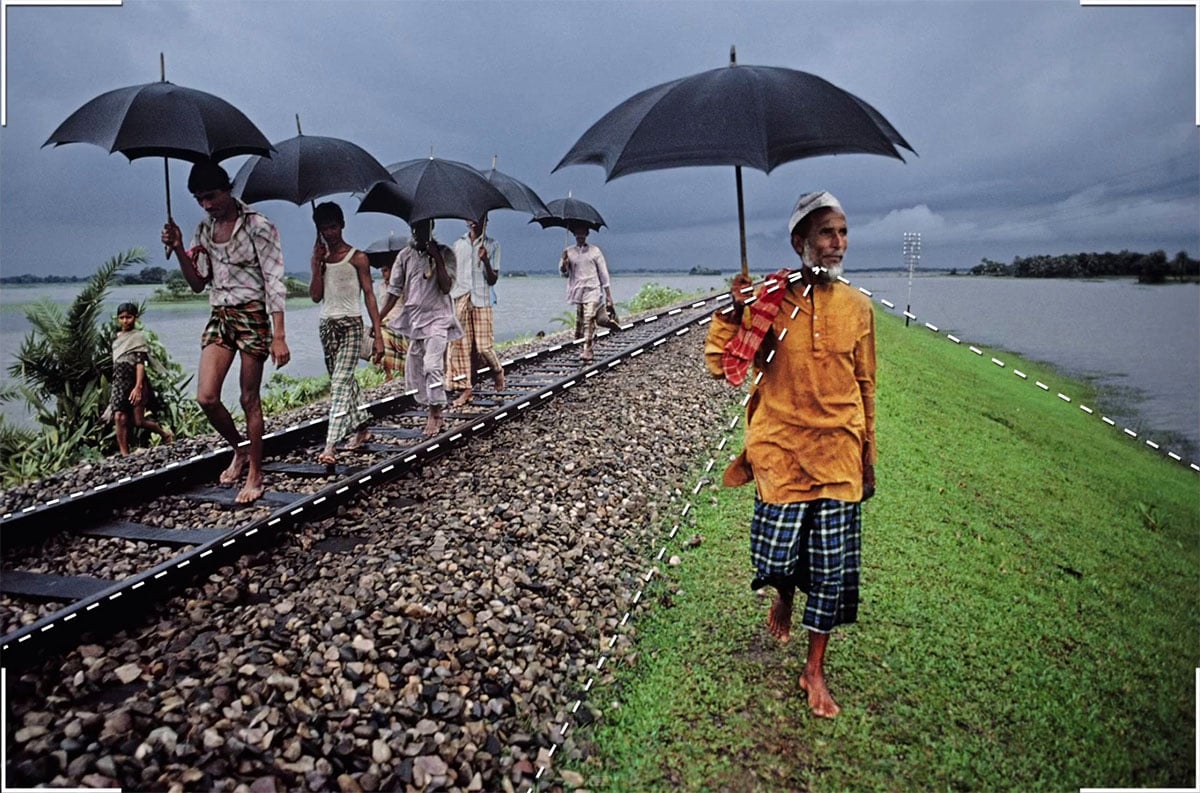
Like other compositional approaches, the rule of thirds is just one of a multitude of compositional techniques that can help you to improve your results. It’s a simple idea. You divide your frame equally by placing imaginary Tic-Tac-Toe board lines over it and using those lines for subject placement.
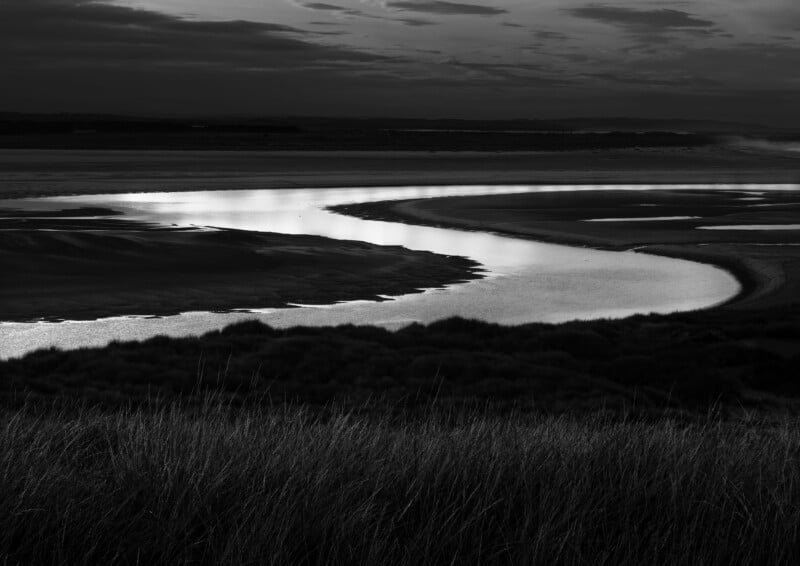
Here is an example of how I have applied the rule of thirds. In photography, some people take the word “rule” literally, but it is never a decree or law. It is a guideline, much like when we say, “as a rule.” There is always space for it to be bent or even broken altogether.


There are numerous ways you can break free from it, and too many other considerations in composition to mention in one article. However, I will cover these in more depth in future articles.
The Golden Ratio
Firstly, you can use the phi grid, a more sophisticated version of the rule of thirds based on the golden ratio. The lines are pulled slightly toward the center of the frame. Alternatively, you can use the golden spiral, also based on the golden ratio.
If you are not familiar with the golden ratio, it is a mathematical relationship of 1:1.618, which I have already written about here. It is considered pleasing to the human eye because some of what we see in nature corresponds with it. However, as I pointed out in the article, it is not the magic solution to composition that some think it to be.
It is often represented by the Greek letter phi (Φ) and is found in art, architecture, and the natural world.

Static Symmetry
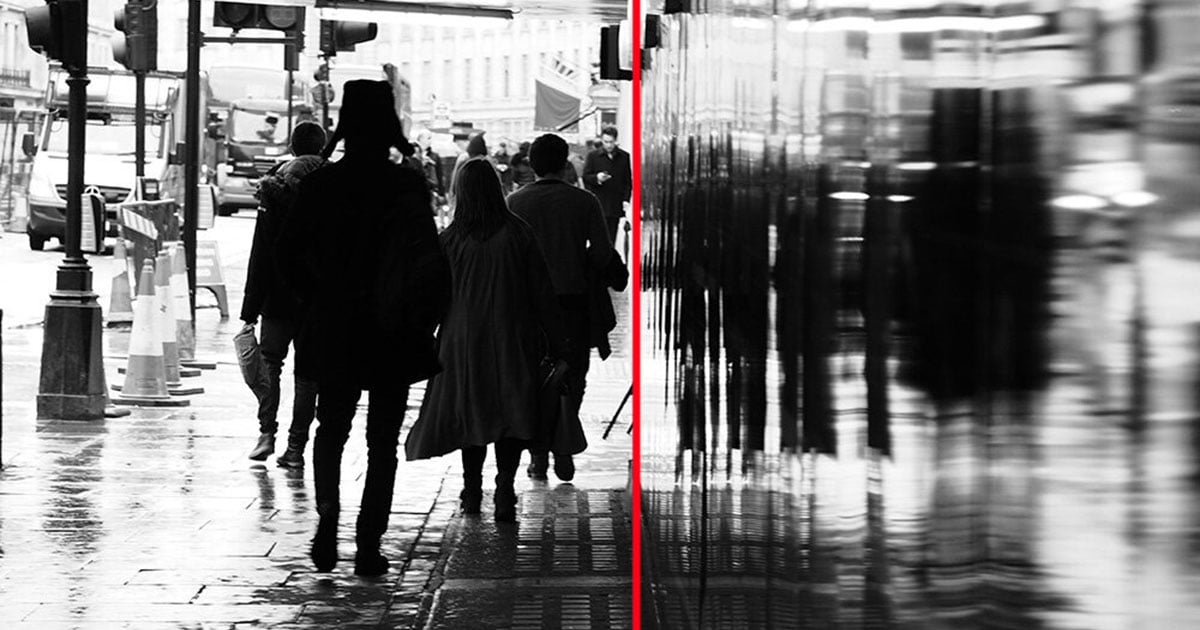
Photography can benefit from symmetry because it helps create balance in an image. Symmetry is a mathematical concept that we usually think of as one side being the mirror image of the other. Nevertheless, reflection symmetry isn’t the only approach we can take.
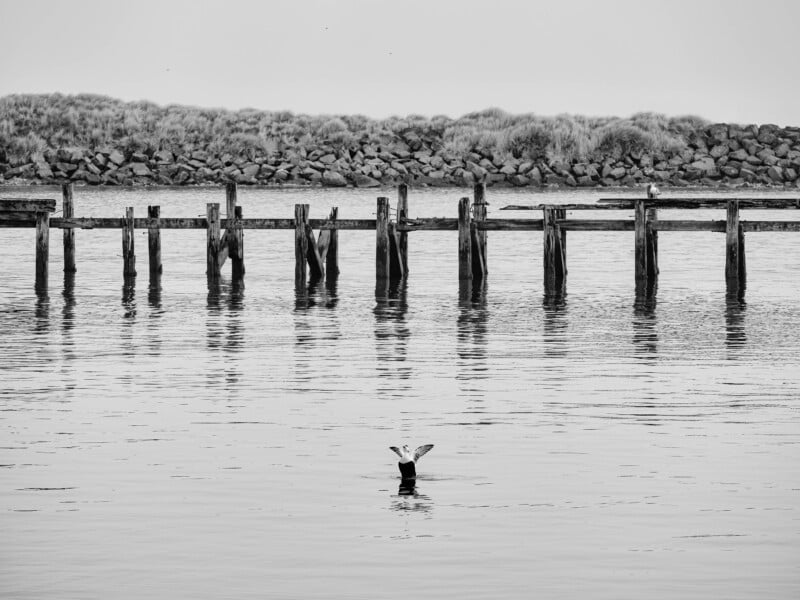
Rotational symmetry is where an object looks the same after being rotated around a central point by any angle less than 360°. For example, a starfish with five arms has rotational symmetry of order five. Related to this is radial symmetry, where parts are arranged around a central axis, such as the petals on flowers.

Meanwhile, translational symmetry is where a pattern repeats itself at regular intervals in a specific direction, as you might see in a pattern of floor tiles or wallpaper.

Glide Reflection Symmetry results from a combination of reflection and a change along the direction of the reflection. A good example of this would be footprints where the left foot mirrors the right, but they don’t align.

Although not directly applicable to two-dimensional photography, spherical symmetry is a concept where every plane passing through the center divides the object into identical halves, such as a spherical ball.
Dynamic Symmetry
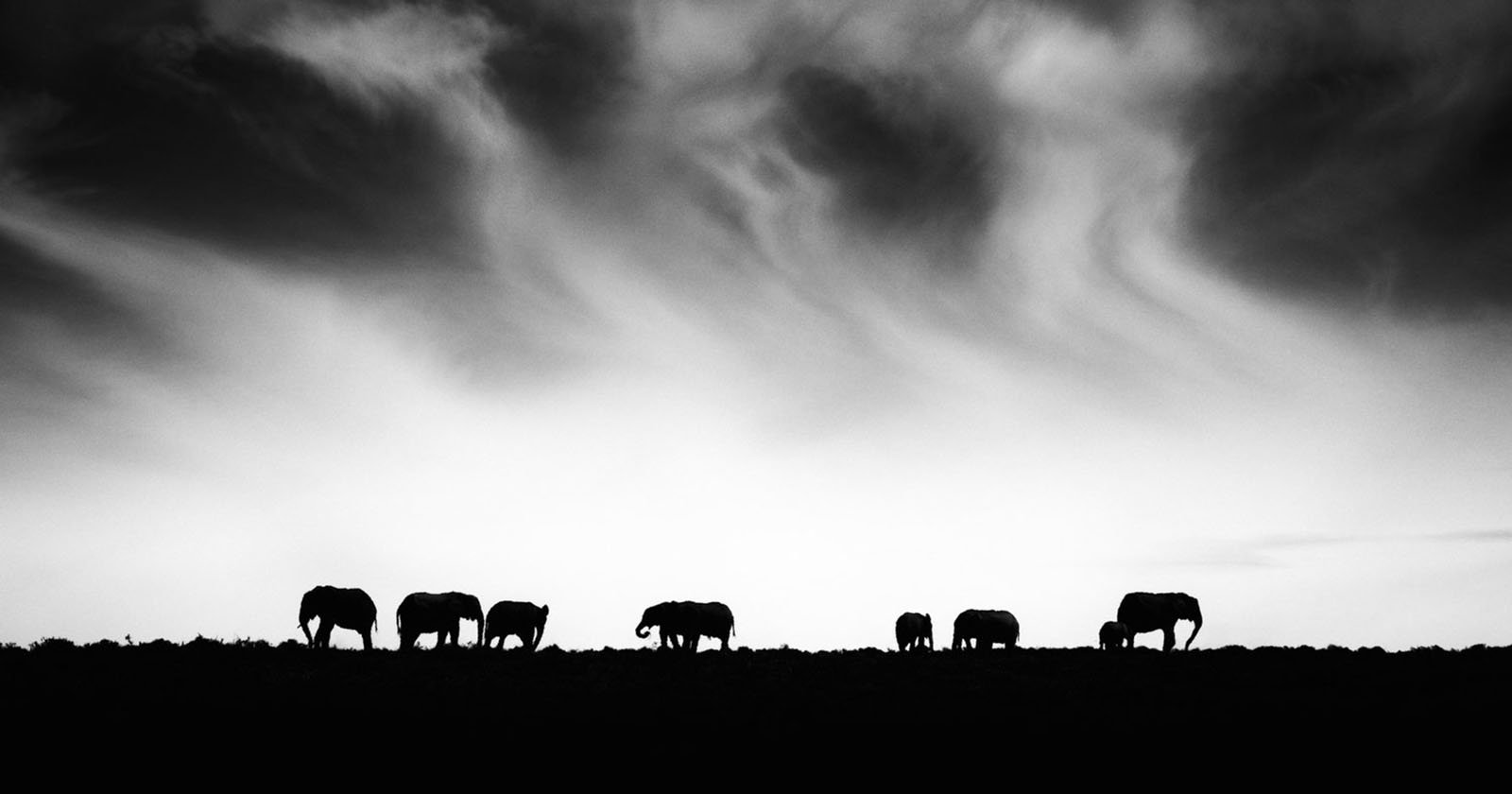
Those types of symmetry are known as static symmetry, characterized by simple, equal divisions. But there is also dynamic symmetry, which is asymmetrical yet balanced, based on natural ratios. For example, the golden ratio I mentioned above is a form of dynamic symmetry.
Another form worth discovering is harmonic armature. This comprises diagonal and reciprocal lines drawn inside root rectangles to help guide composition. They are often used in painting, photography, and design. I will be discussing this in future articles.

Lead-in Lines and Leading Lines,
I distinguish lead-in lines and leading lines. The former is a line that draws your eye into the picture, usually from the foreground to the distance. An example would be the following shot of a pier near my home. Notice how the sides of the boardwalk and the handrails draw your eye deeper into the picture.

Meanwhile, the following image is a leading line that leads your eye around the frame.
It’s worth noting that these lines don’t have to be continuous. For example, in the above photo of the cyclist, the trees are disconnected, but, along with the road dug in the snow, they form a continuous line leading toward the person on a bike.
One should be aware of negative leads. Those are lines or shapes that pull the eye away from the subject or into an unimportant area.

Blocking Elements
Sometimes called visual barriers, blocking elements work in opposition to lead-in and leading lines, as they bring the eye to a visual stop. A common mistake by novice landscape photographers is to shoot toward a fence, which prevents the eye from moving onto the scene beyond. They can also be used to your advantage. For example, a person standing on a path can act as a blocker, which is usually the desired effect, as the person is likely to be the main feature of the image.

On the other hand, if there were an undesired obstruction on the side of the path, such as a bright red bin or even a piece of litter, it could also act as a blocking element.
Dead Space can also be a blocking element. It’s an area that doesn’t contribute to visual flow and may halt eye movement. Although the picture below uses the people riding behind the huskies as a blocking element, the grass on the right is dead space, causing an imbalance in the photo.

Distractions in Photography
A distraction is usually an object that unintentionally stops or redirects the viewer’s gaze. I once saw someone’s wedding photos, and there was a bright orange road cone behind the bride; the photographer should have been sacked. Often, though, they are more subtle. A blade of grass or twig encroaching on the profile of an animal, a dark clump of foliage at the edge of a frame, or a loose hair running across the model’s face can all be distractions.
That notwithstanding, distractions can be deliberately placed to create tension or focus.

Subjectivity in Composition
Although all those are helpful tools, it is worth remembering that they are all human constructs and entirely subjective. If you are happy with a photo and it doesn’t fit in with any of the usual approaches to photography, then that is all that matters. If someone else likes it, that’s a plus. If another person criticizes you for your composition, then it’s possible that they cannot see what you do.
Go Out and Practice
This was a brief introduction to a few key composition considerations for photographers. However, by knowing and adopting some of these techniques and avoiding the pitfalls mentioned here, you can make a significant improvement to your photographic compositions.
The best way to learn these is to go out with your camera and try them. Spend a day shooting pictures with the rule of thirds and then lead-in lines. Gradually, they will be embedded into the back of your mind, and you will find yourself using them and other compositional techniques without conscious thought.