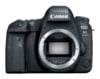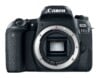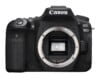
At a glance Canon's latest enthusiast DSLR doesn't appear that different to the outgoing 80D. But with a large bump in resolution and burst shooting it's an altogether different beast.

At a glance Canon's latest enthusiast DSLR doesn't appear that different to the outgoing 80D. But with a large bump in resolution and burst shooting it's an altogether different beast.
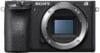
Faster and brighter than its predecessors, the A6400 is a great little mirrorless camera for the creative photographer and videographer.
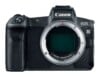
Arguably the most well considered and capable of any full-frame mirrorless camera on the market.
The RP is the step-down model to the EOS R, but we find the more affordable camera a better handler on account of its layout and size. However, limited battery life, some mis-balanced issues when using larger lenses, and 4K crop in video capture are all niggling issues.
The Panasonic Lumix S1 is a formidable full-frame offering that's packed with features and potential.
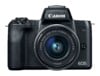
The Canon EOS M50 is a step up for the M series. It's taken time to get here, but Canon finally has a credible mirrorless APS-C camera on its hands.
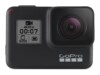
GoPro's latest camera is undoubtedly its best yet. The advanced stabilisation works well in most conditions, improving massively on the Hero 6. It might not be enough for Hero 6 owners to upgrade, but anyone with any previous camera should consider it.
It's a mirrorless marvel, that's for sure.
If the company's engineers can deliver better optical resolve from this lens system then, well, in 30 year's time we'll be reminiscing about this pinnacle camera.
[T]he Fujifilm X-T100 is a bit of an oddity in the Japanese company's mirrorless line-up: with its power zoom lens attached it functions differently to its X-series family, but not in a way that's particularly proficient for entry-level users [...]
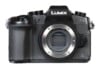
With mighty impressive image stabilisation, an ultra-sensitive shutter, super-fast burst mode, accomplished continuous autofocus and burst shooting, plus a viewfinder that's unrivalled by any mirrorless model, the G9 really is the finest mirrorless camera that money can buy.
It's a photographers' camera. And a clear contender for camera of the year.
The D5600 is capable of taking the sort of images you really do want to share, even with the standard kit lens. That's where Nikon continues to show strength, despite the otherwise minimal updates for this model compared to the outgoing D5500.
We find its new sensor to be just about the perfect balance of resolution, while the vari-angle touchscreen is a huge benefit that lacks from so many other similar cameras.
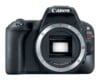
If you're looking for an interchangeable lens camera that's not too big then a mirrorless model might be the obvious option. But with a whole raft of EF lenses to grow into, the EOS 200D is a DSLR with strong footing for a keen newbie to grow into a photographic enthusiast.
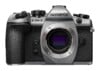
Ultimately, the Olympus OM-D E-M1 Mark II is currently the best Micro Four Thirds camera for advanced photographers. That, in a nutshell, is why it's well worth its asking price.
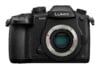
Sure, it might be pipped in stills quality by the Fuji X-T2, but for video features and quality the Lumix GH5 is untouchable at this price point.
If you've long been pining for a quality all-round DSLR camera than Canon makes a strong case in the 77D.
Yes it costs a fair chunk of change, but given its array of features, the A6500 is an outstanding all-rounder.
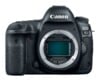
[A]s full-frame all-rounders go the 5D Mark IV is hard to beat.
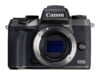
The M5 is a step forward for Canon's EOS M range, but it's nothing for the competition to worry about.
As an overall package, however, the Panasonic Lumix G80 cements the company's position as one of the market leaders. It's a strong performer with a great specification for the price point. That is exactly what will lure people to it.
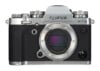
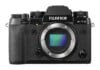
The X-T2, in many respects, sets a new benchmark for the mirrorless market.
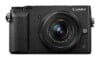
Just because it's smaller and more affordable than its bigger brother doesn't mean it's scrimped on the features front at all - indeed it's added many that other Lumix G-series models lack.