Sure, it's not cheap all-in, but you already knew that. But know this: the 80D is worth every penny and keeps the DSLR hugely relevant in today's market.

Sure, it's not cheap all-in, but you already knew that. But know this: the 80D is worth every penny and keeps the DSLR hugely relevant in today's market.
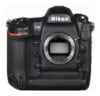
Make no bones about it: the Nikon D5 is an astounding pro-spec camera.
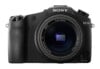
It's big, it's bold, and while it's not exactly giant leaps ahead of where the original RX10 was, the RX10 II is one highly capable camera that's hard not to recommend. Even though it won't be the camera for everyone, for those it suits it certainly won't disappoint.
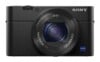
A more detailed and faster autofocus system wouldn't go amiss, but even so the Sony RX100 is still the high-end compact camera to beat.
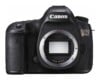
Paired with the right lenses and we've seen no ultra-high-resolution DSLR more capable than the Canon EOD 5DS. It's that simple point that makes it a true five-star product for those pining for a medium-format-matching DSLR camera with added versatility.
[C]ertainly the best full-frame fixed-lens compact ever made.
What many will want to know is whether the Lumix GX8 is worth its four-figure asking price. Its on-board viewfinder is a competition killer so, with that in mind, the answer is a resounding yes.
We're rather fond of the Canon EOS 750D. It's proven a solid companion for a variety of shooting scenarios and capturing some great travel shots, particularly thanks to that vari-angle LCD screen.
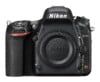
We didn't anticipate finding it that much better than the D7100, but with notable improvements to image quality, burst mode capacity, movie capability and autofocus, it's every bit the Canon 70D competitor.
The Fujifilm X-A2, the company's update to the X-A1 from 2013, is the latest compact system to opt for a flip-forward screen. But does it strengthen the X-series line-up?
On the one hand the EOS M3 is a massive improvement over the original, adding a cool tilt-bracket touchscreen LCD screen for selfies, front thumbwheel, and dedicated mode dial, so kudos for that.
The A5100 is aimed at an audience wanting point-and-shoot simplicity - and perhaps the odd selfie - but better image quality than a high-end compact can offer.
If you want a camera with an occasional-use viewfinder to take everywhere then the GM5 is man enough for the job, and paired with a prime lens its small scale should make it the ideal.
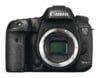
Let's cut to the chase: we're yet to use an APS-C sensor DSLR camera that's impressed us more than the Canon EOS 7D Mark II. It was definitely worth the wait.
Don't think of it in that singular dimension, though, and it's a solid DSLR.
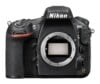
Complex, versatile and always outstanding: that's the Nikon D810 in a nutshell.
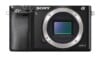
If you want a small system camera where a viewfinder is essential then the A6000 has heaps going for it. It's also so keenly priced that it will have a lot of the competition looking over their shoulders.
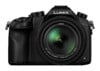
So if you're looking for a DSLR alternative with a long lens then, all things considered, the FZ1000 is an affordable and viable solution.
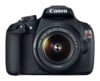
It might be plasticky and isn't a giant leap ahead of where the earlier 1100D model was, but when it comes to all-round performance and image quality the Canon 1200D is a solid device.
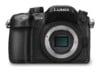
The GH4 sees the GH series finally land with a bang. It's not a budget device, but there are points of brilliance throughout all its important areas.
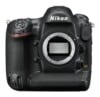
The Nikon D4S is an evolutionary rather than revolutionary continuation of the earlier D4 model. But that's not to take anything away from it: as full-frame professional cameras go this is as good as they come.
[I]f you want to use the camera's rear screen rather than a viewfinder then a DSLR is unlikely to be for you.
Add to those positives super-sharp image quality that’s hard to beat and we think that of all the Fujifilm options available this is the one to go for.
It’s more that the Df’s premium price isn’t quite reflected in its exterior finish, nor the overall specification, while the camera is just too big compared to the image we had in our mind’s eye.