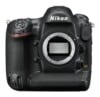
Despite the fact that the Nikon D4s does not offer significant advantages in image quality when compared to the D4, Nikon incorporated a few important changes to the D4s that make the flagship camera noticeably better than its predecessor.

Despite the fact that the Nikon D4s does not offer significant advantages in image quality when compared to the D4, Nikon incorporated a few important changes to the D4s that make the flagship camera noticeably better than its predecessor.
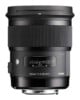
Similar to the excellent Sigma 35mm f/1.4 Art that I have numerously praised here at Photography Life in the past, the Sigma 50mm f/1.4 Art definitely deserves the high praises.
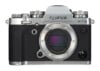
Sporting the fourth-generation 26.1 MP X-Trans CMOS 4 BSI sensor, X-Processor 4 processor, a fast 425-point hybrid autofocus system, and very impressive video recording features, the X-T3 was an instant success among Fuji enthusiasts and professionals.
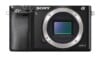
After using the Sony A6000 for a few months on two separate occasions, I can honestly say that it is one of the most capable and versatile mirrorless cameras on the market.
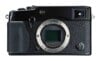
The Fuji X-Pro1 is capable of excellent image quality at ISO levels all the way to ISO 12800.
The Fuji X-Trans sensor is capable of excellent image quality at ISO levels all the way to ISO 12800.
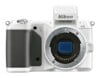
The Nikon 1 V2 is ideally suited for any photographer who puts a premium on small size, fast performance, and good image quality.
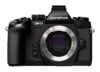
Without a doubt, the Olympus OM-D E-M1 is the culmination of innovation and finest technology, coupled with a beautiful and functional retro design, along with advanced features that are not even found on high-end DSLR camera systems today.
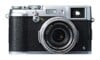
The stylish retro design of the camera is certainly one of the factors that attract so many people to the Fuji X100S. Having a similar look like old film rangefinders / compact SLRs, the Fuji X100S is a very appealing instrument with a unique “character” to it.
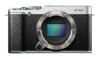
[T]he X-M1 is an excellent camera that is very intuitive and easy to use, with superb image quality. Despite the fact that it lacks an electronic viewfinder, it is still equally as addictive as other X-series cameras from Fuji.
It’s capable of taking fine images, but for raft trips down the Grand Canyon, it stands for All Wet.
As I have pointed out at the beginning of this review, the Nikon D610 is what the D600 should have been when it was initially launched.
The X-T1 is yet another winner camera from Fuji. [...] It adds quite a bit more to the table, with its fully weather-sealed construction, fast continuous autofocus [...] a large and beautiful electronic viewfinder [...] and [...] brand new features [...]
The Nikon 1 V3 is a very good camera and I enjoyed shooting with it a lot more than I anticipated.
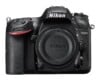
Nikon’s D7200 is a dynamite machine and a pleasure to shoot. It’s nimble, responsive and has good ergonomics.
As you can see from this review, the Pentax 645Z served me very well during my month-long time with it.
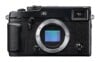
When it comes to ergonomics (ISO selector apart!), compactness, autofocus speed, and accuracy, choice of lenses and overall image quality, the Fuji X-Pro2 proved to be outstanding.
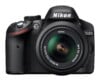
[T]he Nikon D3200 seems to yield pretty impressive results at such high resolution.
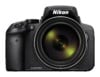
The Nikon P900 is a camera that tries to do everything from macro to supertelephoto, and does a surprising number of things well.
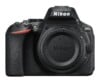
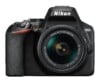
The Nikon D5600 is the newest of Nikon’s upper entry-level DSLR cameras. It packs a lot of impressive features and settings into what is meant to be a “consumer” DSLR, and the result is quite good – but not without flaws.
It’s actually quite a good camera, but it does have some flaws – not surprising at this price point.
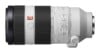
The location of the zoom ring along with the ability to adjust the smoothness of the zoom ring are excellent additions, and the inset sliding door of the hood makes using polarizing filters a cinch.