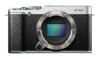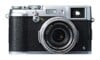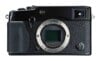
The Fujifilm X-Pro1 is a top-notch mirrorless camera that is sure to appeal to optical viewfinder fans that are put off by the high price of Leica rangefinders.

The Fujifilm X-Pro1 is a top-notch mirrorless camera that is sure to appeal to optical viewfinder fans that are put off by the high price of Leica rangefinders.
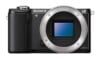
The Sony Alpha 5000 is an affordable mirrorless camera that delivers excellent images, but advanced shooters are going to feel limited by its control system.
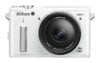
The Nikon 1 AW1 is the first interchangeable lens camera that you can take deep underwater, but it's best left in automatic mode.
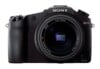
The Sony Cyber-shot DSC-RX10 is a bridge-style camera that gets just about everything right, and its steep asking price reflects its impeccable quality.
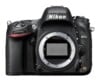
The Nikon D610 is a very minor update to the D600; its burst rate is slightly faster, but otherwise it's the same camera.
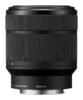
The Sony FE 28-70mm F3.5-5.6 OSS is the first zoom lens available for Sony's full-frame mirrorless system, but it shows heavy distortion and isn't that sharp at the edges.
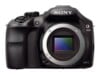
The mirrorless Sony Alpha 3000 cuts a lot of corners to hit its low $400 asking price, but there are no compromises in image quality.
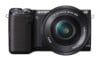
Sony's Alpha NEX-5T mirrorless camera is simply last year's NEX-5R with added NFC support for quick image transfer to a smartphone. And the price has come down.
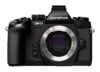
With gorgeous images—even in low light, incredible speed, and a wealth of high-end features, the Olympus OM-D E-M1 is the best Micro Four Thirds camera that money can buy.
The mirrorless Fujifilm X-M1 features a big APS-C image sensor that's capable of capturing some excellent images, but it's just a little slow to focus and fire.
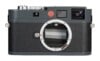
The Leica M-E (Typ 220) is the least expensive digital rangefinder in the company's lineup, appealing to CCD devotees and Leica shooters who have no need for live view.
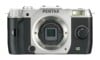
The impressively small Pentax Q7 mirrorless camera features an image sensor that is 50 percent larger than previous models, but its shutter lag is a drawback.
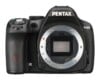
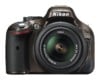
The Pentax K-50 is a fully weather-sealed D-SLR camera with an big optical viewfinder and fast burst shooting capability.
Don't be fooled by the Fujifilm X100S's retro exterior; it's a modern, full-featured digital camera that impressed us enough to earn our Editors' Choice award.
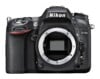
If you're in the market for a serious D-SLR, but don't want to go full-frame, the Nikon D7100 is the way to go; it's our Editors' Choice camera in its category.
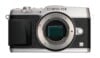
The Olympus PEN E-P5 is an extremely impressive mirrorless camera, but we prefer its sibling, the Olympus OM-D EM-5.
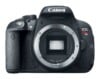
The Canon EOS Rebel T5i is essentially the same camera as its predecessor, and it's still a solid performer.
The under-$1,000 Nikon D5200 is a capable D-SLR that delivers impressive image quality and continuous shooting at 4 frames per second, earning it our Editors' Choice.
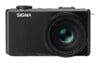
The Sigma DP3 Merrill packs a 46-megapixel Foveon image sensor and a fixed 75mm macro lens.
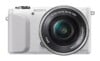
The Sony Alpha NEX-3N isn't as good a performer as its predecessor, but it does include a collapsible power zoom lens and it comes at a lower price.
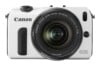
The EOS M, Canon's first compact interchangeable lens camera, feels polished on the outside, but its poor performance makes it clear that you're looking at a first-generation product.
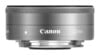
The Canon EF-M 22mm f/2 STM, the standard prime lens for the EOS M, is compact, fast, and sharp.
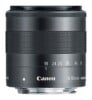
The Canon EF-M 18-55mm f3.5-5.6 IS STM is sharper and better made than many 18-55mm lenses, but shows noticeable distortion at wider angles.
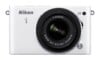
The Nikon J3 compact interchageable lens camera is a speedy performer, but it isn't the best in low light, and lacks expansion options when compared with the competition.