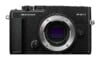
I could see someone in the market for their very first camera to take a close look at the PEN, as it offers a lot at an affordable price point.

I could see someone in the market for their very first camera to take a close look at the PEN, as it offers a lot at an affordable price point.
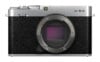
Most people asked for an interchangeable-lens X100VI, and the X-E5 is as close to that as you’re likely ever going to get. It’s a very nice camera.
There’s a lot to like about the Fujifilm X half, and a lot that can be questioned.
The Fujifilm X-M1 with the TTArtisan lens is small enough to be in the same compact category as those cameras, but is much, much cheaper.
While I believe that the flaws in lenses are what gives them character, this lens has proven that position wrong, because this is a near-flawless lens that is oozing with wonderful character.
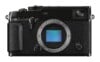
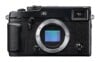
[M]y conclusion is that the X-Pro3 isn’t perfect and it isn’t for everyone, but for some it will be a much appreciated, much loved, and much used camera for years to come.
I think more than anything the pictures that it produces attracts me to it. I absolutely love the new Fujinon XF 27mm f/2.8 R WR lens, and it’s a great bargain when bundled with the Fujifilm X-E4.
This camera is not weather-sealed, and there’s no IBIS, which will certainly cause complaints, yet the X-E4 is a wonderful camera that is well-built and well-designed—a solid offering by Fujifilm, no doubt—but it’s not a premium model, so expectations should be kept reasonable.
If you can find one for a good price, it might be worth owning. Otherwise, there are better options to consider, including the 14mm f/2.8, 16mm f/2.8, 16mm f/1.4, 8-16mm f/2.8, 10-24mm f/4, 16-55mm f/2.8, 18-55mm f/2.8-f/4, 16-80mm f/4, and 18-135mm f/3.5-f/5.6.
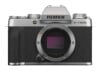
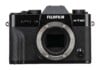
The Fujifilm X-T200 is a reasonably-priced mirrorless interchangeable-lens camera that has solid specs for both stills and video. I was actually quite surprised by this camera: it’s better than I thought it would be.
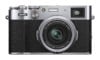
The Fujifilm X100V is a great camera that combines form and function, delivering beautiful film-like photographs without fuss. It’s a joy to use—probably the most fun camera I’ve ever owned!
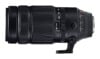
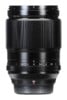
Perhaps the best way to think about the Fujinon 100-400mm is that it’s a fantastic 100-350mm lens, especially from 100mm to about 250mm, which is where it produces the best results. The last 50mm is a bonus—sufficiently good, but disappointing when you consider how much it costs.
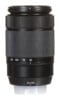
The Fujinon 50-230mm f/4.5-6.7 OIS II lens is lightweight and sharp and optically sound. With an MSRP of $400, it’s cheap, and some corners were cut to make it cheap, but none of that relates to image quality, which is excellent. It’s easy to recommend this lens.
It’s a great camera, even in 2019, and I’m sure still in 2026, and while it’s not for everyone, I do believe that most people would appreciate it.
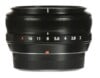
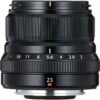
If you are looking for a quality walk-around lens, or a cheap alternative to buying an X100F, I’d recommend the Fujinon 23mm f/2 lens, as it has a lot of pros and very few cons.
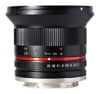
The Rokinon 12mm f/2 lens is a great ultra-wide-angle option for your Fujifilm X camera. It’s very easy to recommend.
It delivers stunningly beautiful pictures that are super sharp. There are a lot of pros and very few cons.
It’s not perfect, as no camera is, but it is very good.
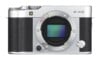
The X-A3 is actually a well-equipped camera capable of capturing high-quality images.