It was designed for people who don’t like to change lenses all the time and want a lens for their new mirrorless camera that can do a little bit of everything.

It was designed for people who don’t like to change lenses all the time and want a lens for their new mirrorless camera that can do a little bit of everything.
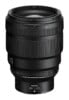
The Nikkor Z 85mm F1.8 S-Line is often mentioned alongside the 50mm F1.8 S as being the two most special lenses in the lineup.
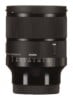
Those owning a Sony E-mount or Leica L-mount full frame camera and who are looking for a 24mm prime should give this lens a long look.
I was consistently happy with the rich colors from the lens, finding them rich and contrasty without becoming garish or unnatural.
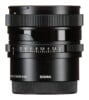
That’s a question only you can answer, but if you were looking for a premium lens that is stylish, compact, and optically excellent, then the Sigma i35 may just be the lens you’ve been waiting for.
The Tamron 28-75mm F2.8 Di III VXD G2 is essentially fan service. Consumers made the original A036 a huge commercial success, and Tamron has rewarded us by giving us a huge upgrade to this lens while essentially retaining the same price.
The idea of a 35mm lens that is this big, this heavy, and this expensive is going to seem absurd to the average photographer.
This is a very useful tool and may just become the favorite portrait lens in your bag…just make sure you have enough room to use it!
So long as you working with decent light, the XF 150-600mm OIS is going to deliver nice results for you.
The bottom line is that in every metric, this is one of the best focus systems in the world.
I was very pleased with the autofocus performance and general handling of the lens, though the miniaturized rings, buttons, and switches may prove challenging to operate when wearing gloves in colder weather.
I was very pleased with the autofocus performance and general handling of the lens, though the miniaturized rings, buttons, and switches may prove challenging to operate when wearing gloves in colder weather.
The great optical performance is unfortunately let down by a disappointing autofocus system.
Fuji has taken quite a few “kicks at the can” at the “normal” focal length, with three previous 35mm designs, and, while I liked the XF 35mm F2 a fair bit, this newer Fujinon XF 33mm F1.4 checks the most boxes for me.
It is also the most exceptional of any of these lenses. It has no real vulnerabilities, and unseated the best 135mm lens that I have ever used previously – the Zeiss Milvus 135mm F2.
The winner here is consumers, as Fuji has now given the market three credible options for a general purpose zoom lens.
The Canon RF 100mm F2.8L Macro IS USM is a (mostly) excellent upgrade to the outstanding Canon EF 100mm F2.8L Macro IS.
I was already a fan of the Viltrox Pro AF 27mm F1.2 after reviewing it on Fuji, but the Sony E-mount versions of these Pro Series lenses have been better still.
As I noted in my introduction, the Fujinon XF 50mm F1.0 WR is a lens for experts.
The Tamron 35-150mm F2.8-4 VC OSD would be a great travel lens for those who don’t want to mess with changing lenses but still want high quality images.
The list of strengths is long, from the quality of the build (including weather sealing), good image stabilization, excellent autofocus, and a truly excellent image quality performance.
The list of strengths is long, from the quality of the build (including weather sealing), video focused features, excellent autofocus, and a truly excellent image quality performance.
This is too much lens for casual photographers, and many landscape photographers could get by with a less extreme focal range.
The Nikkor Z 85mm F1.8 S-Line is often mentioned alongside the 50mm F1.8 S as being the two most special lenses in the lineup.