There's no two ways about it: the X200 Pro's zoom is incredible for a smartphone. Vivo combines class-leading hardware and powerful software to create a huge amount of telephoto versatility, and we can't wait for other phone makers to catch up.

There's no two ways about it: the X200 Pro's zoom is incredible for a smartphone. Vivo combines class-leading hardware and powerful software to create a huge amount of telephoto versatility, and we can't wait for other phone makers to catch up.
There's no doubt it does an admirable job for sports and wildlife shooters, but it's certainly a case of compromises.
The Google Pixel 9 Pro Fold is a good smartphone despite being a mediocre camera phone. By recycling already middle-of-the-road camera hardware from its predecessor, the phone’s camera falls behind the OnePlus Open and Honor Magic V3 in every respect other than telephoto reach.
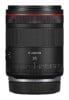
I think that the Canon RF 35mm F1.4L VCM is destined to become an instant classic.
[I]t’s a very versatile and deeply satisfying lens for wide-ranging shooting scenarios and, while it’s pretty pricey to buy, it’s well worth the outlay.
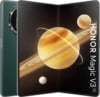
The Honor Magic V3 is a powerful, good-looking, slender foldable that undercuts the competition while arguably offering more. That doesn't mean it's cheap, but it does mean it's a better value package.
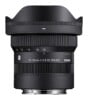
I like the super-wide viewing angles delivered by the Sigma 10-18mm F2.8 DC DN C, making it ideal for landscapes, cityscapes, architectural interiors and even vlogging.
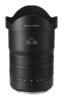
Hasselblad's first ever ultra-wide is another home run for the XCD lineup.
The Sigma 10-18mm f/2.8 DC DN is not perfect. The lack of an aperture ring will be a disappointment for many Fujifilm users, and the lack of weather sealing and OIS may disappoint a few more.
The Instax Wide 400 is a clear improvement on the Wide 300 before it, with a more appealing design and shape.
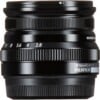
The Fujinon 16mm F2.8 is a super little lens that’s really well made and nice to handle. The controls and finish are so good that it feels as if it ought to cost a lot more than it actually does.
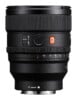
It’s hard to improve on a lens that’s already so good but I feel that Sony has done a great job in making the FE 85mm F1.4 GM II even more ‘perfect’.
The Panasonic Lumix GH7 is a significant upgrade over its predecessor, and righting the minor misteps with that model.
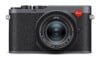
Despite its flaws, the D-Lux 8 stands out in the sparse premium compact camera market as a fun, straightforward camera that is surprisingly affordable for a Leica.
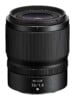
I like that Nikon has made a full-frame compatible Z system 35mm lens with a fast f/1.4 aperture rating, and for a pretty reasonable price.
The Pentax 17 is a solid effort, but overall I found the experience oversimplified and not all that fun.
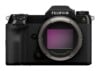
If you have been longing for the GFX 100 II since its release last year but find it beyond your budget, the GFX 100S II might be the perfect alternative.
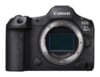
I use a lot of cameras in my job, but this is simply the best camera I've ever used. Bold words, but the Canon EOS R5 Mark II backs them up.
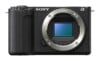
Thankfully, Sony has seen to correct pretty much every fault I had with the original model, and while the ZV-E10 II is still not the perfect all-rounder, it comes as close to vlogging camera perfection as I think you can get right now.
All in all, this camera is an epic all-rounder.
[T]his is the same fantastic 24-80mm f/2.8 equivalent lens that's bright enough to shoot almost anything and light enough to shoot almost anywhere.
I like the way that the Sigma 28-45mm F1.8 DG DN Art combines the convenience of a zoom lens with the fast and constant f/1.8 aperture rating of two or three fixed focal length prime lenses.
I like the versatility of the Tamron 17-50mm F4 Di III VXD. It gives me a generous wide-angle view at one end and a standard perspective at the other, plus everything in between.
Fujifilm has done a great job of packing so much telephoto reach into a medium format lens that’s actually lighter in weight than the GF 250mm.