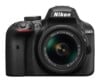
Judged on its own merit, there’s a lot to like about the D3400. It’s a well-thought-out and nicely designed camera that caters for the needs of first-time DSLR owners in a number of different ways.

Judged on its own merit, there’s a lot to like about the D3400. It’s a well-thought-out and nicely designed camera that caters for the needs of first-time DSLR owners in a number of different ways.
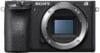
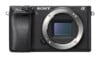
Taken as a complete package though, the A6500 remains an excellent all-round APS-C mirrorless model that offers something for everyone.
It can be used in fully automatic mode, but has enough functions to allow budding photographers to experiment with taking manual control as they learn how to use it.
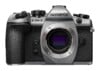
It’s unarguable that the E-M1 Mark II is the best camera Olympus has ever made; indeed, it gives the impression of being the best camera the firm could possibly make given current technology.
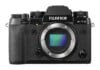
Apart from these, the X-T2 is a dream camera. It’s the most appealing model in the X-series to date and will certainly change people’s perception of speed associated with mirrorless cameras.
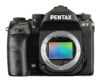
A model as anticipated as the K-1 has to work hard to meet expectations, but those who have waited patiently are likely to be very pleased.
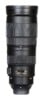
I must admit, I was a bit sceptical about this lens when I first heard about it, thinking there must have been one compromise too many to keep the lens at a competitive price point, but have to say I’ve been very pleasantly surprised.
The result is a camera that may not be quite exemplary, but that will be very pleasing to use and dependable in a variety of situations for a lot of people.
With the Sony Alpha 6000 being one of the company’s most popular cameras of recent years, the Alpha 6300 has a lot to live up to.
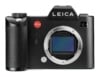
From the moment you set eyes on the Leica SL, it’s clear this is no ordinary camera.
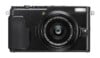
That’s not forgetting the excellent colour output from the X70’s JPEG files and a host of decent film simulation modes.
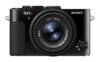
In all, the RX1R II is a rather specialist camera that’s expensive, but equally an impressive piece of kit.
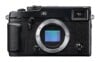
Fujifilm had strong foundations on which to build their successor to the X-Pro1 and, rather than starting from scratch, they’ve focused their attention on refining what was a great camera, revamping it into something truly special.
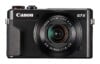
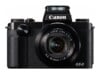
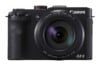
For a user who wants that level of handling, excellent image quality and a fast lens with a good zoom range, then the G5 X is a sound choice.
The introduction of the 5-axis stabilisation transforms handheld shooting to the extent that it’s possible to shoot sharp still images at as slow as 1/4sec and record extremely smooth video footage without always having to rely on a tripod.
If the focal length works for the type of photography you do, then put simply, this is a must-have lens.
It’s not only a lens that looks fantastic, but also backs up its minimalist design with a robust build quality and a superb image quality performance that will tempt portrait, event, wedding, and documentary photographers into taking a much closer look.
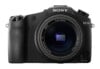
Like its RX10 predecessor, the RX10 II produces great images, it has an excellent lens, very good build and handling, and it excels at video capture.
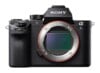
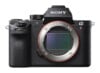
While there are some cameras that offer incremental upgrades over their predecessors, the Sony Alpha 7R II isn’t one of them.
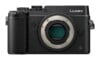
[T]he GX8 is probably Panasonic’s best CSC yet, and a very capable competitor to the likes of the Olympus OM-D E-M5 II and Fujifilm X-T1.
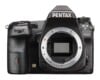
When compared to the original K-3, it’s clear the K-3 II’s core credentials haven’t changed much.
The improvements that have been made to the RX100 IV are centred around its new sensor.
When Canon first told us it was making a camera with a 1in sensor and 600mm equivalent zoom, it looked really exciting. Sadly, though, the G3 X manages to be rather less than the sum of its parts.
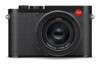
Apart from the Leica M rangefinders, most of Leica’s other digital cameras haven’t quite hit the mark. However, the Leica Q is different.