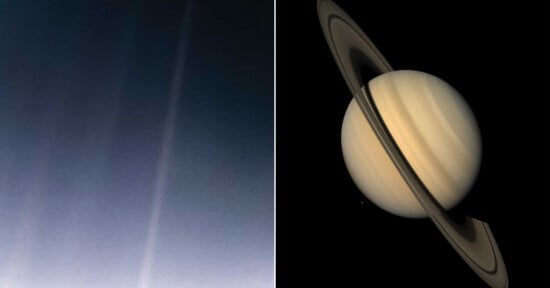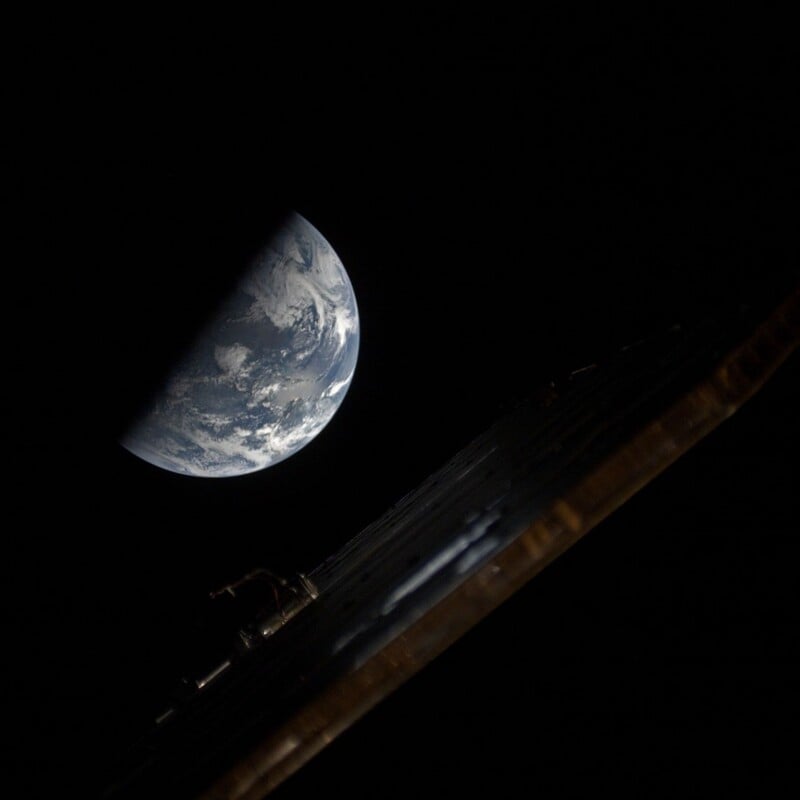
NASA’s ESCAPADE spacecraft has captured an incredible photo of the Earth as it slingshotted past the planet on its way to Mars.
The images were taken by the spacecraft’s Visible and Infrared Observation System camera, developed by Northern Arizona University, at around 9 A.M. EST on November 9. This was approximately three hours after the spacecraft made its closest approach to Earth, when it was about 38,500 miles away and had a clear view of the Western Hemisphere.
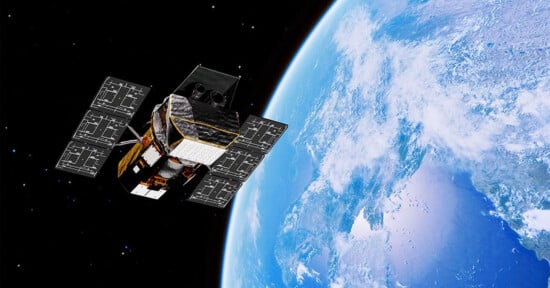
The images were captured by the second of the two ESCAPADE spacecraft to perform a powered flyby of Earth this month. Both spacecraft used a combination of engine burns and Earth’s gravity to gain momentum for their 10-month journey to Mars.
Once they reach orbit around the Red Planet, the spacecraft will study how the solar wind — a stream of charged particles traveling at around a million miles per hour from the Sun — interacts with Mars’ environment and contributes to the loss of its atmosphere.
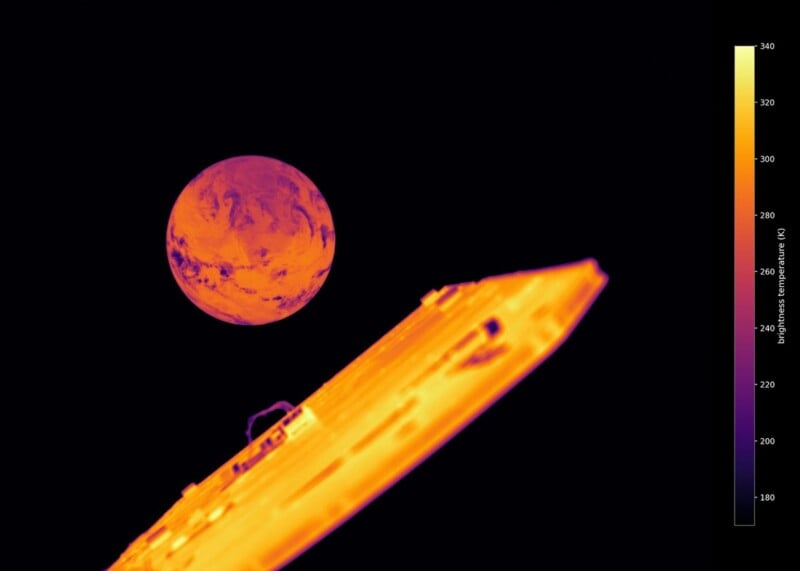
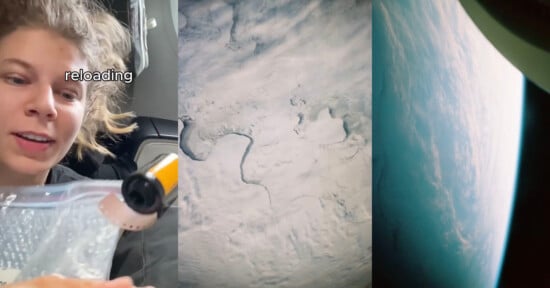
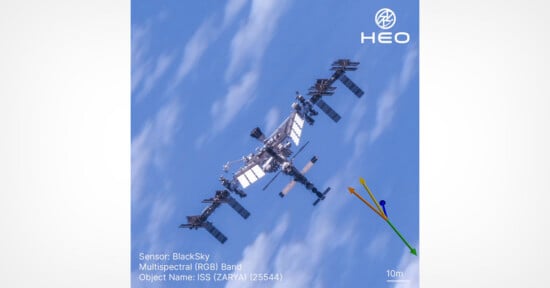
A commercial satellite captured images of the pair from approximately 3,000 miles away, while a member of the mission team photographed the spacecraft passing overhead from his home near Los Angeles (below).
Two spacecraft. Two flybys. One path to Mars.
Photographed from the Los Angeles area, Blue and Gold streaked through the same part of the sky two days apart—Blue in blue, Gold in gold. https://t.co/9SDOMmqqtY
— Rocket Lab (@RocketLab) November 23, 2026
NASA explains that the ESCAPADE mission is funded by NASA’s Heliophysics Division and is part of the agency’s Small Innovative Missions for Planetary Exploration program. The University of California, Berkeley’s Space Sciences Laboratory leads the mission, working with partners including Rocket Lab, NASA’s Goddard Space Flight Center, Embry-Riddle Aeronautical University, Advanced Space, and Blue Origin.
Affiliate Disclosure PetaPixel articles may include affiliate links; we may earn a commission if you buy through one.