Photogenic ‘One-in-a-Million’ Fish With Xanthochromism Caught in New York
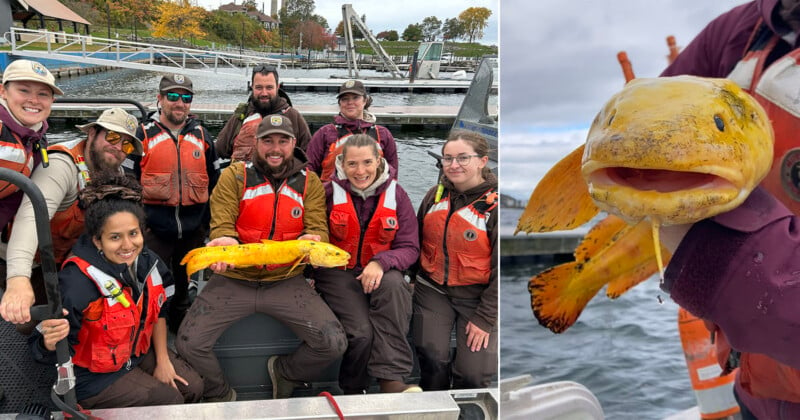
U.S. Fish and Wildlife Service (USFWS) biologists caught a one-in-a-million fish in Oswego, New York, and it sure is a looker.
Biologists performing a routine Aquatic Invasive Species Survey in Oswego Harbor, New York, caught a burbot (Lota lota) with xanthochromism, a “rare biological condition” that turns the fish bright yellow-orange. Burbot are typically brown with dark spots, making this almost entirely yellow-orange specimen a remarkable find.
Xanthochromism is a rare genetic mutation that suppresses normal dark pigmentation, producing a distinct yellow-orange appearance. Scientists note that xanthochromism is “considerably less common” in wild fish populations than albinism or melanism.
In 2024, an orange shark made headlines and scientists later determined that it had an even rarer combination of albinism and xanthochromism. Its unusual eyes the result of the former and the neon-orange skin the latter.
Because burbot are a native species, they are not the primary target of the Aquatic Invasive Species Early Detection and Monitoring Program. As the USFWS explains, this program deploys advanced technology and targeted surveillance strategies to locate “watchlist species” across New York’s Great Lakes, rivers, and harbors.
Most fish caught during these surveys are native species, which biologists inspect and safely release. Burbot—even typical specimens—are notable catches due to their low populations in the Great Lakes. Finding a burbot with xanthochromism is exceptionally rare.
According to United States Geological Survey (USGS) biologists on the team, this particular individual appeared emaciated and in poor health. Consequently, scientists transported it to the Cornell University College of Veterinary Medicine for detailed analysis.
“The discovery could turn out to be lucky for the species too; this exceptionally rare fish may provide valuable insight into the health of the species’ populations throughout the basin that can inform management actions,” USFWS says.
While scientists documented this recent discovery, wildlife photographers have also captured extraordinarily rare animals over the years. In 2024, wildlife photographer Yves Adams photographed an ultra-rare all-black penguin.
It was not Adams’ first time photographing extremely rare birds. A few years prior, he photographed what he believes was a “never-before-seen” yellow penguin — not unlike the burbot recently found in New York.
Image creditsUSFWS
Affiliate Disclosure PetaPixel articles may include affiliate links; we may earn a commission if you buy through one.