

Apple Unveils Its First-Ever MacBook Pro With a Touchscreen OLED

Apple has announced its first-ever touchscreen-equipped Macs. The redesigned MacBook Pro models are also Apple’s first laptops with OLED displays. It’s a big day for the Mac.
The MacBook Pro has always been controlled through its trackpad and keyboard. Apple has never made a touchscreen-equipped Mac before. While the latest iPad Pro and iPadOS 27 bring Apple’s tablet closer than ever to a Mac-like experience, a gap has long existed between the Mac and touchscreens. The gap has now officially closed.
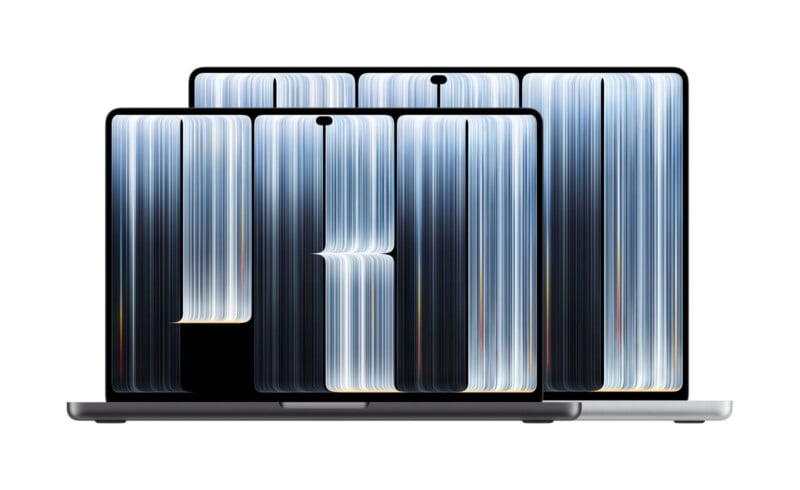
“The new MacBook Pro with PROLED XDR Display is a monumental step forward for the Mac,” says Johny Srouji, Apple’s chief hardware officer.
“PROLED XDR is the world’s best laptop display. It pairs state-of-the-art tandem OLED technology with advanced algorithms in our display engine to deliver the kind of visual fidelity pros have been dreaming of. And with the magic of Touch coming to MacBook Pro, combined with the game-changing performance of M5 Pro and M5 Max, we’ve created a whole new way for pros to interact with their content, taking their workflows to a completely new level. The new MacBook Pro is the result of the deep integration between Apple silicon, hardware, and software, and there’s simply nothing else like it,” Srouji continues.
The Biggest MacBook Pro Redesign In the Apple Silicon Era
At a “Pro and Tell” event in Los Angeles today, Apple revealed arguably the most significant MacBook Pro update ever, and certainly the biggest change to the popular notebook series since Apple moved to its own Apple Silicon M-series chips in 2020. The new MacBook Pro, available in 14- and 16-inch models, marks a major shift for the MacBook Pro, which has largely kept the same form factor and functionality since the first MacBook Pro arrived 20 years ago.


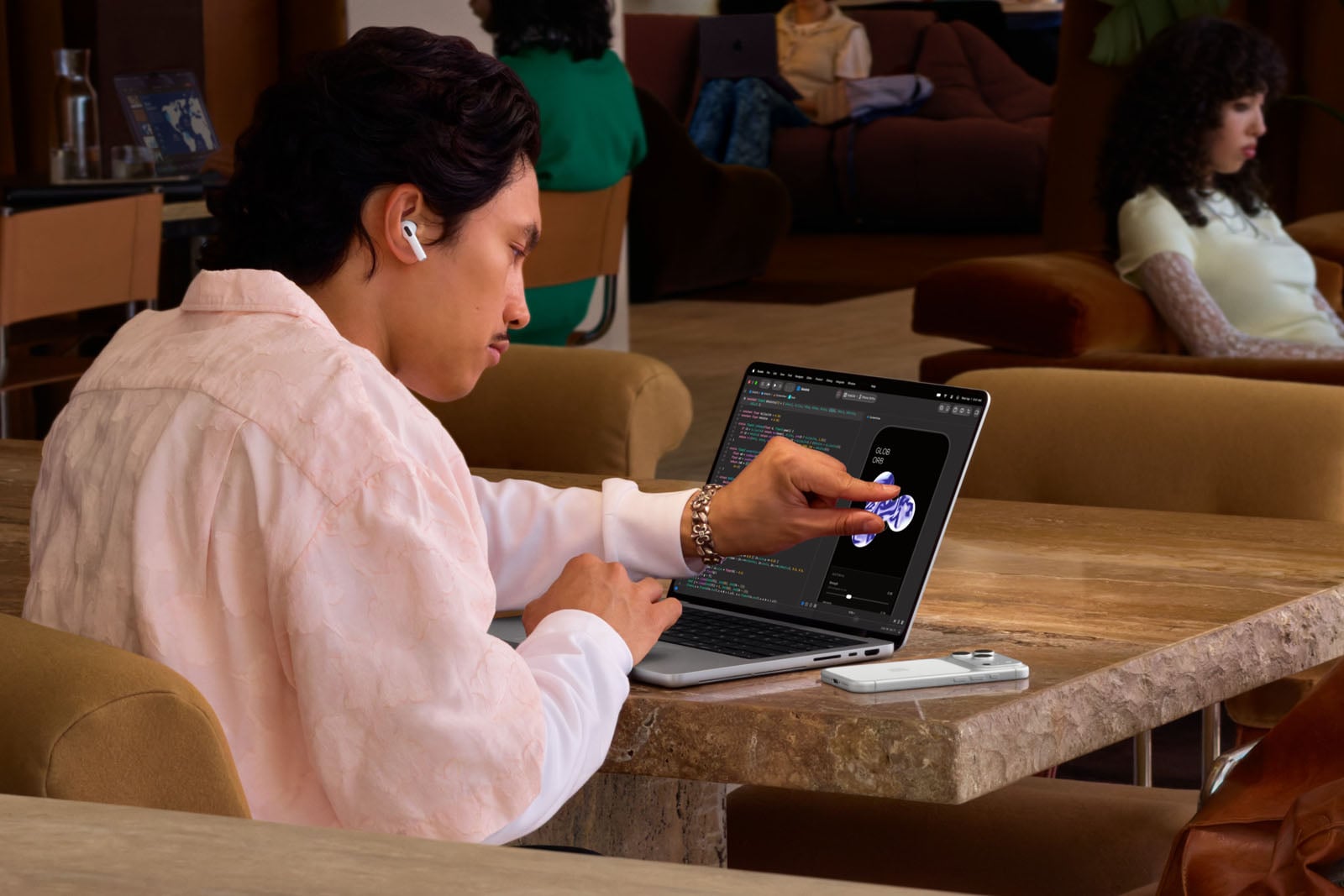
At first glance, the redesigned MacBook Pro looks familiar. It also packs the familiar M5 Pro and M5 Max chips inside, which, as PetaPixel has seen, are incredible. However, that’s about where the similarities end.
Brand-New Touchscreen PROLED XDR Tandem OLED
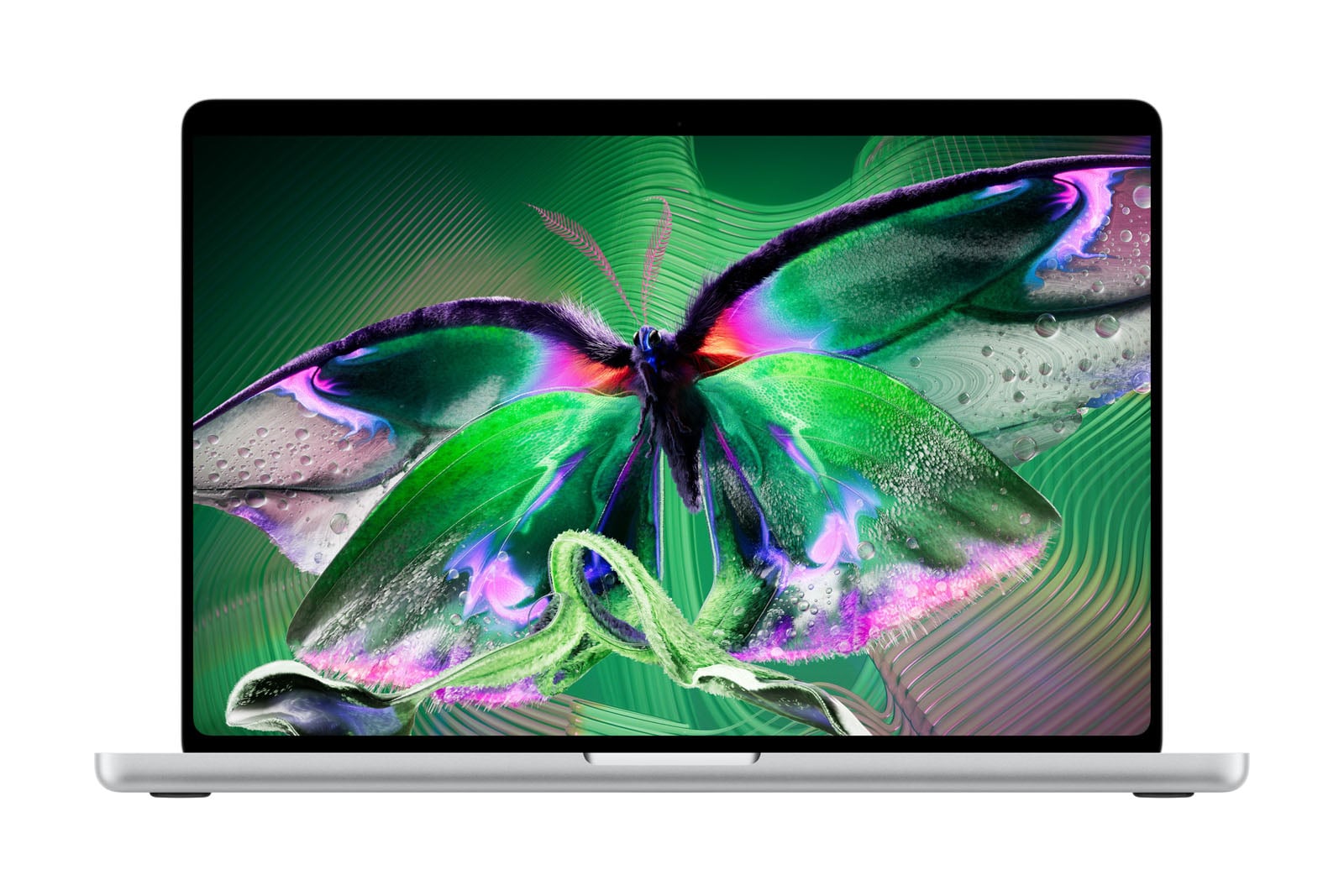
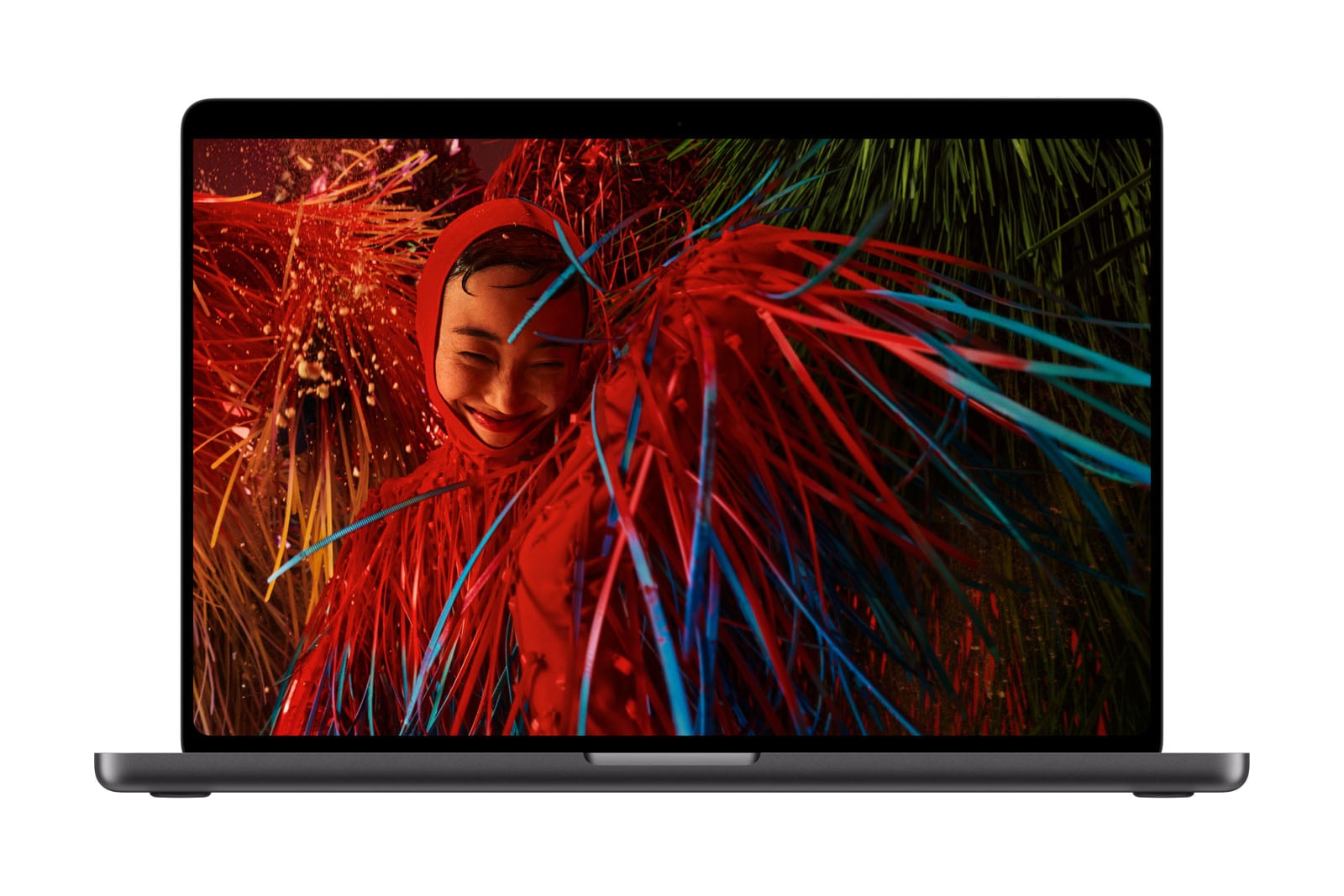
The new MacBook Pro sports what Apple calls a “PROLED XDR” display, essentially an OLED “XDR”. It is a tandem OLED design with 2,000 nits of peak brightness, a 120Hz refresh rate, and the exceptionally black blacks that OLEDs are known for. Apple promises that the screen is effectively a professional-grade, portable reference monitor for creatives.
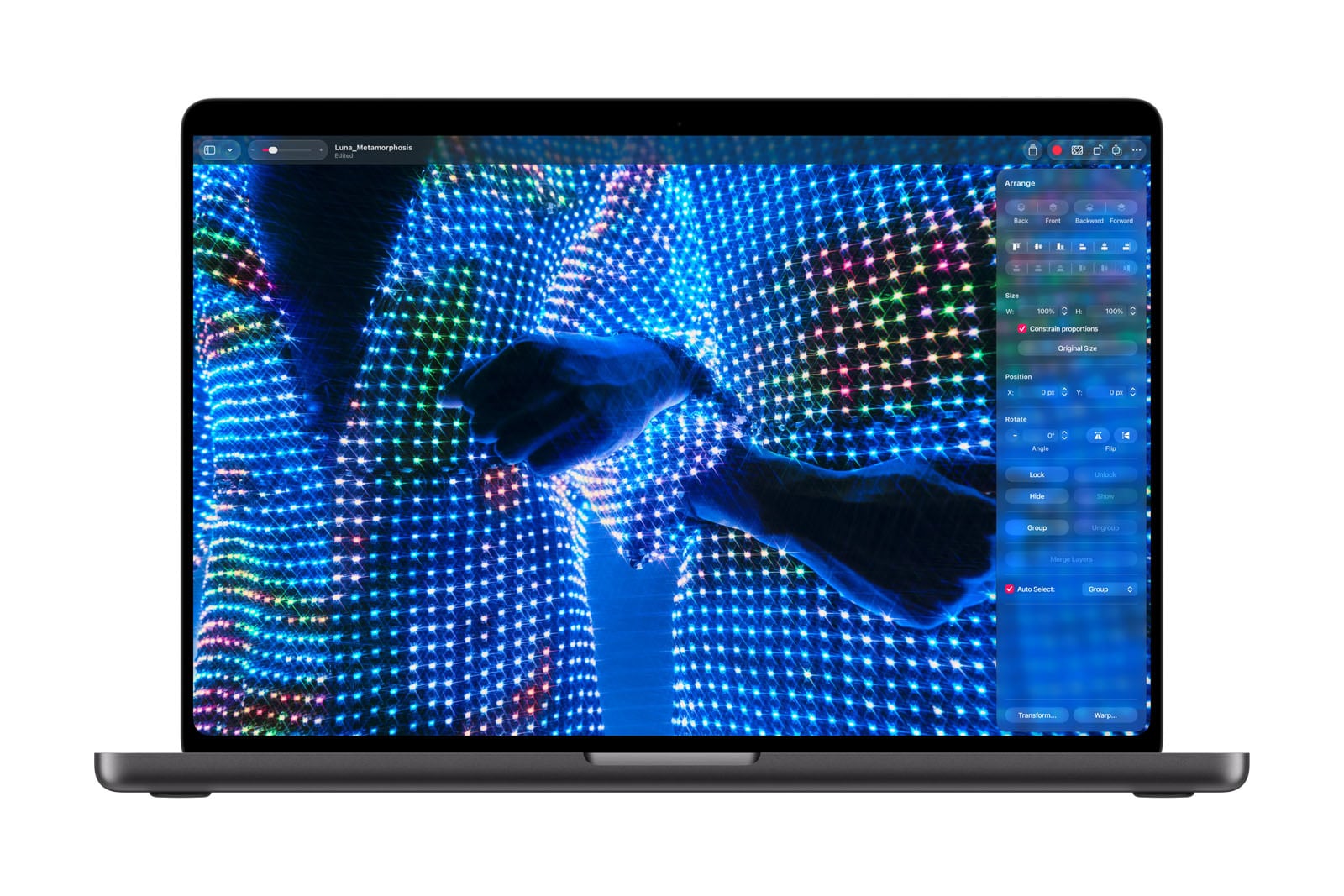
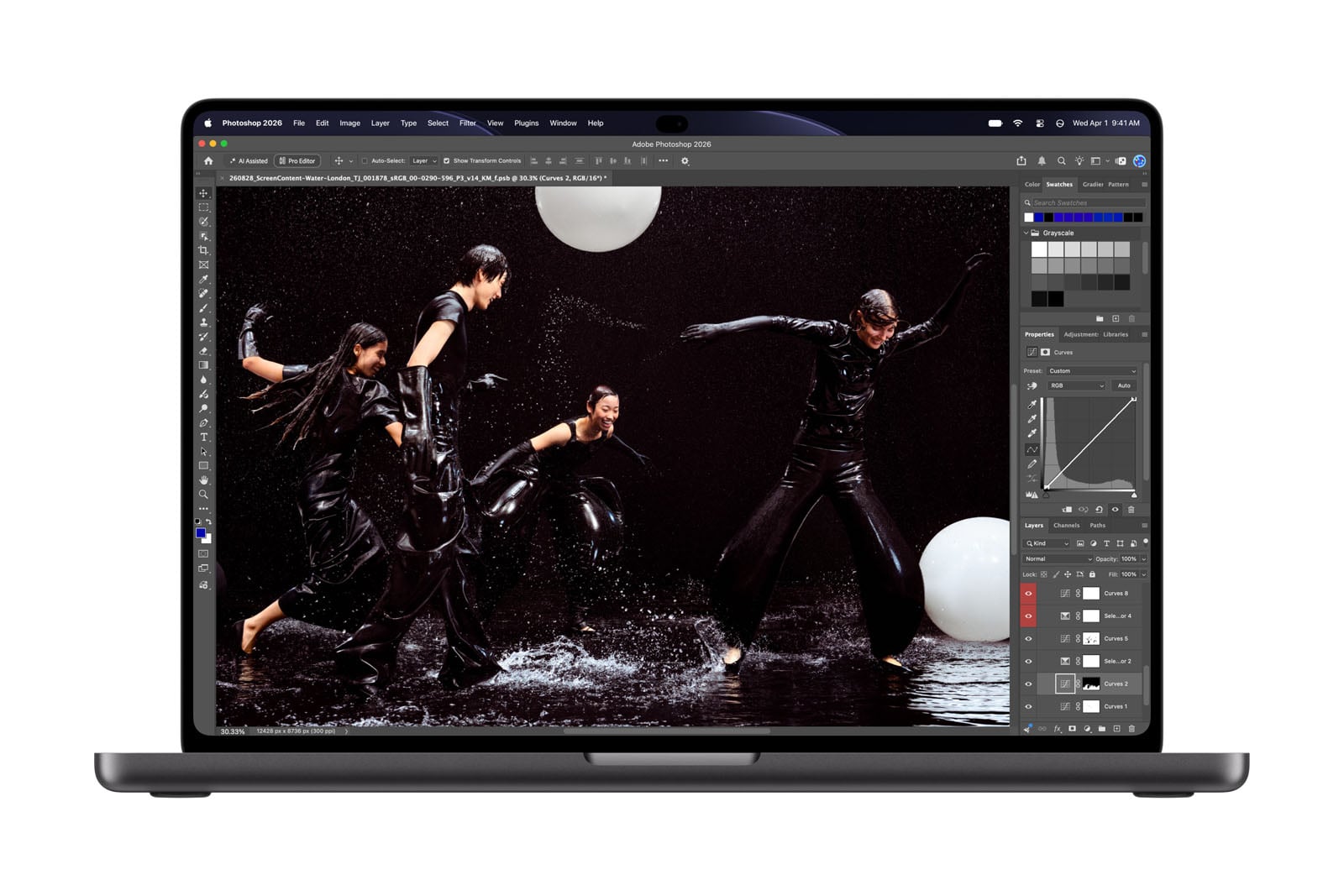
With the move to the new OLED touchscreen, the illuminated Mac logo on the back has returned, too.
View on Threads
Apple describes the PROLED XDR as “the world’s best display in a pro laptop.” The company specifically cites its effectiveness for photographers, colorists, and content creators. The super-wide color gamut supports P3 and now Adobe RGB workflows, and Apple promises better coverage in the green and cyan ranges in particular. It also offers more than 80% Rec. 2020 coverage for HDR video editing and color grading, according to Apple.
With up to 2,000 nits of peak SDR brightness, the new MacBook Pro should perform well outdoors. Those who require anti-glare performance can also opt for a nano-texture display. The screen also includes a Dynamic Island, like the iPhone, instead of the traditional notch. This serves as the new home for Spotlight, Live Activities, and Siri AI.
The bezels are also thinner, which means slightly larger screens without increasing the footprint. The 16-inch display is now 16.3 inches, while the 14-inch one is 14.2 inches diagonally.
Built for Touch
Beyond the bright, sharp, high-contrast, and colorful display, it’s also obviously notable that it can be touched. Apple says this makes everyday interactions easier and more intuitive, like scrolling, swiping, and pinching elements on screen. Apple builds the touch sensor directly into the display panel, rather than layering it on top, which it says reduces latency.
“Touch also introduces entirely new ways of working for pro users. Graphic designers can now use the entire display as their canvas, no longer constrained by the area of the trackpad when drawing; musicians can play software instruments right onscreen; and app developers can test how Touch performs in their iOS and iPadOS apps directly on the MacBook Pro display,” Apple says. The MacBook Pro’s new touchscreen also works alongside existing keyboard and trackpad shortcuts.
Apple also says the newly designed hinge is stronger than before, so the screen shouldn’t wobble when you touch it. Apple also developed new video stabilization to keep FaceTime calls from getting shaky when the caller touches their screen.
Apple’s first-party apps are optimized for the new MacBook Pro straight out of the gate, and macOS automatically translates taps into clicks. However, third-party developers will want to use new touch APIs to make sure their apps take full advantage of the new MacBook Pro. Some apps are already optimized, though, including DaVinci Resolve and Adobe Lightroom.
Thinner and Lighter With a New Hinge
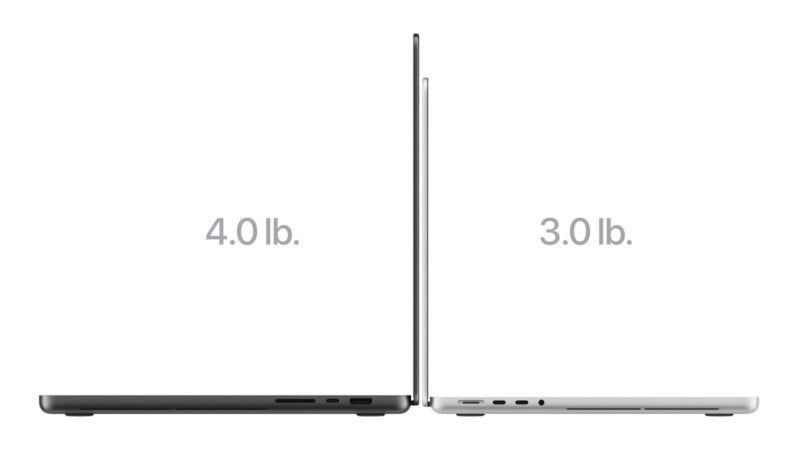
The new MacBook Pro is also thinner and lighter. The 14-inch MacBook Pro now weighs half a pound less, tipping the scales at just three pounds. The 16-inch version is four pounds, 0.7 pounds lighter than before. Both models are slimmer thanks to the OLED’s thinner stack. It’s not a huge difference, though: the 14-inch is half a millimeter thinner, and the 16-inch is nearly a full millimeter slimmer.
Audio Improvements
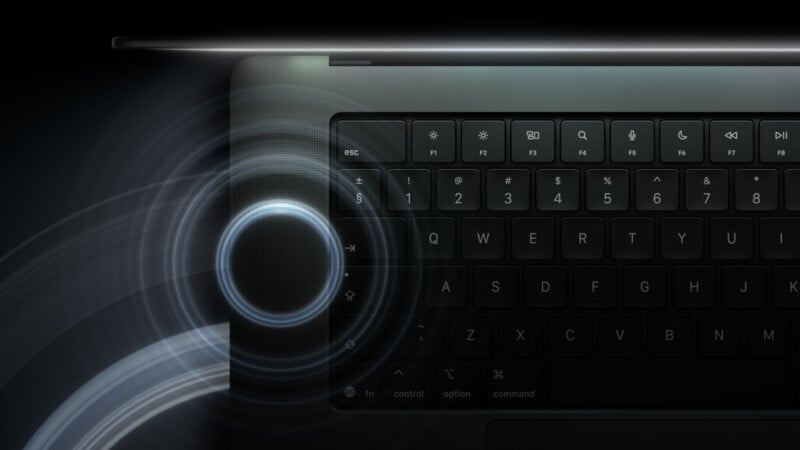
Audio matters, too. An all-new woofer design promises 50% deeper bass, and new tweeters that Apple says improve sound clarity. For the first time in a MacBook Pro, Apple also added new audio tuning specifically for closed-lid use. Apple says the closed laptop will still deliver great audio, replacing the need for dedicated speakers when using external displays.
Powered By M5 Pro and M5 Max
The M5 Pro and M5 Max chips inside are the same as prior Macs. That is, they are very powerful.
“It raises the bar for what was already the world’s best pro laptop. We love the Mac, and it’s the reason why so many of us found our way to Apple in the first place. The Mac has never been better, and it’s never been stronger,” Apple’s new CEO, John Ternus, says.
Ports and I/O
The new MacBook Pro has three Thunderbolt 5 ports, HDMI, and an SDXC card slot. The laptop supports up to three external displays with M5 Pro and up to four with M5 Max, plus the PROLED XDR.
The laptop includes Wi-Fi 7 and Bluetooth 6 connectivity. It can fast charge up to 50% in just 30 minutes and promises up to 24 hours of battery life.
Other Features
The MacBook Pro also offers several other interesting features with PROLED XDR. A new Apple Pro Display Calibrator lets users calibrate the built-in display to very specific targets. A new Apple Color Matching Function 2026 lets the PROLED XDR perfectly match an iPhone 18 Pro or Studio Display XDR.
Pricing and Availability
The new MacBook Pro starts at $2,899 for the 14-inch model with M5 Pro and $3,399 for the 16-inch one with M5 Pro. The M5 Pro models start with 24GB of unified memory and expand to 64GB. Storage starts at 1TB, expandable to 4TB.
They are also available with the M5 Max. The 14-inch starts at $4,449, and the M5 Max starts at $4,799. These start with an 18-core CPU and a 32-core GPU. An upgraded 40-core GPU is also available for $300. These machines start with 36GB of unified memory and 2TB SSDs, and can be expanded to 128GB of RAM and, for the first time, 16TB of internal storage.
For reference, a maxed-out 16-inch MacBook Pro with 128GB of unified memory and 16TB of storage is $14,549. A nano-texture screen is an extra $150.
The new MacBook Pro is available to preorder now and releases on November 6.
Image creditsApple
Affiliate Disclosure PetaPixel articles may include affiliate links; we may earn a commission if you buy through one.


