

4 Cameras, 7 Lenses: What It Takes to Cover the Commonwealth Games
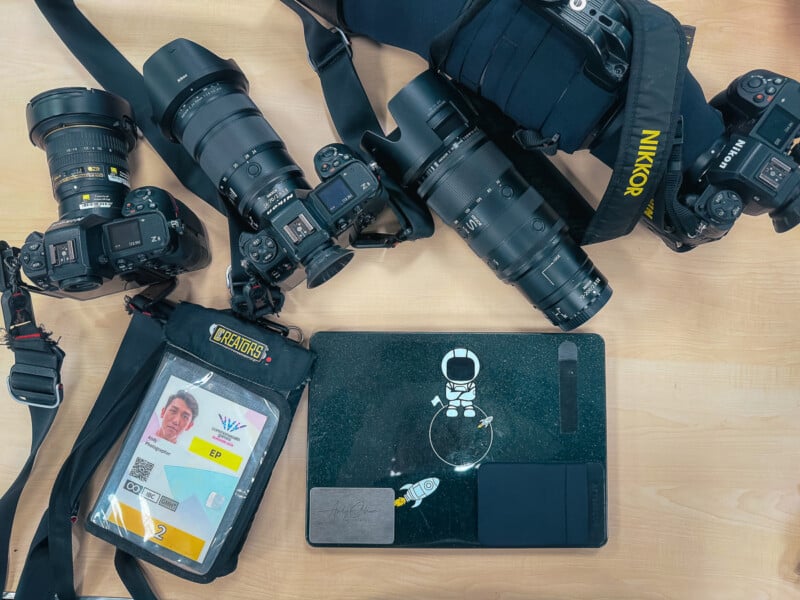
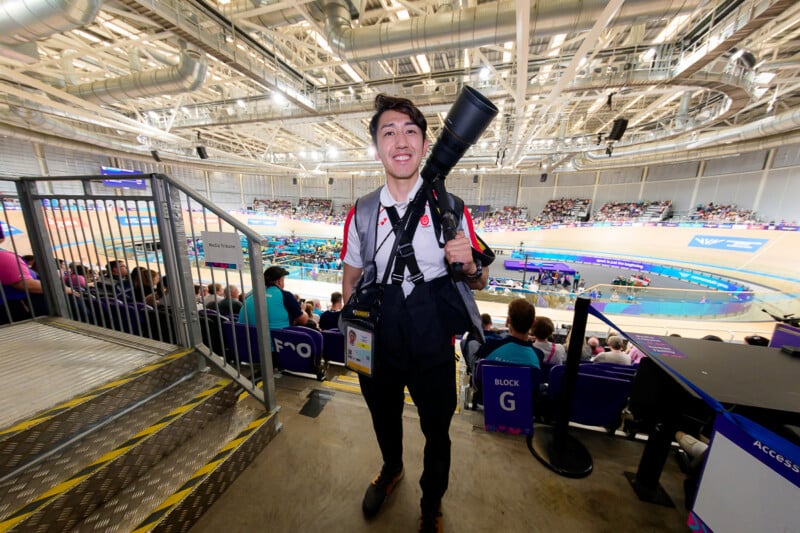
Four cameras, seven lenses, and one Commonwealth Games. That was the equipment I brought to Glasgow 2026. Most days, however, only three cameras came with me to the competition venues. The fourth stayed at the hotel as a backup, unless I planned to use it as a remote camera.
After 11 years of working in sports photography, I’ve learned that choosing equipment is about anticipating what might happen from the positions available to me. Sometimes I need the reach to isolate an athlete across a venue; seconds later, I might need a wider view to capture a reaction or show the atmosphere around the competition. My kit has changed considerably since my first Commonwealth Games in Birmingham in 2022. Some of those changes came from advances in camera technology, while others came from discovering what worked, what limited me, and which photographs I wanted to make differently. Glasgow brought all those lessons together.
From DSLR to Mirrorless: How My Sports Photography Kit Evolved
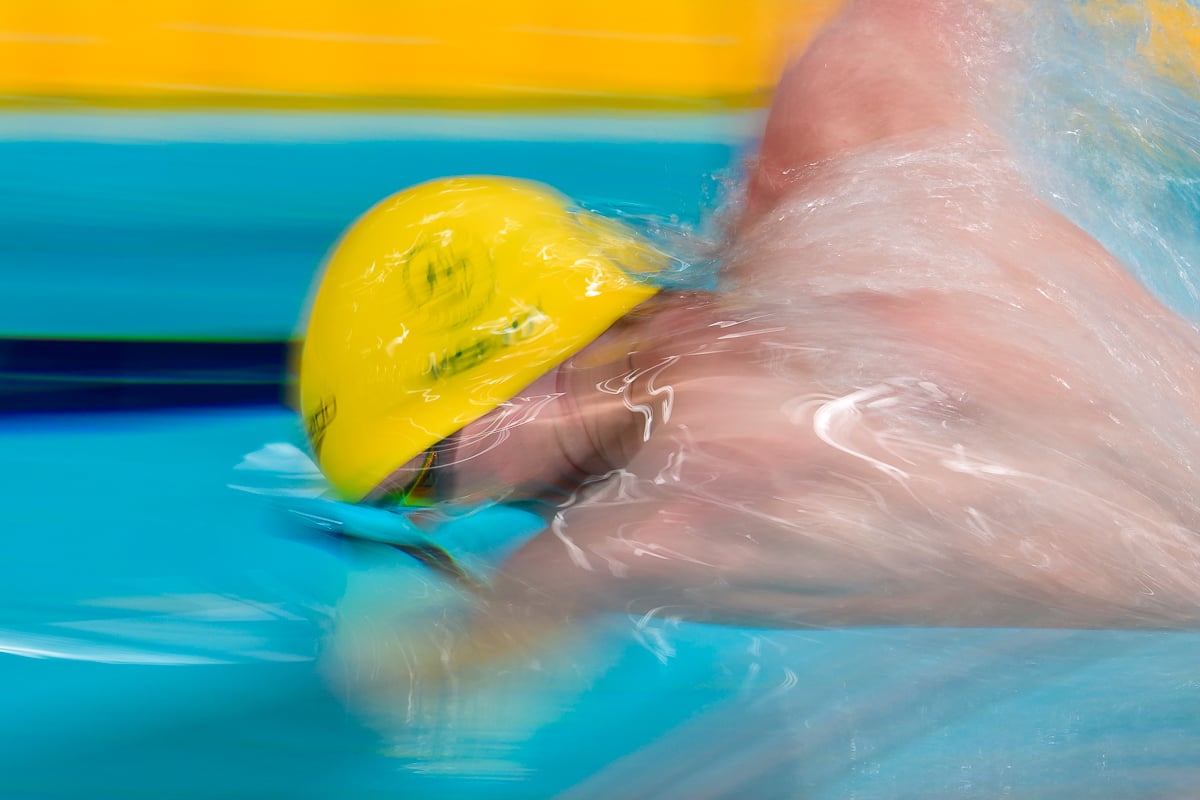
My photography background has always been closely connected to swimming. For years, one of my favorite lenses was a 600mm. From the opposite end of a swimming pool, its reach helped me isolate athletes and capture details that spectators might never notice. Naturally, when I traveled to Birmingham in 2022, I brought equipment I knew well. My main telephoto lenses were the AF-S NIKKOR 120–300mm f/2.8 and a 600mm.
I was also transitioning from DSLR to mirrorless at the time. Nikon’s Z-mount system was expanding, but a lens being announced did not necessarily mean it was readily available for me to buy or borrow. My equipment choices reflected what I could access and already trusted for an important assignment. Covering a multi-sport Games challenged those choices. A focal length that worked beautifully for swimming could feel restrictive elsewhere. With the 600mm, an unexpected movement could send an athlete’s arm or leg outside the frame—and once that happened during capture, I couldn’t recover what I hadn’t photographed.
The 120–300mm offered more flexibility, although there were also situations where I wanted greater reach. Those experiences changed my thinking: instead of asking how close a lens could bring me, I began asking how much freedom it would give me throughout a competition.
By Glasgow 2026, the NIKKOR Z 400mm f/2.8 TC VR S had become one of my most important lenses. The 400mm focal length gave me room to accommodate unpredictable movement while still isolating athletes from their surroundings. Its built-in 1.4× teleconverter also allowed me to switch to 560mm without removing the lens from the camera, making it easier to respond when the distance between the athlete and my position changed. It didn’t replace every other telephoto in my bag, but across the sports I photograph, it offered a remarkably useful balance of reach and flexibility.
Why I Work With Three Cameras
For Glasgow, I traveled with one Nikon Z9, two Z8s, and a Z6 III. My usual venue setup consisted of the Z9, one Z8, and the Z6 III, with the second Z8 staying at the hotel as a backup. Two cameras cover most situations I encounter, while the third helps me capture moments I might otherwise miss.
I might be following an athlete through a 70–200mm when the action suddenly moves closer. Even at 70mm, the framing can become too tight. Alternatively, the competition might finish, and I want to move immediately from a tight action photograph to a wider view of the athlete’s reaction. Having another focal length ready lets me respond instantly without changing lenses.
That becomes particularly useful in heavy rain, when opening a camera’s lens mount introduces another concern. Keeping different lenses mounted helps me continue working while limiting unnecessary equipment changes. There is a physical cost to carrying an extra camera, and I understand why some photographers prefer two, but for the way I work, the additional flexibility earns its place.
I also think carefully about which lens goes on which body. The Z9 has an integrated vertical grip and a larger-capacity battery, so I generally pair it with the lens I expect to use most during that competition. At one event, that might be the 400mm; at another, it could be the 70–200mm. The other lenses go on the smaller bodies, which I expect to use less frequently. The arrangement follows the sport rather than a permanent camera-and-lens pairing, helping me manage battery life while keeping different perspectives ready. I don’t carry three cameras because I need all three for every photograph—I carry three because I don’t know when I’ll need the third.
The Seven Lenses I Brought to Glasgow 2026
My Glasgow kit had to cover different sports, shooting distances, and creative possibilities. This was the selection I brought overseas, rather than a list of everything I carried to every venue.
| Lens | Primary purpose |
|---|---|
| NIKKOR Z 24–70mm f/2.8 S II | Closer action, environmental photographs and general coverage |
| NIKKOR Z 70–200mm f/2.8 VR S II | Flexible action coverage and athlete portraits |
| NIKKOR Z 14–30mm f/4 S | Wide environmental photographs and remote camera perspectives |
| AF-S Fisheye NIKKOR 8–15mm f/3.5–4.5E ED | Creative perspectives incorporating the surroundings |
| NIKKOR Z 85mm f/1.2 S | Portraits, subject isolation and selected indoor sports |
| AF-S NIKKOR 120–300mm f/2.8E FL ED SR VR | Longer-range action requiring flexible framing |
| NIKKOR Z 400mm f/2.8 TC VR S | Distant action and tightly framed photographs |
I also brought a Nikon Z teleconverter for additional reach when required.
There is overlap between these lenses, but that overlap is useful. At a major Games, I don’t always have complete freedom to choose my position; the available angle, distance, and background can make one lens more suitable than another. A lens earns its place through the photographs it allows me to make. Some are used frequently, while others offer a particular perspective that would be difficult to achieve with the rest of the kit.
Before leaving my accommodation each day, I choose what to bring according to the sports I’ll be covering. Sometimes that means packing both the 120–300mm and the 400mm; at other times, a wider selection matters more. The full kit gives me options, and daily planning determines which of those options I need that day.
Why the 120–300mm Still Earns Its Place
Although much of my equipment has moved to Nikon’s native Z-mount system, the AF-S 120–300mm f/2.8 remains useful enough to travel with me. I use it with an FTZ adapter, and its zoom range continues to suit situations where an athlete’s movement can change the framing quickly.
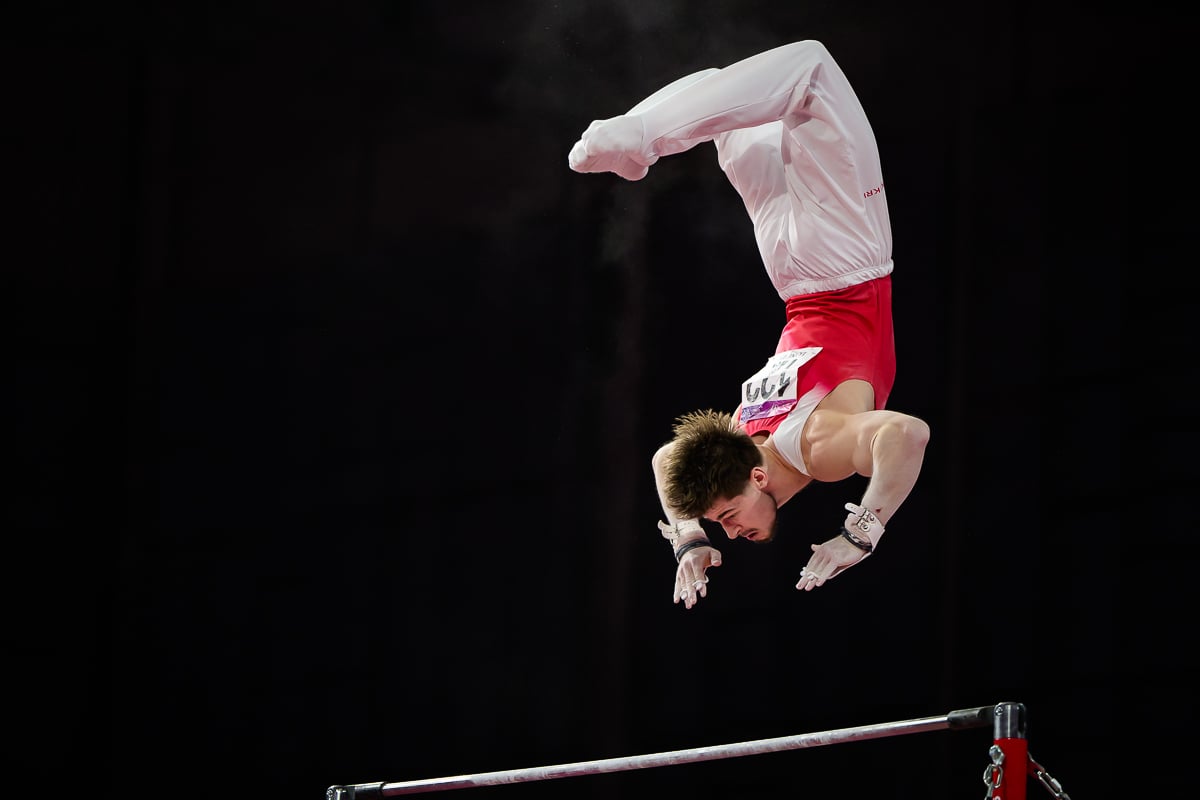
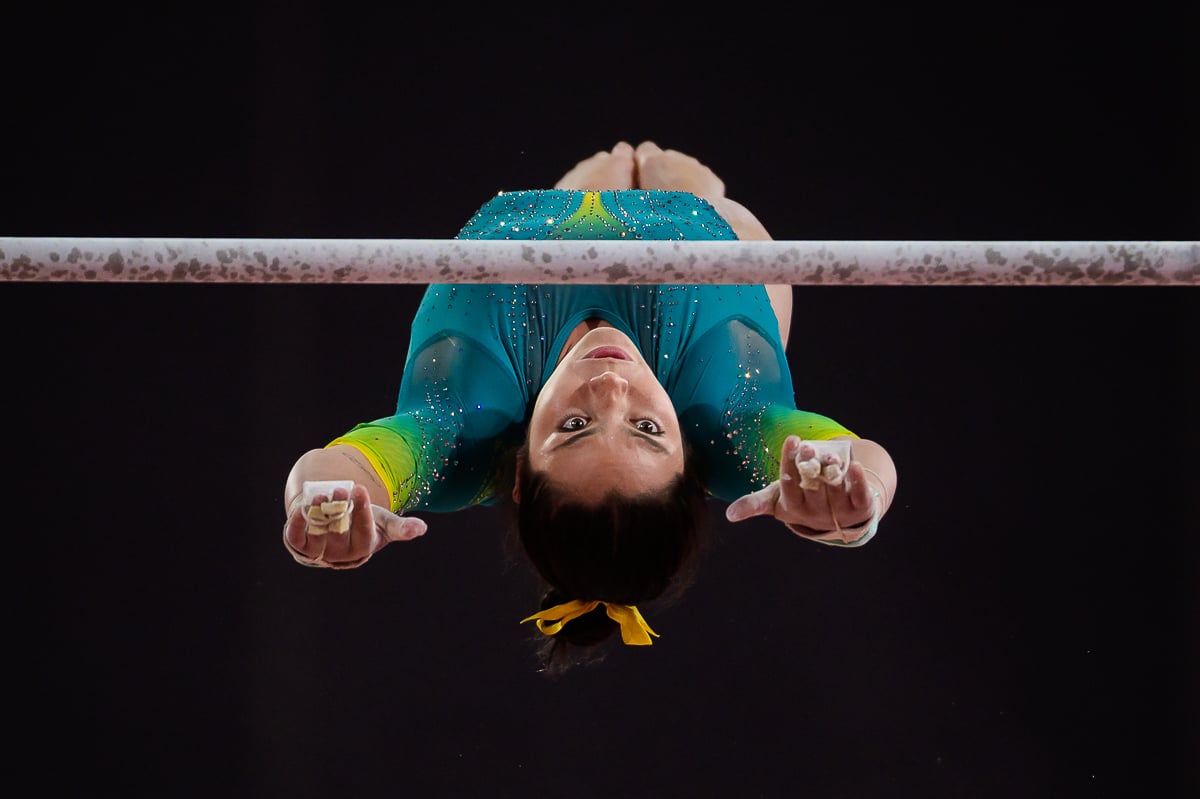
Gymnastics is a good example. During the horizontal bar competition at Glasgow, I needed to respond as the gymnast moved through different positions. A composition that worked at one point in the routine could become too tight moments later. The zoom let me adjust without changing lenses or committing to a single focal length—that flexibility mattered more to me than whether the lens belonged to the newest generation.
Choosing the lens is only part of the preparation. I also make a point of reaching the venue early to study the available positions, lighting, and backgrounds. Warm-ups are particularly valuable: I often arrive with photographs already visualized, then use that time to find out whether they are possible from my position. Sometimes the lens I expected to use turns out to be unsuitable, and other times I discover a stronger composition than the one I had imagined. Making those adjustments before competition begins means I can spend more attention following the athlete when the important moments arrive.
Learning to Look Beyond Tight Action
Early in my sports photography journey, Dave Black’s work helped shape how I saw the possibilities of a telephoto lens. I remember being inspired by his photograph of Michael Phelps from the 2004 Olympics; the tight framing revealed a perspective that felt very different from watching a race as a spectator. I was drawn to that ability to isolate an athlete and bring viewers close to a fleeting moment.
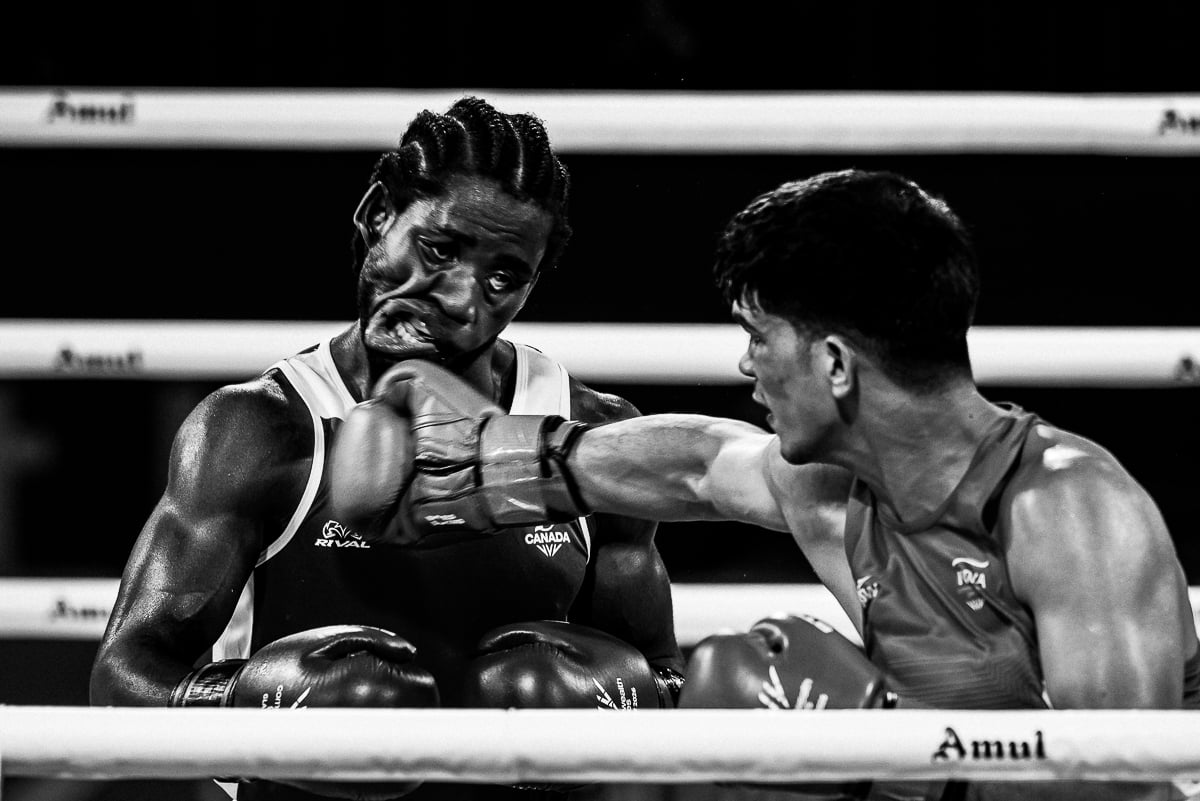
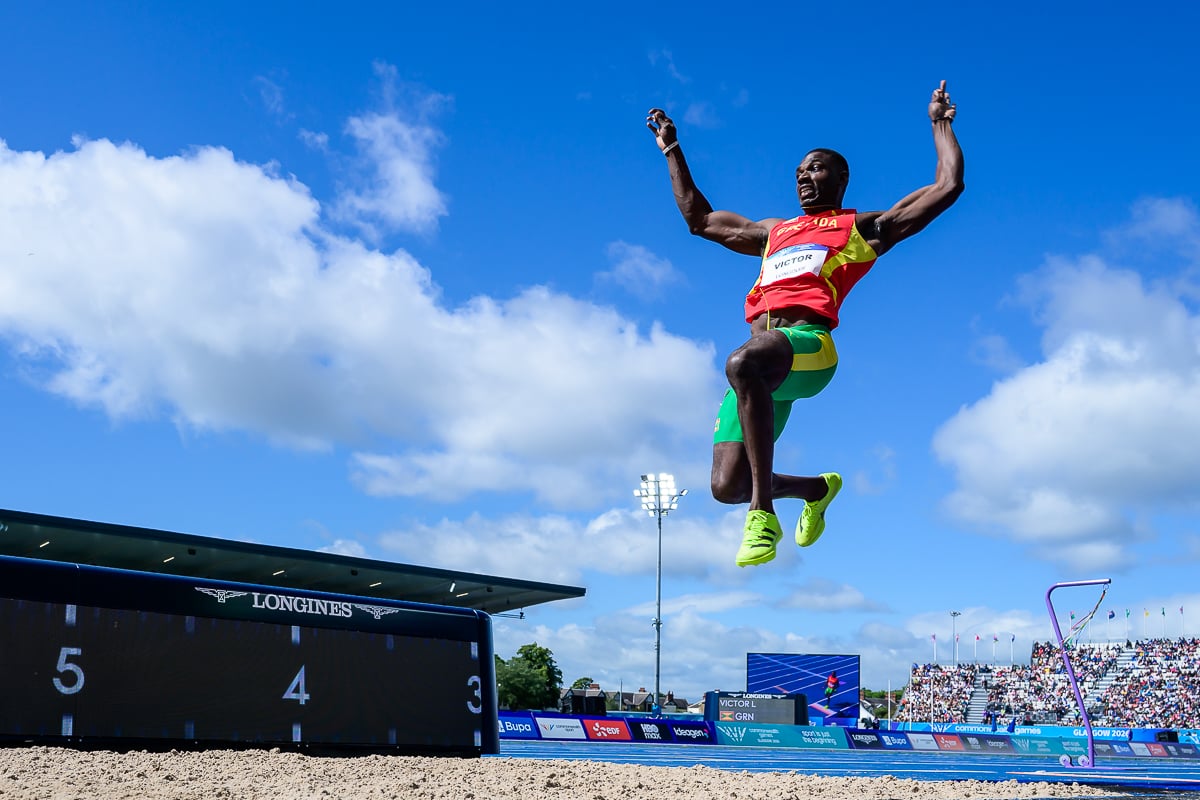
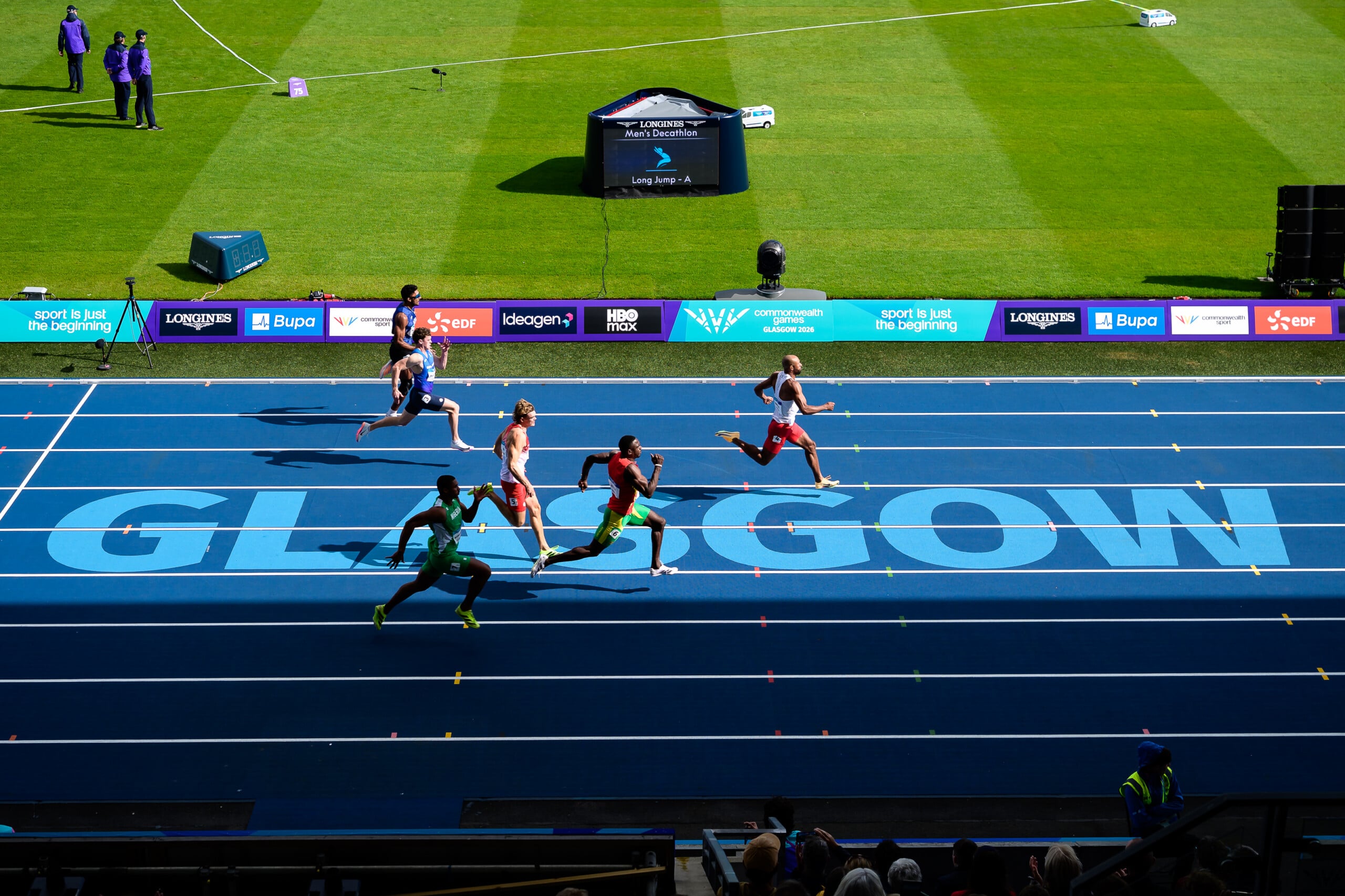
I still enjoy making those photographs, but over time, I realized that a collection built entirely around tight action could leave out much of the event’s atmosphere. The venue, sky, crowd, and surrounding space can all contribute to the story, and including them requires me to think beyond the athlete alone. During the long jump at Glasgow, I used the 24–70mm to incorporate the blue sky and clouds, wanting the athlete to sit within a larger composition with the surroundings contributing to the photograph.
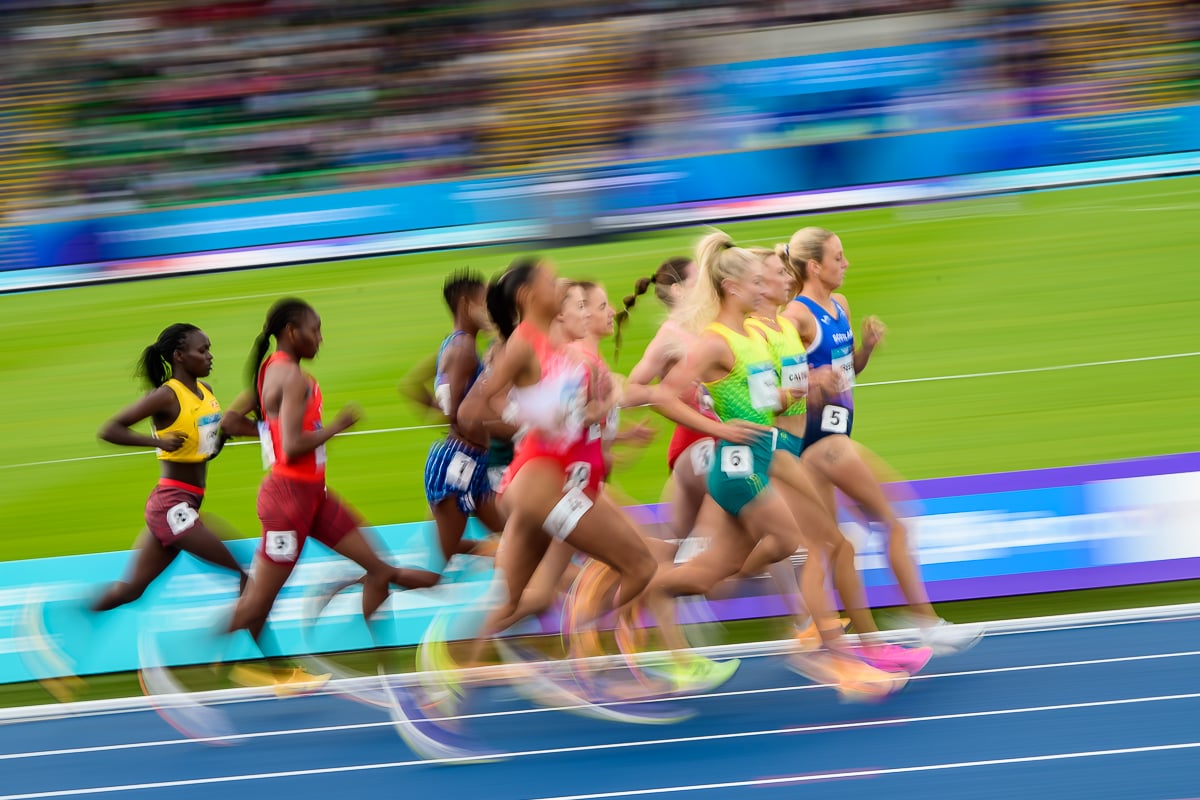
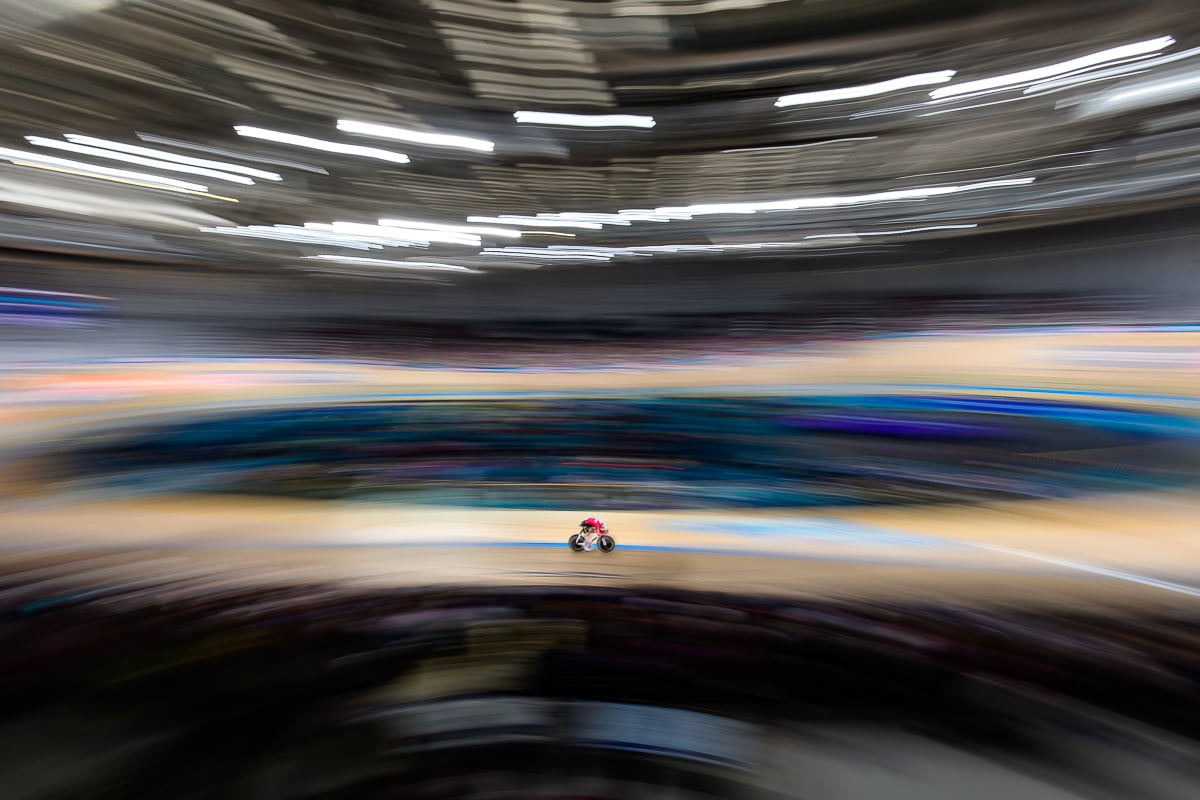
Track cycling offered another opportunity to experiment. Using the 8–15mm fisheye, I incorporated the velodrome while panning with the cyclist. The exaggerated perspective gave the photograph a different sense of space and movement.
These photographs serve a different purpose from tightly framed action: one brings viewers close to an athlete’s expression, while another helps them feel the scale or energy of the competition. I want both in my coverage, and the challenge is recognizing when to step away from the familiar telephoto composition to try something else.
Using the 85mm at f/1.2 for Basketball
The NIKKOR Z 85mm f/1.2 S might seem like an unusual addition to a sports photography kit, but I find it useful when working at a suitable distance to create strong separation between an athlete and the surroundings. During the 3×3 basketball competition at Glasgow, the background was visually busy, so I chose to photograph at f/1.4 to soften those distractions and give the player a cleaner, more isolated presence in the frame. That was my reason for choosing it over a zoom in this situation—I had a particular look in mind.
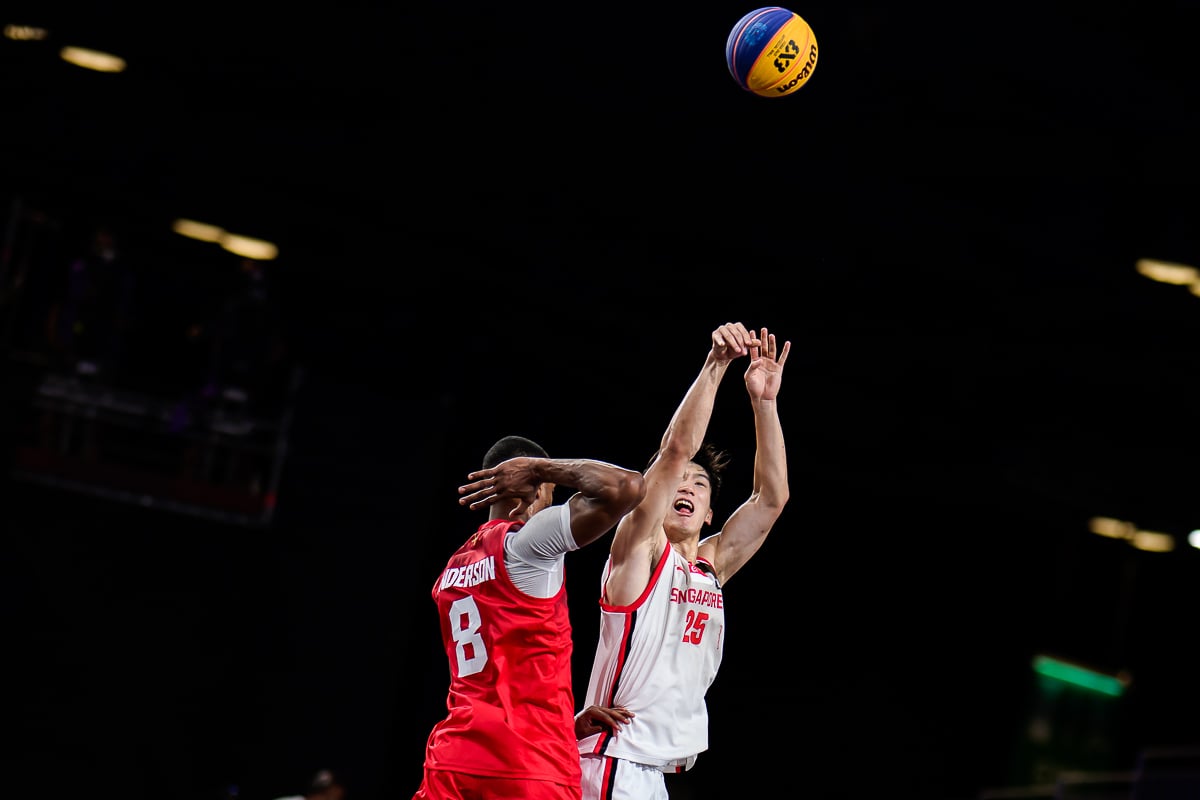
Working with a fixed focal length requires me to be deliberate about my position. I can’t simply widen the framing when the action moves closer, so the shooting distance has to suit the photograph I want. The 85mm isn’t a lens I would choose for every sporting situation, but when the position and background work, it offers a useful creative option alongside my telephoto zooms.
A Fourth Camera for a Different Perspective
My spare Z8 normally stayed at the hotel. When I planned to make remote-camera photographs, however, that fourth body came with me. At athletics, a remote near the finish line could give me a perspective unavailable from my regular photography position. With the 14–30mm, I could include the athletes’ finishing poses and reactions alongside more of the surrounding scene. While I concentrated on the action through my main cameras, the remote offered another way to tell the story.
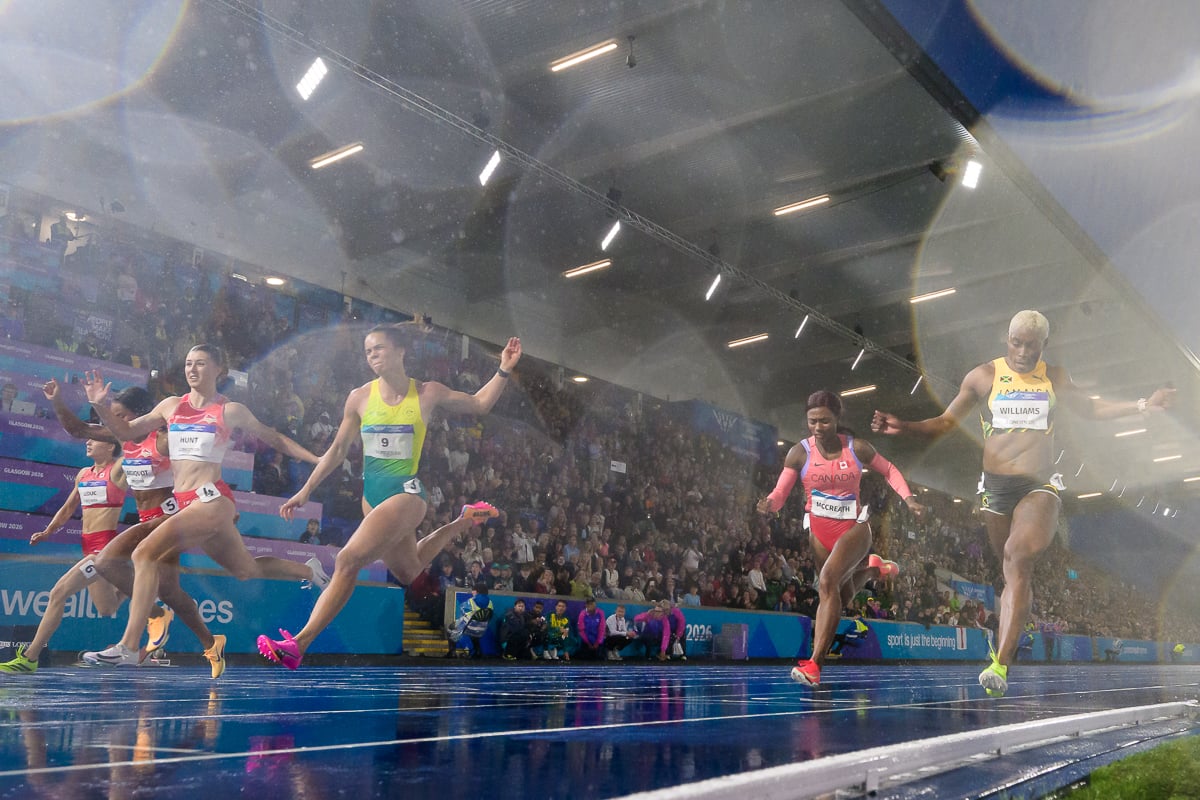
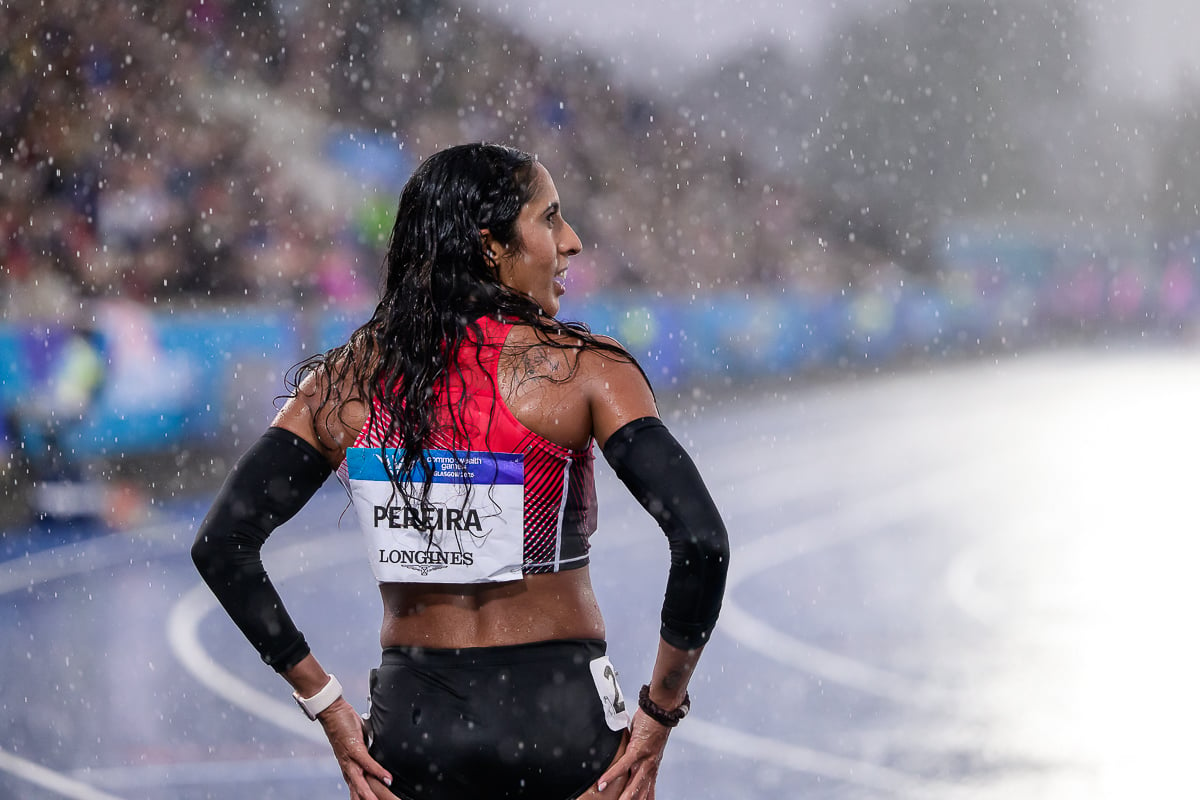
One session put that equipment through a particularly uncomfortable test. Heavy rain continued throughout three hours of athletics. Although I had protected the camera and lens with a rain cover, water still reached the extending section of the lens barrel. I was concerned about possible water ingress, but fortunately, the lens continued working throughout the session and afterward without any apparent issues. That experience gave me confidence in how it handled those conditions, though I wouldn’t treat it as proof that the lens is waterproof—I would still take every precaution to protect it.
The value of bringing the fourth camera was the resulting viewpoint: it allowed me to make photographs that complemented what I could capture from my own position.
Preparing for the Rain
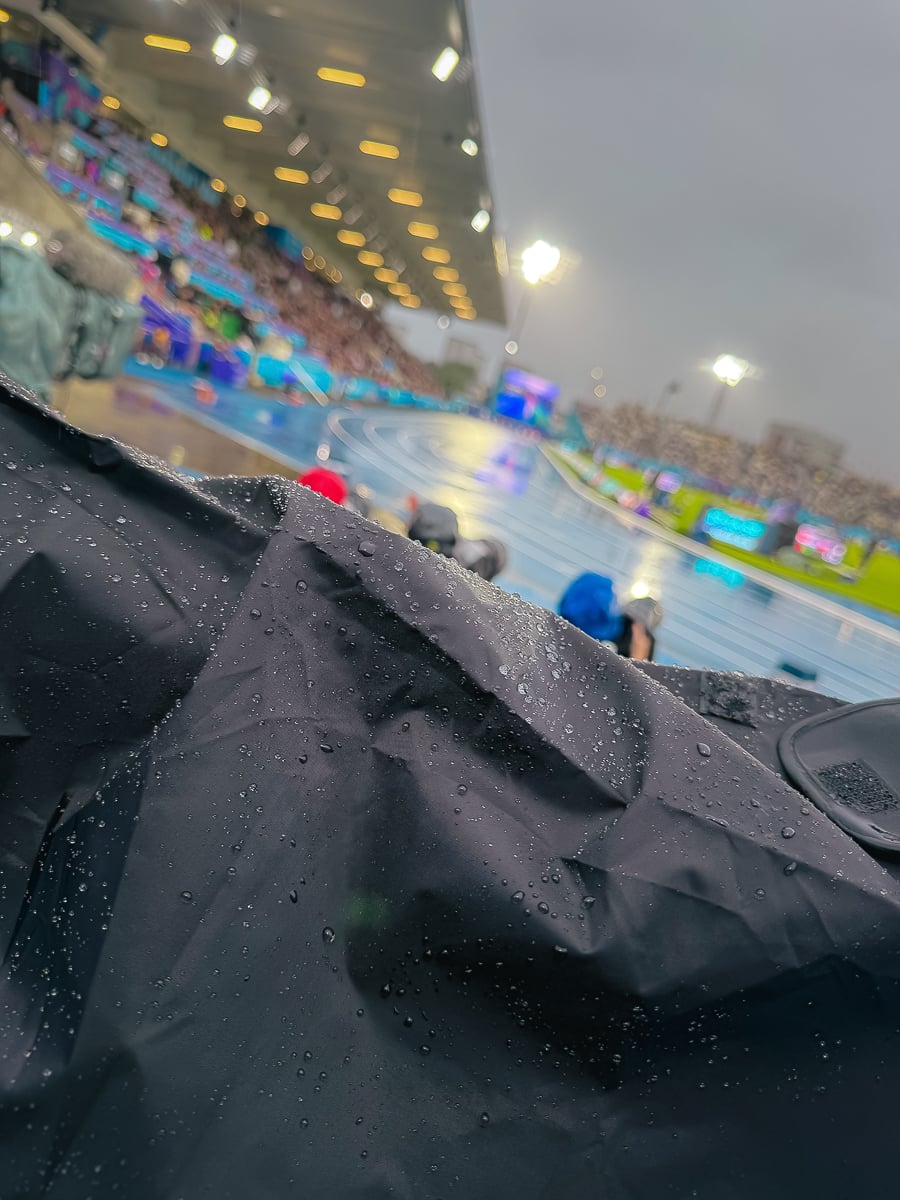
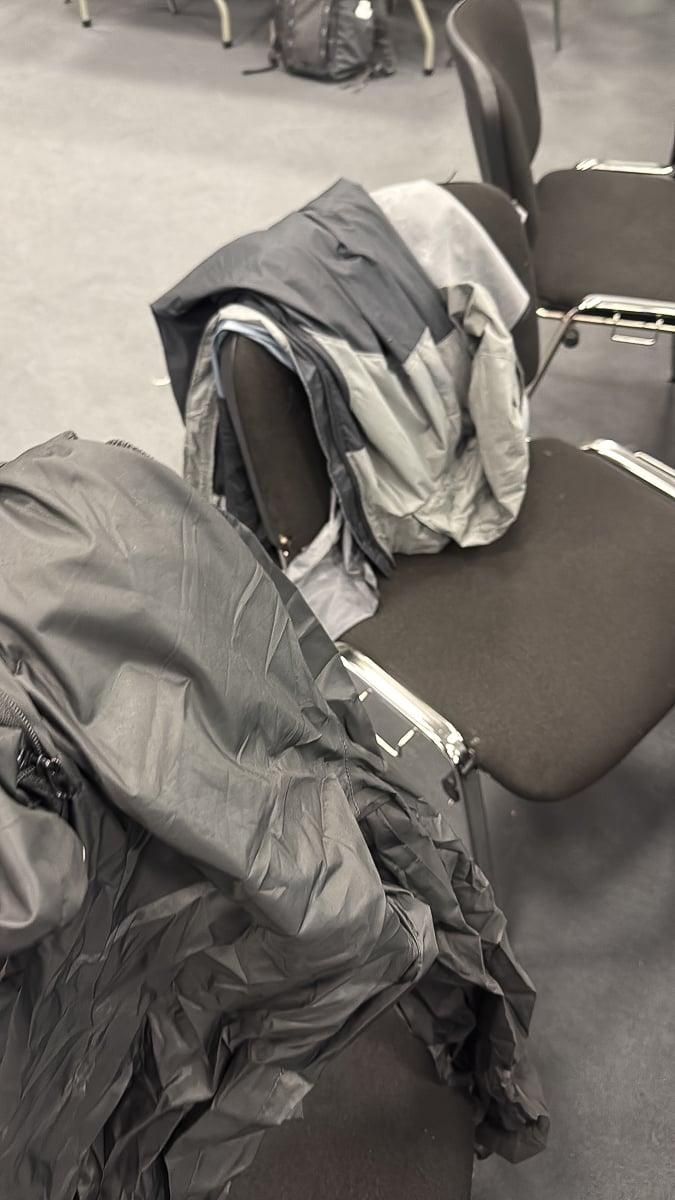
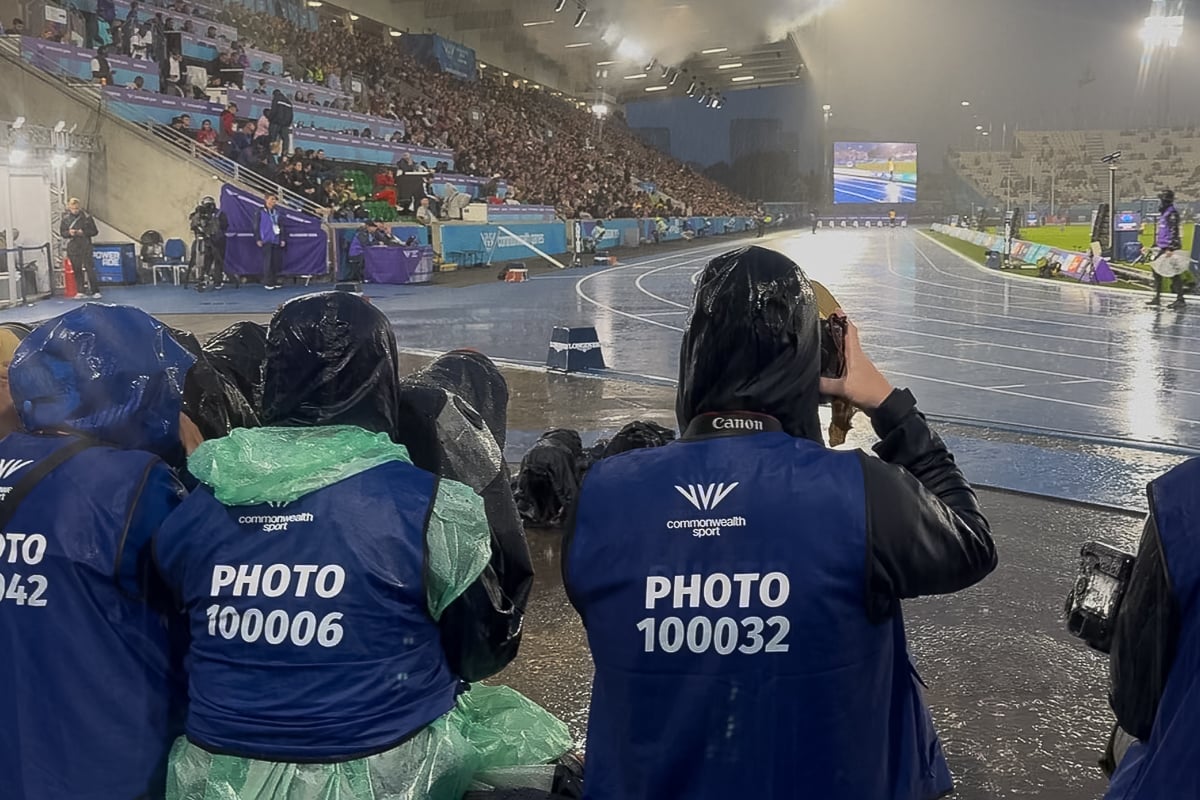
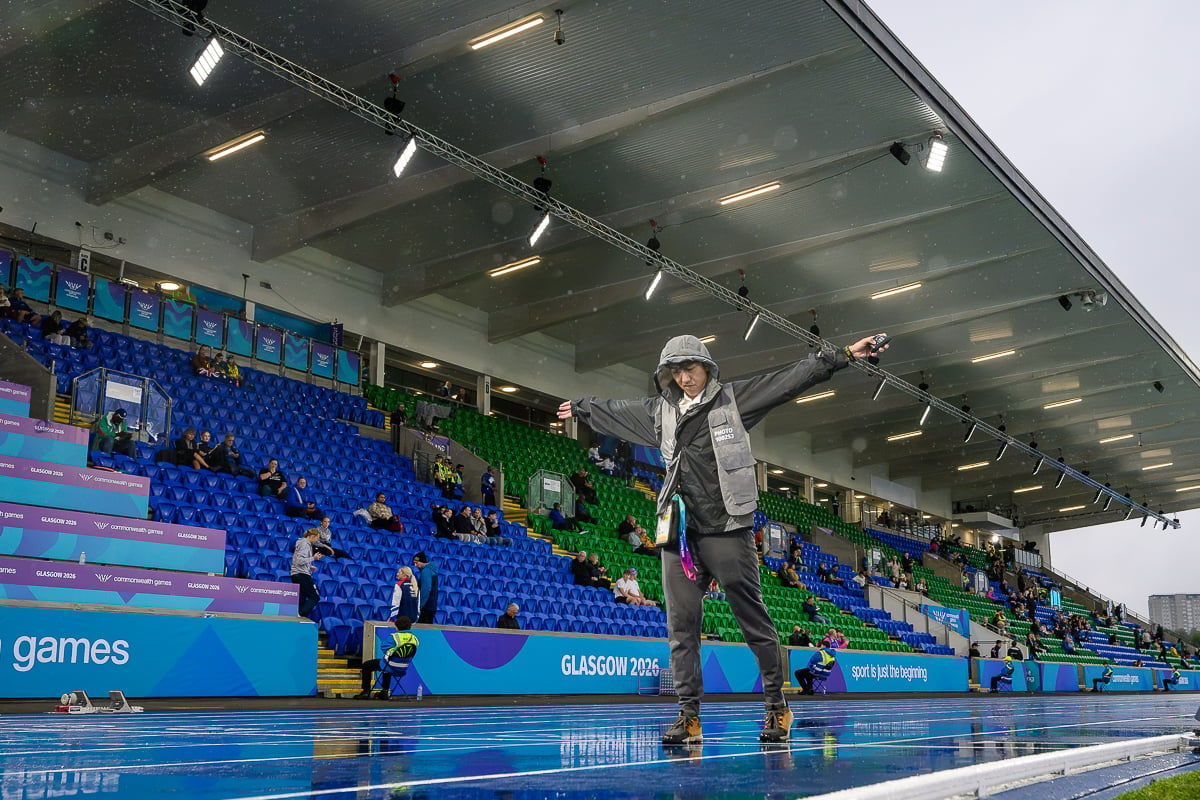
The Paris 2024 Olympics changed how I prepared for bad weather. Coming from Singapore, I’m accustomed to warm and humid conditions, so the wet, cold opening days in Paris exposed gaps in my preparation. Reuters provided me with a thick waterproof jacket, which made working considerably more manageable. Before that experience, I had given much less thought to waterproof trousers; by Glasgow, they were a mandatory part of my preparation.
Nikon Depot also supported me with a custom-made rain cover suited to my camera setup. Its fit and durable material made it easier to work while protecting my equipment. Protecting myself matters alongside protecting the cameras—when I’m uncomfortable or distracted by water reaching my equipment, it becomes harder to concentrate on the competition. Good preparation gives me more attention for the photograph. Even then, prolonged rain demands care, as professional equipment’s weather sealing doesn’t remove the need for protection.
The Assignment Continues After the Photograph
Capturing the moment is only part of a sports photography assignment—the photographs also need to reach the client while they are useful. At major events, large news agencies may have editors receiving, processing, and distributing images as photographers continue shooting. Working independently, I often handle that process myself. Depending on the circumstances, my goal is to deliver important photographs within 10 minutes, which means balancing continued coverage with selecting images, making adjustments, and preparing accurate captions.
Captioning deserves as much attention as the photograph. The athlete, event, date, and action need to be identified correctly so the client can understand and use the image. Venue connectivity also varies: some locations provide excellent media Wi-Fi, while elsewhere I may need to rely on my phone as a hotspot. An effective kit therefore extends beyond cameras and lenses—batteries, a laptop, connectivity, and preparation all contribute to completing the assignment. A strong photograph matters, but getting it to the client at the right time is another vital part of doing the job.
What I’ll Carry Into the Next Games
My equipment selection has become more consistent as I’ve learned what I need across different sports. I’m increasingly interested in making that setup easier to carry while preserving the flexibility that matters to me. Moving between venues, using public transport, and spending long days around competition areas all influence how I judge equipment. Improvements that make a lens or camera less burdensome can be meaningful over an entire assignment.
However, I don’t expect every useful lens to be the newest one. The continued place of the 120–300mm in my bag is a reminder that equipment needs to suit the work. Looking back from Glasgow to Birmingham, the biggest change is how deliberately I choose my kit. I have a clearer understanding of when I need reach, when I need room around an athlete, and when a completely different perspective could improve my coverage.
Ultimately, the best equipment setup helps me respond when the moment arrives. For Glasgow, that meant having different perspectives ready, choosing my lenses for each sport, and preparing for conditions I couldn’t control. The cameras and lenses will continue to change, but what matters is knowing why each one earns its place in my bag.
Affiliate Disclosure PetaPixel articles may include affiliate links; we may earn a commission if you buy through one.


