AI-Edited Photos Can Lead People to Form False Memories
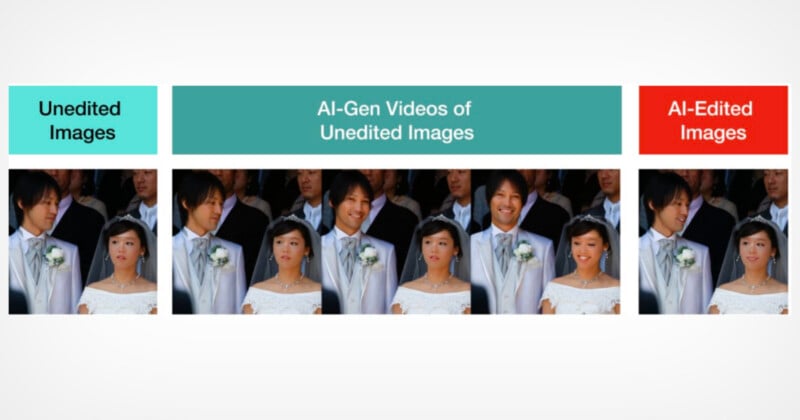
AI-edited photographs and videos create false memories in people’s brains and make them even more confident about the wrong version of the event.
According to a report by The Washington Post, an experiment at MIT’s Media Lab found that people who viewed AI-edited photos and videos were more likely to misremember the original images and feel confident in their inaccurate recollections.
Pattie Maes, a professor at MIT’s Media Lab, tells The Washington Post that she and colleagues conducted an experiment using 24 ordinary photographs depicting scenes such as a wedding, a city street, and a race. Maes and her colleagues showed the photographs to participants, then gave them a break. Some participants were later shown the original images again, while others saw versions that had been altered using AI.
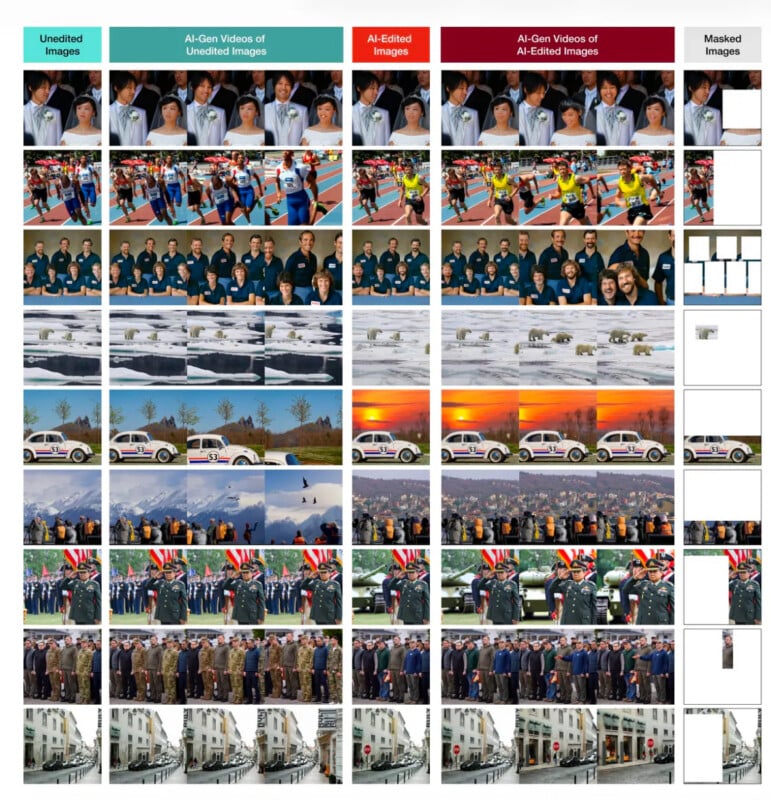
When participants were subsequently tested on their memories of the original photographs, those who had seen AI-altered versions were more likely to remember details incorrectly. They were also more confident in their incorrect answers.
“I think of all this as very dangerous, basically,” Maes tells The Washington Post.
A World Where ‘Thinking Becomes Optional’
According to the paper, published at the CHI 2025 conference, 200 participants first viewed the 24 baseline photographs. After completing a filler task, they were divided into four groups of 50. The first group viewed the original photographs a second time and served as the control group. The second saw AI-edited versions of the images, while the third watched five-second AI-generated videos created from the original photographs. The fourth group watched videos generated from the AI-edited images.
The alterations added, removed, or changed objects, people, and elements of the surrounding environment in the photo. Participants were then asked one question about each photograph, with the aim of testing their memories of the original images. The researchers found that all three groups exposed to AI-generated or AI-edited content produced more false memories than the control group. The largest effect occurred among participants who watched AI-generated videos based on AI-edited photographs. This group produced 2.05 times as many false memories as the control group. Participants in this group were also more confident in their incorrect answers, with confidence levels reported at 1.19 times those of the control group.
The findings raise questions about how AI tools could affect people’s ability to remember information accurately. According to The Washington Post, memory develops through processes such as paying attention, making an effort to learn, recalling information, and connecting ideas. Generative AI can take over some of these tasks, potentially reducing the mental effort involved in learning and remembering. University of Pennsylvania researchers Gideon Nave and Steven Shaw, who study AI’s effects on human cognition, are examining what this could mean for people’s thinking abilities. Nave, an associate professor of marketing at the Wharton School, is particularly concerned that people may become less practised at skills that AI can perform for them, rather than AI itself becoming powerful enough to take control from humans.
“What we are more likely to see is humans starting to decay instead of AI taking over,” Nave tells the outlet, adding he fears a world in which “thinking becomes optional.”
Affiliate Disclosure PetaPixel articles may include affiliate links; we may earn a commission if you buy through one.