
How I Got the Xtra Muse 2 Pro Even Though It’s Banned
Xtra’s Muse 2 Pro isn’t currently available in the U.S., but I have one. Here’s how I got it and my first impressions.
I didn’t buy the Xtra Muse 2 Pro. In fact, when the camera finally arrived at my door, most people in the United States couldn’t buy one either.
I ended up with the camera after applying on Instagram to Xtra’s 100 Creators for Xtra Muse 2 Pro program in May. I was selected as one of the creators who would receive the camera and was also named an Xtra Aesthetic Master, an award the company described as being for creators “with an eye for mood, light, and style.”
At the time, I expected the process to be straightforward. Xtra was promoting the Muse 2 Pro as a new dual-lens pocket gimbal camera, and its U.S. launch seemed just around the corner. Instead, regulatory issues with Xtra’s products delayed the process, and I ended up spending months with the original Muse while waiting for the camera I was supposed to receive.
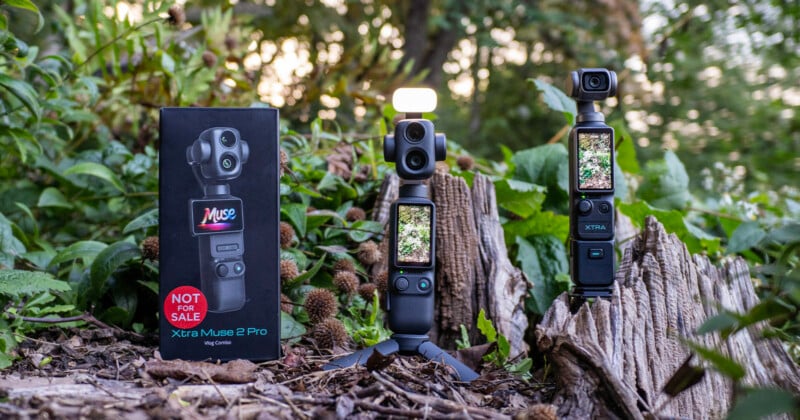
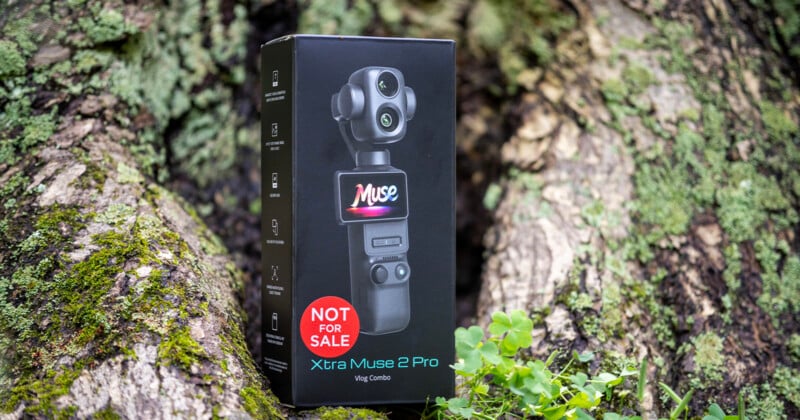
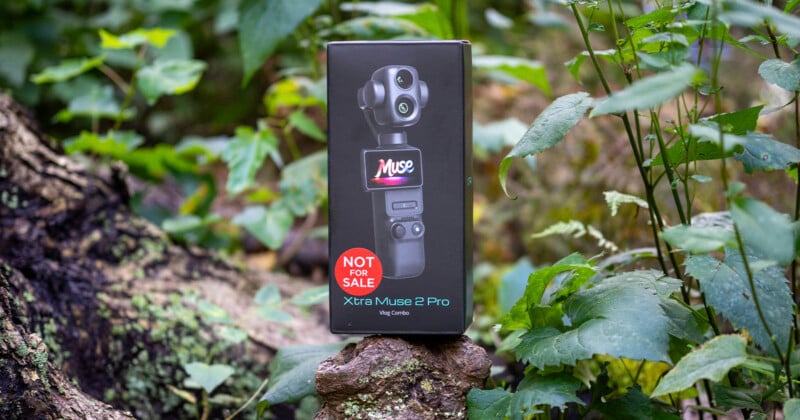
Now the Muse 2 Pro is finally here. There is just one problem: The box has a red sticker on it that says “NOT FOR SALE.” I have no interest in selling mine, but the problem is that no one in the U.S. can get one now.
How I Ended Up With The Xtra Muse 2 Pro
Xtra announced its 100 Creators program in late May, inviting photographers and creators to share their work on Instagram, tag the company, and recommend other creators they thought should be part of the program. When Xtra announced the first wave of selected creators in June, I was among those chosen. I was also named an Xtra Aesthetic Master, an award the company described as recognizing creators “with an eye for mood, light, and style.”
I was particularly interested in the Muse 2 Pro because it seemed like the kind of camera that could fill a gap in my own kit. I regularly carry interchangeable-lens cameras, but there are plenty of situations where having something genuinely pocketable makes more sense. A small camera with a mechanical gimbal can be useful for travel, behind-the-scenes footage, quick video clips, and situations where pulling out a larger camera isn’t practical.
I’ve also been wanting to get more seriously into video, particularly creating vlogs from my adventures. There are plenty of moments from past trips when I wish I’d had a camera like this. I would have loved to have one while swimming in a frigid river to photograph brown bears in Alaska, photographing owls during a blizzard in Canada, or car camping around Iceland. When I’m focused on photographing wildlife or landscapes, I don’t necessarily have the time or attention to operate a second camera, so having a gimbal camera that can track me automatically opens up a completely different way to document those experiences.
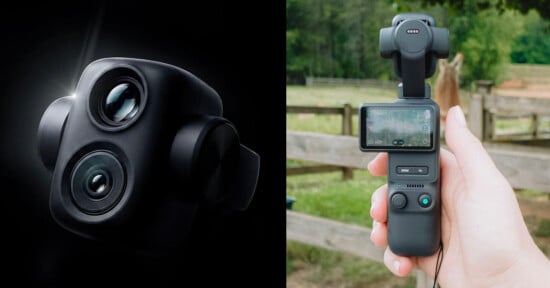
The Muse 2 Pro also stood out because of its dual-camera design. Instead of being limited to a single wide-angle perspective, the camera adds a second telephoto camera, so you can change perspectives without carrying another lens or camera. For the kind of travel and outdoor video I want to create, that flexibility is particularly appealing.
But getting one to the United States proved to be considerably more complicated than I expected.
Why the Muse 2 Pro Is Unusual in the U.S.
When I was selected for Xtra’s creator program, the company was still promoting the Muse 2 Pro as an upcoming U.S. product. Xtra opened an Early Bird program that allowed customers to put down a refundable $20 deposit for the camera, with the company initially targeting a late July 2026 launch.
That changed quickly. In July, Xtra paused the Early Bird program and began refunding deposits, saying it could not confirm a reliable launch timeline. The company has not announced a new U.S. launch date for the Muse 2 Pro.
The timing coincided with growing scrutiny from the Federal Communications Commission. The FCC has been investigating Xtra as part of a broader effort involving companies accused of bringing technology associated with restricted DJI products into the United States. In July, the FCC proposed a $25,000 forfeiture against Xtra and separately proposed prohibiting the continued importation and marketing of equipment from Xtra and several other companies. Those proposed actions are part of an ongoing regulatory process, rather than an immediate blanket ban on every Xtra product.
That distinction matters because Xtra has continued to sell some of its existing products in the U.S. The company says its currently released products remain available and supported, while it communicates with the FCC about their status and has not announced a new timeline for future product availability.
For the Muse 2 Pro, however, the practical situation is much simpler: U.S. customers cannot currently place a normal order for the camera, and there is no confirmed launch date.
That makes the camera sitting on my desk a little unusual.
The Camera Arrived With a Warning
After the Muse 2 Pro was delayed, Xtra initially sent me the original Muse so I could start using the company’s camera system while I waited. That gave me time to spend with the first-generation camera rather than simply receiving the new model and immediately writing about it.
Eventually, the Muse 2 Pro arrived.
The first thing I noticed wasn’t the camera itself. It was the box.
A red sticker across the packaging clearly says “NOT FOR SALE.” That is a particularly strange thing to see on a camera that, only a few months earlier, Xtra was actively promoting for U.S. customers.
The sticker also provides a pretty good physical representation of the strange position this camera currently occupies in the United States. This isn’t a retail unit that I purchased from a U.S. store. Xtra sent it to me through its creator program, at a time when the company’s plans to sell the camera here had become uncertain.
What the Muse 2 Pro Is
The Muse 2 Pro is a pocket-sized camera built around a three-axis mechanical gimbal and a dual-camera system. Xtra lists a 1-inch CMOS sensor for the primary camera, along with a second telephoto camera that provides roughly 3x reach. The company also lists a 20mm-equivalent wide-angle lens and a 60mm-equivalent telephoto perspective, giving the camera considerably more flexibility than a single-lens pocket camera.
The larger main sensor is one of the more important specifications for photographers because it should give the camera an advantage over the much smaller sensors commonly found in compact action cameras and smartphones, particularly as light levels drop. Xtra pairs it with an f/2.0 aperture and a mechanical gimbal, giving the Muse 2 Pro both a relatively large imaging sensor and physical stabilization in a body small enough to carry in a pocket.
The camera also targets video creators. Xtra says it can record up to 4K at 240 frames per second, while its 10-bit X-Log 3 profile is designed to provide additional latitude for color grading. The company claims up to 17 stops of dynamic range and includes 103GB of built-in storage, which means there is a substantial amount of internal space before adding removable storage.
The second camera is potentially the more interesting feature for photographers. A pocket camera normally forces you to accept whatever perspective its single lens provides, but the Muse 2 Pro lets you move between a wide view and a tighter telephoto perspective without physically changing anything. That could make it useful for travel and outdoor shooting, where quickly changing perspectives matters more than a traditional interchangeable-lens setup.
It Looks Familiar
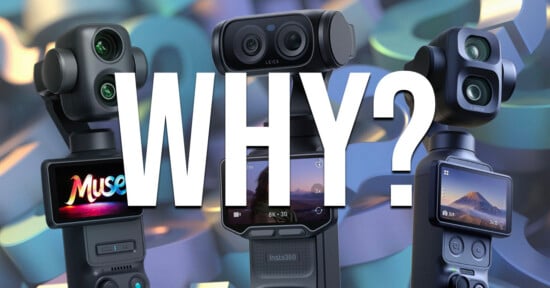
The Muse 2 Pro’s specifications also make its similarities to DJI’s latest pocket camera impossible to ignore. The two systems share the same basic concept of a small, three-axis gimbal camera with a 1-inch primary sensor and a second telephoto camera. The Muse 2 Pro also offers the same broad combination of 4K high-frame-rate video, log recording, and high claimed dynamic range.
Those similarities help explain why Xtra has attracted regulatory attention. The FCC’s investigation concerns allegations that Xtra and other companies may have used or imported technology associated with restricted DJI equipment. Xtra’s regulatory situation remains unresolved, and the company says it is communicating with the FCC and relevant authorities.
There is an interesting wrinkle here, too. The Muse 2 Pro itself received an FCC equipment authorization in June 2026. The filing included an attestation from Xtra stating that the equipment was not covered equipment prohibited from receiving authorization at the time of the application.
That authorization did not ultimately translate into a normal U.S. retail launch. Within weeks, XTRA had paused its Early Bird program and refunded customer deposits.
What It Means to Have One in the U.S.
The Muse 2 Pro is an unusual camera to have in the United States right now, not necessarily because of what it can do, but because of how difficult it is to get one here. When I applied to Xtra’s creator program, I expected to receive a new pocket camera and spend some time figuring out how it could fit into my photography and video work. Instead, getting the camera became part of a much larger story about Xtra’s uncertain future in the U.S.
For now, I am among the relatively small number of people in the country who have a Muse 2 Pro in hand. The red “NOT FOR SALE” sticker on the box is a particularly fitting reminder of just how unusual that is. I feel like one of the cool kids.
Xtra says it remains in communication with the FCC and is working toward a path that would let its products keep reaching U.S. customers. Whether that happens, and when, remains unclear. For now, the Muse 2 Pro is a camera American photographers and creators can see online and read about, but cannot simply order from Xtra like a normal retail product.
That makes my experience with the camera somewhat different from what I originally expected. I didn’t set out to become one of the few people in the U.S. with a Muse 2 Pro. I applied because I wanted a small camera that could help me document my adventures in a way my larger cameras can’t. Now that I finally have one, I’ve been finding out whether it can actually live up to that potential.
Putting the Muse 2 Pro to Work
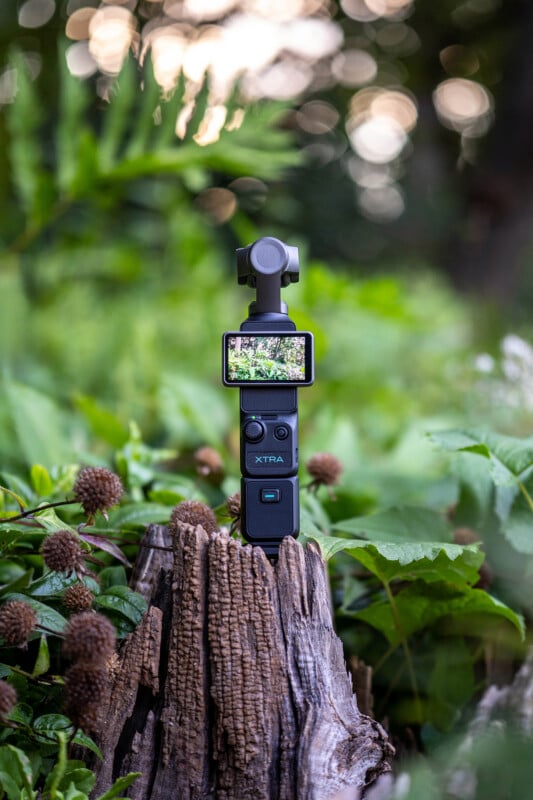
My first impression of the Muse 2 Pro was that it is a noticeably different camera from the original Muse, even before turning it on. The dual-camera setup makes the gimbal area physically larger, and the second lens gives the camera a more substantial presence at the top. Xtra also includes several useful accessories in the box, including a small light and tripod, which makes the camera feel more like a complete kit for a solo creator rather than simply a camera that happens to have a gimbal.
One of the more noticeable design changes is actually something the Muse 2 Pro doesn’t have. The original Muse has an additional removable section extending from the bottom of the camera, while the Muse 2 Pro has a simpler, more compact base. Combined with the larger gimbal area, the two cameras look quite different in person, even though they share the same basic concept.
Once I started using the Muse 2 Pro, its autofocus and tracking were among the first things that surprised me. It can switch focus between subjects extremely quickly, and when I tracked a subject that moved out of frame and then returned, the camera picked it back up and locked onto it again. That kind of behavior is particularly useful when filming yourself or trying to document something while also participating in the experience.
The dynamic range has also stood out to me. I took the camera on several hikes that stretched into blue hour, and I was impressed by how usable the footage remained as the light faded. The colors held up well, and there was surprisingly little noise considering how small the camera is.
At first, I thought some of my low-light footage wasn’t quite as sharp as I expected, but after using the camera more, I realized the bigger issue was focus. In very dark conditions, the Muse 2 Pro can have a harder time finding focus, which isn’t particularly unusual. In extremely low light, even my mirrorless camera eventually reaches a point where autofocus struggles, and I have to switch to manual focus.
That makes me hesitant to be overly critical of the Muse 2 Pro in those situations. This is a tiny camera that sits somewhere between smartphone-sized imaging and the capabilities of a much larger interchangeable-lens camera, and what impressed me most is its ability to produce this level of image quality from such a small package.
I also noticed a significant difference between the Muse 2 Pro and the smartphone cameras I’ve been reviewing recently. The Muse 2 Pro produces excellent-looking footage straight out of the camera, particularly when it comes to the overall rendering of subjects and backgrounds. I photographed a variety of subjects with different colors and textures, and the bokeh was particularly impressive. Unlike some smartphone macro modes, where the transition into the out-of-focus areas can look somewhat artificial, the Muse 2 Pro produces a more natural-looking falloff that reminds me more of what I would expect from a mirrorless camera.
At the same time, it doesn’t require the same level of effort. I can pick it up, start recording, let the gimbal stabilize the shot, and use the tracking features without thinking about the camera nearly as much as I would with my interchangeable-lens setup. That combination of image quality and ease of use is where I think the Muse 2 Pro makes the most sense for me.
There are plenty of situations where I don’t need the large files or extensive focal range of my mirrorless cameras. Walking around while traveling, filming a vlog, recording behind-the-scenes footage, or even shooting a quick selfie are all situations where I could see myself reaching for the Muse 2 Pro instead.
I know it may be a contentious comparison, but I previously owned both the Canon PowerShot G7 X and G7 X Mark II, cameras that became particularly popular among vloggers and social media creators. Based on my experience with the Muse 2 Pro, I think it has surpassed what those cameras offered for this particular type of shooting. The built-in gimbal, subject tracking, included light and tripod, and slow-motion capabilities give it considerably more flexibility for a solo creator. Most importantly, it doesn’t sacrifice as much image quality as I expected for that convenience.
I also noticed a difference between the Muse 2 Pro and the original Muse. The Muse 2 Pro produces better image quality, but it is also the more expensive camera, so I don’t think the original Muse suddenly becomes irrelevant. For someone who only occasionally vlogs or wants a simple camera for casual video, the original Muse could make more sense as a less expensive option. If I wanted to shoot in more challenging light, experiment with slow motion, or use the Muse 2 Pro’s additional features, I would choose the Pro.
For the images and video included here, I deliberately kept my processing to a minimum. The photographs are straight out of the camera, with no adjustments to color or sharpness, and the video clips were simply assembled in DaVinci Resolve. I did not apply a LUT or give the footage a significant color grade. I wanted to show what the camera can produce without trying to make the files look better through post-processing.
Image Gallery
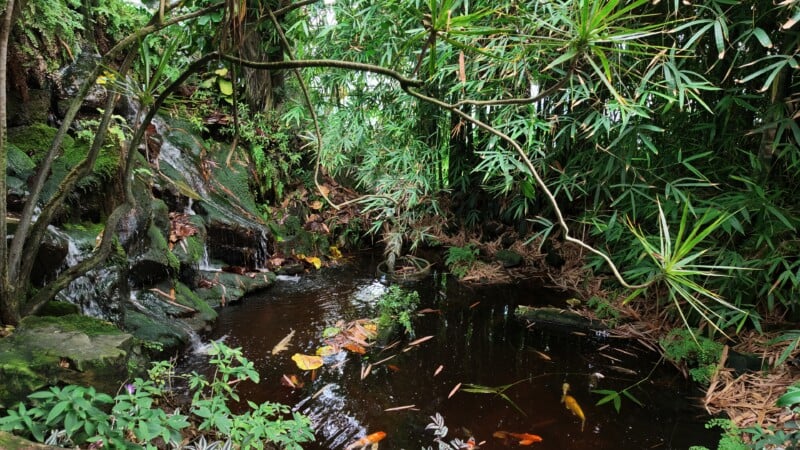
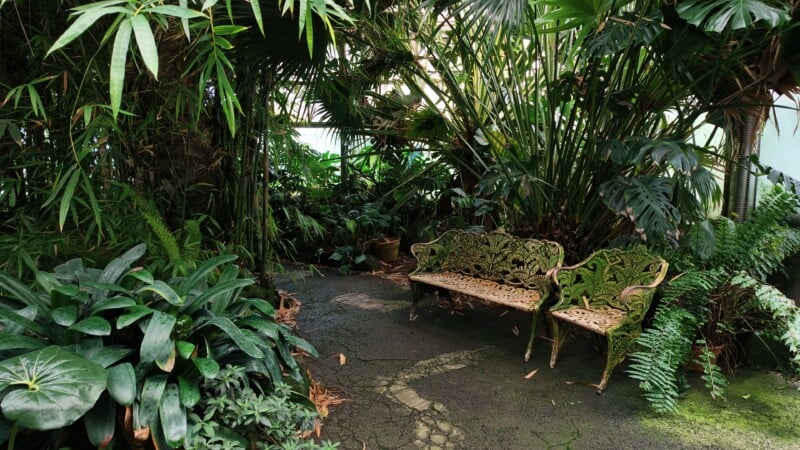






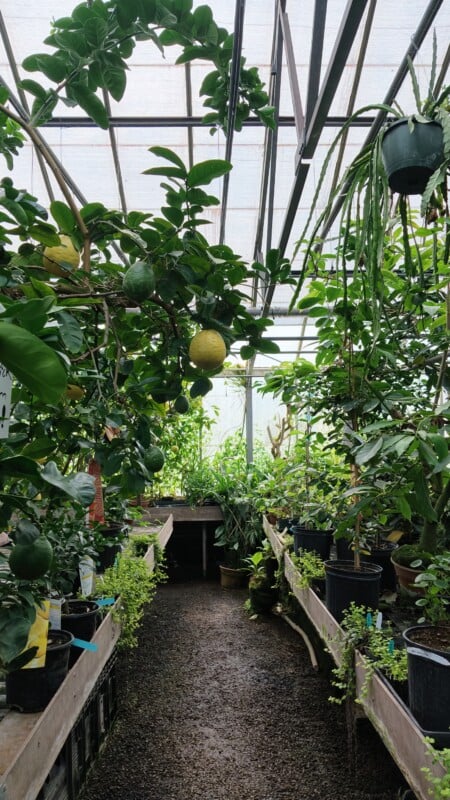

What surprised me most is how close the Muse 2 Pro gets to the image quality I associate with a much larger camera. I initially expected it to be a step above a smartphone, but after spending time with it, I think that undersells what it can do. It won’t replace my mirrorless cameras, especially when I need interchangeable lenses, larger files for printing, or the flexibility of a longer focal length, such as a telephoto for wildlife. But when those things aren’t necessary, this is a remarkably capable little camera.
That has also made me more interested in where this category is going. We’ve gone from large DSLRs to more lightweight mirrorless cameras, and action cameras and increasingly capable smartphones have created entirely new ways to photograph and record our adventures. Cameras like the Muse 2 Pro add another piece to that evolution by combining a small form factor with mechanical stabilization and automated subject tracking. For a solo creator, having a camera that can follow you while you move through a scene opens up compositions and types of footage that would otherwise require another person behind the camera.
For me, that’s ultimately what makes the Muse 2 Pro so interesting. The image quality is impressive, but getting that quality, stabilization, tracking, and flexibility from something this small is what I didn’t expect.
Pricing and Availability
For now, the Muse 2 Pro is not available for normal U.S. purchase. Xtra says it remains in communication with the FCC and has not announced a new launch timeline, leaving the camera’s future availability in the U.S. uncertain. That is a shame, because after spending time with the Muse 2 Pro, I think it is a genuinely fun and surprisingly capable little camera.
Image creditsPhotographs by Kate Garibaldi
Affiliate Disclosure PetaPixel articles may include affiliate links; we may earn a commission if you buy through one.