
The Story Behind The Last Photograph of Oscar Wilde on His Death Bed
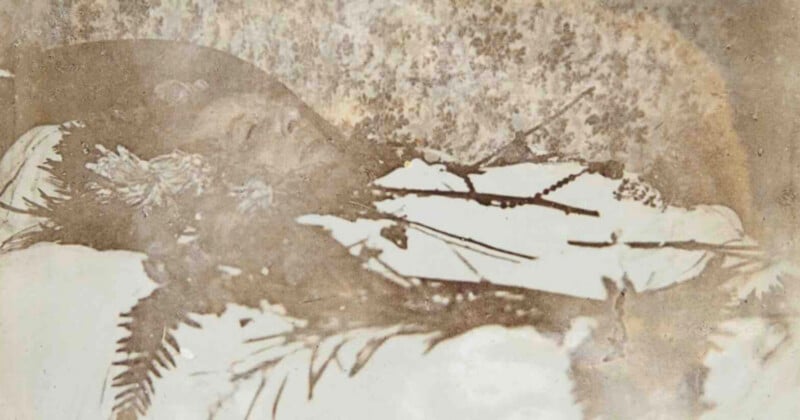
The last known photograph of literary icon Oscar Wilde was taken on his death bed in a Paris hotel room using a borrowed camera and a volatile early flash, mere hours after he passed away.
Earlier this year, the photograph of Wilde taken on his death bed on November 30, 1900, was sold at auction by Bonhams for $375,000 (£279,800), far above its estimate of $5,375 to $6,719 (£3,000 to £5,000). The photograph was taken by French marine infantryman Maurice, Gilbert who was among Wilde’s final companions during his exile in Paris, France.
Wilde was one of the most prominent literary figures of Victorian Britain, known for works including The Picture of Dorian Gray and The Importance of Being Earnest. But his career and reputation was ultimately destroyed after his trial and conviction for “gross indecency” — a Victorian-era crime used to punish men for relationships with other men — in 1895.
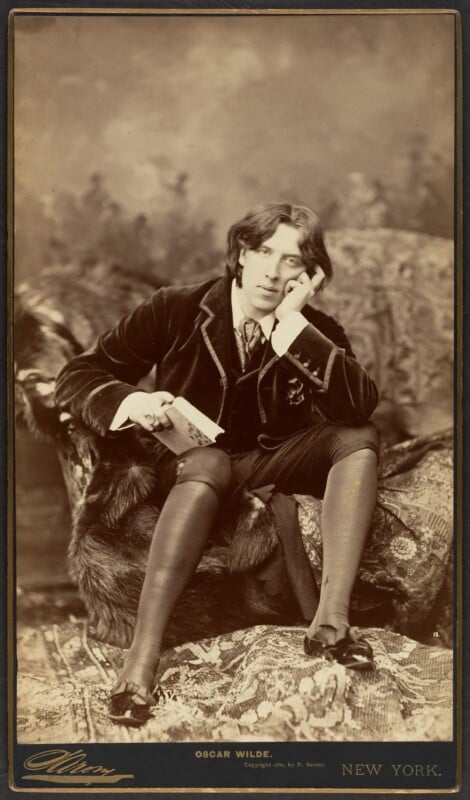
After serving two years of hard labor in prison, Wilde left England and spent the final years of his life in Europe, ultimately settling in Paris, where he died at the age of 46. Wilde passed away — from what is now believed to be the effects of an ear infection — in the early afternoon of November 30, 1900, in his room at the Hôtel d’Alsace. His close friend Robert Ross, writer Reginald Turner, and hotel proprietor Jean Dupoirier were present at his death. After Wilde passed, they laid him out in a white nightshirt and surrounded him with flowers and foliage.
Three hours after his death, Ross asked Maurice Gilbert to take a photograph of Wilde with a borrowed camera and what is believed to be a magnesium flashlight. According to the Camera Museum, early photography struggled to “freeze” movement, so photographers relied on extremely bright, very fast bursts of light to capture a still image. Magnesium became important because when it burns it produces a powerful flash, and by the 1860s it was already being experimented with for photography. By the 1880s, magnesium powder flashes had been developed that were easier to use and brighter, but they were still risky and did not fully solve the challenge of safely or reliably taking truly instantaneous photographs.
Ross later wrote about the image, stating: “An unsuccessful photograph of Oscar was taken by Maurice Gilbert at my request, the flashlight did not work properly.”
The photograph nonetheless became the last known image of Wilde. Because of the borrowed camera and poor lighting conditions, only a few surviving prints of the final portrait are believed to exist. Furthermore, Wilde’s final years in exile in Europe were rarely photographed, which makes this image even more remarkable.
Affiliate Disclosure PetaPixel articles may include affiliate links; we may earn a commission if you buy through one.