
The Hidden World of Insect Wings Revealed by Macro Photographer
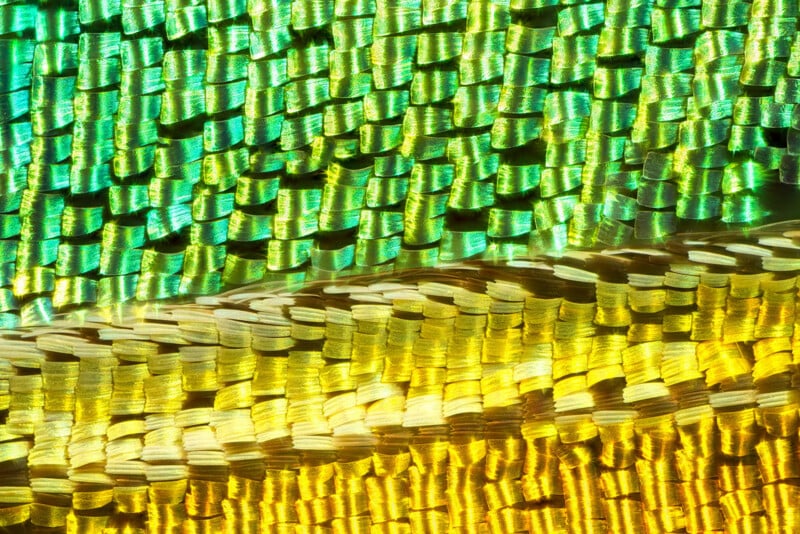
A photographer uses lighting and special equipment to capture something not usually seen by the human eye: the intricate patterns, texture, and color found on insect wings.
Chris Perani tells PetaPixel that each image consists of thousands of individual photos, which are then stacked together to reveal immense detail. He likens the editing process to “building a puzzle.”
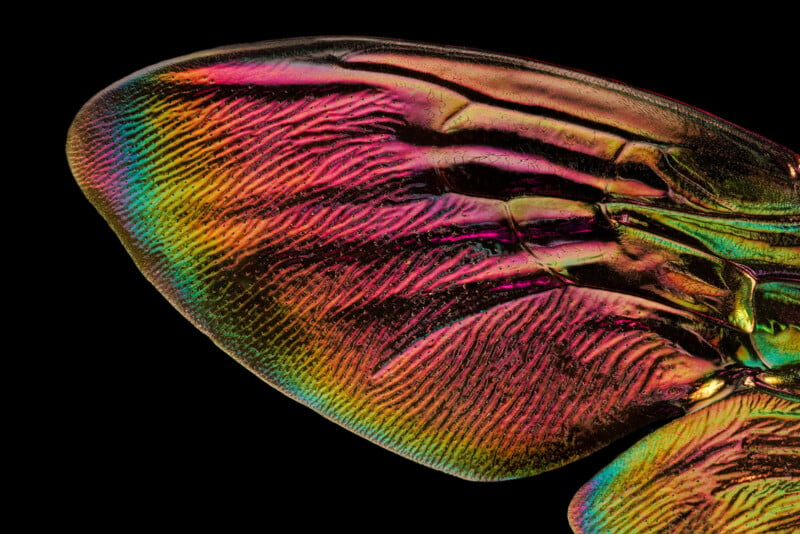
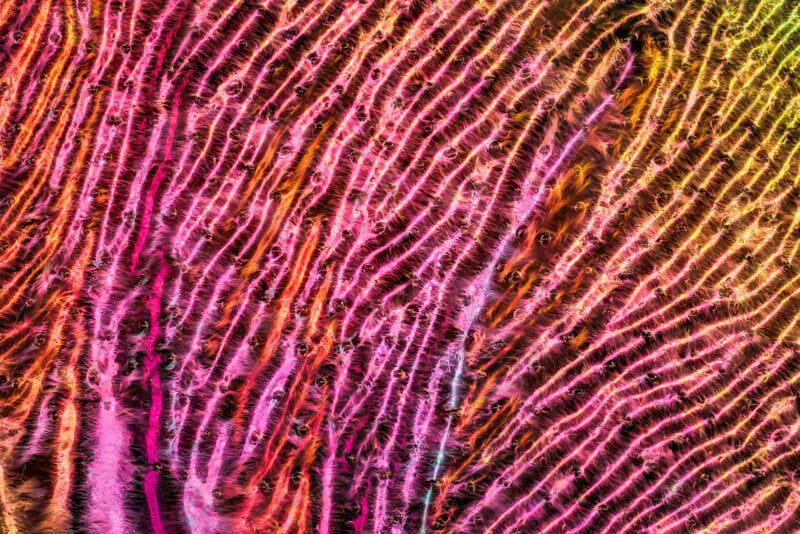
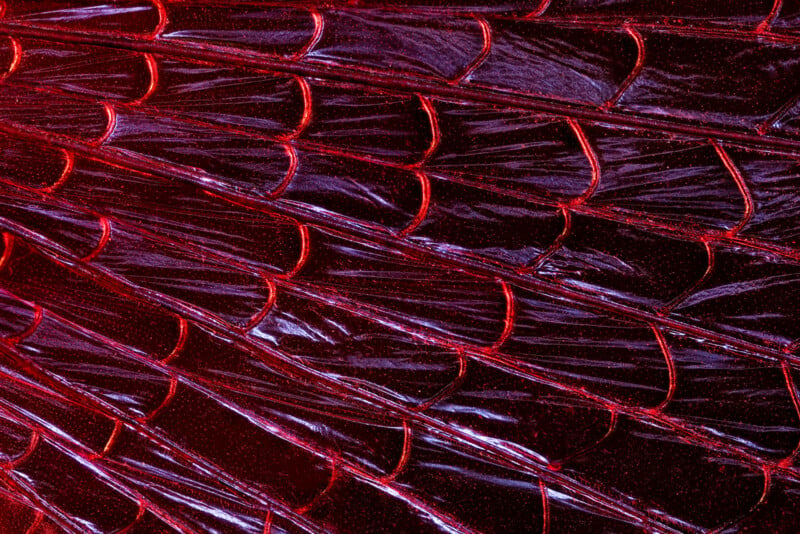
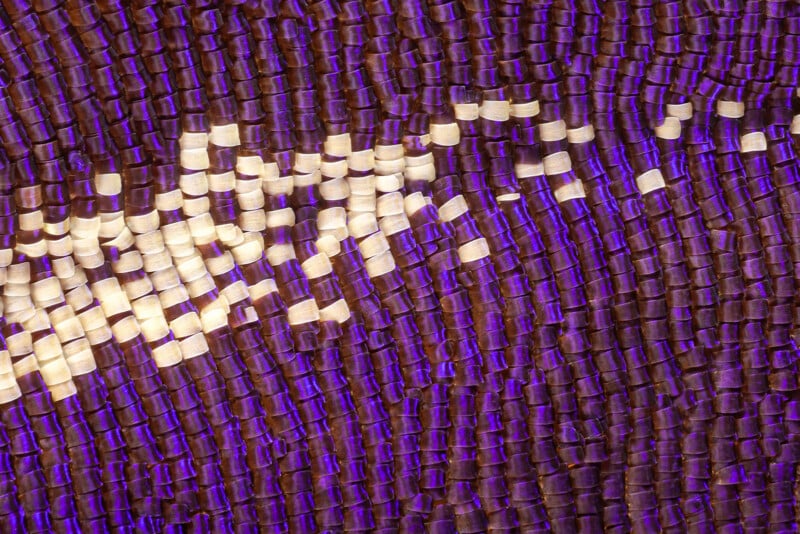
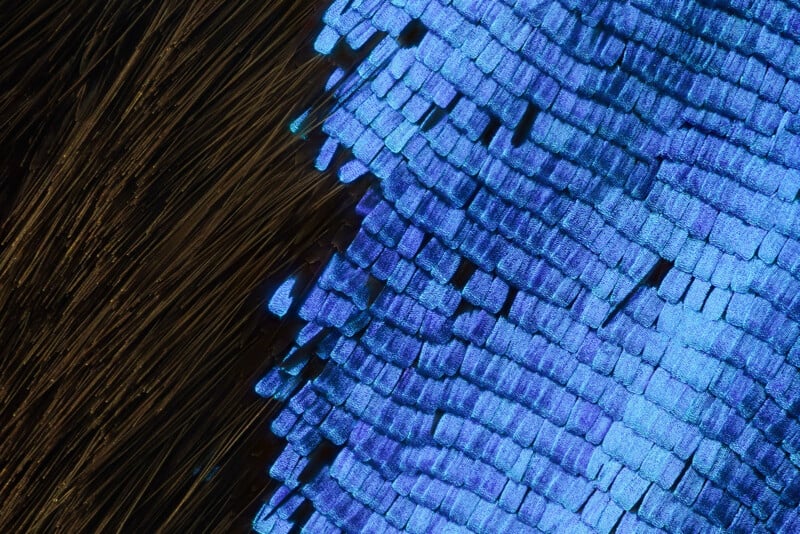
Perani’s new body of work, Wings, focuses on different winged insects, including bees and wasps, damselflies, beetles, and butterflies. “I source my subjects primarily through specialized vendors like BicBugs, along with a few others,” the photographer explains.
After importing the bugs, Perani has a home studio setup where he uses a Sony Alpha 7R V mounted on a Cognisys automatic rail system, paired with Nikon 5x and 10x microscope lenses.
The shooting process can take six hours to complete, but it’s the automatic rig that does most of the work; Perani has to decide the start and end points. “Once it finishes a sequence, I slide the specimen slightly to capture the next section—very similar to how you would shoot a panoramic landscape,” he explains.
Using small gooseneck lights to illuminate his subject, Perani says he usually shoots 10 to 15 distinct sections, which are then stacked on Helicon Focus software. Those stacks are then brought into Photoshop to be blended together. “The result is an ultra-high-resolution image of a subject that, in reality, is roughly the size of a pencil eraser,” Perani adds.
The photographer says the editing process isn’t too time-consuming, likening it to building a puzzle. “I connect the pieces together and spend time cleaning up any dust spots,” he says. “It only becomes complicated if the specimen shifted at all during the multi-hour photography process. If things moved, blending those sections flawlessly becomes quite a challenge.”
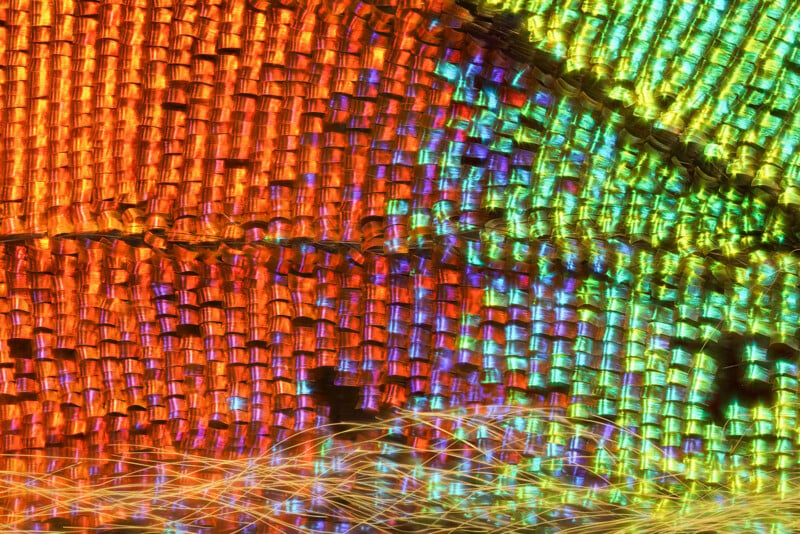
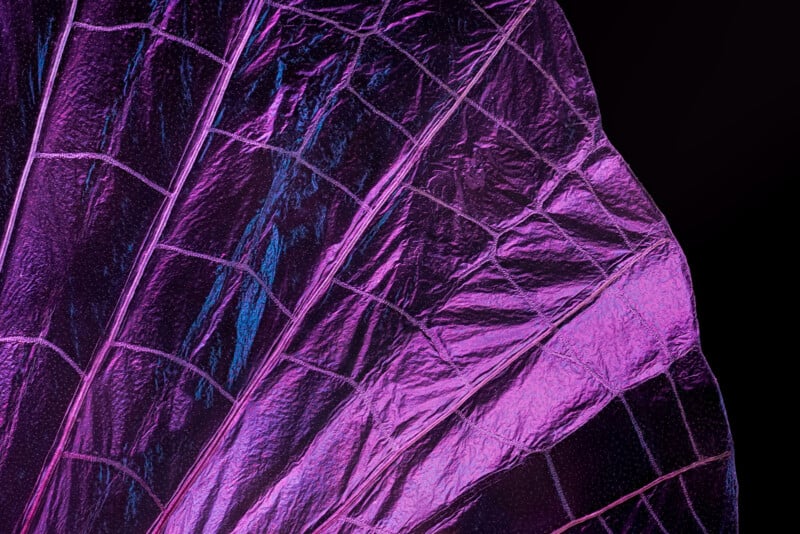
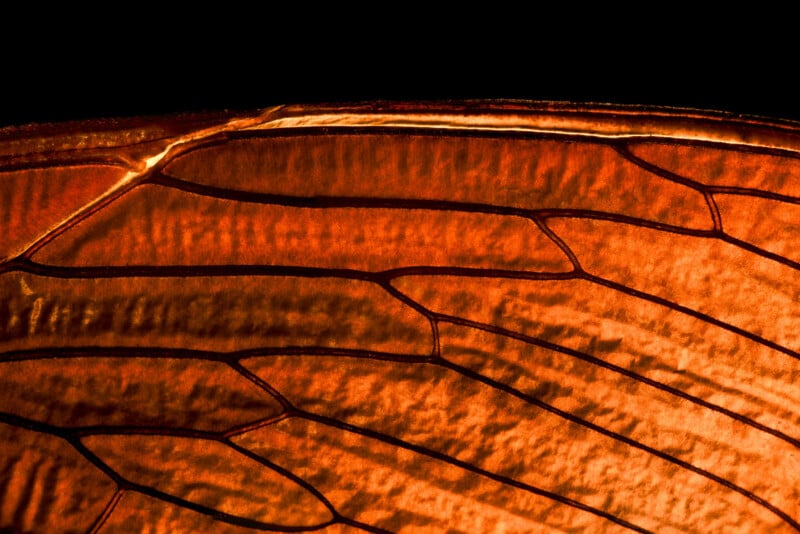
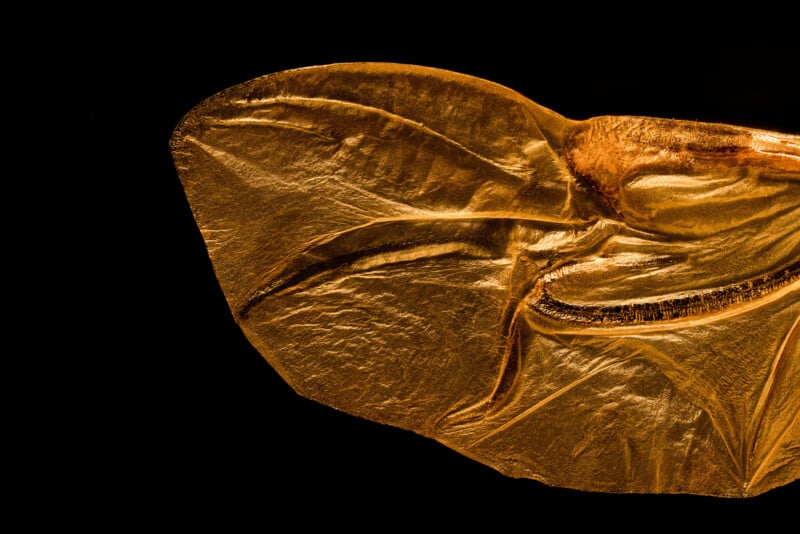
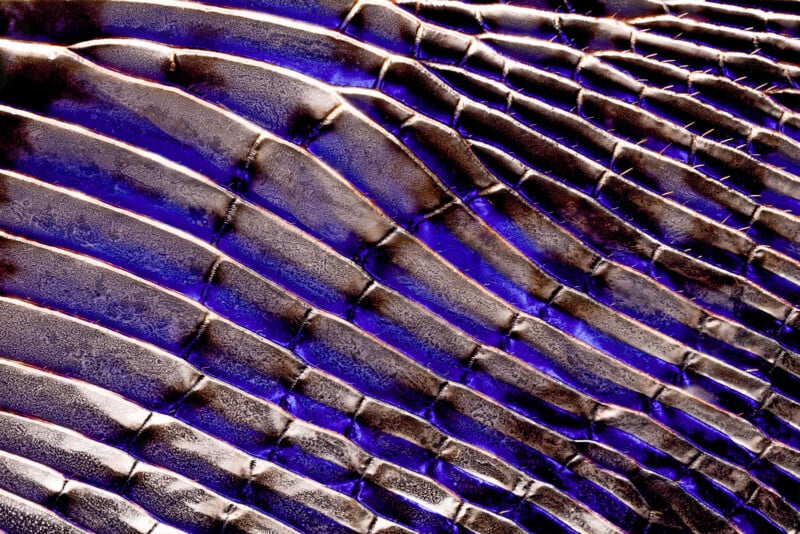
The amazing textures and colors Perani capture is thanks to the colored gels and portrait-style lighting techniques that bring out incredible detail. These structures are invisible to the naked eye, and Perani says his goal is to highlight the unique architecture hidden across the wing’s surface.
“With many of these insects, light completely changes the result,” he says. “Bees, for example, often have wings that appear dark and colorless at first glance. But when light hits them at exactly the right angle, thin-film interference suddenly reveals remarkable colors, textures, and intricate structures across the wing’s surface, turning what first appears dark into a delicate fabric of light and structure.”
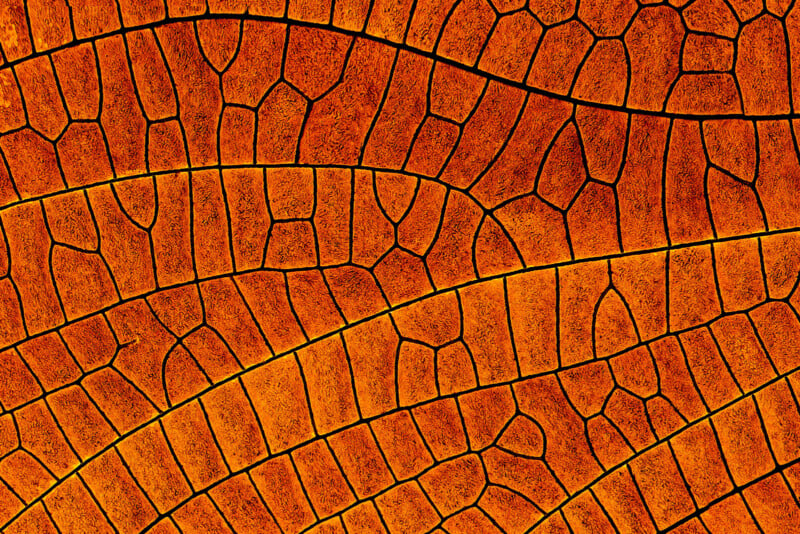
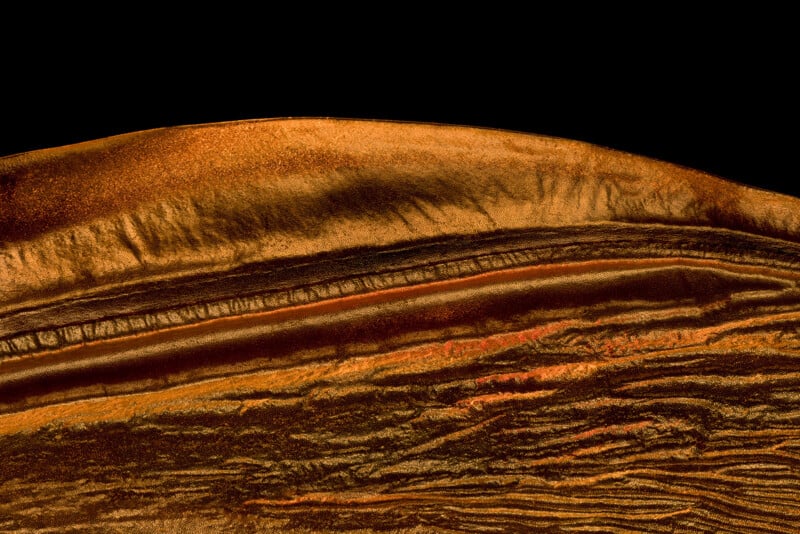
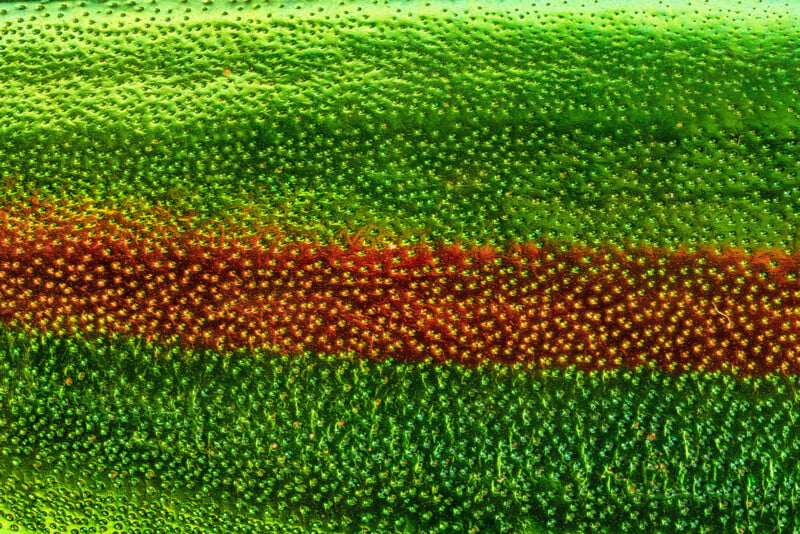
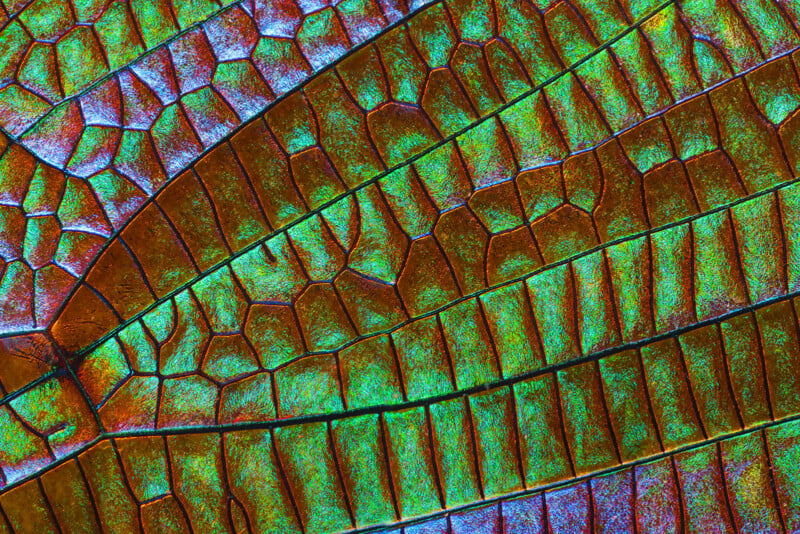
Perani first began shooting extreme macro photos of butterfly wings, and later moved on to minerals. He says those projects were picked up by fashion and art installations.
“With the prior wings and minerals projects, I felt I was merely capturing the existing beauty of the subjects. That was great, but over the past year, I wanted to focus more on artistic interpretation,” he says. “Rather than following a strict lighting formula, I really just experimented with unconventional angles and gels to find what created the most striking visual impact.”
“Because many of these subjects are translucent or feature thin-film interference, they often don’t look amazing until the light hits them at the absolute perfect angle,” he continues. “Finding that sweet spot is crucial, but it also creates a massive challenge during the blending process. With thin-film interference, even the slightest micro-shift in the subject or the light during a sequence can completely alter the colors you capture, which makes piecing that final puzzle together incredibly complicated.”
To see more of Perani’s work on wings, check out his website and Instagram.
Image creditsPhotographs by Chris Perani.
Affiliate Disclosure PetaPixel articles may include affiliate links; we may earn a commission if you buy through one.