
No, Those ‘New’ Apollo UAP Photos Don’t Show Evidence of Aliens
Last week, President Donald Trump and the U.S. Department of War launched a new website to publish unsealed photos and videos related to unidentified flying objects (UFOs) and unidentified anomalous phenomena (UAP). Of the 161 files released so far, the most attention-grabbing ones are from NASA’s Apollo missions in the late 1960s and early 1970s.
While none of these files are actually strictly new, the news surrounding the UFO and UAP image dump has brought them back into the limelight. That’s actually true of a fair bit of data in the info release, experts tell Scientific American. There is nothing “unexpected” in the new release.
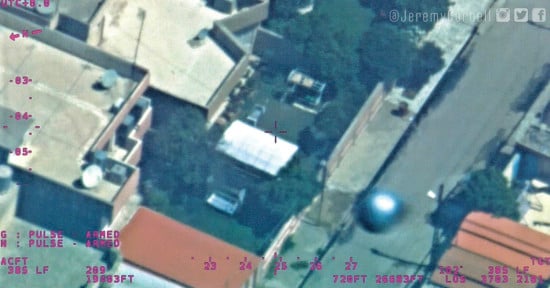
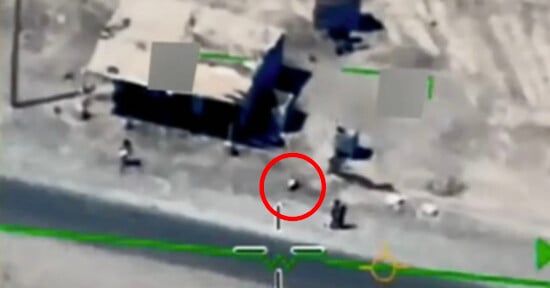
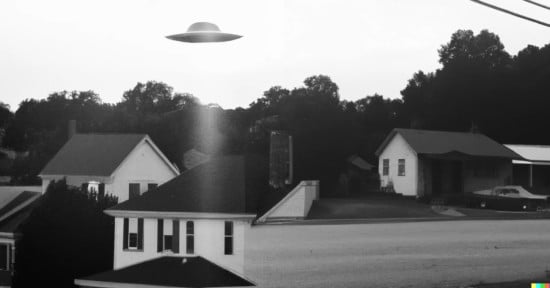
The release seemingly fulfills one of the President’s longtime promises to declassify materials related to UFOs and UAPs, and the newly shared images, plus a trove of associated documents, run the gamut. There are old photos from Apollo missions, renders of eyewitness sketches of UFOs, and many infrared images captured by the military in recent years. UFOs and UAPs have been in the public discourse more in recent years, and not just among the fringe conspiracy circles that typically talk about little green aliens hidden at Area 51.
“As for my promise to you, the Department of War has released the first tranche of the UFO/UAP files to the Public for their review and study. In an effort for Complete and Maximum Transparency, it was my Honor to direct my Administration to identify and provide Government files related to Alien and Extraterrestrial Life, Unidentified Aerial Phenomena, and Unidentified Flying Objects,” President Trump wrote on Truth Social. “Whereas previous Administrations have failed to be transparent on this subject, with these new Documents and Videos, the people can decide for themselves, ‘WHAT THE HELL IS GOING ON?’ Have Fun and Enjoy! President DONALD J. TRUMP.”
While there is, unsurprisingly, no direct evidence of any aliens or extraterrestrial life in the declassified materials, there are certainly interesting images.
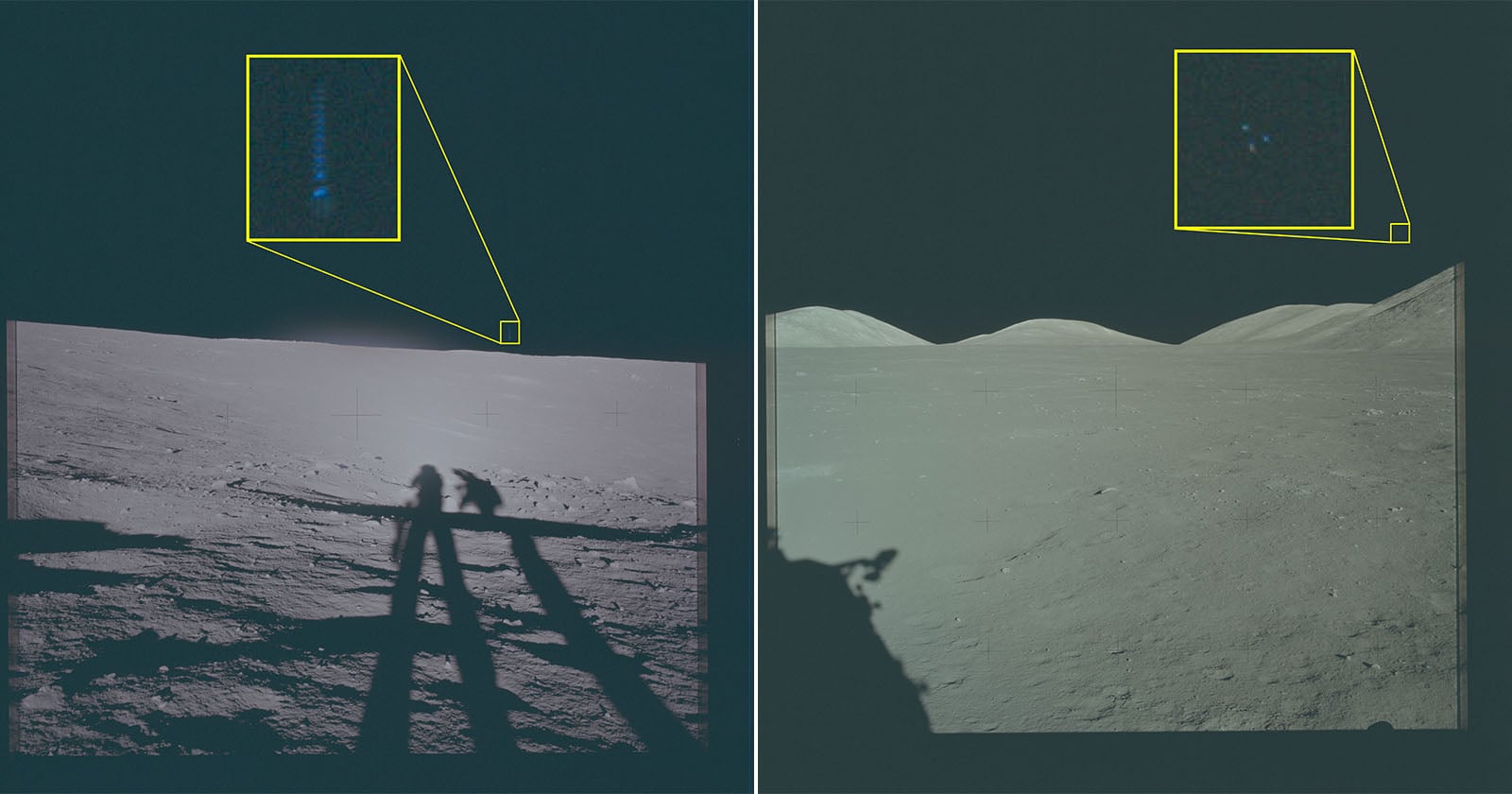
The most interesting ones relate to NASA’s Apollo mission program. Apollo 12 landed people on the Moon’s surface on November 19, 1969, for only the second time. Commander Charles “Pete” Conrad and Lunar Module Pilot Alan L. Bean spent well over a day on the lunar surface, while Command Module Pilot Richard F. Gordon remained in orbit. During their 30-plus hours on the Moon, Conrad and Bean spotted unusual objects in the sky above the lunar surface, which the Department of War classifies as unidentified anomalous phenomena.
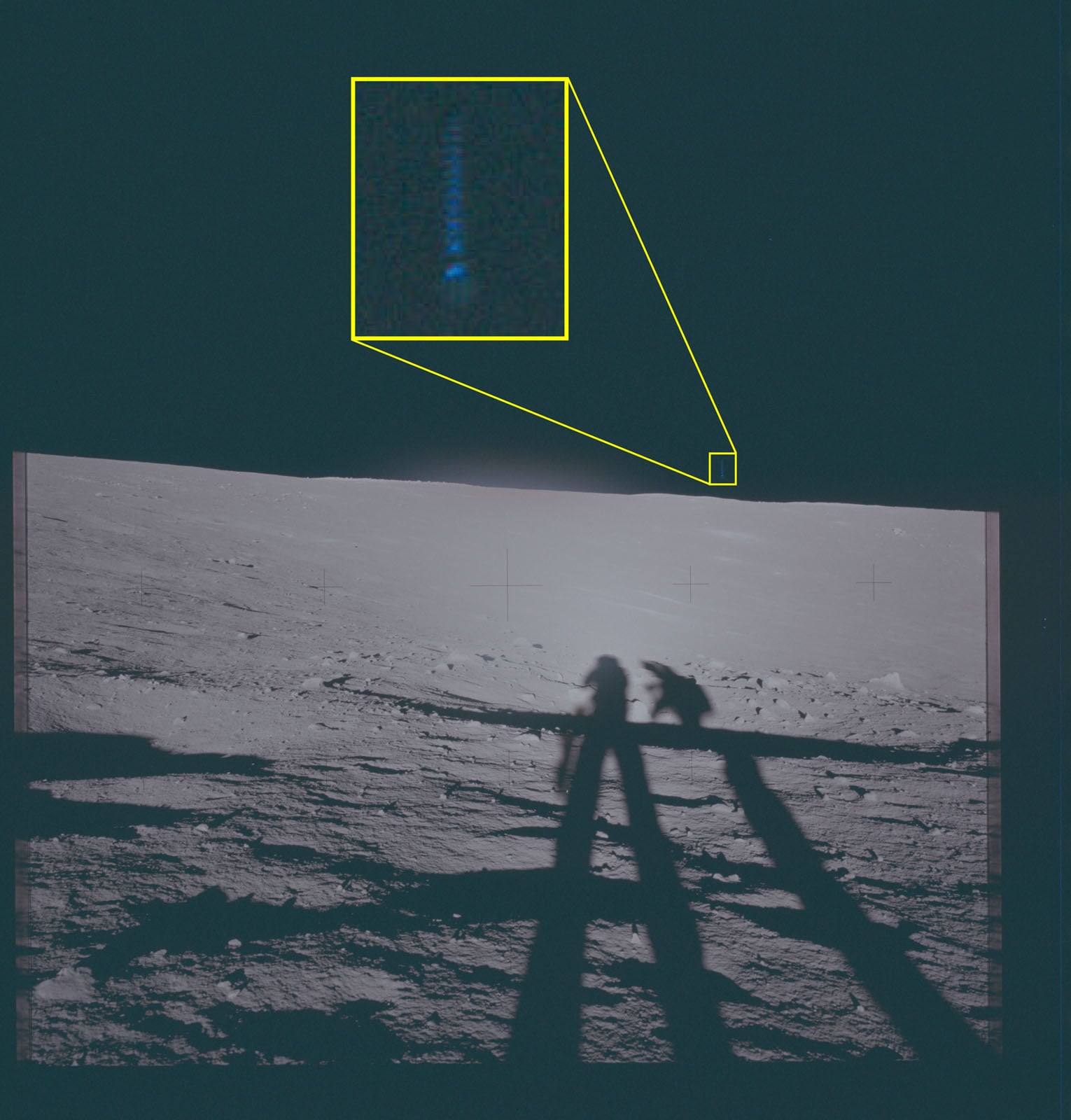
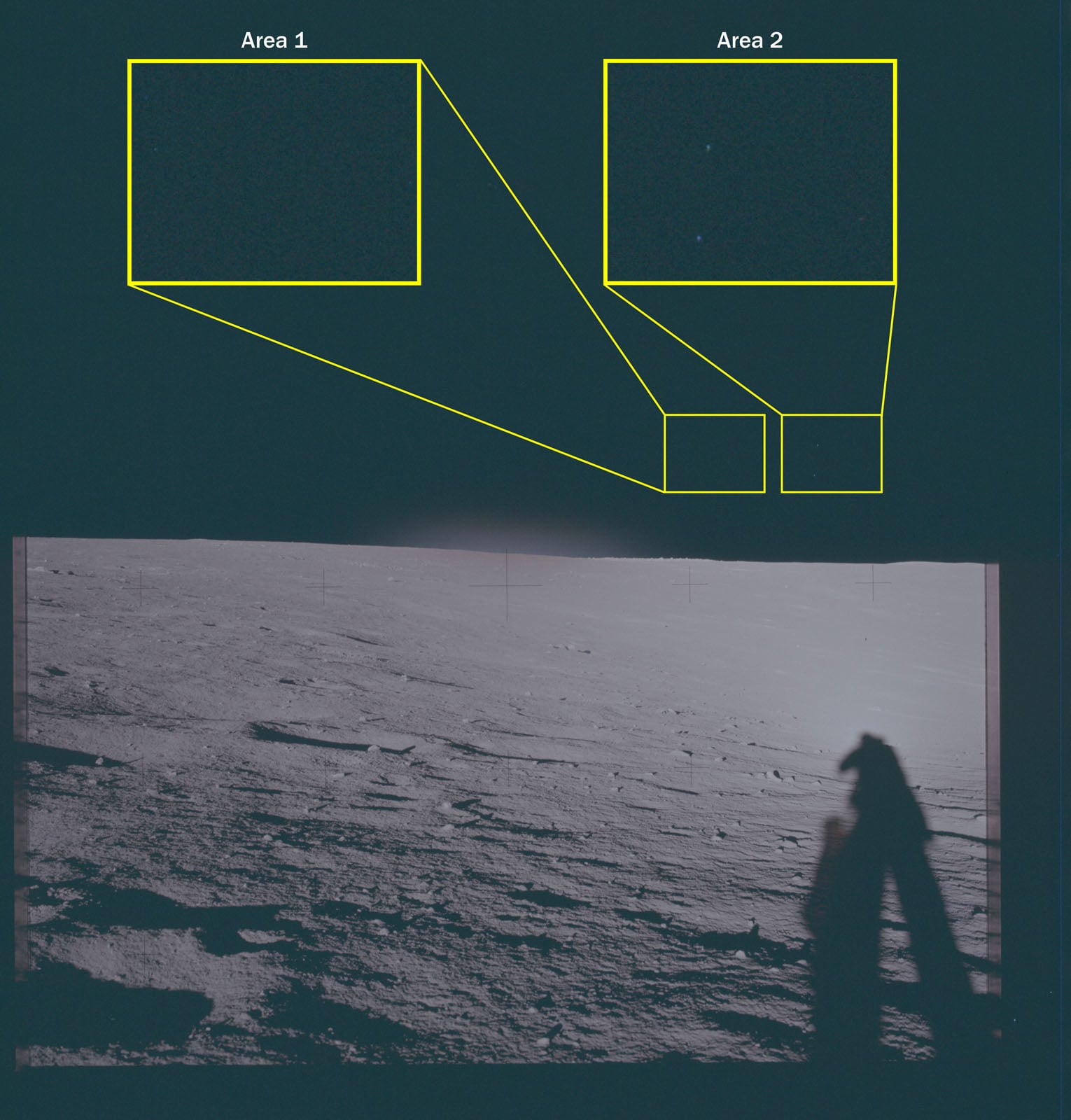
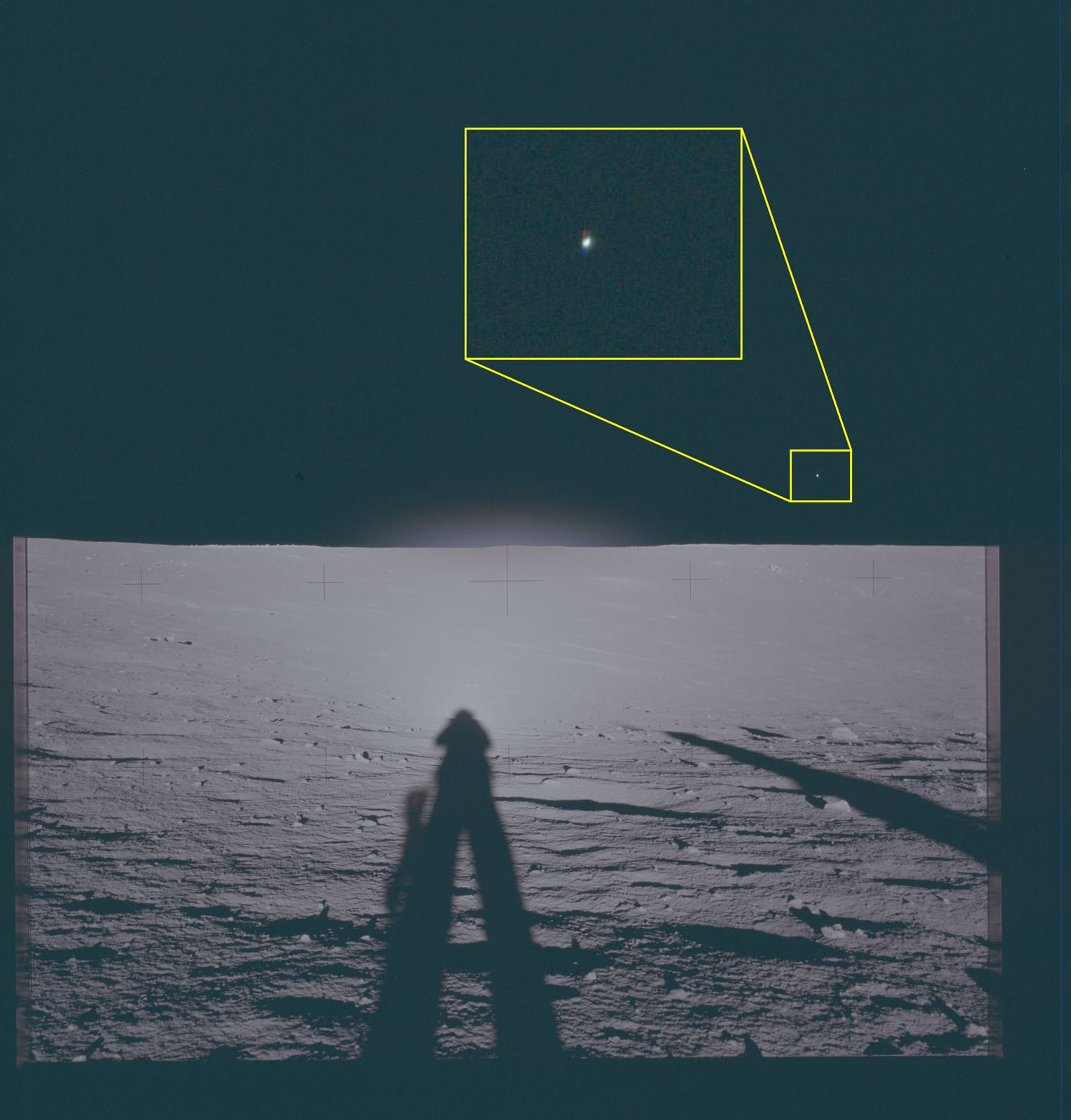
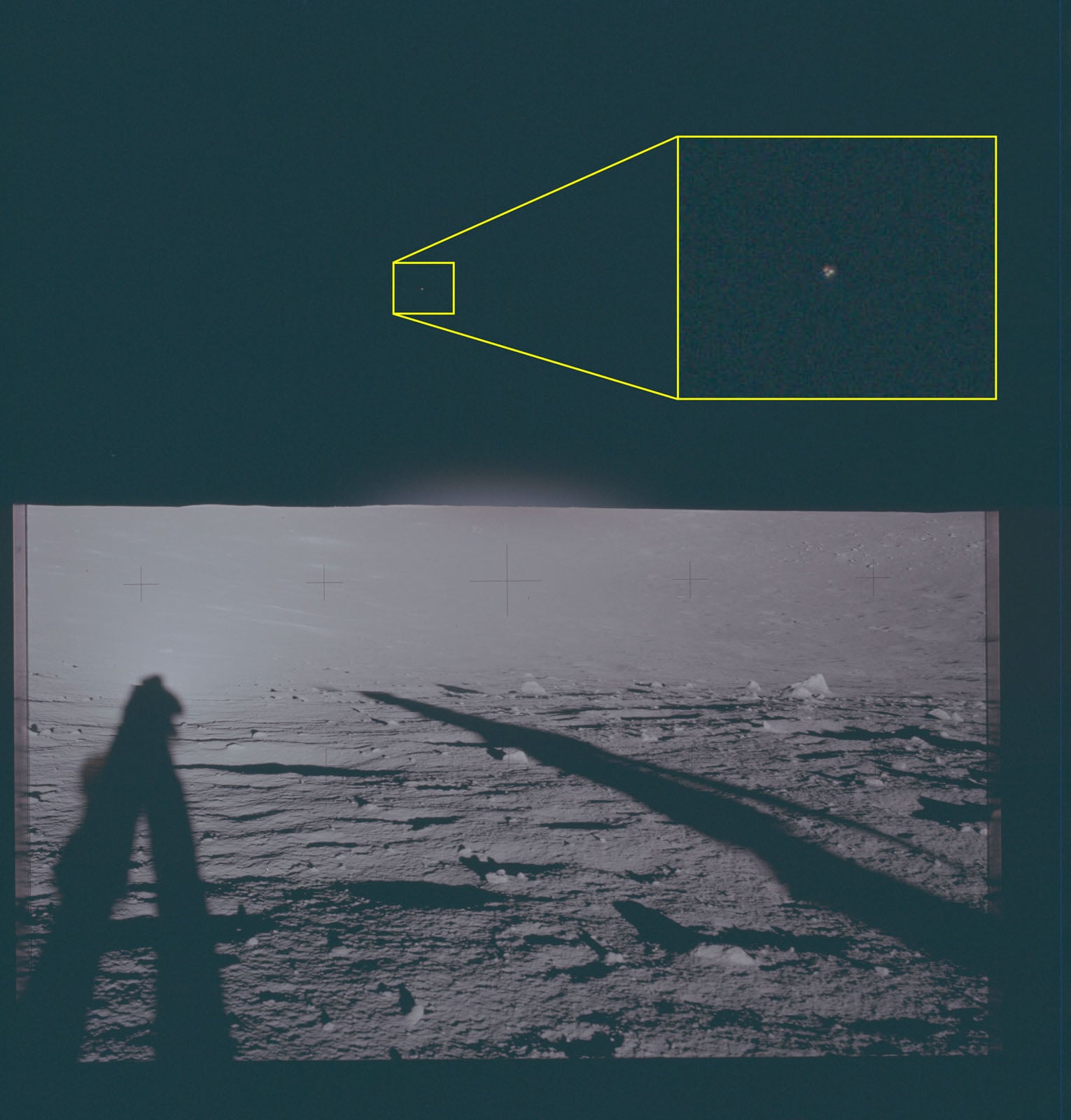
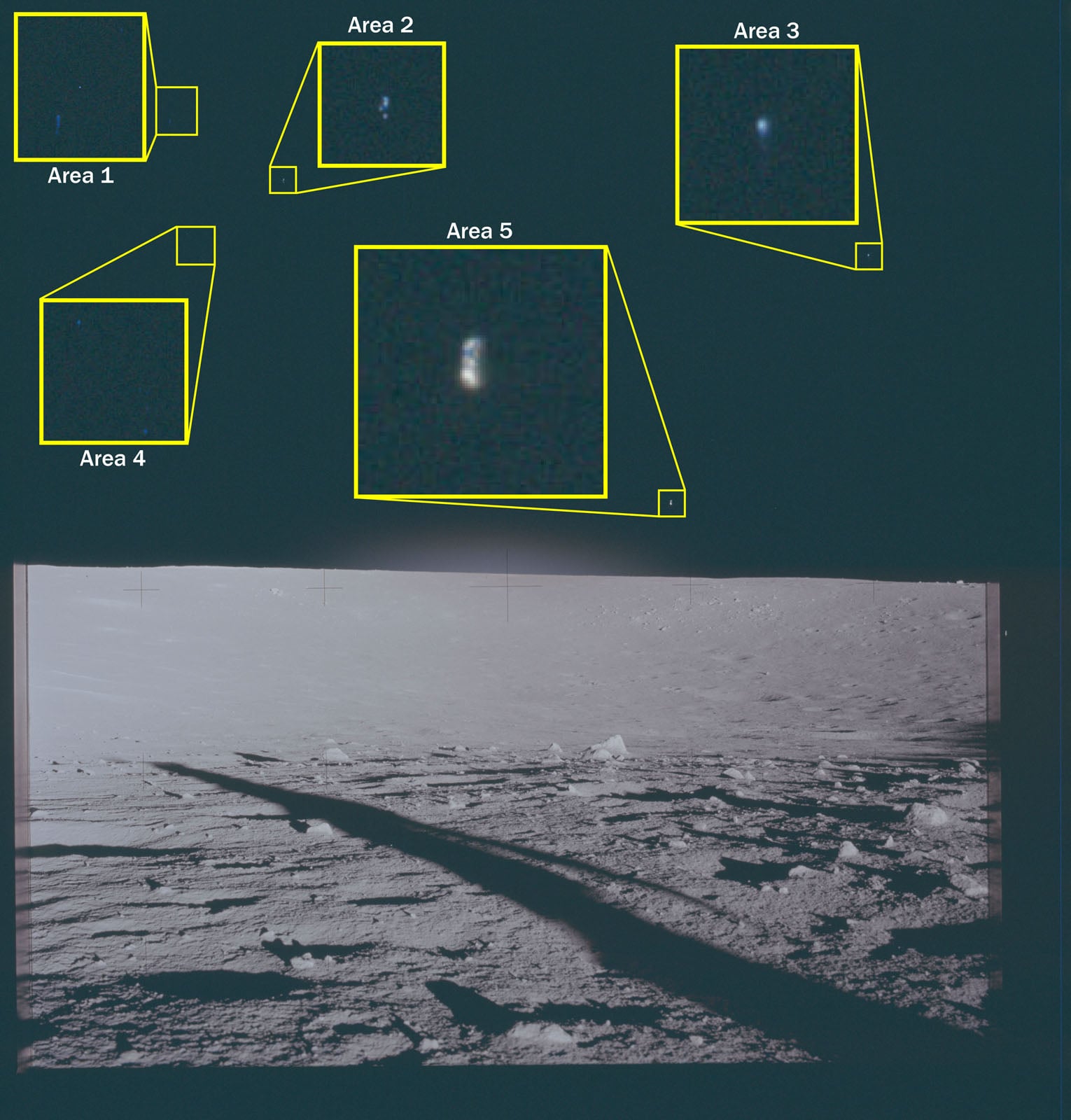
The images have been edited to highlight the objects of interest, based on reports from Conrad and Bean. The edits are not to be considered any form of actual scientific analysis and are provided for illustrative purposes only.
Bean described particles and flashes of light “sailing off in space” and characterized the phenomenon, as the Department of War reports, as “escaping the Moon.” Commander Conrad also described floating debris that was illuminated by the lunar module’s tracking light.
Apollo 17 astronauts also observed UAPs during their mission to the Moon, the final crewed mission of the Apollo program.
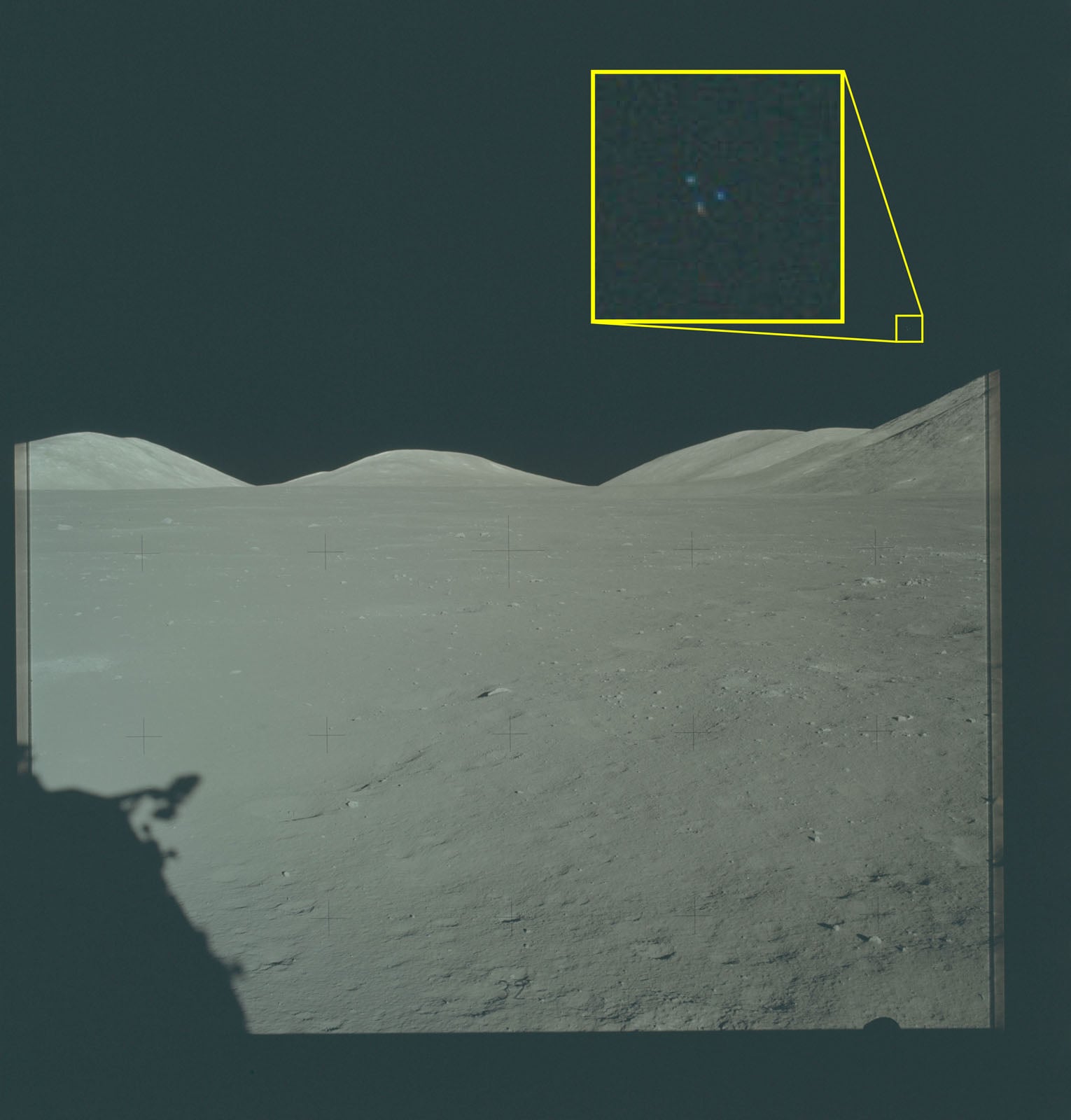
Commander Gene Cernan said he had trouble sleeping and observed intense light flashing between his eyes, comparable to the brightness of a train headlight. Cernan experienced “several flashing, rotating phenomena” that he believed were objects floating in space, rather than any optical illusion. Cernan believed these were most likely related to rocket stages and parts of the spacecraft’s adapter panels, components separated from the Saturn V rocket itself, although he remained uncertain.
Lunar Module Pilot Harrison Schmitt explained that he had seen a flash on the lunar surface north of Grimaldi crater. The crew explained these flashes in great detail in their mission debrief, which has been publicly available for decades.
There was also Buzz Aldrin’s famous descriptions from Apollo 11, which are part of the latest info release, although again, not actually new. While there are no associated photos, Lunar Module Pilot Buzz Aldrin described seeing multiple “flashes” of light during the mission. The crew also saw unidentified objects and what they called a “laser.”
As NASA explains, UAPs are inherently challenging to understand. NASA says analyzing UAP data is “hampered by poor sensor calibration, the lack of multiple measurements, the lack of sensor metadata, and the lack of baseline data.”
All of these challenges apply to the Apollo 12 and Apollo 17 UAPs that the Department of War released last week.
For these reasons, and many more, it is likely the case that these mysterious images will never be fully explained. Good science requires substantial amounts of clean data, and there isn’t enough of it for the Apollo UAPs.
However, here are some possible, entirely reasonable explanations for the various bright objects seen in archival film photos and described by Apollo astronauts. Film damage is an obvious one. Flare is another, both on the lenses for the photos and on the astronauts’ visors concerning eyewitness accounts. Light reflecting off of floating debris from the rocket and lunar module is yet another possible explanation. Moisture related to the mission freezing into ice and floating above the lunar surface is also possible. Apollo 12 astronauts themselves wondered about electromagnetic interference.
While some of these oddities may be related to film artifacts, processing, or cosmic radiation, it is worth considering eyewitness accounts as well, which the photographic film itself cannot explain.
NASA, beholden to rigorous scientific processes, has never explained the UAPs from the Apollo missions. That said, explanations of UAPs, when they can be explained, tend to be quite banal.
The Apollo UAP images are getting a lot of attention online following the Department of War’s release, and the photos are admittedly interesting. Still, they, like the rest of the images released, are remarkably far from being evidence of alien life. The search for alien life is on, and NASA extensively studies exoplanets with its powerful telescopes every single day, but so far, nothing has turned up. If the government is truly hiding evidence of aliens from the public, the Department of War’s new image release does little to resolve that.
Image creditsNASA
Affiliate Disclosure PetaPixel articles may include affiliate links; we may earn a commission if you buy through one.