The Best Lens Filters for Photography in 2026
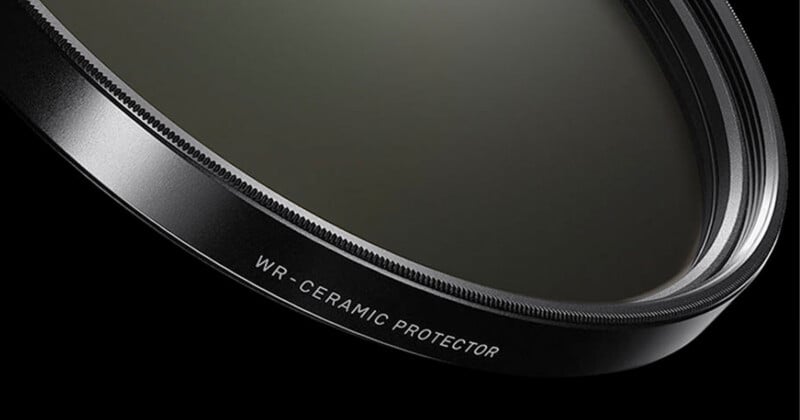
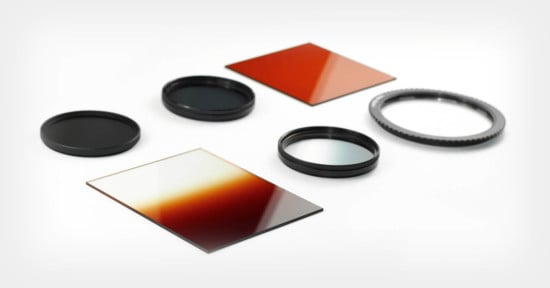
Lens filters are among the few camera accessories that can be either genuinely useful or completely pointless, depending on the quality of the glass, coating, frame, and purpose.
A cheap filter can add flare, reduce contrast, bind to the lens threads, create color casts, or turn a great optic into something noticeably worse. A good filter, on the other hand, should disappear optically while doing a specific job: protecting a lens, cutting reflections, reducing light, adding controlled diffusion, or solving a physical problem that the lens itself cannot.
The best filter is rarely the one with the most marketing language attached to it — it’s the one that solves a real photographic problem without creating a new optical one. UV and protection filters should be invisible and durable. Polarizers should be neutral and effective. ND filters should reduce light without color shifts. Diffusion should add atmosphere without obliterating resolution. Clip-in and magnetic systems should make filtration easier and avoid the issues that can arise with other types of filters. With that said, I have made my picks for the best filters across a plethora of categories; to me, they stand out for balancing optical quality, mechanical design, usability, and value in ways that make sense for real photographers rather than spec-sheet collectors.
Note: This article will not cover many special applications or optical-effect filters, because we have to draw the line somewhere. So these are — what I’d consider — the most necessary and/or commonly sought after types of filters. Furthermore, as this is a photography site for the most part, I will not be getting into specialized cine lens filters (many of these can easily work on a cinema camera, though, of course).
At a Glance
Best UV Filter: B+W T-PRO 010 UV-Haze MRC Nano UV Filter
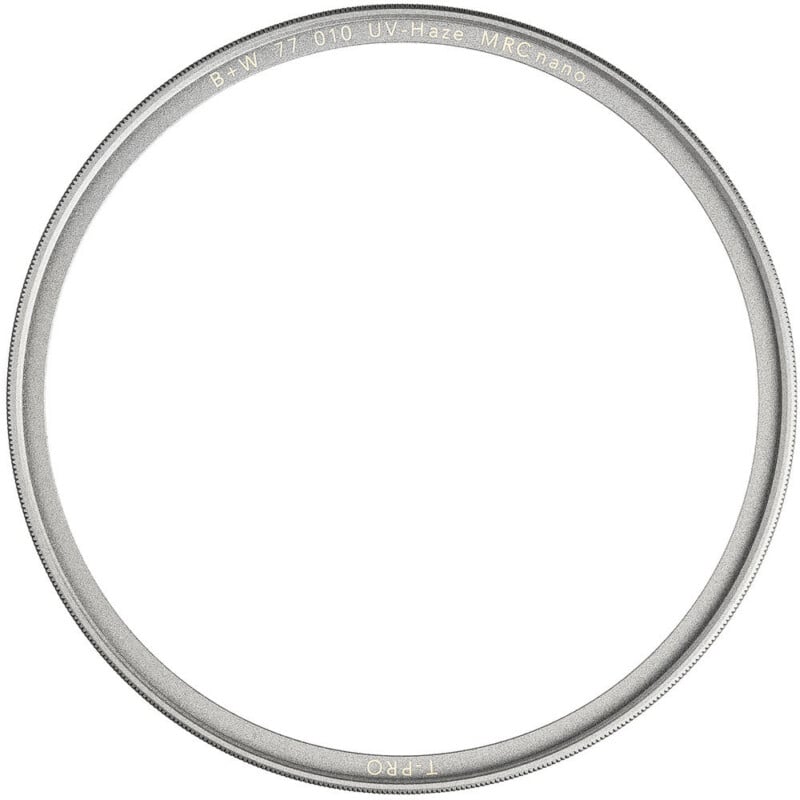
The B+W T-PRO 010 UV-Haze MRC Nano is the UV filter to buy when you want a premium protective filter that does as little as possible to the image. That may sound like faint praise, but it is exactly what a UV filter should do on a modern digital camera. Digital sensors already have their own filter stacks, so the main practical purposes of a UV filter today are usually protection, convenience in cleaning, and, in some situations, a modest reduction in atmospheric haze. B+W’s UV and clear protection filters are specifically positioned for shielding the front element from dust, sand, fingerprints, and splashing water, and the T-PRO 010M adds the company’s MRC Nano coating for easier cleaning and reduced water and dust adhesion.
The T-PRO mount is also a major part of the appeal. It is thin enough to be useful on wide-angle lenses while still feeling like a serious, well-made filter rather than a flimsy wafer of glass in a cheap ring. For photographers who want a UV filter to live on a lens full-time, especially expensive travel, documentary, landscape, or everyday lenses, the B+W is the “buy once, stop thinking about it” option.
Personally, I outfit basically all of my lenses with these filters, with a few exceptions where I use the Sigma option, which I’ll cover shortly.
Best Budget UV Filter: K&F Concept Nano-X Series MCUV Filter
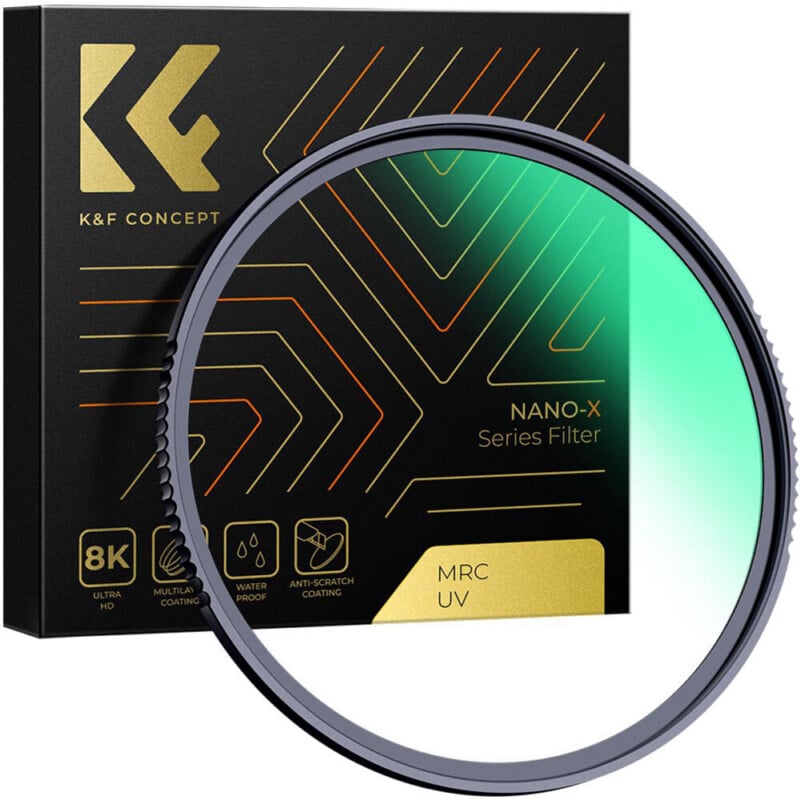
The K&F Concept Nano-X Series MCUV filter is a strong budget pick because it gives you much of what matters in a basic protective UV filter without the premium-brand price. K&F’s Nano-X/Ultra-Low Reflectivity MCUV filters use Japanese AGC glass, a 28-layer nano-coating, scratch resistance, waterproofing, and a listed transmission of 0.995, which is exactly the kind of specification set you want to see in an affordable protective filter.
This is not the filter I would put in front of a once-in-a-lifetime landscape shot if I already owned a B+W, Breakthrough, or Heliopan-level alternative, but for everyday lenses, kit zooms, travel primes, and situations where you want inexpensive front-element protection, it makes a lot of sense. The key with budget UV filters is avoiding the truly bad ones: uncoated glass, loose frames, bad threads, and coatings that make flare dramatically worse. The K&F Nano-X series clears that bar comfortably.
Best Filter for Protection: Sigma WR Ceramic Protector Filter
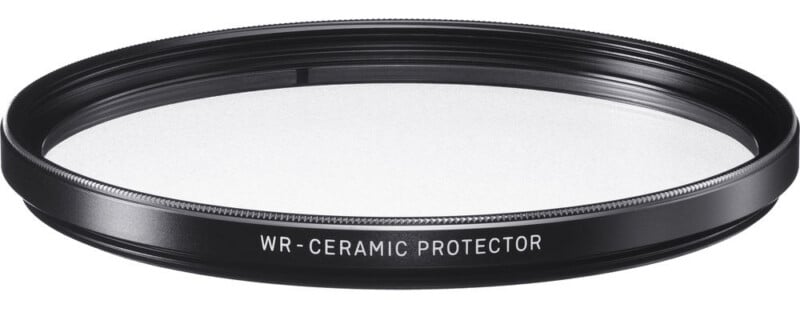
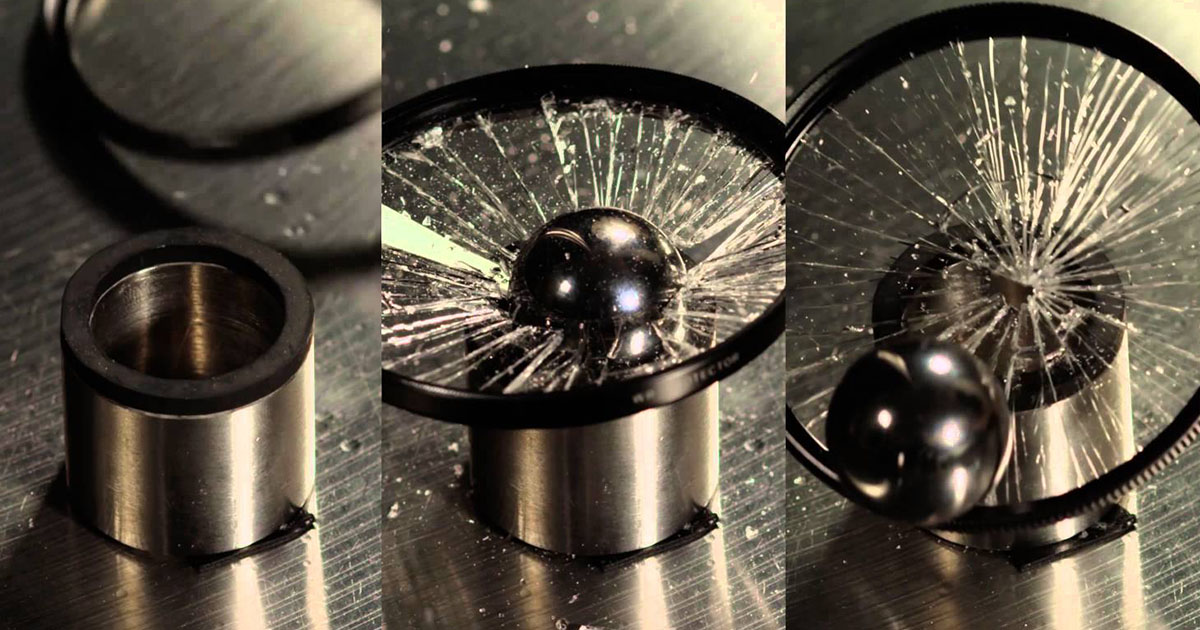
If the category is pure protection rather than UV filtration, the Sigma WR Ceramic Protector is in a class of its own. Sigma developed this filter around Clear Glass Ceramics, a material it describes as offering outstanding protective capability and derived from technology used in demanding industrial applications. Sigma also markets the WR Ceramic Protector as having far greater strength than standard protective filters, and that is the whole point: this is not just a normal clear filter with “protective” printed on the box.
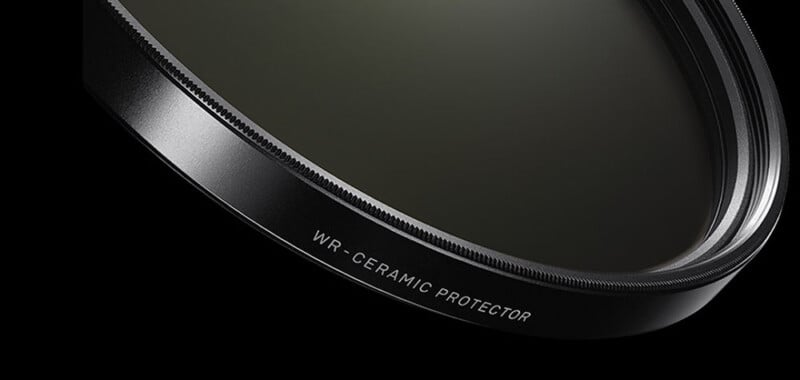
That is also why there is no budget pick here. There are many affordable clear filters, and some are perfectly decent for keeping fingerprints or dust off a front element. But there are not many filters that are meaningfully in the same protective class as Sigma’s ceramic option. For most photographers, it is probably overkill. For working photojournalists, motorsport shooters, wedding photographers, expedition photographers, or anyone using expensive glass in physically risky situations, it is one of the few protective filters that actually feels like a protective upgrade rather than just a sacrificial layer.
Best Circular Polarizer Filter: Breakthrough X4 CPL
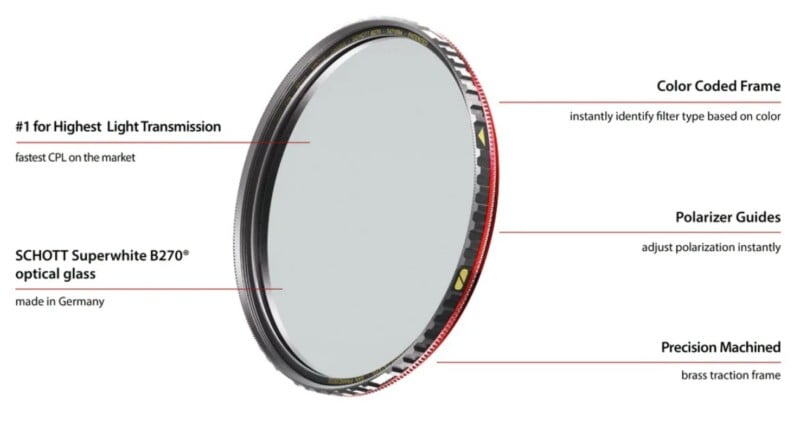
The Breakthrough X4 CPL is the circular polarizer to beat because it focuses on the two things that matter most in a polarizer: color neutrality and optical quality. Polarizers are extremely useful, but they are also among the easiest filters to get wrong. A mediocre CPL can add a strong warm or green cast, soften the image, or cause uneven results. Breakthrough positions the X4 CPL as a sharp, color-neutral polarizer with an internally developed CPL film, advanced coatings, and a precision-machined brass traction frame. It is also described as a true one-stop CPL, which is useful because many polarizers eat noticeably more light than photographers expect.
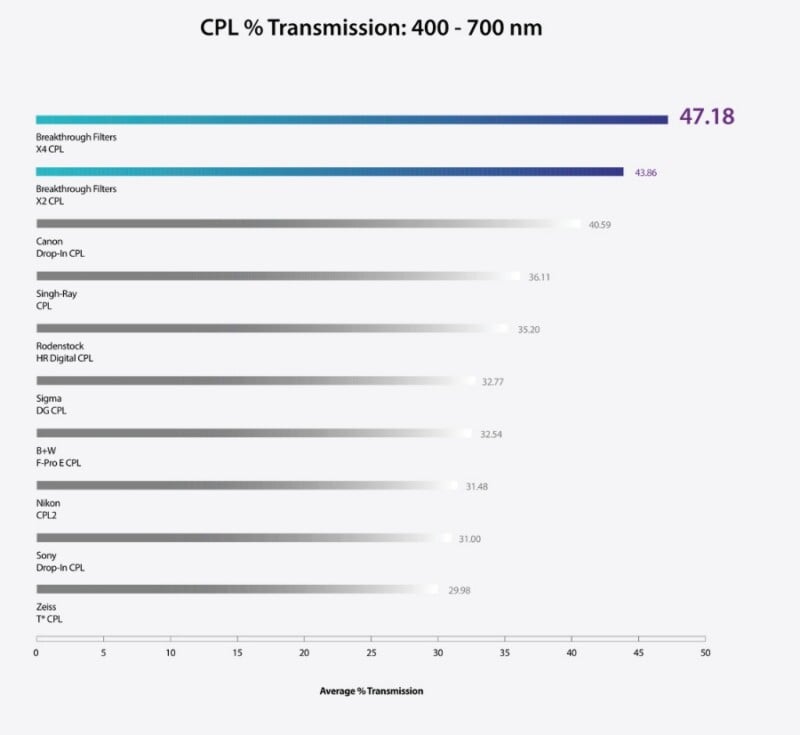
In practice, this is the kind of filter that belongs in the bag of any serious landscape, travel, automotive, architecture, or outdoor photographer. It cuts glare from water, glass, leaves, wet rocks, and painted surfaces; it can deepen blue skies when used carefully; and it gives images a richer, cleaner look that cannot be replicated after the fact. Software can boost saturation, but it cannot remove polarized reflections that were recorded by the sensor.
On a slightly less technical note, Breakthrough is one of only two US-based (San Francisco) lens filter companies — the other being Singh-Ray Filters, which I have not included in this guide due to a lack of experience with their products and their extreme pricing. Breakthrough is also working on a line of all-American filters, with one upcoming filter made 100% in New York state.
On top of Breakthrough’s US-based operations, they offer a 25-year “Ironclad” warranty against defects in materials and workmanship from the date of purchase. Furthermore, and even more exciting to me, is that cracked/scratched/shattered glass and damaged frames can be flat rate repaired for only $29 — given that a 67mm x4 CPL costs $140, a flat rate of $29 + shipping is really, really nice.
Breakthrough is my favorite filter company alongside B+W.
Best Budget Circular Polarizer Filter: K&F Concept Nano-X Series Ultra-Low Reflection CPL
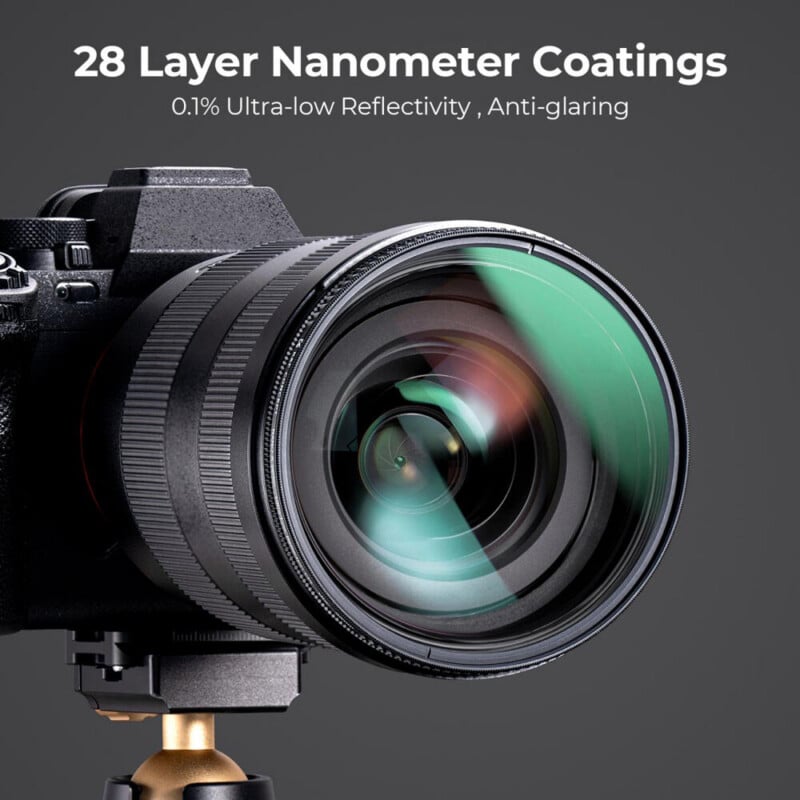
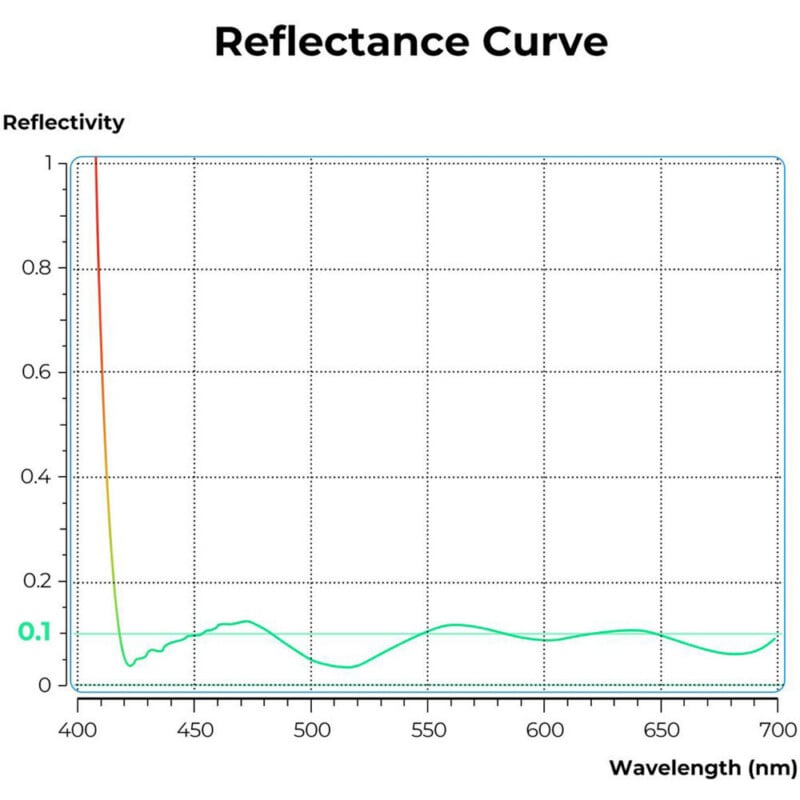
K&F Concept’s Nano-X Series Ultra-Low Reflection CPL is the budget circular polarizer that makes the most sense for photographers who want the polarizer effect without spending premium money. The company’s Ultra-Low Reflectivity CPL line is aimed at bright, high-glare scenes such as beaches, snow, mountains, and strong sunlight, while the True Color Ultra-Low Reflectivity CPL version emphasizes reduced reflections and improved neutrality. K&F claims the filters feature 0.1% reflectivity, eliminating an impressive 99.9% of polarized light and a high transmission of 45%. That may seem very bad compared to a UV filter — and so it would be — but it’s only slightly higher than a one-stop loss, which is actually quite good for a CPL.
The appeal here is not that it will dethrone Breakthrough’s X4, but that it gives photographers a credible CPL at a much more accessible price. That matters because a polarizer is one of the filters that a newer photographer should actually try. The effect is immediate and educational: turn the ring and watch reflections disappear, skies shift, foliage clean up, and contrast change. A good budget CPL teaches you what polarization does without forcing you to spend more than the lens may have cost.
Best Solid Neutral Density Filters: B+W MRC Nano Master ND Filter
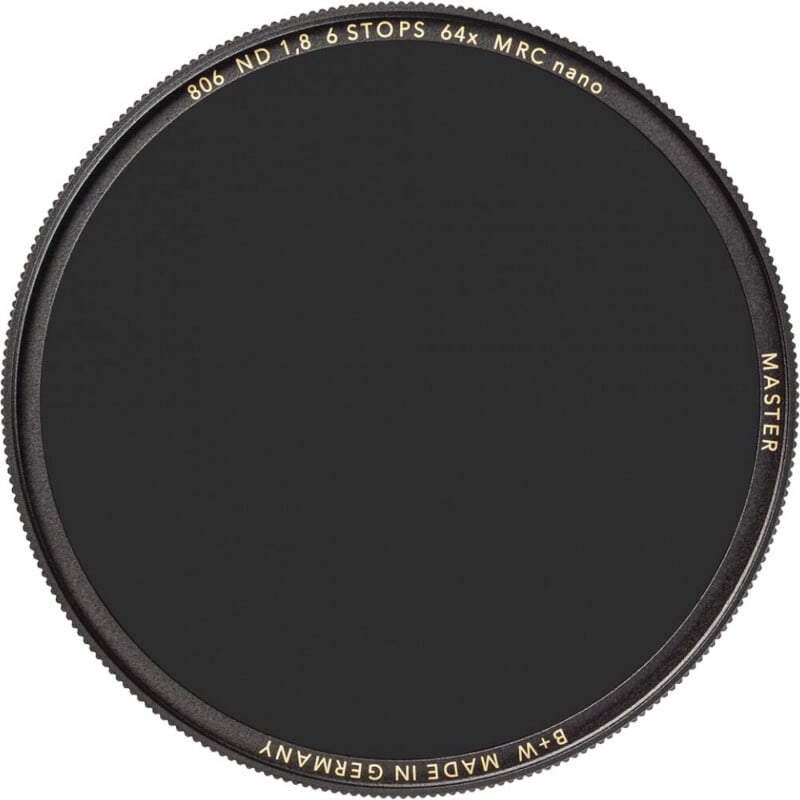
For solid ND filters, the B+W MRC Nano Master line is the safest premium recommendation. Solid ND filters are conceptually simple: they reduce light evenly across the frame, allowing you to use slower shutter speeds or wider apertures in bright conditions. But in practice, cheap ND filters often have color casts, weak coatings, poor density accuracy, and flare issues. B+W’s ND line offers MRC Nano coating and a broad range of circular sizes from 30.5mm to 95mm, in strengths of 2, 3, 6, and 10 stops. B&H describes the MRC Nano Master as a precision-crafted ND filter for controlling exposure, depth of field, motion blur, and water effects.
The reason to choose solid ND over variable ND is image purity. A good fixed ND has fewer compromises, no cross-polarization “X” pattern, and generally better consistency at wide angles. For long exposures, tripod work, seascapes, waterfalls, city motion, or wide-aperture stills in bright light, the B+W MRC Nano Master filters are dependable, neutral, and mechanically excellent.
Best Budget Solid Neutral Density Filter: K&F Concept Nano-X Series ND Filter
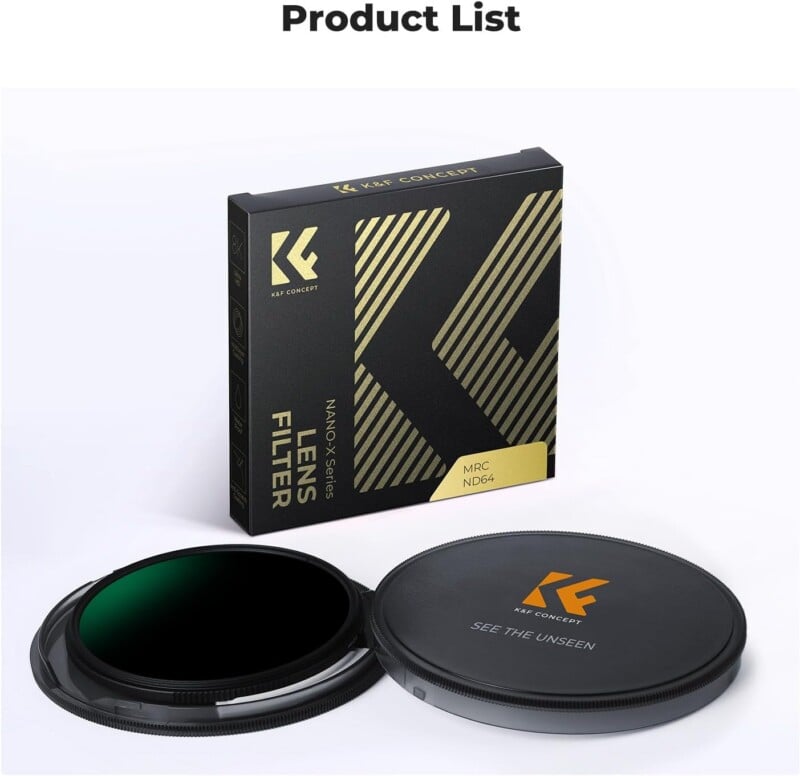
The K&F Concept Nano-X Series solid ND filters are a sensible budget option for photographers who want to experiment with long exposures or wide-aperture daylight shooting without investing in a full premium ND set. K&F’s Nano-X ND100000 listing, for example, describes a 16.6-stop solid ND filter for solar photography and long exposures, with an emphasis on accurate light reduction, color fidelity, and sharp results.
Not every photographer needs a full professional set of 3-stop, 6-stop, 10-stop, and specialty-density filters — but like most filter manufacturers, they produce their Nano-X line 3, 6, and 10 stop strengths. Many people simply need one or two filters to try water smoothing, cloud motion, or daylight shallow depth of field. The K&F Nano-X line is best understood in that context: it is a low-risk entry point into ND work. The ultra-slim frames are also important because vignetting becomes a real concern when stacking filters or using wide-angle lenses.
They’re also available in sizes from 37mm to 112mm — probably the best range I’ve ever seen. And if you want to save some money, they offer a kit with 2, 3, 6, and 10 stop filters for about $99, depending on the size.
Best Variable Neutral Density Filter: NiSi True Color ND-VARIO Pro Nano Variable ND Filter
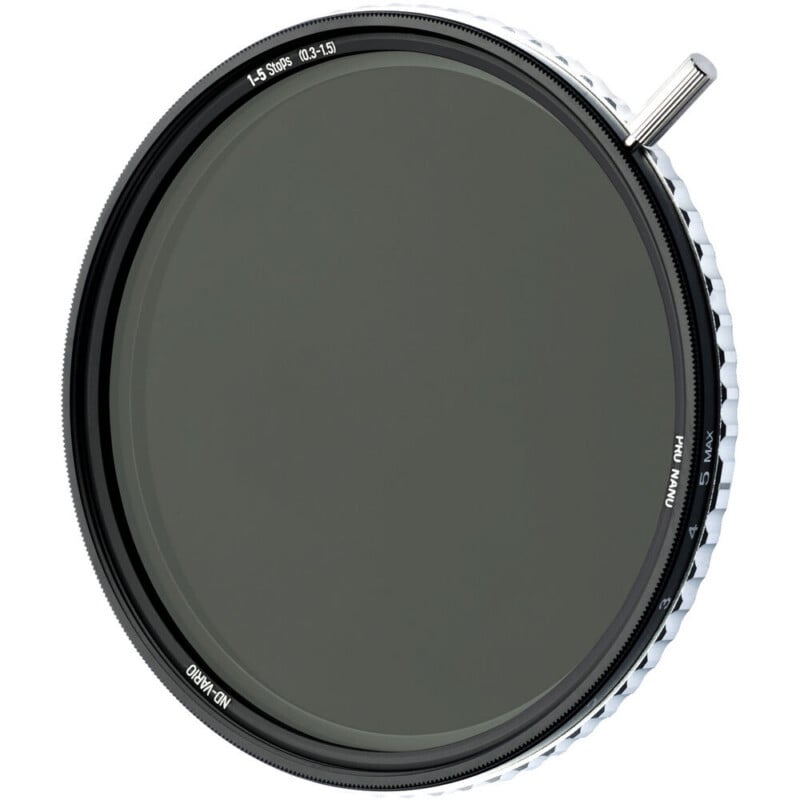
The NiSi True Color ND-VARIO Pro Nano Variable ND is the best variable ND choice because it directly addresses the usual weakness of VND filters: color shift. NiSi describes the True Color ND-VARIO Pro Nano as a variable ND made from high-definition optical glass, with Nano coating for waterproofing, oil resistance, and reduced reflections, and the company emphasizes that the True Color design avoids the color shifts common to many variable filters.
Variable ND filters are especially useful for video, where shutter speed is often tied to frame rate and motion cadence. Instead of constantly changing aperture, ISO, or swapping fixed ND filters, a VND lets the shooter dial exposure quickly as light changes. The NiSi is a premium pick because it keeps the convenience while minimizing the usual penalties. It is not a replacement for high-end matte box NDs on a cinema set, but for hybrid shooters, solo filmmakers, travel work, and mirrorless video rigs, it is one of the cleanest and most practical options.
Best Budget Variable Neutral Density Filter: K&F Concept Nano-X Pro Series Variable ND Filter
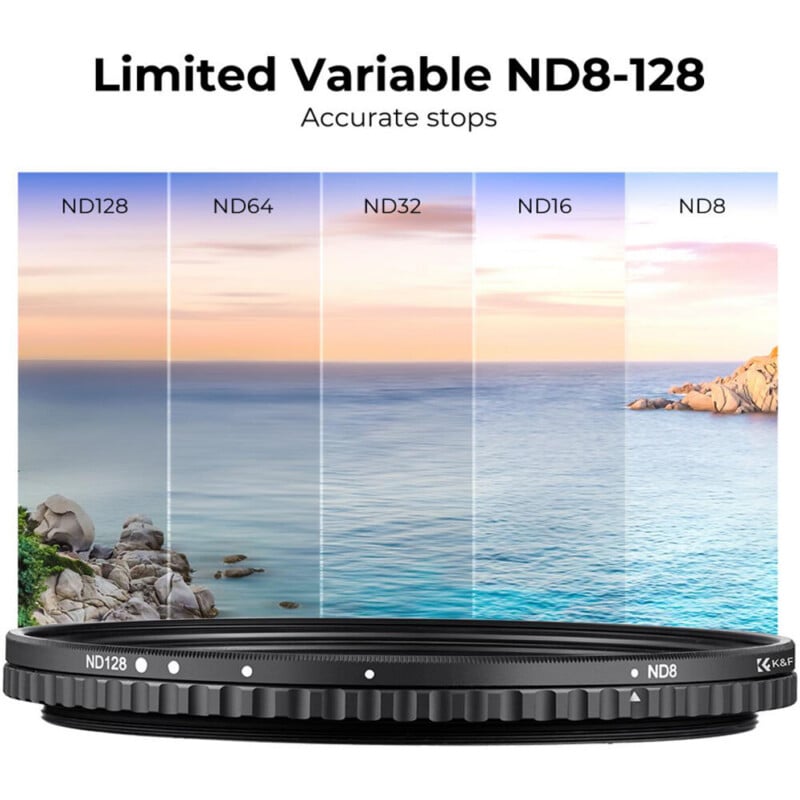
The K&F Concept Nano-X Pro Series Variable ND is the budget variable ND pick because it offers a strong balance of price, coating quality, and everyday usability. K&F’s Nano-X Pro ND2-ND32 variable ND uses double-sided 36-layer nano coating, with waterproof, anti-fouling, and anti-scratch properties, and the common ND2-ND32 range gives shooters roughly the practical daylight control most hybrid users need.
The key is to use it within its intended range. Budget VNDs are not magic, and pushing any variable ND too far can introduce uneven polarization artifacts, color problems, or an X-pattern, especially with wide-angle lenses. But for run-and-gun video, travel clips, portraits in bright sun, or casual hybrid shooting, the K&F Nano-X Pro is a much better buy than the no-name VNDs that often ruin contrast and color.
Best Variable ND/CPL: Haida PROII CPL-VND 2-in-1 Filter
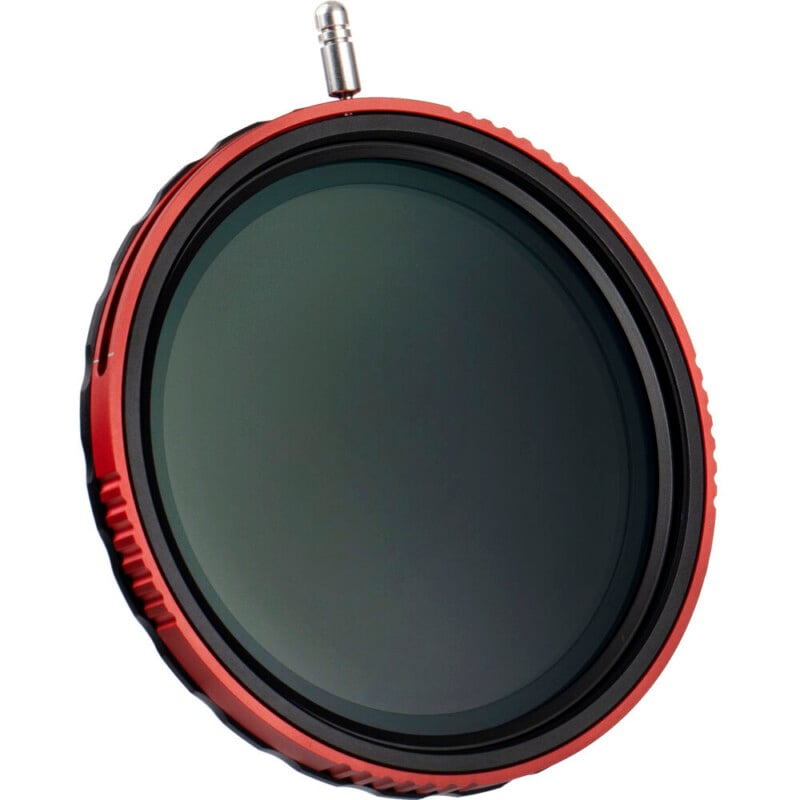
The Haida PROII CPL-VND 2-in-1 is the budget-friendly combined VND/CPL filter to get because it offers independent control of the variable ND and circular polarizer, which is the feature that makes this kind of filter truly useful. Haida describes the PROII as combining a circular polarizer and variable ND in one screw-in filter, with a 3-to-7-stop ND range, independent controls, multi-coated optical glass, and availability in common sizes including 67mm, 77mm, and 82mm.
For video shooters, that 3-to-7-stop range is practical for maintaining shutter speed outdoors. For still photographers, it can enable slower shutter speeds or wider apertures while still giving the reflection control of a CPL. The important thing is discipline: do not treat it like a universal replacement for every filter. It is best as a compact, fast-working field solution when you want exposure control and polarization without stacking separate filters.
Best Budget Variable ND/CPL: K&F Concept Nano-Klear Series ND2-32 and C-PL 2-in-1 18 Multi-Layer
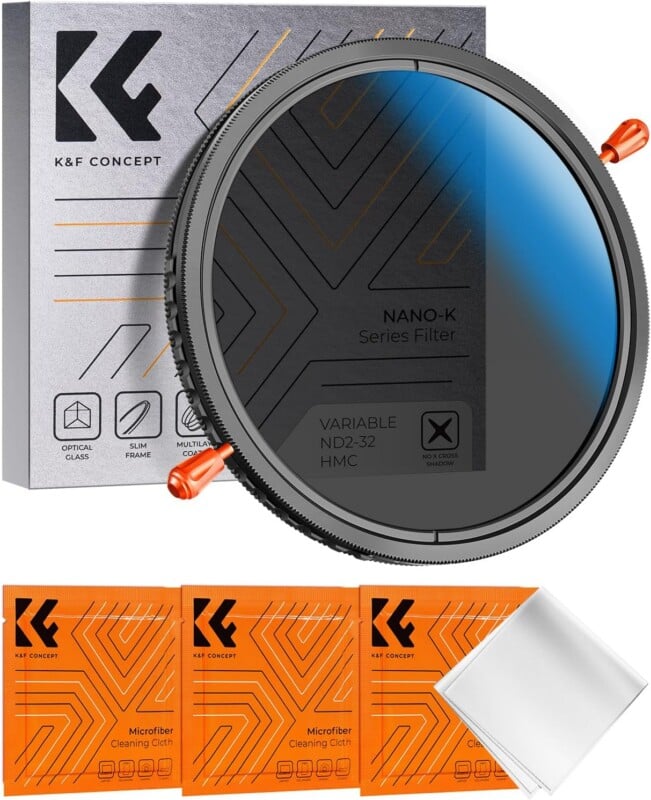
The K&F Concept Nano-Klear Series ND2-32 and C-PL 2-in-1 Filter is the budget pick for shooters who want both variable neutral density and polarization in a single, inexpensive screw-in filter. It combines a 1-to-5-stop variable ND range with a circular polarizer, letting photographers and filmmakers control exposure while also cutting reflections from non-metallic surfaces like water and glass. That makes it especially useful for travel video, outdoor portraits, car photography, bright-day walkaround shooting, and quick hybrid work where carrying and stacking separate filters would slow things down. K&F also uses imported AGC optical glass with an 18-layer coating, which gives the filter a more credible optical foundation than the cheapest no-name 2-in-1 options.
The ND2-32 range is also a sensible choice for this kind of filter. It is not trying to be an extreme 6-to-9-stop VND, which is where variable ND filters are more likely to show ugly cross-polarization artifacts. K&F specifically says the filter uses a self-locking frame that rotates between 1 and 5 stops while avoiding the black “X” cross effect, and the built-in pusher makes adjustment easier, particularly for video shooters who need to make exposure changes smoothly.
This is not a replacement for a premium VND and separate high-end CPL when maximum optical quality matters, but that is not really the point. The Nano-Klear 2-in-1 is a compact, low-cost, practical filter for creators who want one piece of glass that can reduce light, manage reflections, and add contrast without overcomplicating a small camera kit.
Best Graduated Neutral Density Filters: Urth Hard/Soft Plus+ Graduated ND Filter
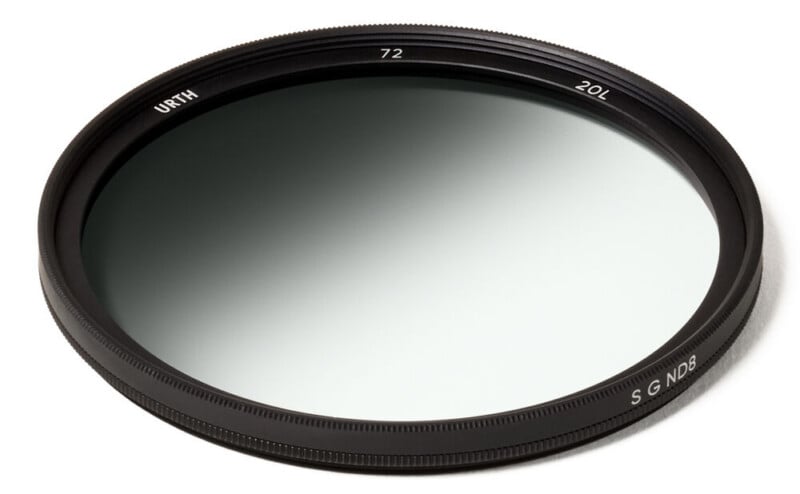
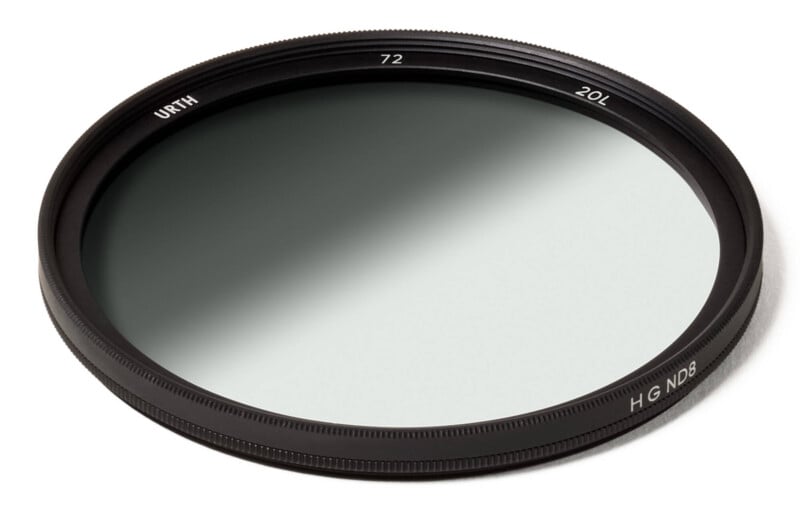
The Urth Hard/Soft Plus+ Graduated ND Filter is a strong choice for photographers who want the classic graduated ND effect without committing to a larger square-filter holder system. Graduated neutral density filters are designed to darken one part of the frame while leaving the rest untouched, most commonly to hold back a bright sky while preserving detail in the land, water, or foreground. Even in the age of excellent dynamic range and exposure blending, there are still plenty of situations where getting the exposure closer in-camera is cleaner, faster, and more satisfying, especially when photographing seascapes, mountains, open fields, desert scenes, and dramatic skies.
The appeal of the Urth Plus+ line is that it gives photographers a more refined version of a straightforward tool. The hard-edge version makes the most sense when the transition between bright and dark areas is clean and defined, such as an ocean horizon or flat landscape. The soft-edge version is more forgiving for uneven horizons, trees, buildings, mountains, and scenes where a hard transition would look obvious. Urth’s higher-end Plus+ filters are also a good fit for photographers who care about decent coatings, solid construction, and a relatively compact setup. It is not as flexible as a full rectangular graduated ND system, where the transition can be precisely moved up or down in the frame, but for photographers who want a simple screw-in graduated ND option, the Urth is an easy recommendation.
Best Budget Graduated Neutral Density Filters: Ice Soft-Edge Graduated ND Filter
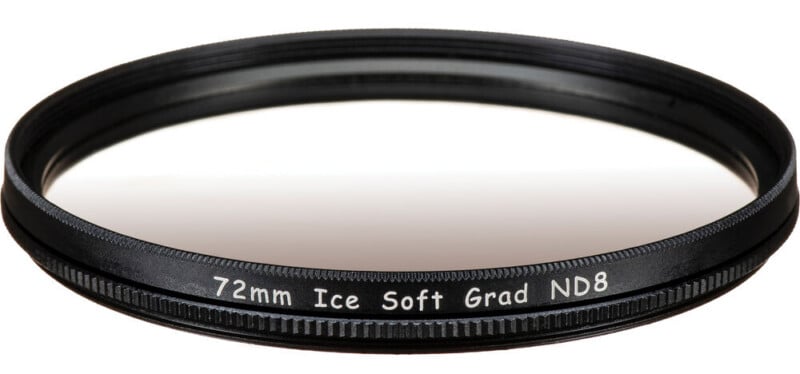
The Ice Soft-Edge Graduated ND Filter is the budget pick because it gives photographers an inexpensive way to experiment with one of landscape photography’s most traditional filter effects. A soft-edge graduated ND is often the safest first choice because the transition is gradual enough to work across a variety of scenes. It can darken a bright sky, preserve cloud detail, and reduce the need to underexpose the foreground dramatically, while being less likely to leave an obvious dark line across trees, buildings, or hills.
As with most budget filters, the Ice is best viewed as an accessible creative tool rather than a no-compromise optical investment. It is the kind of filter that makes sense for beginners, students, occasional landscape shooters, or anyone who wants to find out whether graduated NDs still fit into their workflow before spending more on a premium square-filter system. Used carefully, especially at moderate focal lengths and in scenes with natural horizon transitions, it can still be genuinely useful. The main advantage is simple: for very little money, it lets photographers learn when a graduated ND improves an image, when exposure bracketing is better, and when the scene is better left alone.
Best Drone/Action Camera Filters: Freewell All-Day Filter
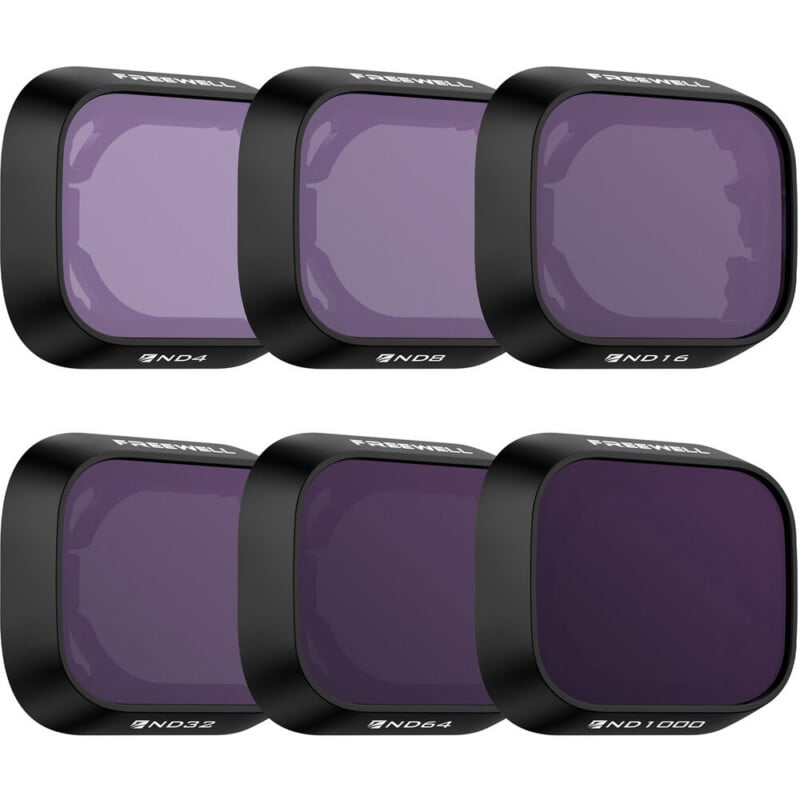
Freewell’s All-Day filter kits are the best choice for drone and action camera users because they are built around the specific needs of small camera systems: low weight, model-specific fit, reliable coatings, and enough ND strengths to handle changing light. Freewell’s DJI Mini 3 Pro All Day 6Pack, for example, includes ND4, ND8, ND16, ND32, ND64, and ND1000 filters, and Freewell emphasizes color-neutral optics, lightweight gimbal-safe construction, and dustproof, scratch-resistant, oilproof coatings.
That is exactly what drone filters need to do. A drone filter cannot be heavy enough to upset a gimbal, loose enough to fall off, or optically sloppy enough to create color shifts across aerial footage. The All-Day kits also make more sense than buying one filter at a time because drone shooting conditions change quickly: sunrise, noon, haze, water, snow, and sunset may all need different strengths.
Best In-Camera Filters: Kolari Vision Magnetic Clip-In Filter
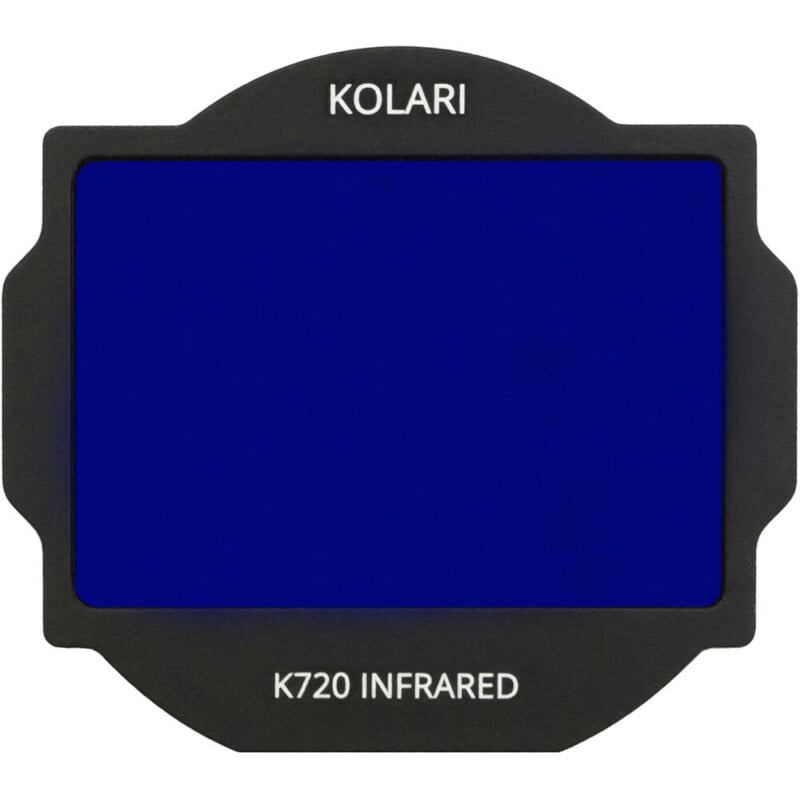
Kolari Vision’s Magnetic Clip-In Filters are the best in-camera option because they solve a problem that front filters cannot: using one filter system across many lenses, including lenses with bulbous front elements, odd filter sizes, or no front filter threads at all. Kolari describes its magnetic clip-in filters as rear filters for full-frame mirrorless systems that allow one filter size to work across many lenses, and the company uses multicoated optics in CNC-machined aluminum frames designed for lens compatibility and reduced vignetting.
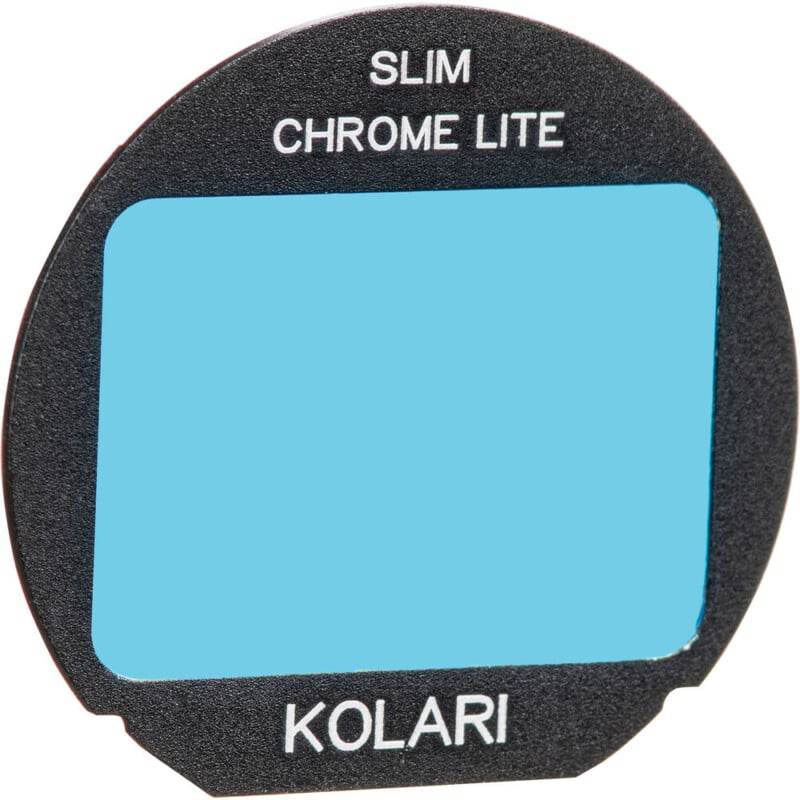
These are especially valuable for infrared, astro, ND, and specialty filtration. They are not quite as casual as screwing a filter onto the front of a lens; you are working inside the camera mount, so cleanliness and compatibility matter. But for photographers who use many lenses, ultra-wides, adapted lenses, or specialty optics, Kolari’s magnetic system is one of the most elegant modern filter solutions.
Best Budget In-Camera Filters: Kase Clip-In Filter
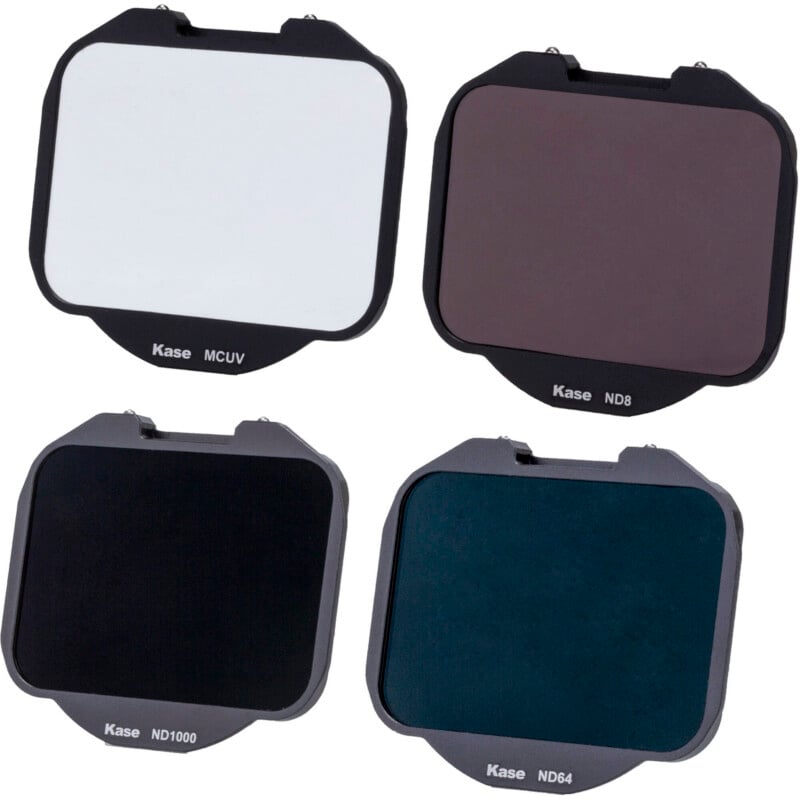
Kase Clip-In Filters are the budget in-camera pick because they cover the same basic concept — placing the filter inside the camera body rather than on the front of the lens — at a more approachable price. Kase offers clip-in filters for systems including Canon RF, Sony Alpha full-frame, and Nikon Z, with options such as MCUV, Neutral Night, ND64, ND1000, and multi-filter sets.
The biggest benefit is versatility. A clip-in ND or night filter can be used across lenses with different front thread sizes, which is especially helpful for photographers who own several lenses or use ultra-wide glass. Kase is also a practical way to try the clip-in concept without going straight to the most expensive ecosystem. As with any internal filter, the usual warnings apply: check compatibility carefully and keep dust control in mind.
Best Diffusion Filter: Moment CineBloom Diffusion Filters
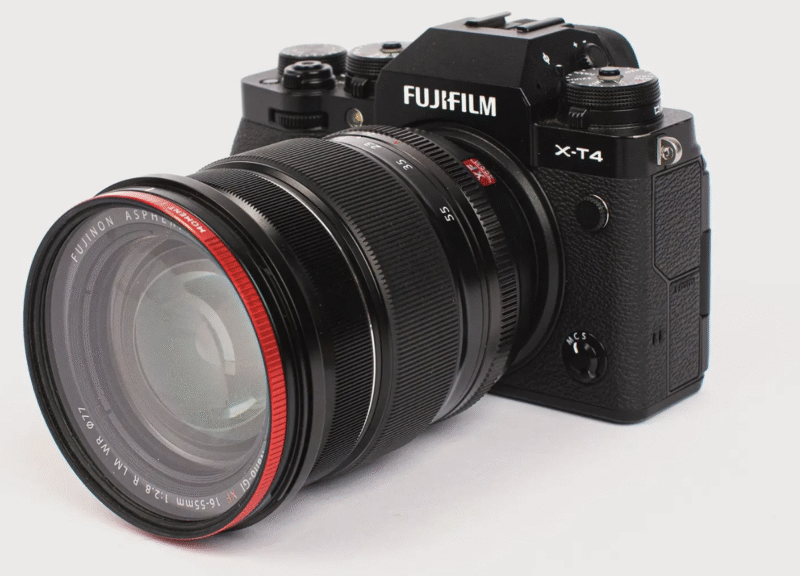
Quick note: Based only on pure quality, my choice would be the Schneider Hollywood Blackmagic filters. However, those are only available in 77mm and 82mm circular options, and then a lot of rectangular options. This is simply because they are geared wholly toward cinema use. My pick here offers options from 37mm to 82mm, which is much more conducive to stills or hybrid stills/video shooters.
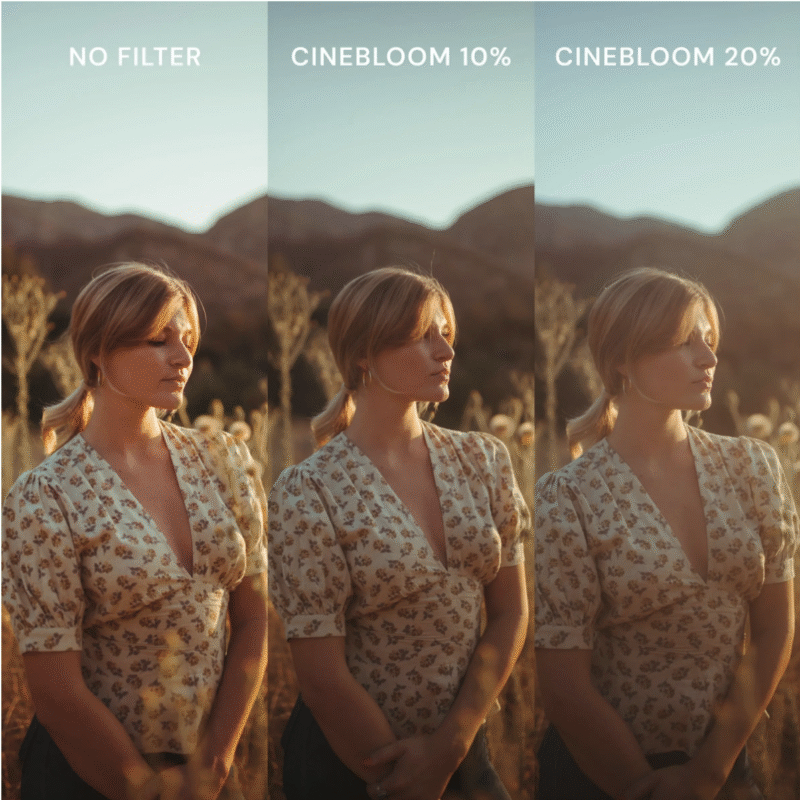
Moment’s CineBloom Diffusion Filters are the best diffusion filters for most photographers and hybrid shooters because they deliver the look people usually want from modern diffusion: bloomed highlights, softened digital sharpness, gentler contrast, smoother skin, and a more film-like glow without turning the entire image into mush. Moment describes CineBloom as its own custom diffusion recipe, using a specific particle blend sandwiched between two layers of HD optical glass. The filters are available in 5%, 10%, and 20% strengths, which makes the line easy to recommend because photographers can choose between a barely-there softening effect and a much more obvious stylized bloom.

The 5% version is the safest choice for still photographers who want a subtle edge taken off modern digital files. The 10% version is probably the sweet spot for video, portraits, night scenes, weddings, and street photography, adding visible atmosphere without overwhelming the image. The 20% version is the dramatic option, best reserved for scenes with practical lights, neon, headlights, candles, windows, or other bright sources where strong halation is part of the desired look. Moment also notes that CineBloom uses premium Japanese optical glass to maintain sharpness and color accuracy, while the NanoBlack diffusion layer blooms light, softens contrast, and creates the halation that gives the filter its character.

The important distinction is that CineBloom does not simply blur the image. It lowers contrast and spreads highlights in a controlled, attractive way, which can make overly clinical lenses and high-resolution digital sensors feel more forgiving. It is especially useful for mirrorless video, portraits, travel films, music videos, night photography, and anyone who wants more character straight out of camera. Moment also says the filters are intentionally uncoated to maximize the strength of the bloom, so they are not the filter to choose when absolute flare resistance is the priority, but for photographers or videographers who like some nice veiling flare, these are perfect.
Best Budget Diffusion Filter: K&F Concept Nano-Klear Black Diffusion K-Series Filter
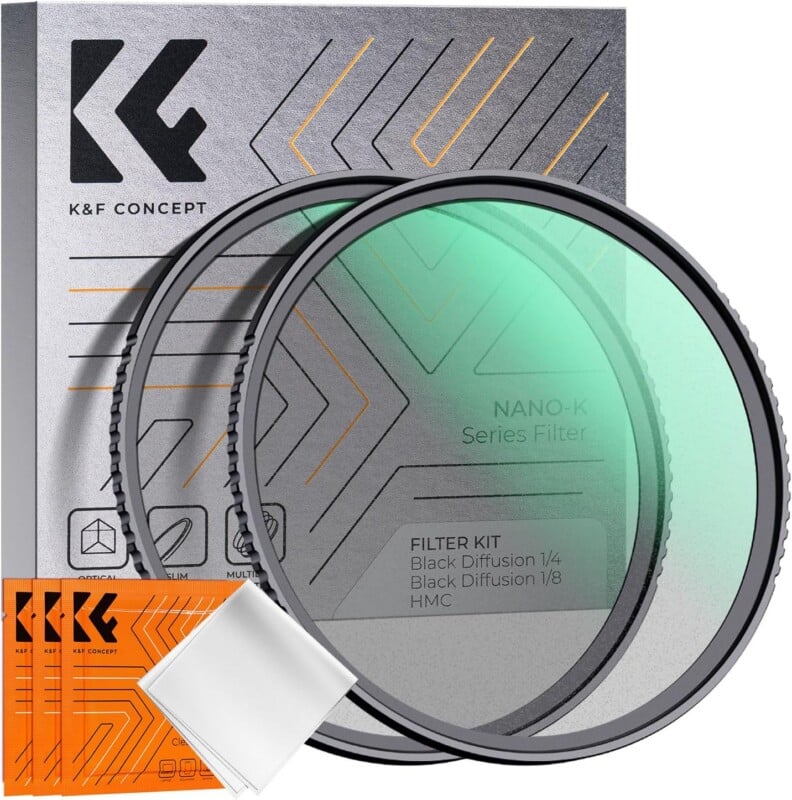
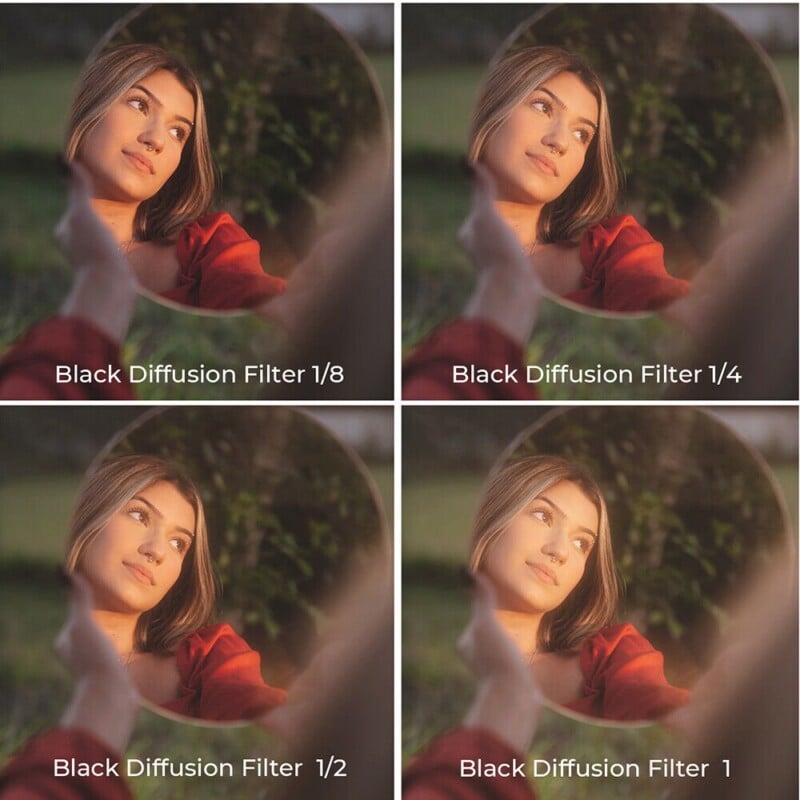
The K&F Concept K-Series Black Diffusion Filter is the best budget diffusion pick because it delivers the popular black-mist look (and, depending on the retailer, may refer to itself as black mist) at a much lower price than premium cinema filters do. K&F describes its black diffusion/mist filters as reducing highlights, lowering glare, softening wrinkles and blemishes, and creating a hazy cinematic effect. K&F is also one of the few companies that offer multiple-strength diffusion filters in a price-saving kit, as shown above.
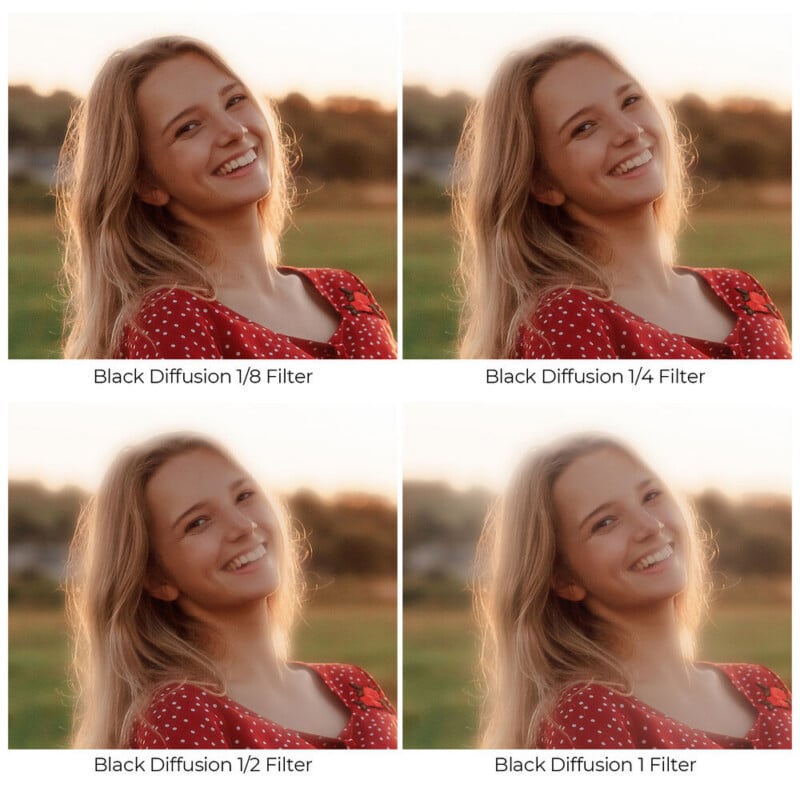
This is a good choice for photographers and videographers who want to experiment with diffusion before investing in Schneider, Tiffen, NiSi, or Moment-level filters. The lower strengths are usually the safer buy, especially for still photography, because heavy diffusion can become gimmicky fast. But for portraits, night scenes, practical lights, neon, music videos, and digital cameras that look too clinical, the K&F K-Series can be a very useful creative tool.
Best Filters for Solar Photography: NiSi Solar Filter Pro Nano UV/IR Cut ND Filter
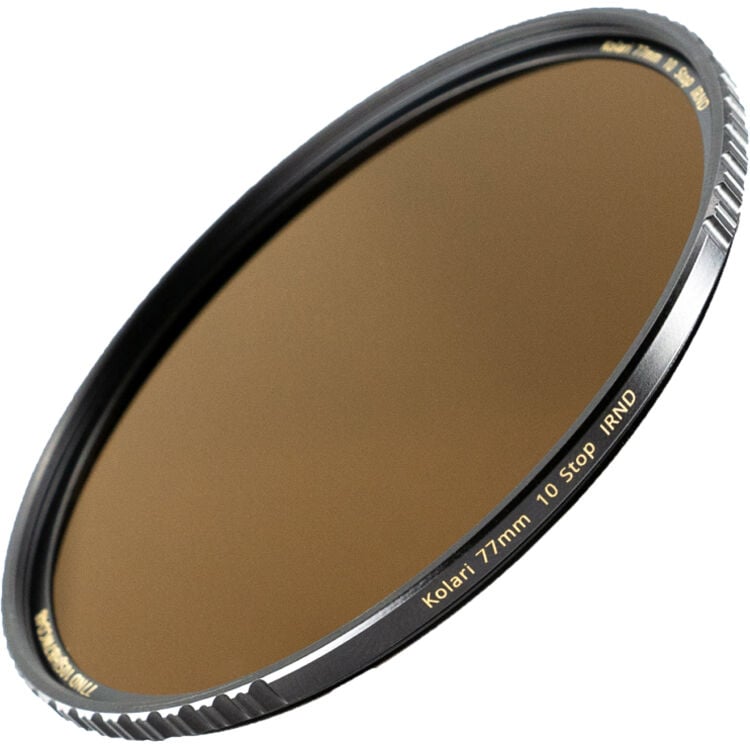
The Kolari Vision Pro IRND Filter in its 20-stop version is an excellent premium choice for solar photography because it gives photographers far more light reduction than a standard long-exposure ND filter. Its 20-stop strength corresponds to a 6.0 optical density, and B&H lists the filter as specifically designed for solar photography, with water-, oil-, and scratch-resistant coatings and impact-resistant Corning Gorilla Glass construction.
That extra density makes the Kolari especially appealing for photographing the sun itself, including solar eclipses, sunspots, and tightly framed telephoto solar compositions. The “IRND” aspect is important because strong visible-light reduction alone is not always the whole story with solar work; infrared control helps keep exposure and image quality more consistent across a broader range of wavelengths. Kolari describes its Pro ND line as engineered for neutrality across the visible spectrum and into the infrared range, with the 20-stop version available as part of the lineup.
As with any solar filter, use it carefully. The filter should be secured to the front of the lens before the camera is aimed at the sun, and photographers should avoid looking through an optical viewfinder at the sun unless a proper solar filter is already in place. For mirrorless shooters, live view removes the direct optical-viewfinder hazard, but the camera and lens still need proper filtration. The Kolari earns the top spot here because it combines extreme density, IR-aware filtration, strong coatings, and unusually durable glass in a filter that is genuinely built for high-intensity solar use.
Best Budget Filter for Solar Photography: Haida NanoPro ND Filter (16.5 stop)
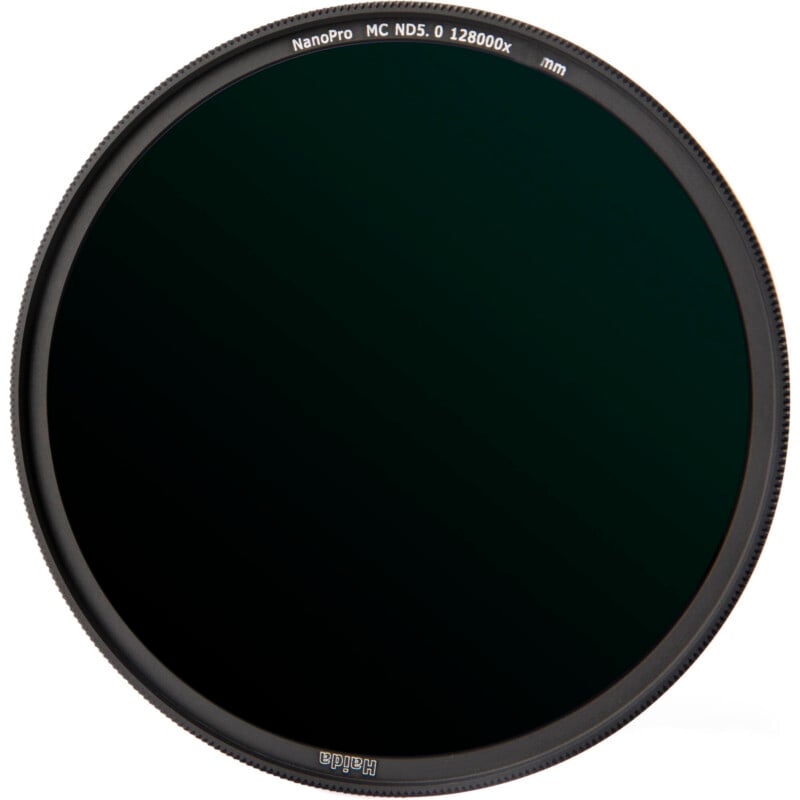
The Haida NanoPro ND Filter, in its 16.5-stop solar-density version, is the best budget-friendly alternative for photographers who want to experiment with solar photography without moving into the highest-priced specialty filters. Haida lists its NanoPro Solar Filter as designed for safe solar eclipse photography, and the 16.5-stop ND5.0-style density places it in the same general exposure-reduction class used for photographing the sun.
The main appeal of the Haida is value. It gives photographers a practical way to shoot solar eclipses, sun disks, and telephoto solar compositions while still using a recognizable filter brand with proper coating technology. It is not the category where I would recommend generic bargain-bin dark glass, because ordinary ND filters are not automatically safe for solar work and may not block enough ultraviolet or infrared energy. But for photographers who want a dedicated solar-capable filter at a lower cost than the NiSi, the Haida NanoPro is a sensible pick. It is especially useful for occasional eclipse shooters or hobbyists who want a reliable filter for rare solar events without building an entire specialty solar imaging kit.
Best Magnetic Filter System: NiSi JetMag Pro Filters
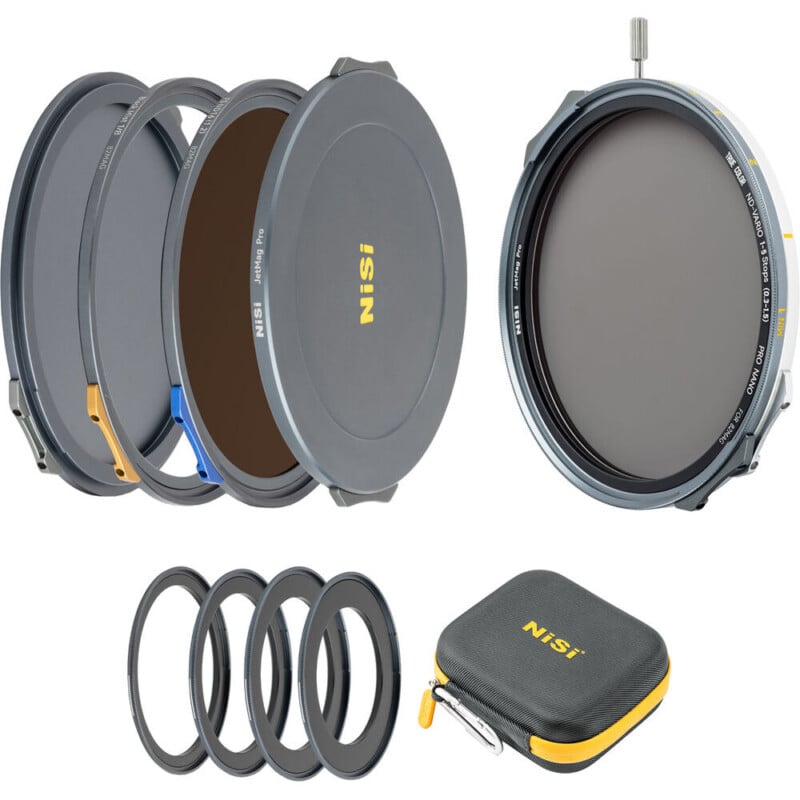
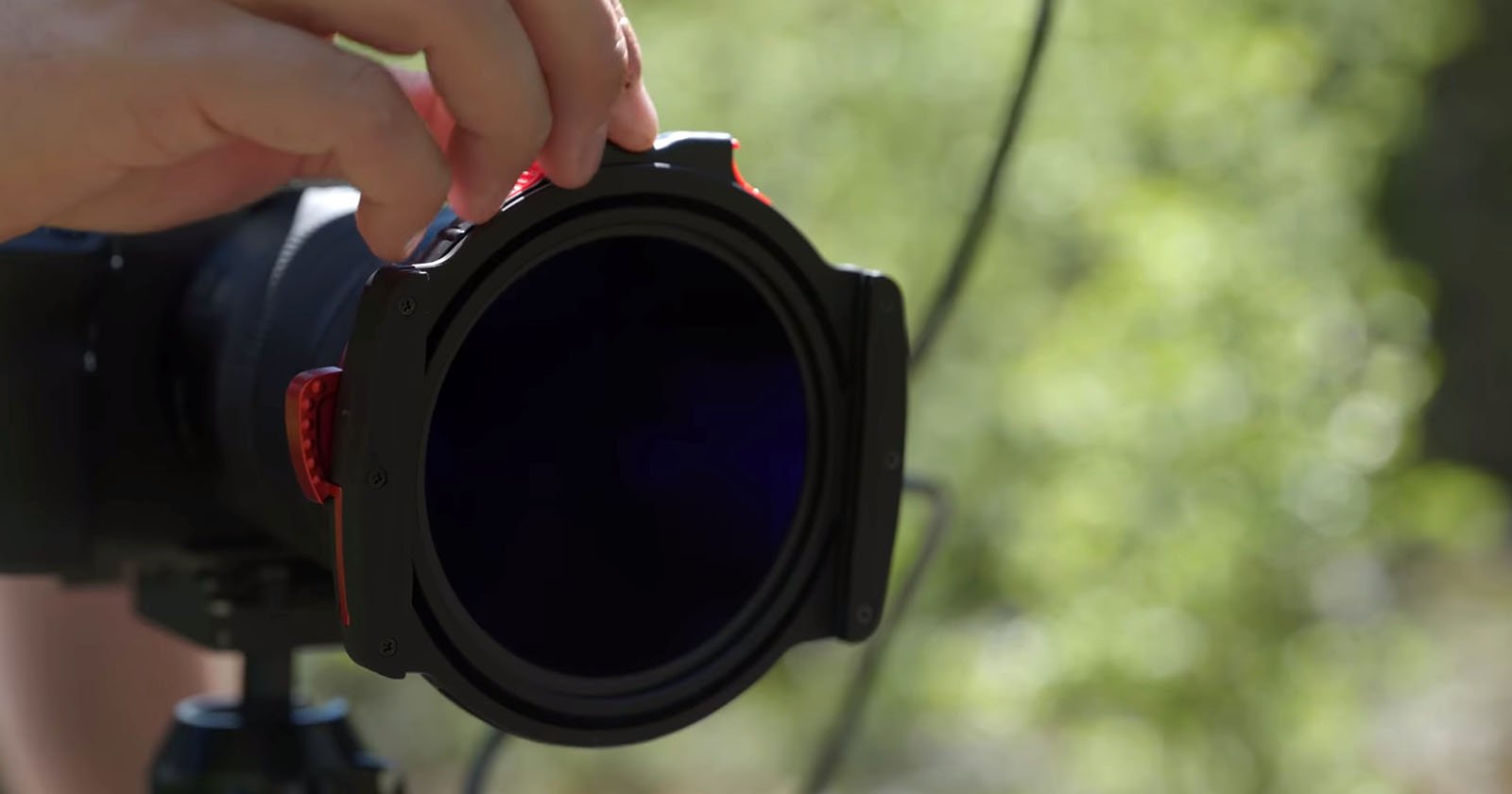
The NiSi JetMag Pro system is the best magnetic filter system because it combines the speed of magnets with a more secure locking approach. NiSi describes JetMag Pro as a magnetic system with a patented locking design, waterproof and oil-resistant Nano coating, low-reflective Nano coating, easy identification, protective metal caps, and multi-filter locking. The company also says the system is slim enough to stack two filters on lenses as wide as 15mm without vignetting.
Magnetic filters are excellent in the field because they remove the slowest and most annoying part of using filters: threading them on and off. The danger is that some magnetic systems feel too casual or insecure for expensive glass. JetMag Pro’s appeal is that it keeps the fast-swap workflow while feeling more like a serious filter ecosystem. For landscape, travel, architecture, and hybrid shooters, it is the strongest all-around magnetic option.
Best Budget Magnetic Filter System: Freewell M2 Magnetic Quick Swap Filters
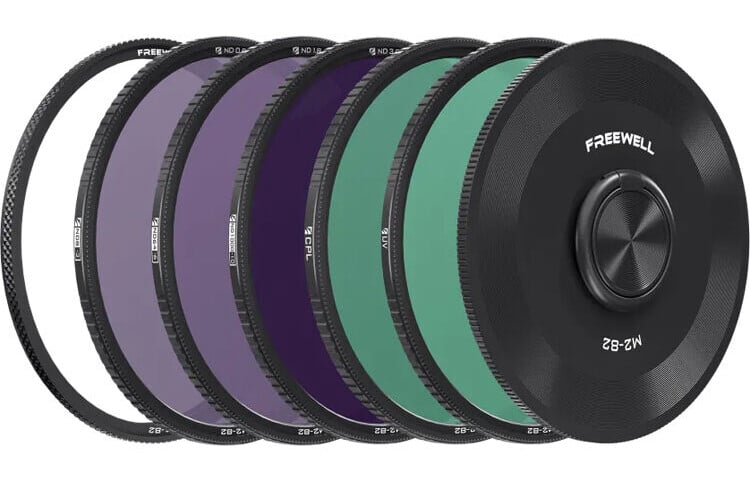
The Freewell M2 Magnetic Quick Swap system is the best budget magnetic filter system because it delivers the main advantage of magnetic filters — speed — at a more accessible price. Freewell’s M2 5-Pack includes ND8, ND64, ND1000, CPL, and UV filters, and the company advertises one-second swapping, strong magnetic hold, premium German optics, and scratch-resistant construction.
This is a very good kit for creators who want a compact everyday filter system without building a more expensive modular setup. The included ND strengths cover common landscape and long-exposure uses, the CPL is useful for glare control, and the UV filter can serve as a protective front layer. It is not as advanced as NiSi’s JetMag Pro system, but it is fast, simple, and priced well enough to make magnetic filters practical for many more photographers.
When in doubt, the best filter brands in general: B+W, Haida, Tiffen, NiSi, Maven, Breakthrough, Formatt Hitech, Heliopan, Kolari Vision, Schneider, PolarPro, Moment, Kase, Sigma, Zeiss, Urth, Hoya, K&F Concept, Chiaro (Premium or Pro), and Benro.
Image creditsHeader image via Sigma
Affiliate Disclosure PetaPixel articles may include affiliate links; we may earn a commission if you buy through one.