Antigravity Is Preserving Historical Sites in 3D Using its 360° Drone
Antigravity has announced Project Eternal, a global initiative unveiled following the International Day for Monuments and Sites, aimed at preserving cultural heritage through advanced imaging and Gaussian Splatting. The project brings together drone technology, panoramic capture systems, and 3D reconstruction tools to create accessible digital archives of historically significant locations.
A Global Effort to Preserve Cultural Memory
Project Eternal is a collaborative effort between creators, cultural institutions, and technology partners to digitally preserve sites that are vulnerable to time, environment, and human impact.
“We’re embarking on a journey to safeguard what matters most. By transforming 360 imaging into enduring 3D archives, we can preserve our most important places and memories for generations to come,” Antigravity says.
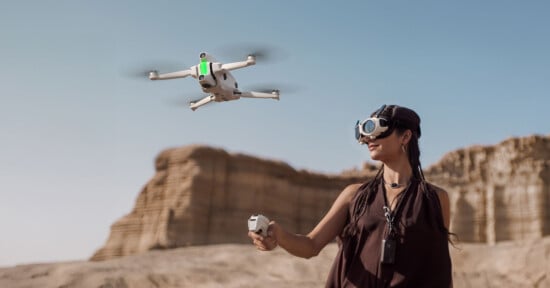
At its core, the initiative is built around two priorities: preservation without disruption and broader access to advanced 3D capture tools. Antigravity emphasizes the use of its lightweight A1 drone, designed to document fragile environments with minimal physical interference while still capturing high-fidelity spatial data.
From 360 Capture to Gaussian Splatting
A central technical pillar of Project Eternal is the integration of air-to-ground capture workflows. By combining Insta360 panoramic imaging systems with Antigravity’s 360 drone platform, the initiative enables full-sphere capture in a single workflow, reducing the complexity traditionally associated with heritage documentation.
The captured data is processed through Gaussian Splatting pipelines, transforming real-world scenes into navigable 3D environments. To expand accessibility, Antigravity has partnered with the Splatica platform to launch a large-scale user-generated content initiative offering free upload access for early participants.
“Project Eternal is driven by two core missions. First, preservation without disruption. Traditional heritage documentation often relies on intrusive setups, but Antigravity’s 249g A1 drone enables high-fidelity capture with minimal human impact—safeguarding fragile sites while recording them in detail. Second, technology democratization. By combining Insta360’s world-renowned panoramic cameras with Antigravity’s industry-leading 360 drone, the project creates a seamless air-to-ground ecosystem for full-sphere capture in a single pass,” Antigravity says.
“To make advanced 3D reconstruction truly accessible, Antigravity has partnered with leading 3D Gaussian Splatting platform Splatica to launch the world’s largest Gaussian Splatting UGC campaign — offering 1,000 free 10-minute uploads, so anyone can turn 360 footage into immersive 3D models with ease.”
Preserving Sites of Historical Fragility
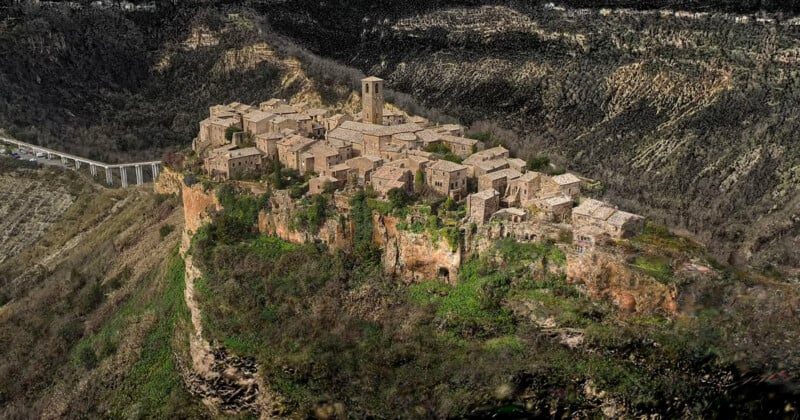
As part of its first institutional collaboration, Antigravity is working with CyArk on pilot projects in Italy, focusing on Civita di Bagnoregio and Pompeii. Both locations represent contrasting dimensions of cultural fragility: one shaped by ongoing erosion, the other preserved by volcanic catastrophe.
Civita di Bagnoregio, often called the “Dying City,” continues to suffer from structural degradation. Pompeii, by contrast, remains a uniquely preserved snapshot of ancient life frozen in volcanic ash, offering extensive detail for digital reconstruction.
A Global Creative and Cultural Challenge
Beyond institutional partnerships, Project Eternal is also opening participation to creators worldwide through a global challenge inviting users of 360 cameras and drones to capture meaningful locations, generate 3D models using Splatica, and share their work publicly. Contributions span living spaces, cultural landmarks, and imagined environments, positioning the initiative as both a technical and creative platform.
“Beyond institutional collaboration, Antigravity is inviting creators worldwide to participate. Global influencers will use Gaussian Splatting to generate digital twins of sites such as Roman theaters and Jeju Island, sharing their creative processes and results across social platforms in the coming weeks,” Antigravity says.
“Project Eternal will also launch a global UGC campaign themed: ‘If you could preserve one place forever, what would it be?’ Open to panoramic camera and drone users worldwide, the initiative invites 3DGS creators, architects, archaeologists and everyday users to capture meaningful locations, generate 3D models via Splatica, and share their stories online. A distinguished jury of experts across technology, art, and heritage will select outstanding submissions for global recognition and awards.”
Participants can submit 360 footage, convert it into Gaussian Splatting models, and share exported results on social platforms using designated campaign tags. Selected entries will be reviewed by a jury spanning technology, design, and cultural heritage disciplines.
Creative Direction and Participation Model
The initiative is structured around three thematic categories: everyday living environments, cultural heritage sites, and creative or hybrid spaces that blend physical and digital expression.
The participation workflow is designed to be accessible, beginning with 360 capture, followed by upload and conversion through Splatica, then export and sharing across social platforms. Selected participants may receive recognition and awards based on creativity, technical execution, and engagement.
A Long-Term Vision for Digital Preservation
Project Eternal is intended to evolve beyond a single campaign into an ongoing cultural archive initiative. Antigravity describes it as a long-term effort to unify creators, technologies, and institutions around a shared goal of preservation through 3D reconstruction.
The initiative reflects a broader shift in how spatial data is captured and used, moving from documentation toward immersive reconstruction that allows historical and personal spaces to be revisited in digital form for generations to come.
Image creditsAntigravity
Affiliate Disclosure PetaPixel articles may include affiliate links; we may earn a commission if you buy through one.