
Canon’s New Industrial Camera Literally Sees in the Dark
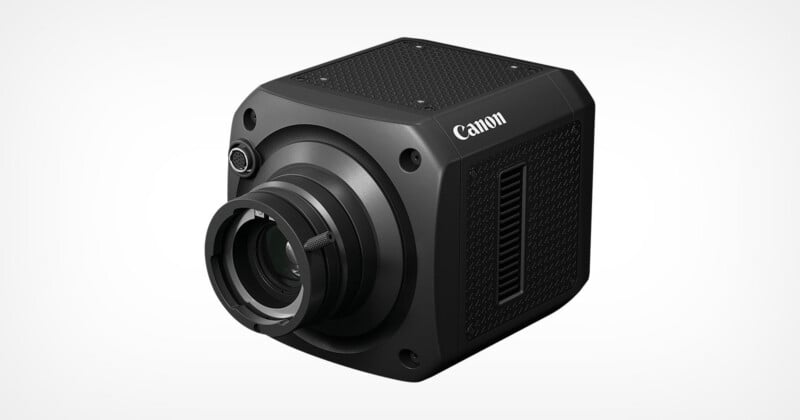
Alongside the exciting new Cine-Servo 40-1200mm T5.0-10.8 video lens, Canon also unveiled the MS-510 Multi-Purpose Camera at NAB 2026. This highly specialized new camera is not built for typical consumer use, but it’s still worth checking out thanks to its impressive technology.
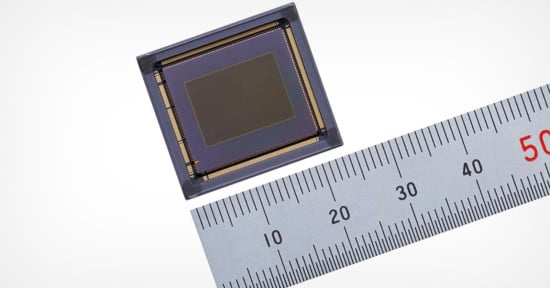
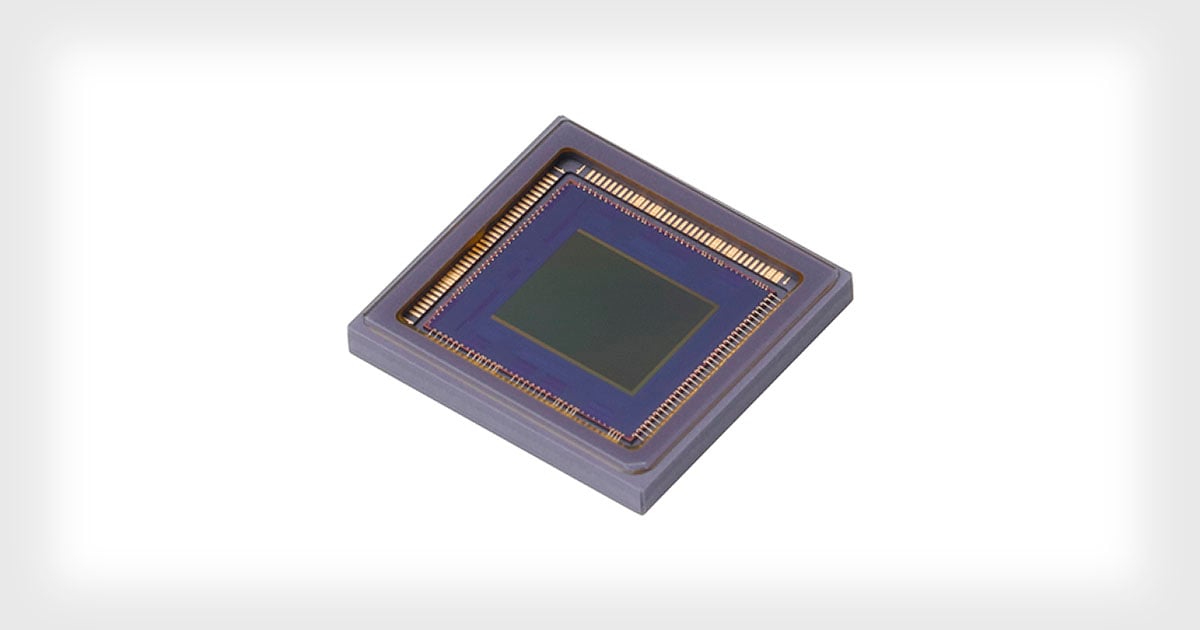
At the heart of the Canon MS-510 is a newly designed Single Photon Avalanche Diode (SPAD) image sensor. This 3.2-megapixel Type 1 image sensor works fundamentally differently from the typical CMOS image sensor found in nearly every other digital camera.
A CMOS image sensor measures the amount of light that strikes each pixel and then converts the analog signal into digital data. However, a SPAD sensor instead measures each particle of light that strikes each pixel of the image sensor. That might not sound like much of a difference, but in extreme situations, it’s dramatic.
At a very simple level, with a CMOS sensor, light accumulates and charges the photodiode over a designated exposure time, and then the amount of total charge is converted into a digital signal. There are some potential issues with this type of image sensor. Beyond the risk of photodiode oversaturation, which results in blown highlights, there is also inherent noise that is amplified as the sensor’s ISO increases. Increasing the ISO essentially amplifies the sensor’s signal, including both the actual light information and the signal noise.
A SPAD sensor, on the other hand, doesn’t accumulate charge of total light, but measures each light particle (photon) that reaches a pixel. It then immediately converts the photon into an electrical charge, which is then multiplied “as an avalanche,” enabling the sensor to extract even one single photon of light as a relatively clean electrical signal.
“Both SPAD and CMOS sensors take advantage of the fact that light possesses the property of particles. While in CMOS sensors, each pixel measures the amount of light that reaches to the pixel within a given time, SPAD sensors on the other hand measure each individual light particle (i.e, photon) that reaches to the pixel. Each photon that enters the pixel immediately get converted into an electric charge, and the generated electrons are eventually multiplied as an avalanche, allowing one photon to be extracted as one electrical signal,” Canon explained in 2023.
“CMOS sensors read light as electric signals by measuring the volume of light that accumulates in a pixel within a certain time frame. This also counts the noise that enter the pixel along with the light particles (photons), hence contaminating the information received. Meanwhile, SPAD sensors digitally count individual photon particles, preventing from any analog noise to enter. This makes it possible to obtain a clear image even in dark places when there is little light, and vividly capture subjects in the darkness.”
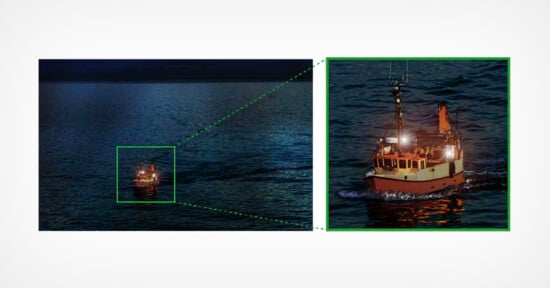
The benefits of the SPAD sensor are especially important in extremely low-light situations. The MS-500 from 2023 could already detect subjects in light as dim as 0.001 lux, but Canon has taken things up a notch with the MS-510’s new SPAD sensor. The Canon MS-510 “achieves a minimum subject illumination of 0.0006 lux,” Canon boasts.
To illustrate just how absurd that is, a starlit night is about 0.02 lux, while a cloudy night sky, which is very dark, is 0.007 lux. The Canon MS-510 can “see” in darker conditions than even that.
The MS-510 also offers improved near-infrared sensitivity compared to its predecessor, further enhancing night-mode performance and long-range detection.
So what does one do with a camera like the MS-510? Well, it’s really for low-light security and observation, think security and infrastructure monitoring. However, Canon notes that it can also be used for wildlife observation and research, particularly of nocturnal species that would otherwise be harmed by artificial lighting.
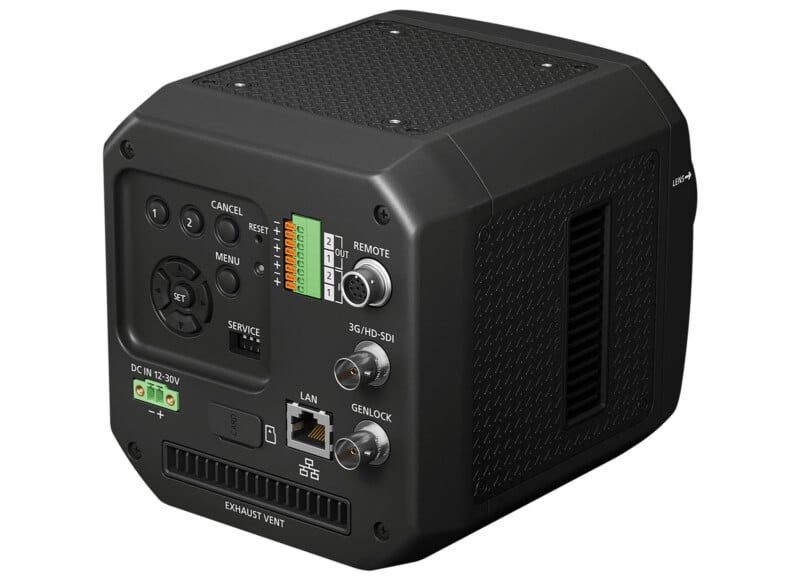
The Canon MS-510, like the MS-500 before it, accepts broadcast lenses with the industry standard B4 mount. It works with Canon’s lineup of 2/3-inch ultra-telephoto broadcast zoom lenses, meaning the MS-510 can clearly observe objects from very far away.
It’s a very specialized camera with an equally interesting image sensor. It has a price to match. It will begin shipping later this year for $22,800.
Image creditsCanon
Affiliate Disclosure PetaPixel articles may include affiliate links; we may earn a commission if you buy through one.