
The Vastnaut One Exoskeleton Expands Outdoor Photography’s Horizons
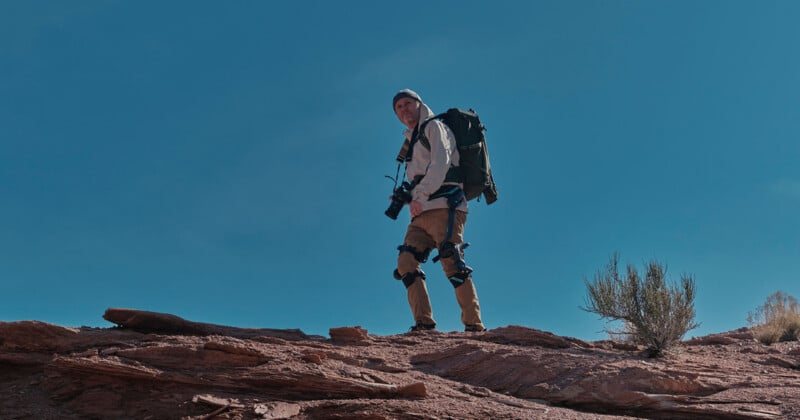
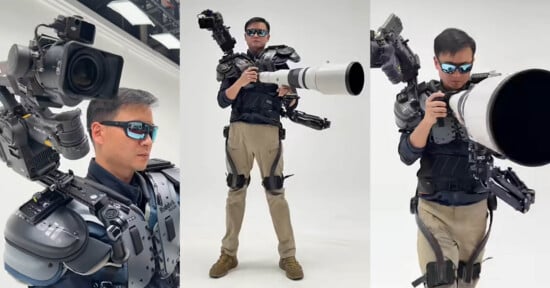
Photography is among the best and most fun ways to enjoy nature. However, for many, the physical demands of outdoor adventures can be too much, forcing people to stay home or stick to only the most accessible, often overcrowded, photo spots. That’s where Vastnaut comes in with the Vastnaut One, the world’s first AI-powered 4×4 wearable exoskeleton. It works with your body to reduce stress and enable you to go farther and explore places that you otherwise couldn’t.
Full disclosureThis article is brought to you by Vastnaut.
Hiking rugged terrain is challenging enough with just the bare essentials required for safe adventuring. Food, water, clothing, and safety gear are heavy. Add in the camera gear that outdoor photographers always want to have with them, including cameras, big professional-grade lenses, and extra accessories, and suddenly even the most seasoned, spry photographer will find themselves quite literally buckling under the load.
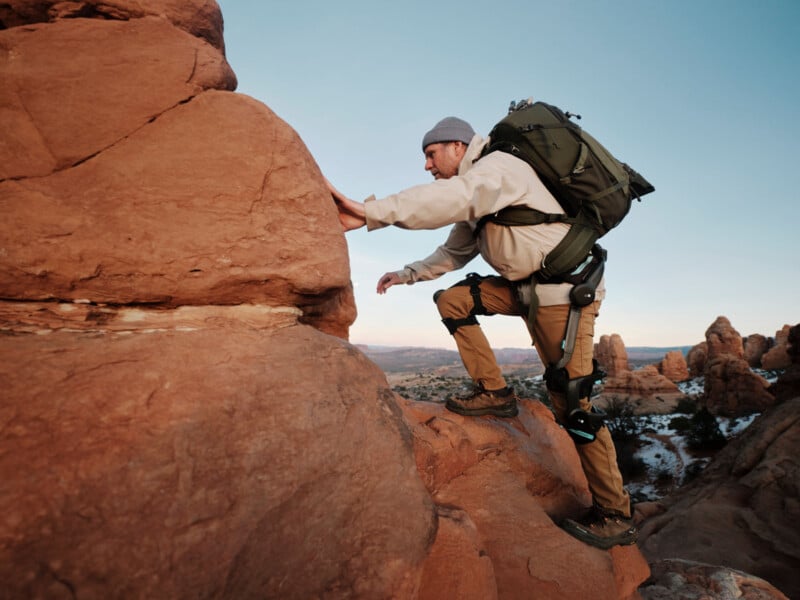
Vastnaut One is a wearable, battery-powered exoskeleton that supports the wearer’s key joints, reduces the load on their body, and helps them explore terrain that would have otherwise been too challenging to approach. Using sophisticated technology developed by extensively studying how the human body moves across diverse terrain, the Vastnaut One’s VastDrive System uses motors, batteries, and precise control to coordinate multiple joints in real time in response to terrain changes, ensuring that the wearer gets the assistance they need, how they need it.
The Vastnaut One is a 4×4 exoskeleton, meaning it has four motors to support four joints. In this case, it supports each knee and both hips. With an additional accessory, the wearer can remove the knee supports and have only hip support, which is a lightweight option for less complex terrain where the knee support isn’t necessary.
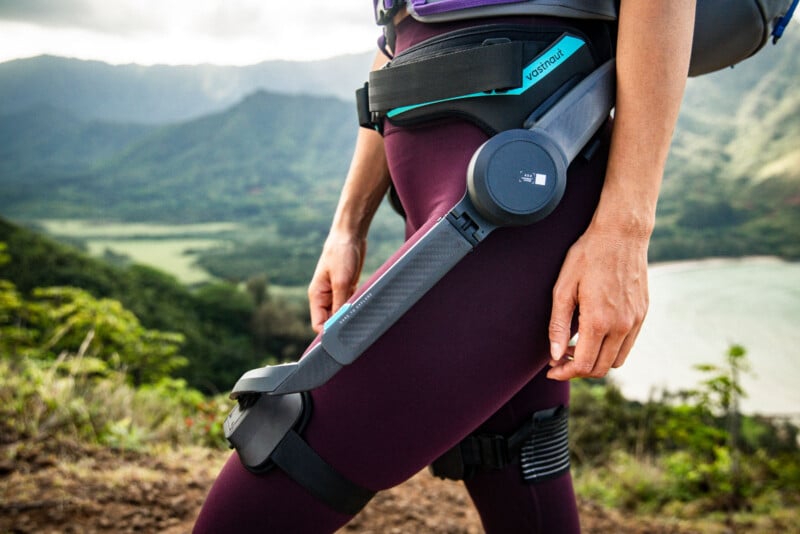
Every person’s body is unique. People are shaped differently and move in varied ways, so the onboard VastSynergy AI Engine features an end-to-end AI network that analyzes individual joint mechanics and the person’s height, weight, and heart rate to adapt to their needs.
The Vastnaut team trained its Vastnaut One software using millions of motion clips, a dedicated motion capture laboratory, and hundreds of structured movement patterns. The result is an end-to-end AI solution with multi-dimensional analysis of biomechanics, movement, and individual physiology at all times.
Vastnaut was founded by engineers with expertise in robotics, biomechanics, and control systems who have a clear vision that technology should help people in practical and meaningful ways. In the case of the Vastnaut One, the goal is to use technology to help people explore new places and adventure through their favorite areas with more ease and less stress on their bodies.
How Vastnaut One Helps Outdoor Photographers Move
As every hiker knows, climbing is hard work. Every extra ounce of gear only makes it more challenging. As trails get steeper, Vastnaut One kicks into overdrive to make sure that the wearer’s exertion remains manageable and steady, meaning you can get farther and, ideally, get even better photos.

The Vastnaut One’s Ascent Power reduces uphill effort by up to 30 percent, decreases overall physical exertion by 32 percent, and keeps the wearer’s heart rate 34 percent lower than if they were not wearing the exoskeleton.
It also reduces the physical wear and tear on the body by bearing some of the load. Vastnaut says that the impact force on the wearer’s knees is reduced by 35 percent, and the overall reduction of joint stress is equivalent to up to 200 percent of the wearer’s body weight.
That all adds up, significantly reducing the physical challenges of difficult hikes. The Vastnaut One works alongside your backpack, too, and the exoskeleton won’t get in the way of a heavy backpack or rigid hiking bag frame. With the Vastnaut One’s active lower-body assistance on the hips and knees, a heavy load will feel up to 18 kilograms (nearly 40 pounds) lighter.
The exoskeleton itself is not heavy. Built primarily using carbon fiber, the mechanical part of the Vastnaut One weighs only 2.7 kilograms (just under six pounds). It is IP54-rated against water and dust and folds down to easily be tucked into a bag when not in use.
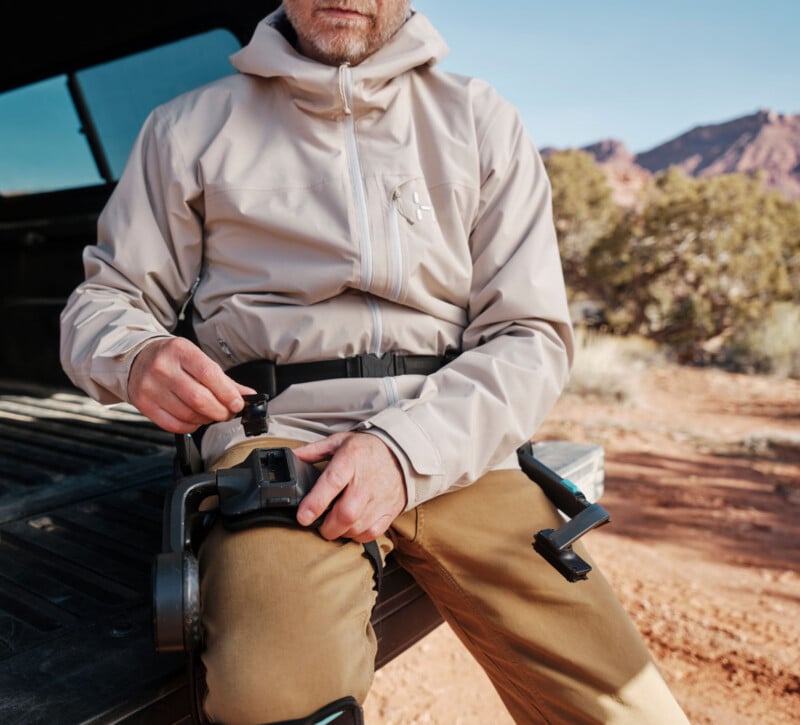
The Vastnaut One works alongside a smart app that syncs with the exoskeleton and lets the wearer adjust settings in real time and monitor its performance. It has built-in motions, including Care, Fitness, and Sprint, that cater to different activity levels and situations. The removable, hot-swappable batteries deliver up to four and a half hours of runtime, supporting routes up to 20 kilometers (12.4 miles).
Why a Photographer Would Want an Exoskeleton Like the Vastnaut One
There’s no question that a wearable exoskeleton like the Vastnaut One is still an unusual product. In the consumer market, this is still a relatively new concept. However, photographers are familiar with wearable products designed to make their lives easier and their loads feel lighter. Photographers’ vests with attachment points are a common sight in the field, for example. Backpacks are carefully designed with special shapes and materials to make loads feel lighter. On the hiking side, it’s common to see people with joint braces, including sometimes robust carbon fiber ones on their knees.
The Vastnaut One makes similar promises concerning reducing physical load and stress, albeit through AI algorithms, extensive biomechanics analysis, and battery-powered motors. For photographers with heavy gear and big aspirations about the shots they want to get, including unique images far off the beaten path, physical limitations and exhaustion are significant hurdles. Vastnaut One aims to help people overcome them. Photographers will be better able to get where they’re going, with all the gear they want, and feel much less tired when they get there.
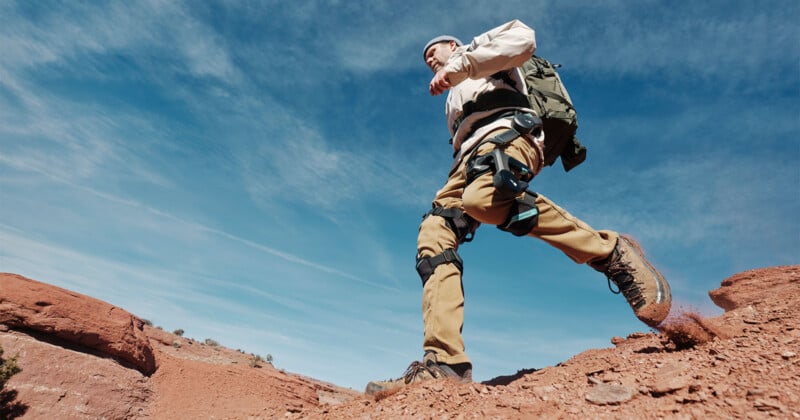
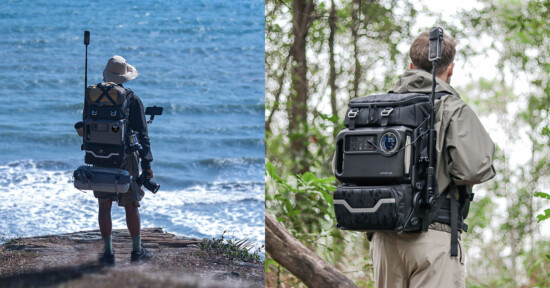
An Australian landscape photographer tested the Vastnaut One as part of his own outdoor photography adventures, trekking with over 16 kilograms (35 pounds) of gear across rocky trails and through a tropical rainforest.
During the most challenging sections, his heart rate stayed 20 to 30 beats per minute lower than usual, without the Vastnaut One, and he remarked that the exoskeleton dramatically reduced the overall load and stress on his body.
This is just one potential, albeit common, use case. While the Vastnaut One allowed that photographer to get farther and better conserve his energy on a multi-day trip, it can also help photographers regain some of their ability to explore.
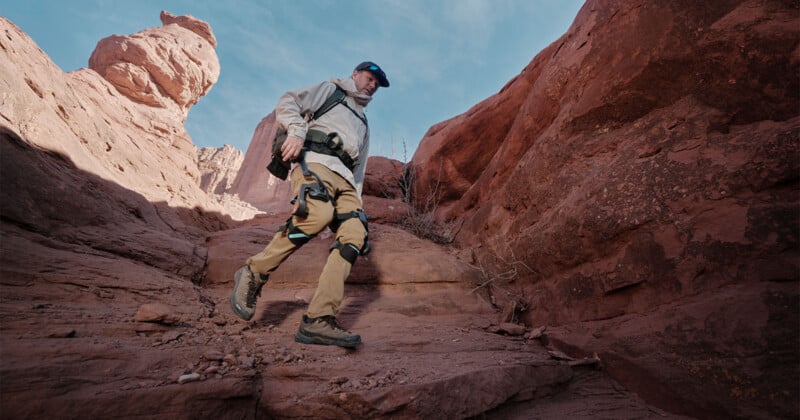
As many photographers know all too well, an aging body often means choosing shorter paths, packing lighter bags, or perhaps avoiding certain trails altogether. The Vastnaut One is designed to reopen possibilities and create all-new ones for people, including photographers.
Ultimately, outdoor photographers care deeply about being able to get out and enjoy nature, see beautiful things, and capture fantastic photos. There is little more exciting than seeing new vistas and getting great shots. The Vastnaut One exoskeleton is designed to empower people to capture more of those photos, even ones photographers thought they couldn’t make.
Vastnaut’s Prelaunch Campaign Is Available Now
Photographers can place a deposit for the Vastnaut One on the official website now. Early supporters will receive a preorder discount along with other limited-edition gifts. Prospective buyers can secure the best deal now and stay updated with the Vastnaut One in the lead-up to launch via the Vastnaut website and on Instagram.
Full disclosureThis article is brought to you by Vastnaut.
Image creditsVastnaut
Affiliate Disclosure PetaPixel articles may include affiliate links; we may earn a commission if you buy through one.