DJI Sues Insta360 Over Alleged Drone and Image Processing Patent Violations

DJI has filed a lawsuit against fellow Chinese tech giant Insta360, alleging patent infringement. DJI claims Insta360, through its parent company Arashi Vision, violated six patents related to drone flight control, image processing, and hardware design.
As South China Morning Post reports, DJI filed its lawsuit in the Shenzhen Intermediate People’s Court, where both DJI and Insta360 are based. DJI believes that six of Insta360’s patents should instead belong to DJI on the basis that the employees who developed them had left DJI within one year before joining Insta360, which is relevant under Chinese patent law. The new technologies are allegedly directly related to the work employees had been doing at DJI before going to Insta360, which, under Chinese law, could mean that DJI has a claim to the associated patents.
Insta360’s Response
Insta360’s founder JK Liu responded to the lawsuit on Weibo, and Insta360 has provided a translated version in English.
“DJI claims that any patents generated by employees within one year of leaving DJI should belong to DJI. We carefully reviewed the patents applied for by these employees during that period. The evidence shows that all ideas and innovations were independently created at Insta360,” Liu writes. “Regarding the area of most interest — flight control — the only potentially relevant patent is one that lets users achieve an FPV-style ‘building dive’ with one button press. This was my idea, and I was deeply involved in refining and approving it. Under current flight restrictions, this patent isn’t very useful, so the feature wasn’t implemented. If DJI wanted this patent, they could’ve just asked for it.”
Liu adds that DJI is accusing Insta360 of “hiding inventors,” which the Insta360 founder disputes. Liu says that hiding inventors is standard practice to protect employee rosters against corporate headhunting.
Liu also claims that the company has not used many of its patents, including some of the ones DJI is suing over, and that they are old.
“Most of the drone-related patent applications involved in this matter were filed 4+ years ago. Since then, our product roadmap has changed significantly, and many patents have never been used.”
Liu also claims on Weibo that it is DJI, not Insta360, that has violated patents, including DJI’s 360 camera and action cameras.
“We understand why GoPro and DJI sued us — established players hate losing market share. At the same time, many functions and accessories from DJI’s 360 camera and action cameras have been called out in the media as ‘copied’ or ‘strikingly similar’ to Insta360’s. Last year, our team found that DJI’s products could fall within the scope of 28 Insta360 patents — 11 of our hardware/structure patents, 8 software-method patents, 6 control-method patents, and 3 accessory patents. But we didn’t sue them,” Liu asserts.
Liu says that Insta360 didn’t sue DJI over these alleged infringements because, “as a smaller company with limited resources, we prioritize innovation over litigation… ”
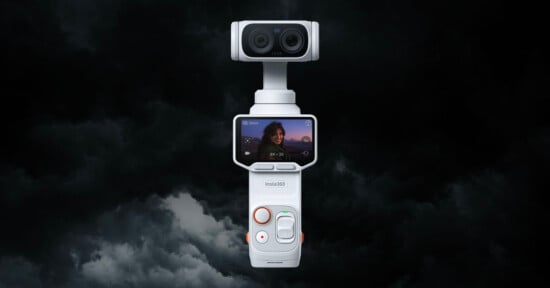
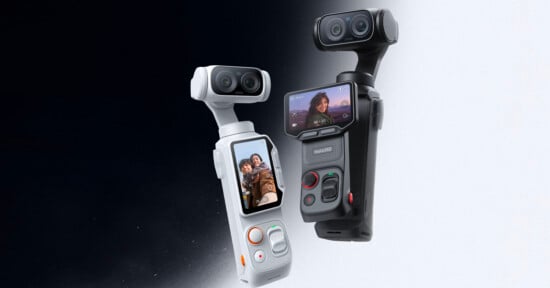
Insta360 says it must wait for the legal process to play out, including evidence collection and investigations. The company says “this kind of thing is common in tech,” and that it remains focused on launching “seven or eight” new products this year, including what Liu describes as gimbal cameras, microphones, and a drone.
“The bottom line is we respect intellectual property, but we also respect facts, legal procedures, and rulings. We are not afraid of patent lawsuits. We refuse to fight over the same pie; we prefer to expand the market through continuous innovation and earn our place. Litigation is only used as a last resort,” Liu concludes.
An Increasingly Tense Battle Between DJI and Insta360
This is the latest volley in an increasingly tense competition between DJI and Insta360. The two companies have long played on the same playground but only recently began competing for the same sandbox. Last year, DJI entered the 360-degree camera landscape long dominated by Insta360 with the Osmo 360. Later last year, an Insta360-incubated brand, Antigravity, launched a drone, the 360-degree 8K Antigravity A1. Before that, the two companies have routinely squared off in the traditional action camera market, with Insta360’s Ace Pro series and DJI’s Osmo Action 5 Pro going toe-to-toe.
While Insta360 remains insistent that it did nothing wrong, that will ultimately be up to the courts to determine. This lawsuit is not the only thing DJI is doing this week that could be perceived as an attack on arguably its largest competitor. DJI is slated to unveil the Avata 360 drone this week as well.
Arashi Vision’s stock closed nearly seven points down today following news of the lawsuit. DJI is privately owned.
PetaPixel has asked DJI for comment and will update this story if the company provides one.
Image creditsGoPro, Insta360
Affiliate Disclosure PetaPixel articles may include affiliate links; we may earn a commission if you buy through one.