This Is Canon’s Prototype SLR-Style Camera With a Waist-Level Viewfinder
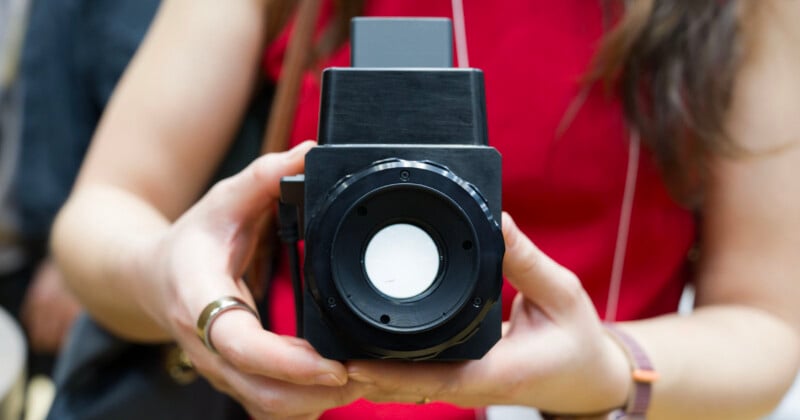
At the CP+ Show in Yokohama, Japan, Canon surprised by showcasing a new SLR-style digital camera with a waist-level viewfinder. The company showed two possible designs for it, one modern and one vintage-inspired, and is soliciting feedback on which it should pursue.
It’s hard to know where to begin with this one, as it’s a bit odd on multiple fronts. The design clearly takes notes from Hasselblad and Rolleiflex film cameras.
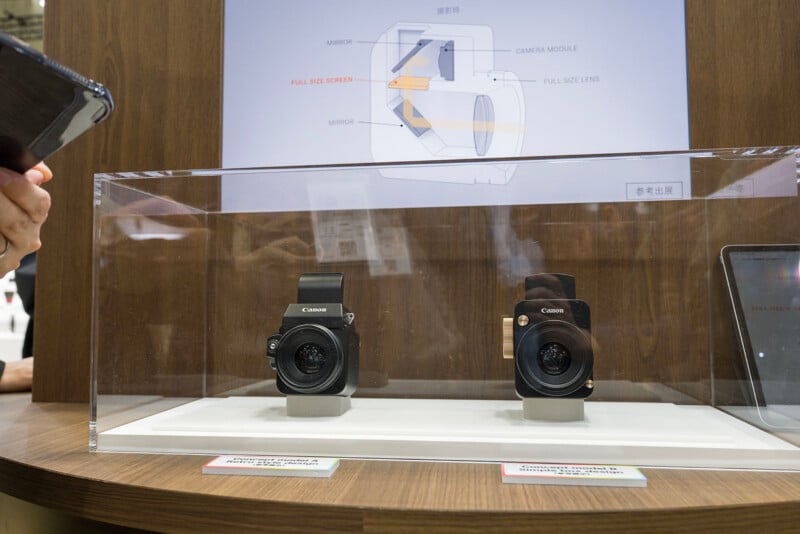
To start with, the imager in this prototype is a Type 1 sensor, although it remains to be seen if that will be the route Canon chooses to go with if it moves forward to production with this design. Despite that small sensor, Canon’s prototype camera isn’t exactly small. Instead, it’s about the size of a grapefruit and isn’t designed to be pocketable.
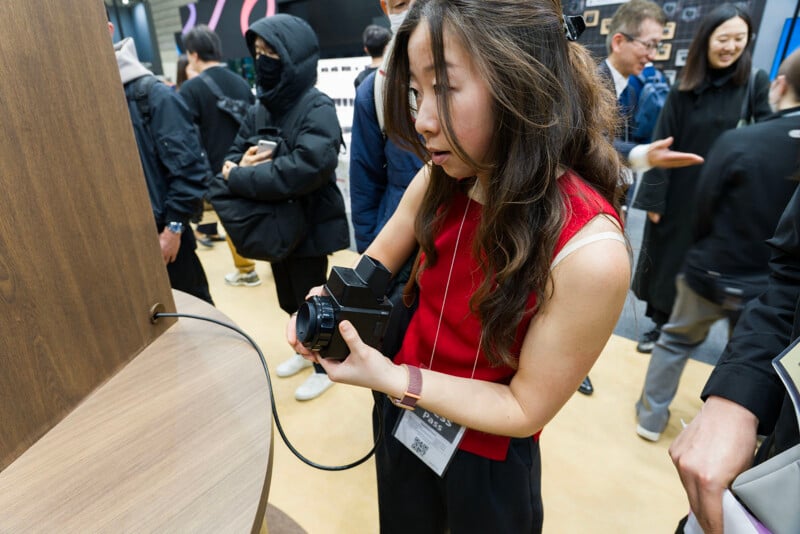
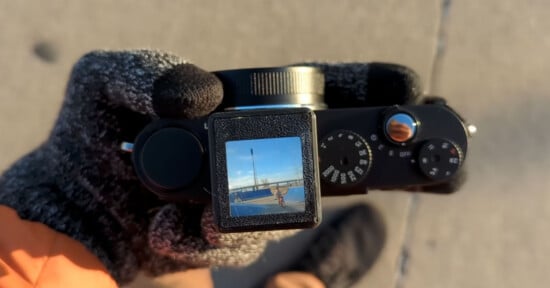
The unnamed camera features a manual focus only, fixed lens in front of a mirror, and a “screen” that allows it to be used with a waist-level optical viewfinder. The “screen” is not ground glass, but functions similarly to it and gives users a true view of the scene in front of them. The rear of the camera does feature a flip-up digital screen, however, so it does appear as though it may be possible to use that as a viewfinder as well.
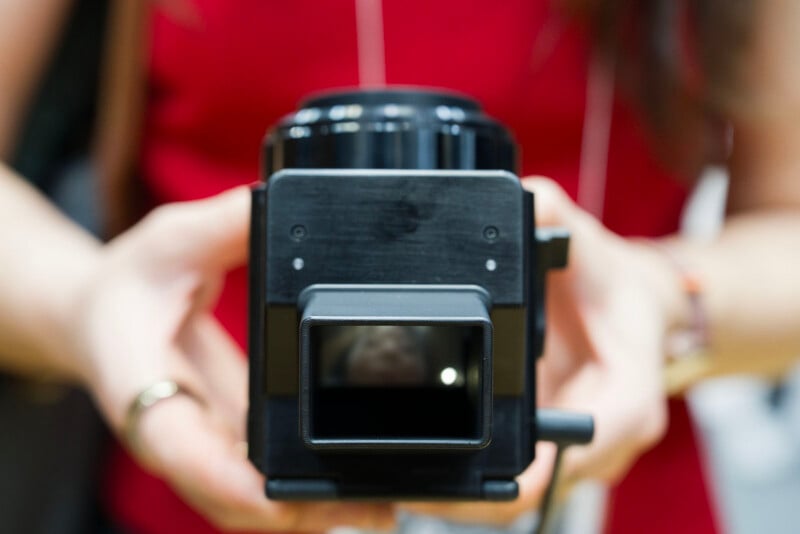
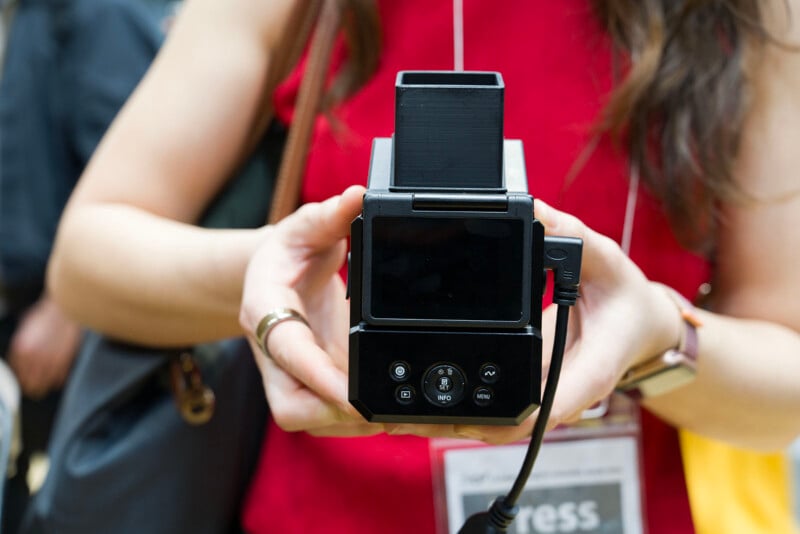
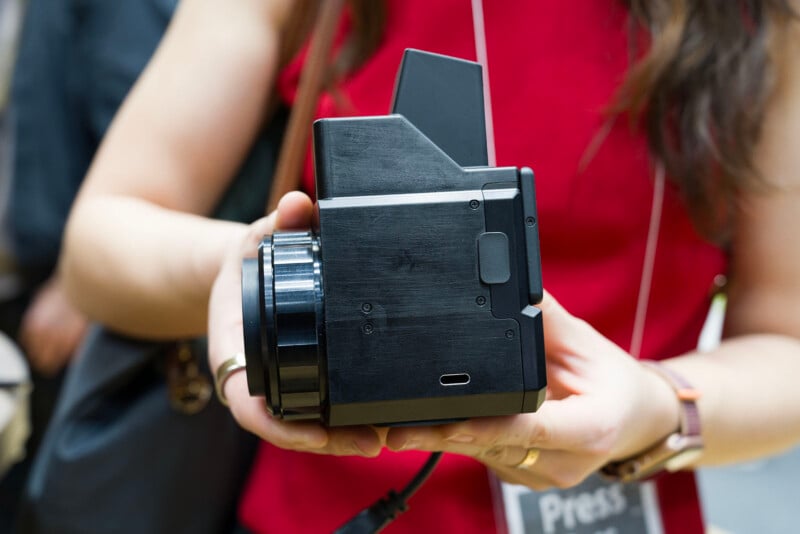
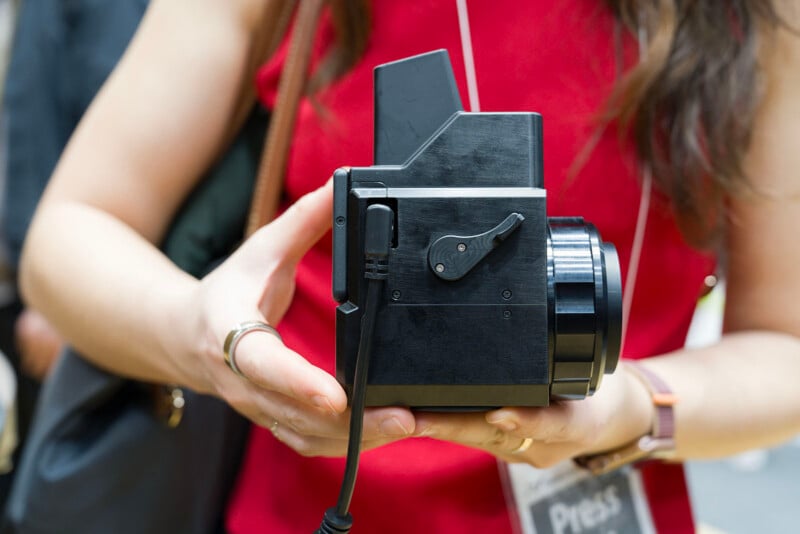
Photos are initiated by depressing a lever on the right side of the camera, which pulls a second mirror into position, bouncing the image onto the sensor. It is an SLR-style camera in that while it does have a fixed lens, it uses a mirror (well, a series of mirrors). That lever pull makes an audible “clack” sound, which is likely to please many vintage-loving camera enthusiasts.
As mentioned, Canon featured two examples of possible designs. One is a more modern design that is more square in shape, while the other is vintage-inspired. Canon is soliciting feedback from the community on which of these two designs it should pursue. That said, the company stopped short of saying it would even promise to bring this camera to market at all.
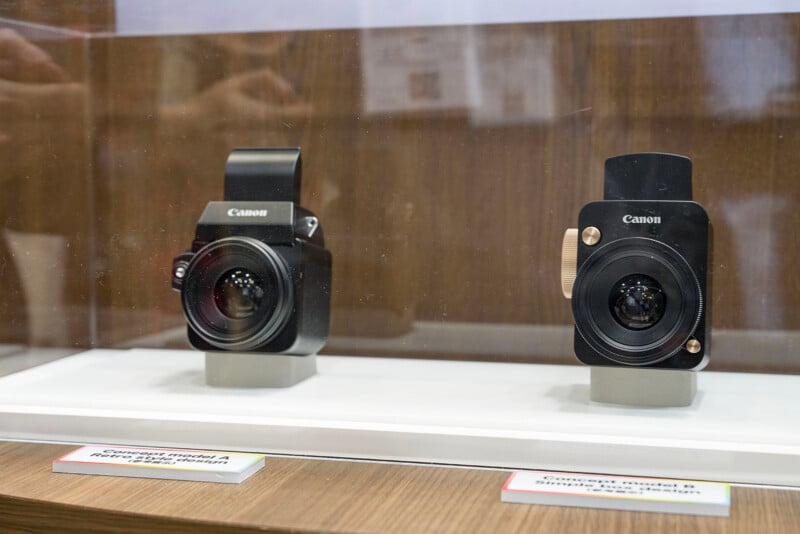
The two designs were behind glass, and the handleable sample was what is best described as “rough,” even for a prototype. It is very clearly still early in the design phase, so it is surprising to see Canon showcase it at the largest international photo exhibition in the world. The response has been significant, however, and it was one of the most popular spots across the entire CP+ venue.
Image credits: Photographs by Jaron Schneider for PetaPixel