

Chickens Have Image Stabilized Heads
Man-made technologies are often inspired by things found in nature, right? Well, the big camera corps could learn a thing or two about in-body image-stabilization/vibration-reduction from chickens.
Man-made technologies are often inspired by things found in nature, right? Well, the big camera corps could learn a thing or two about in-body image-stabilization/vibration-reduction from chickens.
If you care about not having your photographs used with permission, there's a Firefox extension called Image Search Options that can help you find copyright violations easily. What it does is add reverse image search options to the right click menu for images, allowing you to find other places on the web your photos appear (if any) with a couple clicks instead of having to manually enter the image URL into reverse image search engines (IQDB, SauceNAO, TinEye, GazoPa and Ascii2D).
Canonites in Japan who often find their mode dial inadvertently changed can now choose to have their camera upgraded with a locking mode dial. The service upgrade costs ¥10,500 (~$125) and adds a button to the center of the mode dial that must be pressed before the dial can be changed. Maybe DSLR makers should find a way to have this be an available (but not mandatory) option on all DSLR models. What do you think? …
Update on 12/18/21: This video has been removed by its creator.
Dmitry Sklyarov of Russian software company ElcomSoft announced yesterday that the encryption system used by Canon to prove the authenticity of photographs is flawed and unfixable. This is the system that's used to prove that images were not altered after being captured by the camera, and has applications in things such as court cases.
"Freeze Tag" is an award-winning commercial by Canon in which people play the popular children's game using Canon DSLR cameras instead of the boring act of tagging. Too bad magical cameras like these don't actually exist in real life. If you're interested in how this commercial was made, check out this behind-the-scenes video.
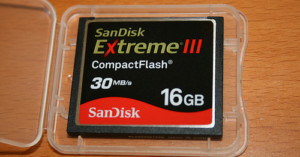
Nikon, Sony, and Sandisk have announced that they're teaming up to develop a set of specifications for the next generation of memory cards. The new format uses a new interface (PCI Express, previously Parallel ATA) that allows data transfer rates of up to 500MB per second. The theoretical maximum capacities of the cards would also be increased from the current 2 terabyte ceiling.