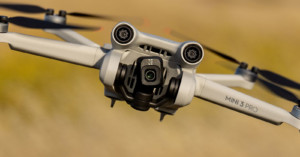
United States Blacklists DJI as a ‘Chinese Military Company’
DJI has been officially blacklisted by the United States Department of Defense by classifying it as a "Chinese military company."
DJI has been officially blacklisted by the United States Department of Defense by classifying it as a "Chinese military company."
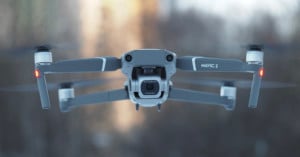
The United States will add eight more Chinese companies to its Investment Blacklist, including DJI. Also known as the U.S. Treasury's "Chinese military-industrial complex companies" blacklist, it would prevent any U.S. investment in a company on the list.
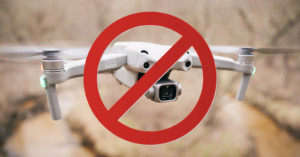
FCC Commissioner Brendan Carr has called for the addition of DJI drones to the FCC Covered List, which could prevent the company from selling its products in the United States.

DJI has found itself on a list of companies that the United States Department of Commerce has blocked from being able to conduct business with U.S.-based companies. American companies cannot export parts to DJI, and it's possible that U.S. consumers will find it harder to purchase DJI products.
It’s been an active few weeks in the world of new camera announcements. Between Nikon, Canon, and Fuji, there’s a slew of state-of-the-art camera choices available to entice photographers to switch brands. As I dug into the details associated with such an important decision, I set out to determine the most responsible way of identifying if making a brand change made sense for me.

Ed Gold has spent nearly two decades working as a full-time photojournalist. Perhaps best known for documenting some of the world's most remote people groups, Gold's photos have regularly been published by the BBC. Despite his apparent "success" in the industry, however, Gold has been homeless for as long as he has been a photographer.

Ever wonder how much the arts and photography contribute towards the United States economy? Wonder no more. According to a newly-published government report, the arts contribute over $763 billion to the economy, and photography represents over $10 billion of that total.

There are as many career paths in photography as there are food pictures on Instagram. The difference is that on Instagram, the pictures are posted for fun. When it comes to a career though, pictures are produced for profit. At least that's how it's supposed to be.
There is no denying that the business of photography has changed recently and so has the landscape of the clients that need pictures. From the dramatically slashed budgets at national magazines to the recent layoff of the entire photo staff at the Chicago Sun-Times, editorial photographers in particular are finding themselves questioning a marketplace that has devalued photography to the point where it has often become unprofitable to work in the editorial market -- particularly if you're a freelancer.

The original title for this article was going to be “Group Buying Deal Review: Why WagJag Can Suck It”. After receiving an “offer” to participate in a group buying deal (also known as social buying or deal-a-day. Examples include Groupon and LivingSocial) from one of the larger local group buying companies in my area, it took me a few days, and some good advice from my wife to cool down and write this (mostly) rational analysis of the group buying deal economics.
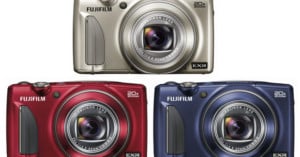
Olympus isn't the only camera manufacturer finding ways to cut costs by getting rid of their low-end camera offerings. Tokyo-based Fujifilm is expected to dramatically slim down their compact camera line by fifty percent in the near future.
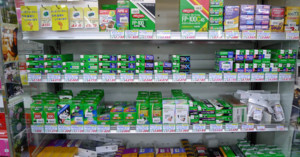
Last week we reported that Fujifilm is planning to increase its film prices by 25% starting this month due to decreased consumer demand. Turns out that was specifically for the Japanese market, and that the hit won't be as serious in the United States.
Instead of a 25% hike this month, photographers in the US will be seeing a 20% hike starting on July 1st, 2013.

The Economist has published an article on photographic film's "transition from the mass market to the artisanal," writing that the future is bleak for film as we know it:
Consumers and professionals ditched film first. Then health-care services, which used it for X-rays, shifted to digital scans. The final blow came with the film industry's switch to digital projection. IHS iSuppli [...] estimates filmmakers consumed 2.5m miles [...] of film each year for the distribution of prints at its height. That was just a few years ago. By 2012 this plunged by two-thirds. In 2015 it will be next to nothing.
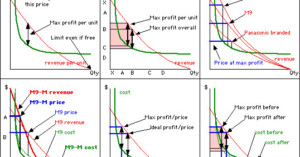
Have you ever wondered how Leica chooses its pricing for its high-end cameras? J Shin has written up …

Photographer Laurence Kim wrote an interesting article titled “ …
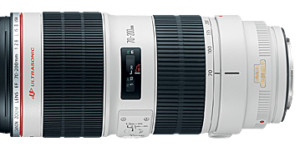
According to the Canon Japan website, the company is experiencing a shortage of the EF 70-200 f/2.8 L IS II USM lens. The company says demand for the lens, which was announced in January and released recently in the US, was much higher than expected.
Just as the Winter Olympics are heating up international competition in Vancouver this week, the U.S. has …