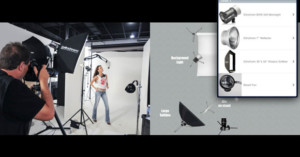
Free iPad App with Lighting Recipes by Scott Kelby
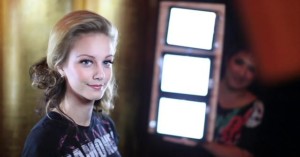
Photoshop guru Scott Kelby has released a free iPad app that teaches the lighting techniques he used for various photographs in his portfolio.
Not too long ago I finally got around to picking up a decent manual flash for exploring lighting and speedlight techniques. I picked up a Yongnuo YN-560 Speedlight Flash for Canon and Nikon, and my friend Sean was kind enough to send me his old radio triggers to play with. I was mostly all set to start exploring the world of off-camera lighting...
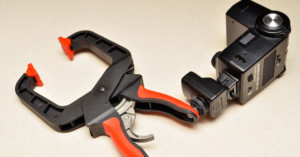
Photographer Allen Mowery has a step-by-step tutorial on how to build a useful DIY flash mounting accessory using a ratcheting hand clamp and standard 1/4-inch threaded screw. It's a cheap DIY version of the Super Clamp or Nasty Clamp, and can help you place your flash in places that are inaccessible to light stands or traditional equipment.
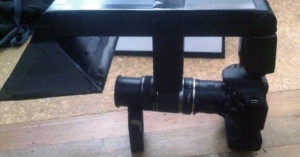
Photography enthusiast Kris Robinson used to handhold a flash above his subjects for macro photographs, but then he got tired of doing that and ran out of hands. He then came up with the brilliant idea of making a do-it-yourself contraption that attaches to his flash when it's mounted to the hotshoe. The light travels down a tube lined with reflective aluminum tape, and is bounced downward onto the subject through a diffused lightbox. For a couple sample shots, see here and here.
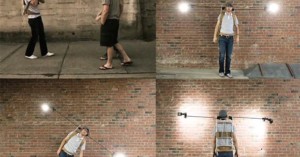
Fashion photographer and filmmaker Jacob Sutton recently had the idea of capturing "a lone character made of light surfing through darkness". He had designer John Spatcher create an LED enveloped suit, and then had pro snowboarder William Hughes wear it while zipping down the slopes of the Rhône-Alpes region in south-east France.
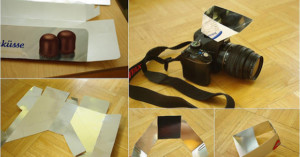
Want to improve the quality of the photos captured using your DSLR's popup flash? Tina (AKA synthetic_meat) discovered that the cardboard box that came with a particular brand of chocolate had a nice silver lining on the inside -- perfect for making a mirrored bounce reflector! After some cutting, scoring, and folding, she came up with a DIY Lightscoop clone that lets you bounce your onboard flash off the ceiling or wall for softer and more appealing images. You can download the free template …
For those of you who are interested in the fine art of studio lighting, here's a video in which American celebrity photographer George Holz talks about how he went about photographing Beyonce for the cover of Spin magazine.
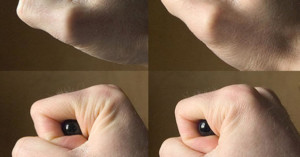
Steve 21 has an interesting trick for finding good available light: he places a marble in his hand to simulate what the light would look like on a human face: …
Slide Light is a wall light designed by SUCK UK that provides low level background room lighting that's customized using slide film. Adding different photographs to the light provides different moods.
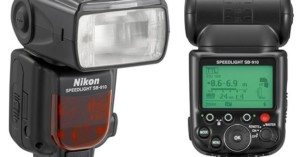
Nikon has announced the new SB-910, a top-of-the-line flash unit to succeed the SB-900. Instead of increased power -- the guide number and zoom range haven't changed -- Nikon has chosen to focus on usability. The new flash features a new MENU button and improved LCD user interface that are designed to make operating it a breeze. It also automatically detects spiking temperatures, and slows down the recycle rate to automatically prevent overheating. The price fits the SB-910's place in the …
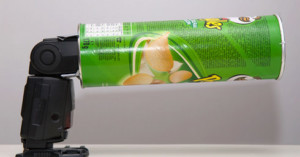
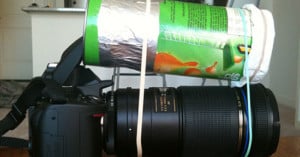
If you have a potato chip tube lying around, you can convert the tube into a super simple DIY snoot. All you need to do is cut an opening in the closed end that's the size of your flash head (tip: use some duct tape to prevent it from scratching your flash).
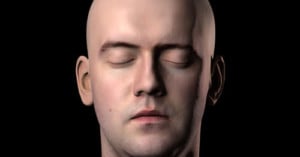
Shape is a series by French photographer Quentin Arnaud that consists of minimalistic portraits shot with low-key lighting. The stark lighting highlights the shape of the head but completely leaves the face void of any details, giving a creepy and ominous look to each of the photos.
Here's a helpful tutorial by Jay P. Morgan of The Slanted Lens on how to mix strobe light with sunlight to make photographs more interesting.
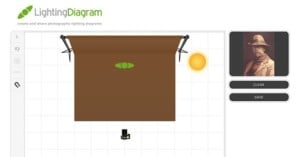
Just launched this week, Lighting Diagram is another simple web-based tool that lets photographers create and share lighting diagrams and the photos created with the setups.
Want to learn the basics of studio lighting? Here's a two-hour-long lecture with photographer Joey Quintero in which he gives an overview of the basic principles, techniques, and tools.
Caleb Barrett wanted a simple ring light to play around with, so he built himself one for just $20 using built himself a makeshift ring light using eight cheap compact fluorescent light bulbs. The lights are pretty dim and have a horrible color rendering index, but are fun to play around with if you're just looking for something to experiment with.
If you've never done studio portraits before, check out this uber-helpful video that quickly runs through five basic lighting techniques commonly used by photographers everywhere.
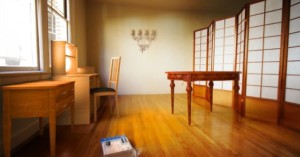
Here's a video in which interior photographer Roger Brooks walks through how he goes about lighting, photographing, and stitching residential interior photographs.
Photographer Jesse Rosten wanted a more efficient and mobile way to do off-camera lighting, so he invented this backpack-style apparatus that he calls "The Strobist Jet Pack". Although it's pretty ridiculous looking (it reminds us of Ghostbusters), it works well for placing lighting equipment in exactly the place needed while still being able to move about.
Maurice Ribble of Tech Photo Blog recently found the ingredients list for flash powder, which was used for state-of-the-art photographic lighting 150 years ago. After making some of the powder, he began to test it to see how it compares to modern day flashes (more specifically, a Canon 580EX II).
Here's a helpful tutorial on how to adjust the angle of your light sources to avoid the nasty reflections that show up in eyeglasses. It has to do with understanding and harnessing the "angle of incidence" and "angle of reflection" of your light.
Photographer Jay P. Morgan made this informative walkthrough showing how he shot a photograph that combines artificial light with the evening sky: …
German photographer Berthold Steinhilber has an awesome technique for lighting expansive locations at night: he tediously paints in the light manually with a powerful 1.8-pound headlamp powered by a 12-volt car battery. Depending on the scale of the location, his large format film exposures last anywhere from 45 minutes to 2 hours, with the aperture set between f/8 and f/16. The above photo took 1.5 hours at f/16.
The RoundFlash is a new ring flash adapter that's lightweight and collapsible. Setting it up from its collapsed state is similar to setting up a tent: simply take the rods and stick them into the holes to expand the adapter.
Photographer duo Joachim Guanzon and Marden Blake (AKA aesonica) created this short behind-the-scenes video showing how they recently shot and Photoshopped an Audi A4 photo for a print advertisement. You can read a longer how-to over on the aesonica website: …
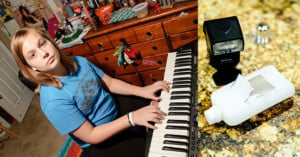
Photographer Joseph Nienstedt was at a grocery store recently when he spotted a $4 plastic flask that reminded him of a curved light modifier he had seen before. After buying it and transforming it into a diffuser using a razor, Nienstedt discovered that it provided softer light than his Sto-Fen Omni-Bounce due to the 5x larger surface area. While it's not a very respectable look for a professional environment, using a plastic bottle as a DIY diffuser could be an option if you're in a pinch or …
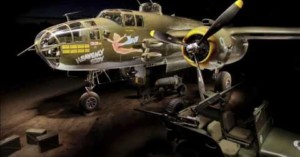
Here's an illuminating (pun intended) video walkthrough by photographer Eric Curry, showing how he went about creating a photo of a B-25 bomber. His technique for lighting the plane is similar to the real estate photography walkthrough that we featured last weekend, and involves lighting the scene a bazillion times from different angles, and then combining the different parts of the photo in Photoshop.
We always get a laugh when news organizations or governments try to pass off bad Photoshop jobs as real images, but with the way graphics technology is advancing, bad Photoshop jobs may soon become a thing of the past. Here's a fascinating demo into technology that can quickly and realistically insert fake 3D objects into photographs -- lighting, shading and all. Aside from a few annotations provided by the user (e.g. where the light sources are), the software doesn't need to know anything …
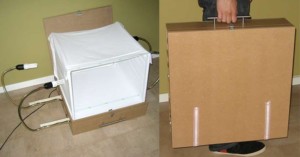
Needing a portable light box, Instructables member HHarry came up with a ingenious collapsible design that has built-in lighting. He's also written up a tutorial on how you can build one too, but be warned: the materials may cost you up to $80, and you'll need a good amount of know-how. However, if you're looking for a hefty weekend project and need a convenient way to light and photograph small objects on-the-go, this one's for you.
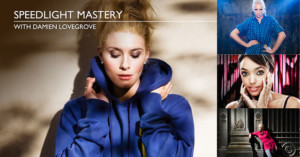
In this video, UK photography instructor Damien Lovegrove demonstrates how you can add some pseudo-sunlight to portraits by simply placing some weeds or part of a bush -- which he calls a "dingle" -- between an off-camera flash and your subject.
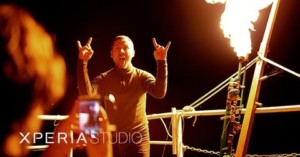
To promote its new Xperia phones, Sony hosted a three-day hackathon on a boat to see what creative innovations people could come up with. One of the hackers decided to make a flamethrower-style flash (seen at 2:26), triggering a gas flame to flare whenever a photograph is taken with the phone. Maybe this'll start a fire-lighting trend in professional photo studios...
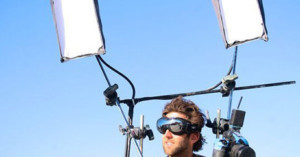
Photographer Eric Schwabel was trying to think of a creative way to photograph the people at Burning Man, and ended up making a portable photo studio called the "Human Light Suit" for lighting portraits in the desert. It's like the photography version of a one-man band!
About a year ago, engineer and photo-enthusiast Morten Hjerde began brainstorming ideas for the next generation of photographic lighting after concluding that most of the lights used by photographers these days are simply glorified light bulbs.
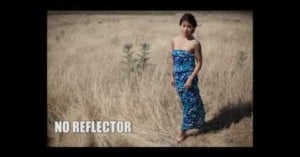
Here's a helpful tutorial that teaches how to shoot in harsh, midday sunlight using a single reflector to soften the shadows on your subject. If you've never used a reflector outdoors before, it's a great primer for getting started. Aside from buying a nice reflector for about $30, you can also find cheap ones for under $10 on eBay, use a car sun shade, or make one yourself with cardboard and foil.
Photographer Don Barnard made this video tutorial showing how to convert a styrofoam shipping box into a DIY softbox. The video is pretty in-depth and runs nearly 10 minutes, but the basic idea is to line the inside of the box with some reflective material, stick a strong light inside, and cover it with some cloth to soften the light. It's a neat way to make a useful lighting tool for under $20. Check out some sample photos taken with the softbox here.
The Coleman LED Quad Lantern is an area lantern that features four detachable LED panels that function as individual lights, with each one containing six LEDs, a handle, and a rechargeable battery. While it's designed for outdoor use (e.g. camping), it can also be used as a cheap solution for lighting your photos on the go.
Here's a quick video tutorial by Olivia Speranza teaching how to create an infinite white background.
Flickr user Steve Kushnir came up with this neat idea of building a cheap DIY diffuser using a Pringles can, two layers of paper towels, and some rubber bands. He attached it to his Nikon D5000's popup flash and uses it for macro photographs of creepy crawlies.
Photographer Joey Celis needed to shoot a photograph of eleven people in a dimly lit cigar lounge, but found it difficult to light the models without having lighting gear appear in the shot. In the end, he was able to make the image above with a single Speedlite.
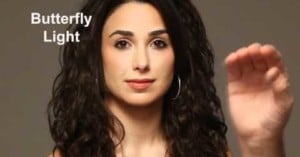
If you're looking to get started in studio portraiture, here's a great tutorial by prophotolife teaching three different lighting techniques (Rembrandt, butterfly, and edge) you can do using only one light.
Who says you need uber-expensive lighting equipment to shoot nice-looking studio portraits? In this video, photographer Bert Stephani shows us what you can do with cheap halogen work lights (you can find them for about $30-$50) and a couple shower curtains.
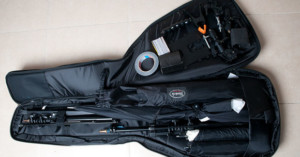
Rather than using more expensive bags or cases for moving around your lighting gear, you can buy a bass guitar bag for $30 or $40 to get the job done. The length allows you to store light stands, the velcro straps inside help secure them, and the multiple handles and straps on the outside give you a number of options for carrying the bag.
No, this isn't some advanced beam weapon from a sci-fi flick. It's actually a do-it-yourself ring flash created using 150 optical fibers, with one end wrapped over the pop-up flash of the DSLR and the other end spitting out the photons in a ring-shape. If you want to learn how to make your own, here's an in-depth writeup on how this was constructed.
Photojojo has a new ring flash adapter that allows you to shoot soft, studio-style portraits without shelling out the big bucks for an actual ring flash. It's a plastic add-on with a reflective circle that simply channels the light from your existing flash, so it doesn't require any batteries.
You've probably seen weird DIY light experiments before, but what about using only iPads as your main light sources? Photographer Jesse Rosten did just that, using 9 iPads (worth a cool $4,500) on maximum brightness on a recent photoshoot. On his blog, he writes, …
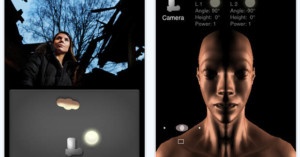
Light Studio is a new iPhone app designed to teach you the basics of studio lighting for portraiture. In addition to sections with examples of setups and tutorials, there's a 3D modeling feature that allows you to position up to three hard light sources and watch how the lights affect the 3D face model. The app is available for $1.99 in the App Store.
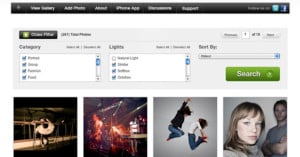
When we featured Strobox back in 2009, it was a simple idea: provide an easy way for photographers to create lighting diagrams and share them with others. Since then, they've upgraded their website to include a gallery where you can browse photographs done by others, view their lighting diagrams, and comment on them.
Portrait photographer Gregory Heisler has done quite a few portraits for Time Magazine covers, including a few for their Person of the Year issues. This is an informative video where he steps through how he went about photographing Rudy Giuliani at the top of Rockefeller Center with the Empire State Building in the background. If you're interested at all in portraiture and/or lighting, you'll find this video quite educational.
Brothers Will and Matt Burrard-Lucas, the same UK-based duo who created a remote-control BeetleCam to photograph wildlife in Africa, decided to get up-close and personal with some of nature's less desirable creatures. The two originally noticed mosquito larvae in stagnant water sitting in the backyard of their home, and decided they'd found their next photo subjects. They patiently set up the photo shoot, waiting for key moment when the adult mosquitoes emerged from their larval state. It's …
Sylights (short for "Share Your Lights") is a new website that makes it easy for you to create and share lighting diagrams.