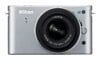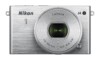
The J4 has an intriguing mixture of strengths and weaknesses. It’s one of the smallest, most stylish CSCs around, but the Panasonic GM1 is just as small and takes better photos and videos.

The J4 has an intriguing mixture of strengths and weaknesses. It’s one of the smallest, most stylish CSCs around, but the Panasonic GM1 is just as small and takes better photos and videos.
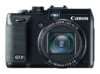
The Canon G1 X Mark II’s high price means it’s certainly not for everyone. Still, with such outstanding image quality, nippy performance, dependable controls and a handsome – if rather heavy – pocketable design, it has to be five stars.
Compared to similarly priced cameras, there’s not much that can touch it. Nothing else comes close to delivering 11fps shooting with continuous autofocus.
You’ve probably figured out that we really like this camera. Almost everything about it is top tier: cosmetic design, ergonomics, viewfinder, controls, image quality, performance.
For dependable image quality across a generous zoom range without the hassle of changing lenses, the RX10 is in a class of its own.
Some people will be put off by low-resolution screen and EVF, the lack of a command dial and the less-than-blistering performance.
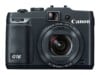
The Canon G16 beats [the Panasonic LX7 and GM1] both for physical controls, though, and it includes a viewfinder – that’s enough to keep it in the running.
[K]eep the lens or sell it on and get a huge potential discount, but we’ll have to re-evaluate the camera when the offer ends.
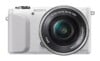
We still prefer the more feature-packed Panasonic GF6 and NEX-5R (or the just-announced NEX-5T which adds NFC to the 5R for easier connections to other devices). However, if your budget won’t stretch that far, the NEX-3N is a great choice.
This is a point-and-shoot camera, and it delivers on its promise of premium image and video quality in a straightforward, pocket-friendly package.
Taken on its own terms, though, it’s impossible not to admire the K-50. It offers the best shooting experience of any SLR in this price bracket, and its image quality is more than up to scratch.
That’s the crunch with X Mount cameras. They’re a cut above the competition for image quality, and Fujifilm knows it and charges accordingly.
The LX7 sets an extremely high standard, and although the LF1 isn’t as consistently impressive, it has its own set of strengths.
[T]hat this is the best compact camera we’ve ever reviewed. After all, it’s also the most expensive.
Consider it as the successor to the A37, a replacement for an older Sony Alpha or a first SLR-like camera, and it looks more tempting.
The most surprising thing about the EOS M is that there aren’t really any surprises.
This isn’t the best premium compact camera for image quality or performance, but the cameras that beat it aren’t nearly this slim.
If the J2 does have a niche, it’s as a stylish point-and-shoot camera for people who want CSC quality but don’t want manual controls or high prices. That makes a lot of sense, and the J2 meets those requirements admirably.
The D800 and 5D Mark III are tough acts to follow, and although the D600 is cheaper, the price difference isn’t huge. However, it’s extremely competitive regardless of price.
The D800 is a fantastic camera and its consistency with other Nikon cameras – and compatibility with lenses – mean there’s no need for existing Nikon users to switch allegiance. It’s time to start saving up.
Stunning image quality, sublime ergonomics, lethargic performance, high price – if you're rich and not in any rush, it might just be perfect.
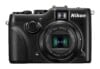
The fact that the P7100’s sensor puts it at a basic disadvantage compared to other £400 cameras – and various cheaper ones too – is hard to ignore.
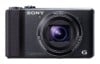
The HX9V comes very close to greatness, and with a lower-resolution sensor it might have earned itself an award. However, at this price only the very best image quality will do.
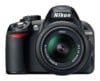
So it is with a heavy heart that we’re forced to admit that the D3100 is comfortably the best entry-level digital SLR currently available.