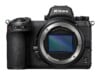
It has been more than five years since Nikon launched its first full-frame mirrorless cameras, the Z6 and Z7.

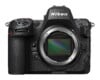
It has been more than five years since Nikon launched its first full-frame mirrorless cameras, the Z6 and Z7.
In fact, it’s difficult to think of any situation where the Z8 wouldn’t excel.
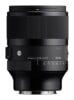
Shooting at f/1.2 isn’t going to make you a better photographer, but it does give you an extra chance of making your pictures stand out from the crowd.
The Xiaomi 15T Pro is an impressive upper-midrange smartphone that puts photography at its core. Its improved 5x optical telephoto reach, genuine creative tools combined with 8K video options, will appeal to both casual shooters and more serious enthusiasts alike.
Considering its photography prowess, the Honor 400 is a well-made little phone. Don’t let the fact that it only has two cameras at the rear put you off.
The Samsung Galaxy S25 Ultra remains an excellent flagship smartphone for photographers, but there’s little to compel S24 Ultra owners to upgrade already.
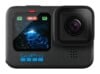
The GoPro HERO12 Black creates some well-lit, great looking footage – if not shooting in low light. There are plenty of features to get your teeth into and the stabilisation is second to none – making it a great action camera and suitable for all kinds of users.
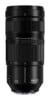
With the Lumix S 100-500mm F5-7.1 OIS, Panasonic has created a fine telephoto zoom for L-mount users. It’s impressive how the firm has managed to squeeze 500mm reach into the size we’d expect for a 100-400mm zoom.
The OM-System Tough TG-7 is a great choice for those who seek an easy to use, but tough point-and-shoot camera; particularly if you need something that can survive all types of adventure, wet or dry.
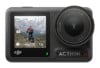
Back in 2019, DJI disrupted the camera sector when it released a feature-packed action camera – the Osmo Action – to take on its biggest rival, GoPro.
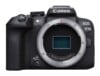
With the EOS R10, it’s produced a likeable little camera that ticks most of the boxes we’d expect for a $900 / £900 body. It handles nicely, in a fashion that existing Canon users will find very familiar, while delivering attractive images.
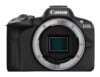
This places the Canon EOS R50 in the odd position of being one of the most capable cameras in its class, yet being completely hamstrung by the lack of available RF-S lenses.
It’s unlikely to excel when assessed using such things as brick-wall shots or MTF charts. However, judging a lens on sharpness alone risks missing the wood for the trees.
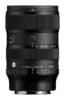
The Sigma 200mm F2 DG OS Sports is a niche lens, but one that delivers outstanding results. Its bright aperture and exceptional image quality make it a tempting choice for indoor sports, low-light events and long-distance portraiture.
It’s such a handsome-looking camera, with the kind of robust metal body and lovely tactile top-plate dials that make it feel like a worthy successor to the FM film SLR.
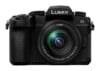
It’s perhaps easy to be dismissive of the Panasonic Lumix G9II. After all, here is a Micro Four Thirds camera that costs almost twice as much as its predecessor, while being as large as many full frame models.
If you’re a Pentax user with a nice set of APS-C lenses, who loves shooting in black & white and has the money to spare, it’s an easy recommendation. It’s a fine camera that will repay you with superb results.
Part of the sell of the Insta360 GO 3 is its small size and ability to go completely hands-free – to forget about it for easy shots, which is a big attraction.
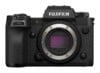
The Fujifilm X-H2 is a highly capable and versatile camera for professional photographers, particularly those prioritising high resolution and image quality for subjects like landscapes, portraits, fine art, editorial and commercial work.
Heck, it’s not even the most exciting Micro Four Thirds camera of the year so far – see our review of the OM System OM-3 for that. [...] It’s well-priced, belongs in an extensive eco-system, is great to use and produces good images – what more could you really want?
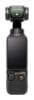
The DJI Osmo Pocket 3 is a versatile pocket-sized gimbal camera suitable for vlogging and content creation, and remains the latest of its type from DJI.
Only time will tell how that pans out in practice, but it’s always good to see manufacturers trying something different.
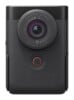
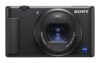
With the ZV-1, Sony has made an interesting little camera that takes RX100-series technology and gives it a video-centric twist. Its new vlogging features generally work well and appear cleverly targeted to its intended audience.
Instead, it’s a higher-end upgrade, with increased zoom range and built-in optical stabilisation. As a result, it’s one of the very best Micro Four Thirds lenses you can buy.