The Hedonistic Days of Raving in Europe Revealed in New Photo Book

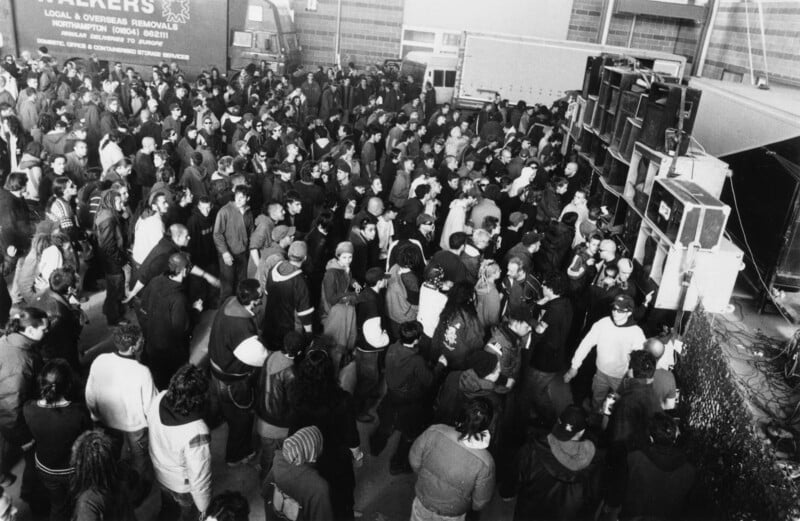
A high-angle black and white shot of a crowded outdoor rave with a large stack of speakers and a truck labeled Walkers Local & Overseas Removals.
© Cheyenne Clementi and Valentina Morandi. Courtesy of Drago–Propaganda, publishers of Never Alone – Raving in Europe 1997/2004.

A new photography book offers a glimpse into Europe’s underground rave culture at the turn of the millennium, documenting the free-party movement through the eyes of two photographers who were part of the scene.

Never Alone 1997–2004: Raving in Europe, by Cheyenne Clementi and Valentina Morandi, features 160 original analog photographs made between 1997 and 2004. The images document a period when free parties were spreading across Europe, offering an alternative to mainstream society through music, community, and a shared rejection of conventional lifestyles.
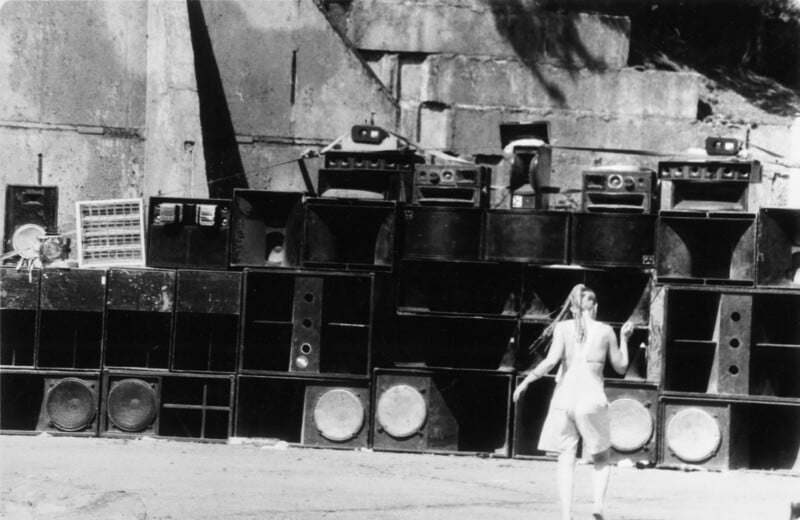
A person with long hair stands before a large, stacked wall of black audio speakers in front of a concrete wall.
© Cheyenne Clementi and Valentina Morandi. Courtesy of Drago–Propaganda, publishers of Never Alone – Raving in Europe 1997/2004.
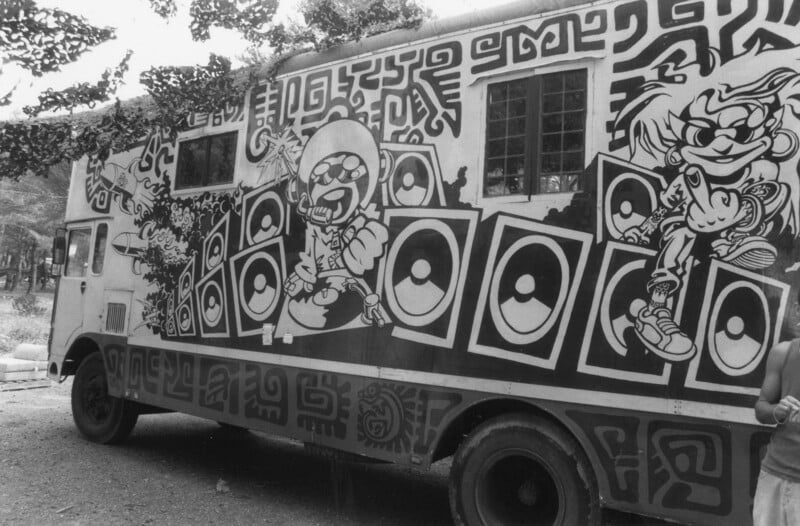
A black and white side view of a bus covered in elaborate graffiti art featuring cartoon characters, speakers, and abstract patterns.
© Cheyenne Clementi and Valentina Morandi. Courtesy of Drago–Propaganda, publishers of Never Alone – Raving in Europe 1997/2004.
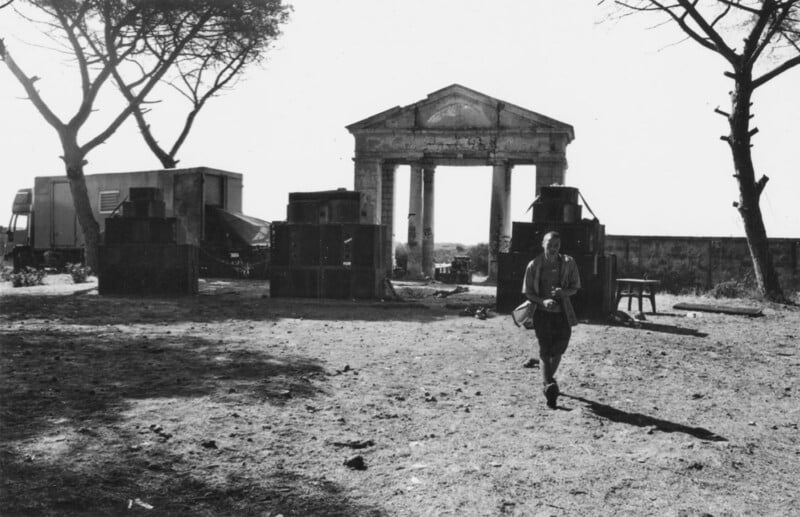
A person walks across a dirt clearing toward a classical stone archway flanked by large stacks of audio speakers and a parked truck.
© Cheyenne Clementi and Valentina Morandi. Courtesy of Drago–Propaganda, publishers of Never Alone – Raving in Europe 1997/2004.

Rather than documenting the movement as outsiders, Clementi and Morandi were active participants in the culture. Their photographs provide a firsthand account of a counterculture built around emotion, affection, and togetherness, at a time when music and personal connections — rather than social media and mass communication — brought people together.
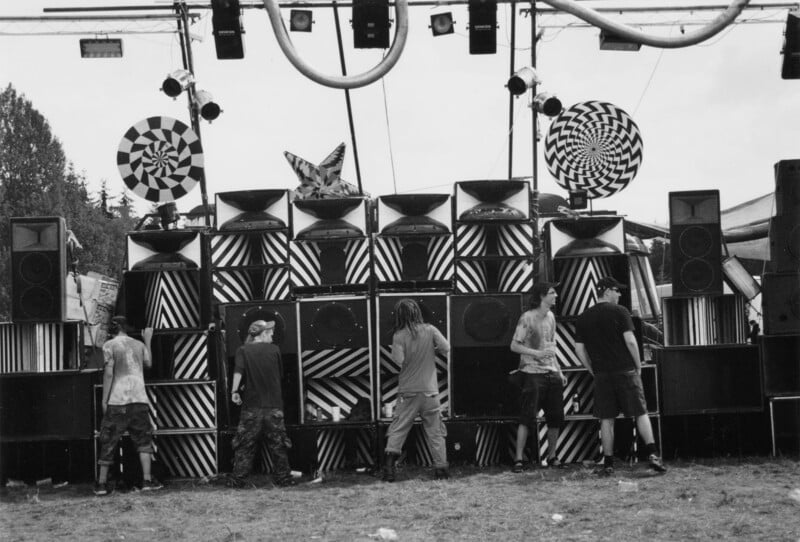
Five people stand before a large, stacked sound system decorated with black and white diagonal stripes and two circular hypnotic patterns at an outdoor event.
© Cheyenne Clementi and Valentina Morandi. Courtesy of Drago–Propaganda, publishers of Never Alone – Raving in Europe 1997/2004.
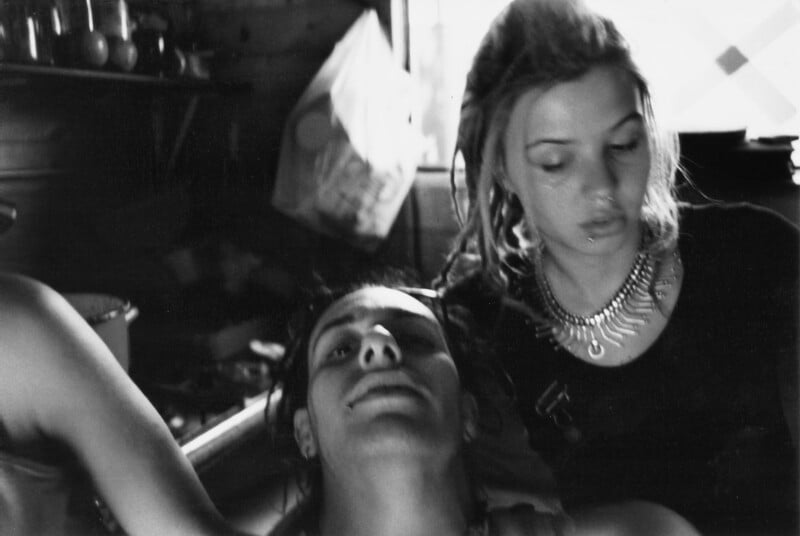
A black and white close-up shows a person lying down looking up while another person with dreadlocks and a necklace looks down at them.
© Cheyenne Clementi and Valentina Morandi. Courtesy of Drago–Propaganda, publishers of Never Alone – Raving in Europe 1997/2004.
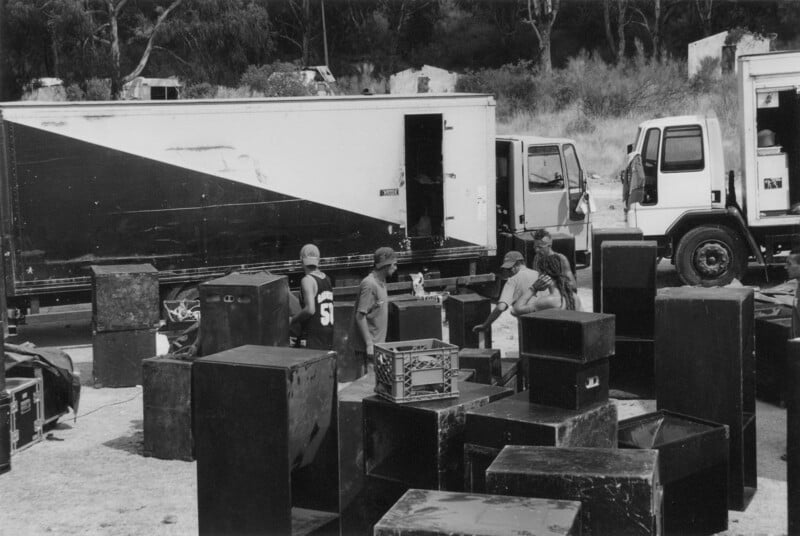
Several people stand among a large collection of black speaker cabinets near two parked trucks in an outdoor area.
© Cheyenne Clementi and Valentina Morandi. Courtesy of Drago–Propaganda, publishers of Never Alone – Raving in Europe 1997/2004.

The book spans 196 black-and-white pages and brings together previously unseen photographs that capture the atmosphere and values of the era. Its accompanying text is written by Tobia D’Onofrio, author of Rave New World, who explores the history and significance of the European free-party movement.

“Rave was born as a disappearing ritual in which the art of invisibility was practiced, and parties were temporarily autonomous and free zones that appeared and disappeared into thin air within a few hours,” says D’Onofrio.

“1997–2004 can therefore be considered the golden age of the so-called illegal free parties and of rave culture. It was the moment of the phenomenon’s expansion across Europe… the rave scene had been criminalized to the point that in 1994 the Criminal Justice Act in England outlawed free parties. At that point, the energies shifted to the rest of Europe, and Italy immediately became the scene of legendary parties.”
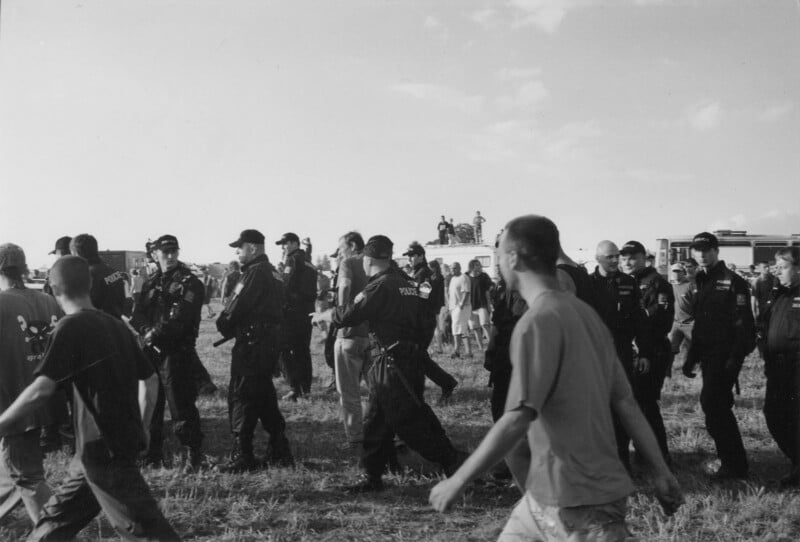
A group of police officers in dark uniforms and caps stand in a field, interacting with civilians during an outdoor event.
© Cheyenne Clementi and Valentina Morandi. Courtesy of Drago–Propaganda, publishers of Never Alone – Raving in Europe 1997/2004.
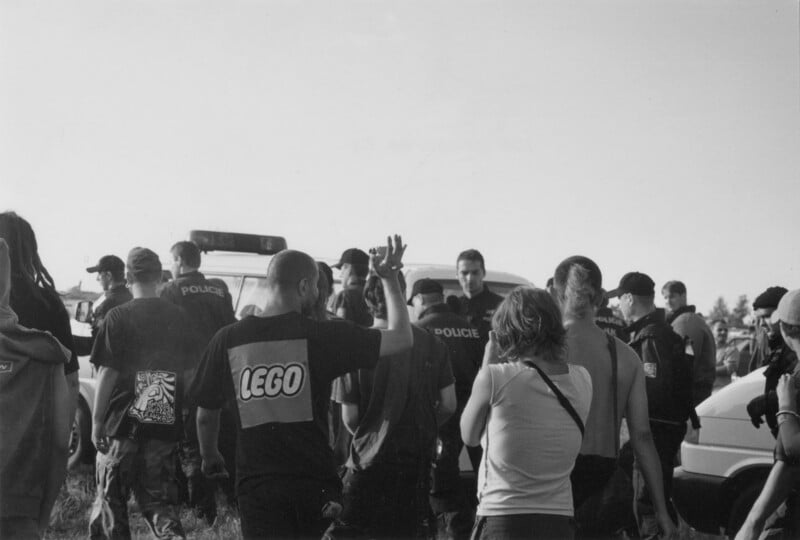
A group of people, including one wearing a shirt with the word LEGO, stand in a field facing several police officers in uniform.
© Cheyenne Clementi and Valentina Morandi. Courtesy of Drago–Propaganda, publishers of Never Alone – Raving in Europe 1997/2004.
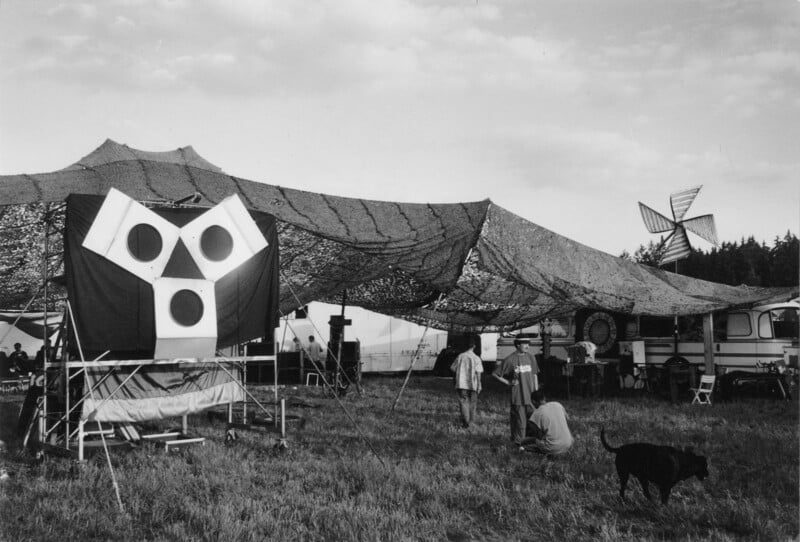
A black-and-white outdoor scene shows a large camouflage canopy covering a field with a geometric white structure, a windmill, and a few people and a dog nearby.
© Cheyenne Clementi and Valentina Morandi. Courtesy of Drago–Propaganda, publishers of Never Alone – Raving in Europe 1997/2004.

The book examines how rave culture developed into more than a musical movement. It represented a rejection of conventional working and social structures, embracing communal living, constant movement, and a different relationship with time and space. Free parties became meeting places for people united by anarchic sensibilities and a desire to escape everyday routines.

Clementi and Morandi both attended the same high school in Milan before pursuing separate careers. Despite taking different paths, both remained dedicated to photography, eventually bringing their shared rave-scene experiences together in Never Alone.

A black hardcover book titled Never Alone: Raving in Europe 1997-2004 by Cheyenne Clementi and Valentina Morandi, featuring a black-and-white photograph of a sound system and a dog on the cover.

The book is available online and through specialist bookstores.

Affiliate Disclosure PetaPixel articles may include affiliate links; we may earn a commission if you buy through one.


Discussion